
Best Travel Seasons: Month-by-Month Guide
Quick Answer (30 Seconds)One-sentence summary of the best time to visit China: Autumn (September-November) is universally excellent — comfortable weather, beautiful scenery, fewer crowds. Spring (March-May) is for flowers (Beijing/Jiangnan)
Quick Answer (30 Seconds)
One-sentence summary of the best time to visit China: Autumn (September-November) is universally excellent — comfortable weather, beautiful scenery, fewer crowds. Spring (March-May) is for flowers (Beijing/Jiangnan), but the south gets damp. Summer (June-August) is for escaping the heat (Yunnan/Qinghai/Harbin) — avoid the southern sauna. Winter (December-February) is for snow in Harbin/Jilin, or warmth in Hainan/Yunnan. Absolutely avoid Golden Week (October 1-7) and summer school holidays (July-August) — crowds everywhere, prices doubled. Detailed city-by-city recommendations below.
Bottom line: If you can come in autumn, do it. Avoid Golden Week and summer peak — you've already won 80% of the China travel experience.
---
Full Guide
I've lived in China for five years and traveled in every season. I've stepped in the classic traps: National Day at Jiuzhaigou, stuck in traffic for three hours without moving. Since then I've learned — in China, choosing the right time matters more than choosing the right place.
Spring (March-May): Flower Season
Spring is China's most beautiful but unpredictable season:
- March — South warms up, north is still cold. Wuhan cherry blossoms (mid-late March), Wuyuan rapeseed flowers (mid-March). Weather is changeable — dress in layers.
- April — Nationwide warming, the best spring travel month. Luoyang peonies (mid-April), Beijing Yuyuantan cherry blossoms (early April), Yangzhou in spring bloom. 15-25°C, comfortable.
- May — Approaching early summer. North around 25°C, south starts getting hot. May Day holiday (May 1-5) is crowded — avoid.
Spring destinations:
- Beijing — Best in April. Comfortable temperature, Forbidden City and Great Wall in perfect weather.
- Jiangnan (Suzhou/Hangzhou/Yangzhou) — March-April, "spring in Yangzhou." Water town spring scenery.
- Wuhan — March, cherry blossoms at Wuhan University, flowers across the city.
- Luoyang — Mid-April, peony festival.
- Wuyuan — March, rapeseed flower terraces, one of China's most beautiful villages.
Note: Southern China gets "huí nán tiān" (回南天) in March-April — walls sweat, clothes won't dry, humidity that makes you question reality. Check local weather before booking.
Summer (June-August): Heat Escape Season
Most of China is hot and humid in summer, but there are cool havens:
- Yunnan (Kunming/Dali/Lijiang/Shangri-La) — 20-25°C in summer, China's best heat escape. Rainy season (June-August) brings showers, but they come and go fast.
- Qinghai (Xining/Qinghai Lake/Chaka Salt Lake) — 15-25°C in summer, rapeseed flowers (July) + salt lake + grasslands — stunning.
- Xinjiang (Ili/Kanas) — 20-30°C in summer, Ili lavender (June), Kanas at its best (July-August).
- Harbin — 20-28°C in summer, one of China's coolest major cities. Harbin Summer Music Festival.
- Guizhou (Guiyang/Libo/Huangguoshu) — Around 25°C in summer. "Refreshing Guiyang" isn't just a slogan.
Places to avoid in summer:
- Southern furnaces (Wuhan/Changsha/Chongqing/Nanjing) — 38-40°C + high humidity, feels like 45°C+.
- Beijing — July-August is muggy with occasional heavy rain.
Summer school holidays (July-August) are China's peak travel season. All attractions are packed, hotel prices surge. If possible, avoid July 15 - August 20.
Autumn (September-November): The Best Season
Autumn is China's golden travel season — stable weather, comfortable temperatures, the most beautiful scenery:
- September — Comfortable nationwide (15-25°C). Summer holidays are over, crowds are thinner. But the Mid-Autumn Festival (September) brings a mini-peak.
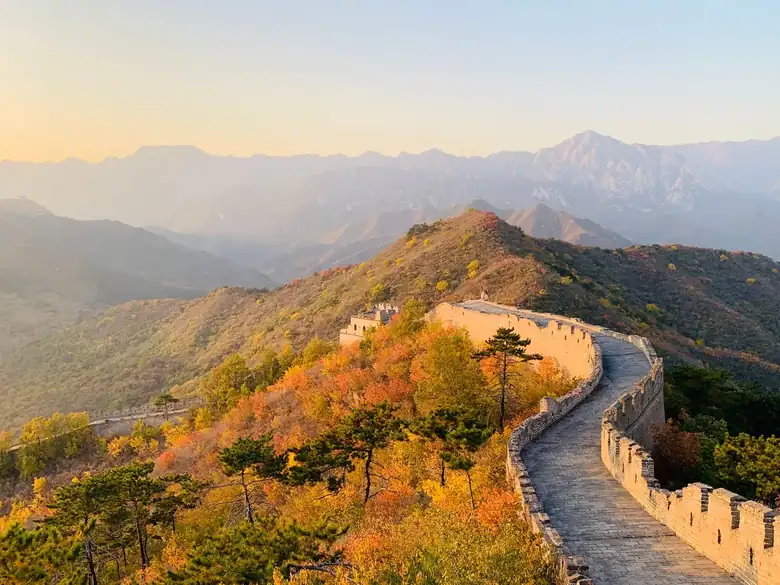
- October — The most beautiful month. Beijing Fragrant Hills red leaves, Kanas golden autumn, Inner Mongolia Ejina poplar forest. But National Day Golden Week (October 1-7) is hell mode — everyone is on the road, hotel prices triple, attractions are packed even with capacity limits. October 8 onward instantly becomes paradise.
- November — North starts getting cold (5-15°C), but the south is still comfortable (15-25°C). Fewer people, lower prices — the best value travel month.
Autumn destinations:
- Beijing — Mid-late October red leaves (Fragrant Hills/Badaling/Summer Palace). The Forbidden City is at its most beautiful in autumn sun.
- Xinjiang · Kanas — Mid-September golden autumn, white birch forests in gold. China's most beautiful autumn scenery.
- Inner Mongolia · Ejina — October, poplar forests — a golden sea.
- Jiuzhaigou — October-November, colorful forests + turquoise water. The most beautiful season.
- Nanjing — November, Qixia Mountain red leaves + Ming Xiaoling Mausoleum ginkgo trees.
Winter (December-February): Snow and Warmth
Winter in China splits into two worlds — northern ice, southern warmth:
- Harbin — December-February, Ice and Snow World (opens late December), Central Street, Yabuli skiing. Minus 20-30°C, but worth it.
- Jilin — January, rime ice island (wùsōng, 雾凇). A frozen wonder on the Songhua River — one of China's four natural wonders.
- Changbai Mountain — December-February, skiing + hot springs. Heaven Lake frozen solid.
- Mohe — China's northernmost point. December-January, experience minus 40°C and maybe the Northern Lights (if you're lucky).
- Hainan (Sanya/Haikou) — December-February, 20-25°C, a warm escape. Peak season — book early and expect higher prices.
- Yunnan (Xishuangbanna/Kunming) — 15-25°C in winter, warm and comfortable.
- Tibet (Lhasa) — Winter days are sunny and warm (10-15°C), few tourists, no need to fight for Potala Palace tickets. But altitude sickness risk remains.
Quick Reference: Best Months by City
- Beijing — April-May (spring), September-October (autumn)
- Shanghai — April-May, October-November
- Xi'an — March-May, September-November
- Chengdu — March-June, September-November
- Yunnan (Kunming/Dali/Lijiang) — March-May, September-November (year-round works)
- Tibet (Lhasa) — May-October (winter possible but altitude risk)
- Xinjiang (Kanas) — July-September (September is most beautiful)
- Harbin — December-February (ice/snow), June-August (heat escape)
- Hainan — October-April (avoid typhoon season)
- Jiuzhaigou — September-November (autumn is most beautiful)
- Huangshan — April-May (flowers), September-November (autumn colors), December-February (winter snow and rime ice)
Peak Season Avoidance Guide
- National Day Golden Week (October 1-7) — The most terrifying week of the year. 700+ million people traveling simultaneously. Do not travel during this period. If you must, choose off-the-beaten-path destinations (small northwestern/southwestern towns).
- Spring Festival (January-February, dates vary) — 7-day holiday, Spring Festival travel rush, train tickets sell out, hotels surge. Southern cities + Hainan are most crowded.
- Summer holidays (July 15 - August 20) — Student travel peak, attractions packed. Choosing a heat-escape destination is fine, but book accommodation early.
- May Day (May 1-5) — 5-day holiday, popular attractions crowded. Short trips OK, long trips avoid.
- Mini-holidays (Qingming/Dragon Boat/Mid-Autumn) — 3-day holidays, local travel peaks. Long-distance travel is less affected.
Best Value by Season
If you want the best experience for the least money, choose your timing in this order:
- Best value: November — Golden Week crowds just left, weather is still comfortable (south 15-25°C), hotel prices at a low, no lines at attractions. If you can choose your time, November is the best month to visit China.
- Runner-up: March — Spring Festival just ended, temperatures rising, few tourists. The north is still a bit cold (5-15°C), but the south is already blooming.
- Peak season to avoid: July-August — Summer holiday travel peak, hotel prices up 30-50%, attractions packed. If you must come in summer, pick a heat-escape destination (Yunnan/Qinghai/Guizhou), avoid southern furnace cities.
- Worst choice: October 1-7 — National Day Golden Week. If this is your only option, choose the most obscure destination possible (small northwestern town / northeastern border). Do not go to popular attractions.
---
Disaster Manual
Disaster Scenario 1: Went to a Popular Attraction During Golden Week
Problem: You arrive at Jiuzhaigou on October 3. Two-hour queue at the entrance. More people than trees inside.
What to do:
- If you haven't left yet: Change your itinerary immediately. Go to an off-the-beaten-path destination (northwest/northeast/southwestern small towns).
- If you're already there: Go early (before 6 AM), choose less popular routes, and accept that "crowds are part of National Day."
- October 8 onward is the golden window — crowds gone, scenery still there, prices down. If you can extend your stay, do it.
Disaster Scenario 2: Heatstroke in Southern Summer
Problem: You go to Wuhan/Chongqing/Changsha in July. 38°C + high humidity. Ten minutes outside and your shirt is soaked through.
What to do:
- Adjust your schedule: Go out 6-10 AM, stay indoors 10 AM - 4 PM (museums/malls/cafés), come back out in the evening.
- Carry water and sun protection. Take breaks in air-conditioned places.
- If it's truly unbearable: Switch to a heat-escape destination (Yunnan/Qinghai/Guizhou), or head north (Harbin/Inner Mongolia).
Disaster Scenario 3: Didn't Pack Enough for Southern Winter
Problem: You assumed "southern winters aren't cold." You visit Shanghai in December with only a thin jacket. It's 5°C, damp cold, no heating indoors. You can't sleep from the cold.
What to do:
- Buy thermal underwear (¥79-149) and a light down jacket (¥199-399) at Uniqlo or Decathlon — available in any city.
- If the hotel doesn't have an electric blanket, ask the front desk for heat packs or a space heater.
- Turn on the AC heating mode (many southern hotel ACs have a heat function). Keep windows closed.
- Lesson: Southern winter cold is a magic attack — the temperature doesn't look that low (0-10°C), but the damp cold + no heating makes it feel worse than minus 10°C in the north. Bring the down jacket and long johns — don't skip them.
---
Information verified: August 2026 · Sources: National Climate Center of the China Meteorological Administration (ncc.cma.gov.cn), China Weather (weather.com.cn), public info from city tourism departments · Best travel times are based on climate and historical patterns. Actual weather may vary — check forecasts closer to your trip.
Travel information can change. Check current opening hours, reservations and entry requirements before you travel.



Traveller discussion
Start the conversation with a helpful tip or a question.