
Chengde City, Hebei Province
河北省承德市
Origin of the name: Chengde was formerly known as "Rehe". In 1703, Emperor Kangxi built the "Mountain Resort" here. In 1733, Emperor Yongzheng named it "Chengde" to signify "receiving the blessings of ancestors". Basic introduction: Chengde City is located in northeastern Hebei Province, in the transitional zone between North China and Northeast C…
Origin of place name:
Chengde was formerly known as "Rehe". In 1703, Emperor Kangxi built the "Mountain Resort" here as a summer palace. In 1733, Emperor Yongzheng named it "Chengde" to "inherit the virtues of his ancestors".
Basic introduction:
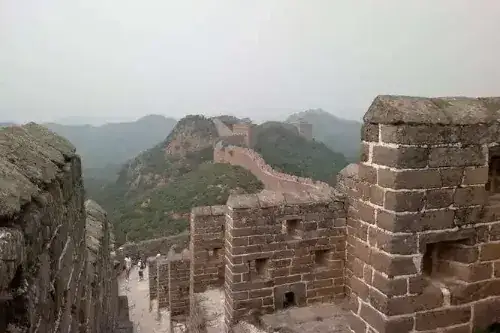
Chengde City is located in northeastern Hebei Province, in the transitional zone between North China and Northeast China. It is close to Beijing and Tianjin, backed by Inner Mongolia and Liaoning, and borders the coastal cities of Shaanxi and Tangshan, as well as Zhangjiakou City within the province. Chengde boasts abundant resources, with its natural scenery and historical sites renowned far and wide. The Mountain Resort, also known as the Chengde Imperial Palace or Rehe Imperial Palace, is the largest existing imperial garden in my country. The magnificent Eight Outer Temples are a group of royal temples of diverse styles, arranged like stars surrounding the moon around the Mountain Resort. The Jinshanling Great Wall, located in Luanping County, is imposing and architecturally unique, and is hailed as the "Second Badaling."
Chengde boasts magnificent natural scenery, with unique peaks and rocks vying for attention. The ten major scenic spots of Chengde include Qingchui Peak, Yishi, Luohan Mountain, Tianqiao Mountain, Sengguan Peak, Jiguan Mountain, Chaoyang Cave, Shuangta Mountain, Yuanbao Mountain, and Rehe Spring. In addition, there are other natural scenic spots scattered throughout the county, such as Wuling Mountain, Mulan Weichang, Baiyun Ancient Cave, Panjiakou Reservoir, and the source of the Liao River, which have their own unique charm.
Jurisdiction 3
View detailed information about Chengde City >>
Honors Ranking:
In July 2026, it was designated as a key tourism city in the "15th Five-Year Plan for Building a Tourism Power".
In January 2026, it ranked 151st in the overall ranking of overseas online influence of Chinese mainland cities in 2025.
In May 2025, the 2025 China City Charm Ranking was released, with Chengde City ranking 193rd (a fourth-tier city).
In April 2025, it was named a national model city (county) for supporting the military and giving preferential treatment to families of servicemen.
In March 2025, it was named the seventh National Civilized City.
In May 2024, the 2024 China City Commercial Attractiveness Ranking was released, with Chengde City ranking 195th.
In March 2024, the second batch of model cities and counties for national fitness was announced, and Chengde City was selected.
In January 2024, it was named one of the eleventh batch of national demonstration zones for ethnic unity and progress by the State Ethnic Affairs Commission.
In December 2023, it was designated as one of the first pilot areas for carbon peaking.
View more honors and rankings of Chengde City >>
Historical background:
Chengde has a long history and rich multi-ethnic historical and cultural heritage. According to unearthed cultural relics, there are traces of human activity in the Chengde area as early as the Longshan Culture period in the Central Plains.
During the Yin and Zhou dynasties, this area was inhabited by the Shanxu and Donghu ethnic minorities and was within the sphere of influence of the Marquis of Yan.
During the Warring States period, the Chengde area belonged to the three commanderies of Yuyang Youbei Run and Liaoxi, which were established by the Yan state.
Qin (221-207 BC) still belonged to Yuyang and Youbeiping Commandery, bordering the Donghu lands.
During the Western Han Dynasty (206-25 BC), it belonged to Yuyang and Beiping Commanderies.
During the Eastern Han Dynasty (25-220), the territory belonged to the Xianbei.
During the Three Kingdoms period, the Wei state (220-265) was under the control of the Xianbei leader Kebineng.
View detailed historical evolution of Chengde City >>
Travel information can change. Check current opening hours, reservations and entry requirements before you travel.
Traveller discussion
Start the conversation with a helpful tip or a question.