
15 Helpful Beijing Travel Tips & FAQs 2026/2027
15 Helpful Beijing Travel Tips & FAQs 2026/2027 1. What is the weather like in Beijing, and when is the best time to visit? Beijing experiences four distinct seasons due to its temperate continental monsoon climate. Summers (June to August)

15 Helpful Beijing Travel Tips & FAQs 2026/2027
1. What is the weather like in Beijing, and when is the best time to visit?
Beijing experiences four distinct seasons due to its temperate continental monsoon climate. Summers (June to August) are hot and humid, with temperatures reaching up to 37°C (98.6°F), while winters (December to February) can be very cold, with temperatures dropping as low as -10°C (14°F). The best time to visit is during spring (April to June) and autumn (September to November), when the weather is mild and pleasant, especially in April, May, September, and November. It's recommended to avoid traveling during China's public holidays, as these periods tend to be crowded and more expensive.
- Beijing Weather & Seasons
- Best Time to Visit Beijing
- 2026 Chinese Holiday
2. What are the top places to visit in Beijing?
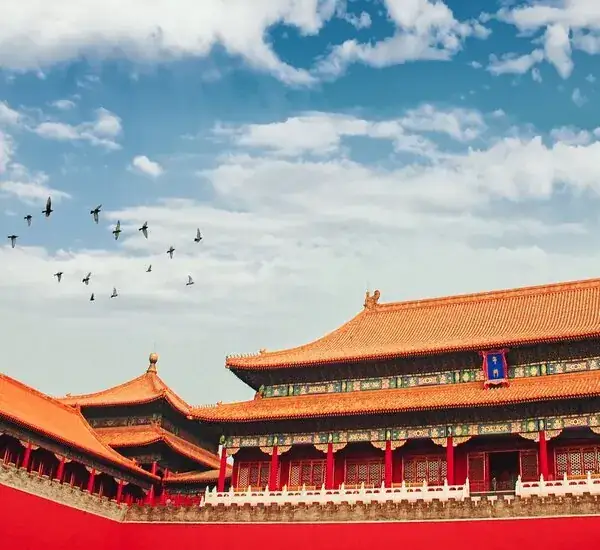
The Forbidden City and the Great Wall are not only the top sights in Beijing but also in China. Besides, the Temple of Heaven, the Summer Palace, and the Hutongs are undoubtedly the top must-see attractions in Beijing, offering a glimpse into the city's rich history and culture. If you've already explored these iconic sites, there are plenty more to discover. The National Museum of China displays a rich collection of Chinese art and history, while the Lama Temple offers a peaceful retreat. Jingshan Park provides panoramic views of Beijing and the Forbidden City. For a modern touch, visit the Beijing Olympic Park with the iconic Bird's Nest stadium. Art enthusiasts will enjoy the 798 Art District, a center for contemporary art. These are just a few of the many attractions that highlight Beijing's mix of tradition and modernity.
- Top 15 Things to Do in Beijing
- Top 6 Places to Visit in Beijing for First-Timers
- 8 Best Sections of Great Wall near Beijing
- 10 Awesome Landmark Sites to Take Photos
-
5 Best Places to Explore Beijing's Folk Culture
- 6 Recommended Free Attractions to Visit in Beijing
- Top Popular Beijing Hutongs
3. How many days should I spend in Beijing?
To see Beijing's main highlights - such as the Forbidden City, the Great Wall (with Mutianyu as the top recommendation), the Temple of Heaven, the Summer Palace, and the Beijing Hutongs—plan for about 4 days, including arrival and departure. If you have an extra day or two, you can explore additional sections of the Great Wall, like Jinshanling, Huanghuacheng, and Juyongguan. For a deeper cultural experience, visit the National Museum, Lama Temple, and explore more of the city's historic hutongs.
- How to Plan a Beijing Trip
- How to Spend 2 Days in Beijing
- How to Spend 3 Days in Beijing
- How to Spend 4 Days in Beijing
- How to Spend 5 Days in Beijing
4 Days Classic Beijing Tour Package (Leisure Paced)
Itinerary: BeijingHighlights: Forbidden City, Mutianyu Great Wall, Summer Palace, Local Family Visit
4. How do I book tickets for the Forbidden City?
3 Days Beijing Essential Highlights Tour
Itinerary: BeijingHighlights: Forbidden City, Jingshan Park, Mutianyu Great Wall, Hutong, Bird's Nest, Water Cube
5. Which section of the Great Wall should I Visit
There are several sections of the Great Wall you can explore around Beijing, each offering unique experiences. Popular sections include Mutianyu, Badaling, Jinshanling, Juyongguan, Simatai, and Gubeikou. We highly recommend the Mutianyu Great Wall , known for its well-preserved structure, scenic beauty, and convenient location just a short distance from Beijing. It also offers cable cars, making it accessible for visitors of all ages. While Badaling is another beautiful and close option, it's the most visited section and can get quite crowded, especially with domestic tourists. For hiking enthusiasts, sections like Jinshanling, Simatai, and Gubeikou are great choices for a more immersive experience. Jinshanling Great Wall is particularly recommended for photographers, offering breathtaking panoramic views of the Wall. It's also a great spot for sunrise and sunset views. If you're looking for something unique, Simatai Great Wall offers a stunning night view as it's the first section of the Great Wall open after dark. The charming Gubei Water Town at its base makes it worthwhile to stay overnight and enjoy the scenery under the stars. Check Top Recommended Great Wall >>
4 Days Classic Beijing Tour with Jinshanling Great Wall Hiking
Itinerary: BeijingHighlights: Great Wall Section(s): Jinshanling
6. What is the best way to visit the Great Wall of China from Beijing?
There are several sections of the Great Wall near Beijing, and it typically takes 2-3 hours to drive from central Beijing, around Tiananmen Square, to most of them. If you prefer public transportation, transfer options vary depending on the section you choose, and the journey generally takes around 3 hours or more. Tourist buses to popular sections like Mutianyu, Badaling, Simatai, Huanghuacheng, Jinshanling, and Juyongguan are available and offer a more efficient way to reach the Wall, saving you time compared to regular buses. Check How to Get to Great Wall >>
4 Days Beijing Essence Tour with Simatai Great Wall Night Sightseeing
Itinerary: Beijing / Jinshanling / Simatai / Gubeikou Water Town / BeijingHighlights: Jinshanling Great Wall, Simatai Great Wall Evening Sightseeing, Gubei Water Town
7. How can I get to Beijing?
As the capital of China, Beijing is a major transportation hub, with international flights connecting to cities across all continents (except sub-Saharan Africa and some parts of the Americas), as well as domestic flights to every provincial capital and key cities within China. Beijing Capital International Airport and Beijing Daxing International Airport together serve over 160 domestic and international routes, linking Beijing to 136 cities worldwide. In addition, Beijing has four major railway stations - Beijing Railway Station, Beijing West Railway Station, Beijing South Railway Station, and Beijing North Railway Station. These stations offer extensive rail services, including high-speed trains to other popular destinations in China, such as Xian, Shanghai, Guilin, Zhangjiajie, Chengdu, Harbin, and Guangzhou.
- How to get to Beijing
- Travel from Hong Kong to Beijing
- Travel from Guangzhou to Beijing
- Travel from Chengdu to Beijing
- Travel from Guilin to Beijing
- Travel from Tianjin to Beijing
- Travel from Chengdu to Beijing
- Travel from Zhangjiajie to Beijing
- Travel from Hangzhou to Beijing
- Travel from Shenzhen to Beijing
8 Days Best of China Tour (Flight/Bullet Train Covered)
Itinerary: Beijing / Xian / ShanghaiHighlights: Mutianyu Great Wall, Forbidden City, Summer Palace, Terracotta Warriors & Horses, Ancient City Wall, Muslim Quarter, The Bund, Yu Garden, Shanghai Museum, Tianzifang
8. How easy is it to get around Beijing using public transportation?
In Beijing, you have several transportation options. The subway is the most efficient, with 17 lines and an airport express, providing easy access to major attractions like the Forbidden City and the Summer Palace, as well as train stations. Buses cover the entire city and surrounding areas, with over 29,500 vehicles and 1,000 routes, including sightseeing buses and night buses operating from 11:00 PM to 4:30 AM. Taxis are widely available in the city, with fares starting at CNY 13 for the first 3 km, but can get expensive for longer trips, such as to the Great Wall.
9. What are the best neighborhoods or areas to stay in Beijing?
Beijing offers a wide range of hotels across various price ranges and locations. The best areas to stay are typically Wangfujing, Hutong, and Qianmen, all of which are close to major attractions like the Forbidden City, Temple of Heaven, Bell Tower, Drum Tower, Jingshan Park, and Beihai Park. If you plan to visit the Great Wall, there are more hotel options near the Mutianyu and Badaling sections than at other parts of the Wall. Check Where to Stay in Beijing >>
10. Do I need a visa to travel to Beijing? What is Beijing visa exemption policy?
A Chinese visa is generally required to visit Beijing, but you may qualify for one of Beijing's visa exemptions.
30-Day Visa-Free Policy: Passport holders from Australia, France, Germany, Italy, New Zealand, the Netherlands, Spain, Malaysia, and 29 other countries can enter China visa-free for up to 30 days for business, tourism, family visits, or transit. This policy is valid until December 31, 2025.
240-hour transit visa free: Travelers from over 50 countries can stay in the Beijing and other designated areas (like Xi'an, Shanghai, Guilin, Zhangjiajie...) to 10 days without a visa, provided they have a valid passport and connecting tickets to a third country or region.
24-Hour Transit Visa Free: This policy at Beijing Capital International Airport and Beijing Daxing International Airport is available for all foreigners who hold connecting flight tickets to a third country/region. It allows passengers stay within the airport for less than 24 hours, without going through any immigration or customs.
☛ Beijing Visa Free: 240/24-Hour Transit Visa Exemption Guide
6 Days Beijing Tianjin Chengde Visa-Free Tour
Itinerary: Tianjin / Beijing / Chengde / BeijingHighlights: Forbidden City, Jinshanling Great Wall, Summer Palace, Chengde Mountain Resort
11. Where can I go during a Beijing layover?
12. What are some recommended foods and snacks to try in Beijing, and where can I find them?
Beijing offers a wide range of shopping options to suit all tastes. Hongqiao Market is famous for its pearls but also has a variety of souvenirs, including figurines, silk, handbags, toys, and some electronics. Panjiayuan Antique Market is the go-to place for both authentic and replica Chinese antiques. For high-end shopping, Wangfujing Street is Beijing's busiest commercial hub, lined with upscale stores and boutiques. Xidan Commercial Street is a vibrant shopping destination popular with young people, featuring megamalls, outdoor markets, small shops, restaurants, and entertainment centers. For specific restaurants and more about Beijing food, please check Popular Beijing Chinese Food, Snacks & Cuisines
13. Where can I go shopping in Beijing?
There are many shopping centers in Beijing. Hongqiao Market is most famous for its pearls, but it also provides a great number of souvenirs goods like figurines, silk, handbags, toys, some electronics, etc. Panjiayuan Antique Market, as the name shows, is the best place to find both authentic and fake Chinese antiques. Wangfujing Street is Beijing’s busiest and most prosperous commercial street with numerous upscale shops and boutiques. Xidan Commercial Street is a shopping paradise for the young dotted with megamalls, outdoor markets, small shops, restaurants, and entertainment centers. For more detailed information, please check Beijing Shopping – What and Where to Buy in Beijing
14. What payment methods are accepted in Beijing? Can I use a credit card or cash?
In Beijing, mobile payments like Alipay and WeChat Pay are the most commonly used methods and are widely accepted in shops, restaurants, transportation, and even at some tourist attractions. Cash is still accepted, but it's a good idea to carry small denominations as change may not always be available. Credit cards are accepted in larger shopping malls, high-end stores, and star-rated hotels, but smaller shops, street vendors, and some scenic areas may not accept them. To ensure convenience, using mobile payment apps is often the easiest and most efficient option.
☛ Chinese Currency & Money Exchange
15. How is the Wi-Fi accessibility throughout Beijing? Do I need a local SIM card?
In Beijing, free Wi-Fi is available in many public places, including shopping malls, restaurants, hotels, and cafes. Some locations allow you to connect directly, while others may require a password (ask the staff) or a Chinese mobile number for registration (you'll need a local SIM card). For mobile internet, you have two options: 1) Use your own SIM card with international data roaming activated by your home provider. 2) Purchase a local SIM card at the airport or from stores like China Mobile, China Unicom, or China Telecom. You'll need your passport, and the staff will help you choose the right plan based on your needs (data or international calls). A local SIM card is generally more convenient and affordable.
☛ Internet & WiFi | Cellphone & SIM Card
- Karen
- Wonder
- Jack
- Rita
- Johnson
- Vivien
- Ariel
- Tracy
- Leo
- Wing
- Evelyn
- April
- Phoebe
- Kelly
- Shirley
- Reya
- Elk
- Samantha
- Bliss
- York
- Felix
- Sean
We will prioritize responding to messages from users who follow our Facebook page. Each response requires a significant amount of time for research and verification. Prioritizing these users' messages is a way to reward everyone for supporting the promotion of our platform, and we also hope to rely on everyone's efforts to help more people in need find us.
- Question title * Your question *
- Your name *
- Your email *
Travel information can change. Check current opening hours, reservations and entry requirements before you travel.


Traveller discussion
Start the conversation with a helpful tip or a question.