
[2026 Beijing Forbidden City One-Day Tour] Ticket Reservation, Panoramic View, and Travel Guide
The Forbidden City, now known as the Palace Museum, is located in the center of Beijing. It served as the imperial palace for the Ming and Qing dynasties, construction of which began in 1406 (the fourth year of the Yongle reign) and was completed in 1420 (the eighteenth year of the Yongle reign), boasting a history of approximately 600 years. Twen…
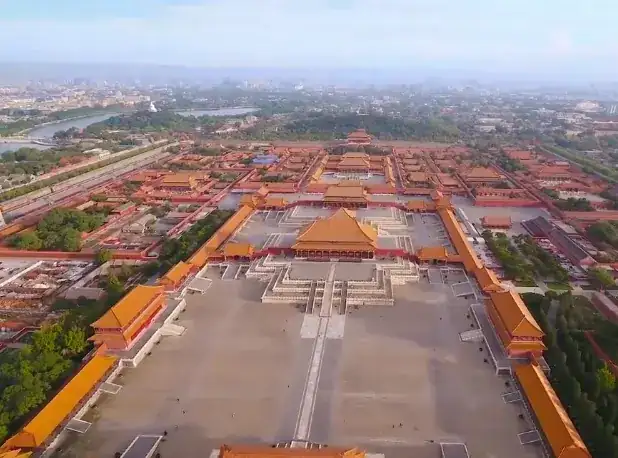
The Forbidden City, now known as the Palace Museum, is located in the center of Beijing. It served as the imperial palace for the Ming and Qing dynasties. Construction began in the fourth year of the Yongle reign (1406) and was completed in the eighteenth year of the Yongle reign (1420), giving it a history of about 600 years. A total of 24 emperors ruled the country from here for nearly 500 years.
Further Reading: [Beijing Travel Guide] Must-see attractions, accommodations, food, and costs
The Forbidden City is a magnificent palace complex, with towering pavilions, white jade balustrades, red walls, and yellow tiles, resplendent in gold and jade. This vast "sea of palaces" covers an area of 720,000 square meters, with a building area of 150,000 square meters, containing 890 palaces of various styles and more than 9,000 rooms. The Forbidden City is surrounded by a 10-meter-high, 3,428-meter-long square wall. At each of the four corners of the square wall stands an exquisitely crafted and uniquely beautiful corner tower. Each of the four sides of the wall has a gate: the Meridian Gate (Wu Gate) to the south, the Gate of Divine Might (Shenwu Gate) to the north, the East Prosperity Gate (Donghua Gate) to the east, and the West Prosperity Gate (Xihua Gate) to the west. A moat, 52 meters wide and 3,800 meters long, surrounds the palace walls. Truly, it is a formidable fortress, heavily guarded.
The magnificent Forbidden City boasts grand halls and expansive squares, as well as opulent inner palaces and secluded paths, confidential council chambers, and imperial gardens for the emperor and his consorts to rest and relax. The Forbidden City is divided into two main parts: the Outer Court and the Inner Court. The Outer Court, centered on the Hall of Supreme Harmony, the Hall of Central Harmony, and the Hall of Preserving Harmony, flanked by the Hall of Literary Glory and the Hall of Military Prowess, was where grand court assemblies, celebratory banquets, and the exercise of power were held. The Inner Court, centered on the Palace of Heavenly Purity, the Hall of Union, and the Palace of Earthly Tranquility, served as the emperor's residence and the place where he conducted daily affairs. North of the Palace of Earthly Tranquility lies the Imperial Garden, with its verdant pines and cypresses, exotic flowers and rocks, pavilions and terraces, winding ponds and waterside pavilions, resembling a natural painting, a place for the emperor, empress, and imperial family to stroll and relax.
The three rear halls each have four gates on their east and west sides, leading to the six palaces of the east and west, which were the residences of the empresses and imperial family. The Yongshou Palace, Taiji Hall, Yikun Palace, Changchun Palace, Chuxiu Palace, and Xianfu Palace constitute the six western palaces, while the Jingren Palace, Chengqian Palace, Zhongcui Palace, Yanxi Palace, Yonghe Palace, and Jingyang Palace constitute the six eastern palaces. Each palace is composed of a two-courtyard layout, including a front hall for receiving ceremonies, a sleeping quarters, and side halls.
South of the Western Six Palaces is the Hall of Mental Cultivation, where the emperor resided and conducted daily affairs. South of the Eastern Six Palaces is the Fasting Palace, where the emperor resided during periods of fasting. Behind the Eastern and Western Six Palaces are the residences of the princes. West of the Western Six Palaces are the Palace of Compassion and Tranquility and the Palace of Longevity and Health, the residences of the Empress Dowager and imperial concubines. East of the Eastern Six Palaces are the Hall of Supreme Harmony and the Palace of Tranquil Longevity, a group of palaces built by the Qianlong Emperor of the Qing Dynasty when he was the Retired Emperor.
Palace Museum ticket information
Opening hours: The Palace Museum is open daily from 8:30 to 17:00 (ticket sales stop at 16:00), and closed every Monday (except for statutory holidays).
Peak season (April 1st - October 31st): Ticket price 60 yuan/person.
Off-season (November 1st - March 31st of the following year): Ticket price 40 yuan/person.
Clock and Watch Museum and Treasure Museum: 10 yuan/person.
Tickets can be purchased at: https://bookingticket.dpm.org.cn/
✅️Tickets and commentary included can be booked here: Klook Exclusive Limited-Time Offer|Trip
Palace Museum Route Planning
The Palace Museum Highlights Tour Route
Meridian Gate → Gate of Supreme Harmony → Hall of Supreme Harmony → Hall of Central Harmony → Hall of Preserving Harmony → Gate of Heavenly Purity → Palace of Heavenly Purity → Hall of Union → Palace of Earthly Tranquility → Imperial Garden → Gate of Divine Might
If you have limited time at the Forbidden City but still want to gain a good understanding of it, then this itinerary is perfect for you.
The Ming and Qing emperors primarily held court at the Hall of Mental Cultivation in the Qianqing Palace, near the Gate of Supreme Harmony and the Gate of Heavenly Purity, not at the Hall of Supreme Harmony as commonly known. The Hall of Supreme Harmony was mainly used for grand ceremonies. In the early Qing dynasty, the imperial examinations were also held at the Hall of Supreme Harmony, but this was later moved to the Hall of Preserving Harmony.
The Hall of Supreme Harmony, the Hall of Central Harmony, and the Hall of Preserving Harmony were where the emperor held court; the Palace of Heavenly Purity, the Hall of Union, and the Palace of Earthly Tranquility were where the emperor handled daily affairs and rested. The Six Palaces to the east and west, centered on these three palaces, were the living quarters of the empresses and concubines.
A Deep Dive into the Palace Museum: A Tour Route
Meridian Gate → Gate of Supreme Harmony → Hall of Supreme Harmony → Hall of Central Harmony → Hall of Preserving Harmony → Palace of Benevolence and Respect → Palace of Longevity and Prosperity → Palace of Heavenly Mandate and Heavenly Stems and Feudal Union → Palace of Earthly Tranquility and Peace → Palace of Heavenly Purity and Cleanliness → Palace of Eternal Longevity and Longevity → Palace of the Palace of Righteousness and Harmony → Palace of Gathering Elegance and Beauty → Imperial Garden → Gate of Divine Might.
If you love the Forbidden City and want to gain a comprehensive understanding of it, but don't want to spend too much time, then this route will definitely allow you to understand the Forbidden City more deeply while spending the least amount of time.
Jingren Palace was the residence of imperial concubines. Emperor Kangxi was born here, and Consort Zhen also lived here. Here, one can also catch a glimpse of the touching love story between Consort Zhen and Emperor Guangxu.
Speaking of Yanxi Palace, one cannot help but mention the TV series "Story of Yanxi Palace," which is where Wei Yingluo once lived... Chengqian Palace, Yongshou Palace, Yikun Palace, and Chuxiu Palace were all places where imperial concubines lived in ancient times.
The Palace Museum Quality Tour Route
Meridian Gate → Hall of Martial Valor → Hall of Literary Glory → Gate of Supreme Harmony → Hall of Supreme Harmony → Hall of Central Harmony → Hall of Preserving Harmony → Palace of Heavenly Purity → Hall of Union and Peace → Palace of Earthly Tranquility → Hall of Mental Cultivation → Western Six Palaces → Imperial Garden → Eastern Six Palaces → Hall of Ancestral Worship (Clock and Watch Museum) → Palace of Tranquil Longevity (Treasure Museum, Opera Museum) → Gate of Divine Might.
If you're visiting Beijing and planning to spend a day at the Forbidden City, this route is perfect for you. If you're a history enthusiast, this is a must-try; it will deepen your understanding of Ming and Qing dynasty history and allow you to appreciate the grandeur of the ancient imperial palace.
The Palace Museum is a must-see attraction.
The bronze lions at Taihe Gate: the largest bronze lions in the Forbidden City.
The Forbidden City houses countless dragons, but only six pairs of lions, the largest of which is here. Two lions crouch on bronze pedestals, their heads adorned with neatly arranged spiral curls. Both lions have wide-open, angry eyes and slightly agape mouths, revealing their fangs, seemingly poised to roar or emit a menacing growl. A ribbon with a lotus scroll pattern adorns their full chests, with a dragon head at the center, its mouth holding a square hook from which hangs a bell. To the west is a male lion, its strong left paw resting on the pedestal, its right hand holding an embroidered ball wrapped in a ribbon, symbolizing the unification of the land (control of the state). To the east is a female lion, her left paw gently holding a cub, as if playing. The cub lies supine, its four paws bracing against its mother's paws, playfully biting her toes with its mouth—a charming sight, symbolizing abundant offspring. The heads of both lions are slightly turned toward the steps, as if watching the passing crowds and guarding the Taihe Gate behind them.
Broken Rainbow Bridge Crotch-Covering Lion: Internet Celebrity Little Lion
The "Lion Covering Its Crotch" on the Duanhong Bridge in the Forbidden City is a unique stone lion statue, famous for its peculiar pose: one hand touching its head, the other covering its crotch. This bridge, located outside the Taihe Gate and east of the Wuying Hall, spans the Inner Golden Water River and is a classic example of the Forbidden City's bridges.
The Crotch-Covering Lion is located on the east side of the Broken Rainbow Bridge. Counting from the south, it is the fourth lion. Its appearance is very unique. One hand (or paw) is touching its head, while the other hand (or paw) is covering its crotch, and its expression looks both comical and as if it is in some kind of pain.
Bronze tortoise, bronze crane, sundial, and measuring vessel in front of the Hall of Supreme Harmony
On the platform in front of the Hall of Supreme Harmony are displayed a sundial, a measuring vessel, a pair of bronze tortoises and cranes, and 18 bronze tripods. The tortoise and crane symbolize longevity. The sundial was an ancient timekeeping device, and the measuring vessel was an ancient standard measuring instrument; both were symbols of imperial power. Below the hall is a three-tiered white marble base, 8.13 meters high, surrounded by a railing. Below the railing are stone dragon heads for drainage: during the rainy season, this creates the spectacular sight of a thousand dragons spouting water.
The 10 roof ridge beasts of the Hall of Supreme Harmony
The small statue of an immortal riding a phoenix is called an immortal, also known as a true man or the King of the Underworld. It is said that this immortal is the incarnation of King Min of Qi. There is a folk saying, "King Min was exposed to the sun, and had nowhere to turn," referring to the story of King Min of Qi during the Eastern Zhou Dynasty. Defeated by the Yan general Yue Yi, he fled in panic, encountering numerous obstacles and finding himself with nowhere to go. In his desperation, a phoenix flew before him, and King Min rode it across a great river, turning misfortune into good fortune. Placing this "immortal riding a phoenix" on the top of the eaves likely also carries the meaning of turning adversity into opportunity and averting disaster.
As the highest-ranking palace in the Forbidden City, the Hall of Supreme Harmony's roof ridge beasts, in terms of both quantity and variety, reflect the supreme status of the imperial family. These ridge beasts are distributed on the sloping ridges at both ends of the building, and in order from bottom to top, they are: dragon, phoenix, lion, seahorse, celestial horse, yayu (also known as yayu), suanni, xiezhi, douniu, and xingshi.
A rhyming saying goes: "One dragon, two phoenixes, three lions, heavenly horse, sea horse, six yayu; suanni, xiezhi, nine dou niu, and finally, xingshi looks like a monkey." Function: Besides decoration, these nails also protected the wooden pegs and nails, preventing leaks and rust, and provided fixation and support for the ridge's joints; these are what we commonly call nail heads.
The largest Danbi stone behind the Hall of Preserving Harmony
The most captivating feature of the Hall of Preserving Harmony is the Danbi Stone behind it, measuring 16.57 meters long, 3.07 meters wide, and 1.70 meters thick, weighing over 200 tons. Carved on this massive imperial stone are nine colossal dragons soaring through the air, rising and falling, rising high above the stone's surface with remarkably lifelike forms. Below the dragons are countless clouds. At the lower part of the stone carving are five treasure mountains, with flowing water patterns depicted between them.
Longzongmen Arrow - A Historical Warning
Longzong Gate was first built during the Ming Dynasty when Zhu Di moved the capital to Beijing. It was later rebuilt in 1598, the 26th year of the Wanli Emperor's reign. After the Manchu Qing Dynasty took control of the Central Plains, Longzong Gate was repaired again. The Longzong Gate we see today is basically the appearance after the reconstruction in 1655, the 12th year of the Shunzhi Emperor's reign.
Within the Forbidden City, the Longzong Gate held a very important position because it was a vital passageway between the inner court and the outer court. To the north inside the gate was the office of the Grand Council, and to the west outside the gate was the Cining Palace, the residence of the Qing Dynasty's empress dowagers.
In addition, Longzong Gate was a gate right next to the emperor's residence, so even princes and ministers could not enter without the emperor's summons.
Bronze lions in front of the Qianqing Gate
The bronze lions in front of the Qianqing Gate are made of gilded brass. If the lions at the Taihe Gate are majestic and imposing, then the lions in front of us are extremely cute and endearing.
The smallest palace in the Forbidden City—the Golden Hall of the Land and Society
The Golden Hall of the Land and Grain is the smallest palace in the Forbidden City. It measures only about 1 meter on each side, is about 1.4 meters high, and has an area of less than 10 square meters, yet its status within the Forbidden City is unparalleled. Located on the east and west sides in front of the Qianqing Palace, it consists of two three-tiered stone platforms, each topped with a miniature, gilded palace, known as the Golden Hall of the Land and Grain. The eastern Golden Hall is named the Golden Hall of the Land and Grain, and the western Golden Hall is named the Golden Hall of the Land and Grain. The historical background of the Golden Hall of the Land and Grain can be traced back to the thirteenth year of the Shunzhi Emperor's reign (1656), when the Shunzhi Emperor ordered the establishment of shrines to the gods of the land and grain in front of the Qianqing Palace and dispatched officials to perform sacrifices. Here, "land and grain" refers to rivers and mountains, symbolizing the state power; "land and grain" refers to the gods of grain and land, symbolizing the country. This is related to the layout concept of "ancestral temple on the left, land and grain on the right" recorded in the pre-Qin official book *Kaogongji*. The Imperial Ancestral Temple and the Altar of Earth and Grain, and the Temple of Heaven and the Altar of Agriculture are located on the east and west sides of the central axis, respectively. They all follow the same design philosophy.
The plaque with the inscription "正大光明" (upright and righteous) in the Qianqing Palace
The plaque inscribed with the words "Upright and Bright" is a rubbing of calligraphy personally written by Emperor Shunzhi of the Qing Dynasty, and it hangs prominently in the main hall of the Qianqing Palace in the Forbidden City. The four characters "Upright and Bright" originate from Zhu Xi's "Collected Works of Zhu Xi, Volume 38, Reply to Zhou Yigong," meaning to be honest and upright in thought and conduct. These four characters not only embody the uprightness and brightness of the Qing Dynasty's rule but also imply that the long-term stability of the imperial throne requires emulating Heaven and Earth and conforming to human nature. The plaque itself is a rubbing of calligraphy, and in addition to Emperor Shunzhi's writing, it also bears postscripts from Emperors Kangxi and Qianlong.
The most beautiful unfinished building---Yanxi Palace
Yanxi Palace, built in the 18th year of the Yongle reign of the Ming Dynasty (1420), was initially named Changshou Palace, later renamed Yanxi Palace. During the Ming and Qing dynasties, Yanxi Palace primarily served as the residence of imperial concubines. Due to its relatively remote location and frequent fires, it was often assigned to concubines of lower rank or those not favored by the emperor. For example, during the Qing Dynasty, lower-ranking concubines such as Consort Xu and Consort Tian resided in Yanxi Palace. A fire occurred during the Daoguang reign, leaving only the palace gate standing. In the first year of the Xuantong reign, the Western-style building "Lingzhao Pavilion" was constructed. Although it was ultimately unfinished due to the fall of the Qing Dynasty, this unfinished building still stands in Yanxi Palace today, becoming a unique feature of the ancient architecture of the Forbidden City.
The Palace Museum's popular afternoon tea - Wanfu Jin'an
The Palace Museum's "Wanfu Jin'an" Afternoon Tea is a unique tea break experience within the palace grounds, located in the Kunning East Courtyard, east of the Kunning Palace. The afternoon tea offers a variety of drinks and desserts, such as the Fragrant Red Plum Concubine Drink, Mingxiang Fushou (fragrant longevity drink), Persimmon Ruyi (auspicious persimmon), Five Blessings Holding Longevity, and Autumn Fruit Pink Butterfly, with rich flavors and exquisite presentation. It's a great place to experience the traditional Chinese tea culture of the imperial court.
The most beautiful caisson ceilings in the Imperial Garden (Qianqiu Pavilion, Wanchun Pavilion)
Qianqiu Pavilion caisson ceiling
The caisson ceiling of Qianqiu Pavilion on the west side of the Imperial Garden, although a reconstruction from the late Qing Dynasty, still stands quietly in the corridor of time with its unique charm, like a graceful lady, attracting countless tourists to stop and gaze. The overall shape of Qianqiu Pavilion is unique and elegant, and the caisson ceiling is the finishing touch of the entire building, demonstrating extraordinary artistic value.
The caisson ceiling of Qianqiu Pavilion is exquisitely designed, carved from golden nanmu wood, and the painted colors are still well preserved. Sunlight streams into the pavilion through the windows under the caisson ceiling, creating a dreamlike effect of light and shadow. Especially around 3 pm before and after the Great Snow solar term, it is said that a beam of light will fall precisely on the dragon head, creating a dreamlike and breathtaking spectacle.
Wanchunting Caisson Ceiling
The Wanchun Pavilion caisson ceiling, which echoes the Qianqiu Pavilion caisson ceiling across the Imperial Garden East Road, is a genuine Ming Dynasty artifact. Although its color is slightly aged and even has a hint of dirtiness, this cannot conceal its meticulous workmanship and exquisite craftsmanship. The Wanchun Pavilion caisson ceiling has an ingenious structural design, with seamless connections between its various components, forming a stable and harmonious whole that remains as solid as a mountain even after hundreds of years of weathering.
Yin-Yang Dao - Mysterious Legends
The Yin-Yang Path in the Forbidden City is a passageway shrouded in mystery and legend. Located in the East Corridor, it gets its name from its unique Yin-Yang phenomenon. Under specific times and conditions, such as on a moonlit night, the ground of the Yin-Yang Path will display two distinct interfaces, one Yin and one Yang, creating a striking contrast.
There are many legends and stories about Yin-Yang Dao, which I won't go into here. Those interested can look them up themselves. After all, these stories and legends are quite mystical.
Nine-Dragon Wall in the Forbidden City
The Nine-Dragon Wall of the Forbidden City is located outside the Huangji Gate of the Ningshou Palace area on the East Road of the Forbidden City in Dongcheng District, Beijing. It is a single-sided glazed screen wall built against the palace wall. It was made in 1772, the 37th year of the Qianlong Emperor's reign, when the Ningshou Palace was rebuilt. It is named after the nine dragons carved on its surface.
The Nine-Dragon Wall in the Forbidden City, together with the Nine-Dragon Wall in Datong, Shanxi, and the Nine-Dragon Wall in Beihai Park, Beijing, are known as the "Three Great Nine-Dragon Walls of China".
Changyin Pavilion Grand Theater
The Changyin Pavilion in the Forbidden City is a grand opera stage in the inner court of the Qing Dynasty, located on the east side of the Yangxing Hall within the Palace Museum.
Changyin Pavilion was first built in the 37th year of the Qianlong Emperor's reign (1772) and completed in the 41st year of his reign (1776). It underwent repairs in the 7th year of the Jiaqing Emperor's reign (1802) and the 17th year of the Guangxu Emperor's reign (1891). The existing building is based on the layout after the reconstruction during the Jiaqing era.
Jade Mountain, depicting Yu the Great taming the floods
The Jade Mountain depicting Yu the Great Taming the Flood in the Forbidden City is a court jade artifact from the Qianlong period of the Qing Dynasty. It is hailed as one of the world's largest jade carvings and is currently housed in the Hall of Joyful Longevity in the Palace of Tranquil Longevity in the Forbidden City, Beijing.
This jade artifact is 224 cm tall (excluding the base), 96 cm wide, with a base height of 60 cm, and weighs 5,000 kg (or 5 tons), making it one of the largest existing ancient jade artifacts. The material, a dense and hard green jade from the Milerta Mountain in Hotan, Xinjiang, China, is carved with towering mountains, rushing waterfalls, ancient trees and pines covering the slopes, and deep, mysterious caves, depicting the magnificent scene of "Yu the Great controlling the floods."
Zhenfei Well
The Well of Consort Zhen is a well located inside the Zhenshun Gate at the northern end of the Palace of Tranquil Longevity in the Forbidden City, Beijing. Originally an ordinary well in the palace, it was named after Consort Zhen, who was pushed into the well and drowned.
In 1900, the 26th year of the Guangxu Emperor's reign, the Eight-Nation Alliance attacked Beijing, and Empress Dowager Cixi and the Guangxu Emperor fled westward in haste. Before leaving, Empress Dowager Cixi summoned Consort Zhen, the Guangxu Emperor's favorite concubine who was imprisoned in the North Courtyard of Jingqi Pavilion, to Yihe Pavilion, and ordered the eunuch Cui Yugui and others to push her into the well inside Zhenshun Gate and drown her. This well was thus named "Consort Zhen's Well".
In 1901, after the imperial entourage returned to Beijing, Consort Zhen was posthumously honored as a Noble Consort. Her family was granted permission to retrieve her body and bury it in Tiancun Village in the western suburbs. Later, she was buried in the Consort Cemetery of the Chongling Mausoleum in the Western Qing Tombs.
The plaque at Shenwu Gate that reads "Palace Museum"
The Shenwu Gate, the north gate of the Forbidden City, was originally named Xuanwu Gate, but was later renamed Shenwu Gate to avoid the taboo of Emperor Kangxi's personal name, Xuan Ye. At the inception of the Palace Museum, to demonstrate its grandeur to the nation, the Shenwu Gate was chosen as the main gate, and the plaque bearing the inscription "Palace Museum" was hung there.
Transportation routes to the Palace Museum
Meridian Gate:
Subway: Take Subway Line 1 and get off at Tiananmen East Station or Tiananmen West Station. From Exit C of Tiananmen East Station, you can walk to the Meridian Gate; from Tiananmen West Station, you can also walk there via the corresponding passageway.
Public transportation: Buses 1, 120, 2, 52, 82, Night 1, Sightseeing Line 1, and Sightseeing Line 2 stop at Tiananmen East Bus Station; buses 1, 5, 52, Night 1, Sightseeing Line 1, and Sightseeing Line 2 stop at Tiananmen West Bus Station.
Note: The route from Tiananmen Square through Duanmen to Wumen is open from 8:00 to 16:00, Tuesday to Sunday. It is closed all day on Mondays. Please refer to on-site announcements for actual opening hours.
Shenwu Gate:
Public transportation: Trolleybuses 101, 103, 109, and 124 and buses 58, Night 13, Sightseeing Line 1, and Sightseeing Line 2 stop at Shenwumen Bus Station; trolleybuses 111 and 124 and buses 58 and Night 2 stop at Jingshan East Gate Bus Station.
Donghua Gate (now used as a visitor exit):
Subway: Take Line 8 to Jinyu Hutong Station.
By bus: Buses 2, 82, Night 2, and Sightseeing 2 stop at the Donghuamen and Forbidden City East Gate bus stops. Alternatively, you can walk 800 meters west along Dong'anmen Street from Wangfujing Commercial Street.
Frequently Asked Questions
Q: Is the Palace Museum open year-round?
A: Except for statutory holidays, the Palace Museum is closed on Mondays throughout the year.
Q: Do I need to make an appointment to visit the Palace Museum?
A: Successfully purchasing a ticket to the Palace Museum constitutes a successful reservation, which must be made at least one day in advance.
Q: Can I buy tickets for the Palace Museum at the ticket window on the day of the visit?
A: The Palace Museum does not sell same-day tickets; tickets must be booked online in advance.
Q: How many days in advance do tickets for the Palace Museum go on sale?
A: Tickets for the Palace Museum are released 7 days in advance at 8:00 PM.
Q: Do I need an ID card to enter the Palace Museum?
A: Yes, you need to present a valid ID used for your reservation and enter the palace through the Meridian Gate (South Gate of the Forbidden City).
Q: Can I still enter the Forbidden City if I lose my ID card?
A: Tourists who are unable to enter the hospital due to lost or damaged documents or other unforeseen circumstances can enter by presenting valid documents that can prove the holder's identity, such as household registration book, medical insurance card, or driver's license.
Q: Can children enter the Forbidden City without an ID card?
A: Children without ID cards can bring their household registration booklet for entry.
Q: Is admission to the Palace Museum free for senior citizens?
A: It's not free, but the entrance fee is half price: 30 yuan per person during peak season and 20 yuan per person during off-season.
Q: Can I enter the Palace Museum in the morning if I have an afternoon ticket?
A: No, the latest check-in time for those who booked a morning session is 12:00 noon on the same day, and the earliest check-in time for those who booked an afternoon session is 11:00 noon on the same day. Please come to the hospital according to your reservation time to avoid being unable to check in and affecting your visit.
Q: Can I get a refund for my ticket to the Palace Museum?
A: Unused pre-sale tickets can be refunded through the original booking channel before 24:00 the day before your visit. Refunds can still be processed before 20:00 on the day of your visit, but this will be counted as one no-show. If you accumulate three no-shows within six months (calculated in six-month increments, not calendar months), you will be unable to purchase Palace Museum tickets or book exhibitions for 60 days starting from the day after the third no-show.
Q: Can I still enter the Palace Museum if I couldn't get a ticket?
A: No.
Travel information can change. Check current opening hours, reservations and entry requirements before you travel.

Traveller discussion
Start the conversation with a helpful tip or a question.