
[Xiamen Attractions] Top 10 Must-Visit Attractions in Xiamen; You've Truly Explored Xiamen If You've Visited Nine of Them.
In life, nothing is more precious than delicious food and beautiful scenery. With exams over and summer vacation approaching, travel is back in vogue for many families. People are choosing to travel to different places to appreciate the beautiful scenery and experience different customs and cultures. Xiamen, abbreviated as "Xia" or "Lu," also know…
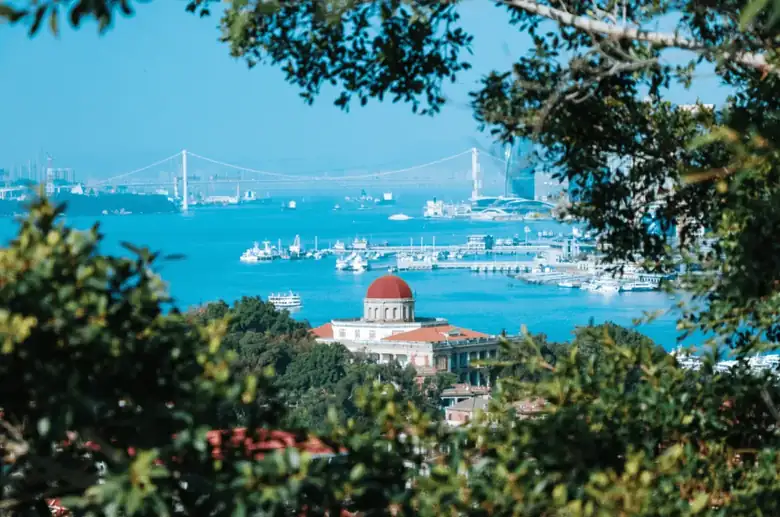
In life, nothing is more precious than delicious food and beautiful scenery. With exams over and summer vacation approaching, travel is once again becoming a popular activity for families. People are choosing to travel to different places to appreciate the beautiful scenery and experience different customs and cultures.
Xiamen, abbreviated as "Xia" or "Lu," also known as Egret Island, is a prefecture-level city in Fujian Province, and is a very laid-back city. Xiamen is a city within the sea, with the sea within the city, and has been a famous city in Southeast China since ancient times, boasting numerous historical sites and scenic spots. For first-time visitors to Xiamen, how can they best understand and appreciate the city?
Further Reading: [Xiamen Tourism] Xiamen Independent Travel Guide: Attractions, Transportation, Accommodation, and Food
Here, we introduce ten must-see attractions in Xiamen. We hope you enjoy them.
Gulangyu
As a child, I longed for the sea and especially hoped to live in a city by the sea, because the sea symbolizes vastness, passion, and life. As I grew up, I longed for Gulangyu Island, because it is a dreamlike paradise, a tourist destination full of artistic atmosphere.
Gulangyu, formerly known as Yuanshazhou and also called Yuanzhouzai, was called Wulongyu during the Southern Song Dynasty. It is a small island named after a sea cave in the southwest of the island that makes a sound like drumming when the waves crash against it. It is known as the "Garden on the Sea".
The island boasts rugged reefs, a long coastline, verdant peaks, and crisscrossing streets and alleys. It is home to thousands of buildings with diverse styles, blending Chinese and Western architecture, earning it the reputation of "Museum of World Architecture." It is also known as "Piano Island" and "Hometown of Music" due to the abundance of musical talents it has produced.
The island is known for its architecture and music, and boasts attractions such as Sunlight Rock, Shuzhuang Garden, Haoyue Garden, Bagua Island, Gulang Rock, Piano Museum, Zheng Chenggong Memorial Hall, Underwater World, natural seaside bathing beach, Haitang Villa, Hero Garden, Qin Garden, and Bird Garden, making it a comprehensive scenic spot in Fuzhou.
Gulangyu Island retains its secluded and independent character, perched alone on the sea, making it all the more extraordinary. The island enjoys a spring-like climate year-round, with fresh air, and its charming alleyways with blue brick walls and red-tiled houses exude a romantic atmosphere. Longtoushan Mountain, located in the center of the island, boasts numerous scenic spots and historical sites, including Yipianwa (One Tile), Lujiang Longku (Lujiang Dragon Cave), the Ancient Summer Retreat Cave, Longtoushan Village, the Water Training Platform, and the 100-meter-high platform, making it an excellent vantage point for panoramic views of the entire island.
Further Reading: [Gulangyu Island Day Trip] Gulangyu Island Travel Itinerary Guide, including transportation, attractions, food, and accommodation.
Address: Siming District, Xiamen City
Xiamen University
Do you know which university in China is the most popular? According to the latest statistics, Xiamen University tops the list, meaning it's the most popular school. Why is Xiamen University so popular? What makes it so appealing?
Xiamen University, nestled between mountains and the sea, boasts stunning scenery. Founded in 1921 by the renowned patriotic overseas Chinese Mr. Tan Kah Kee, it is a prestigious comprehensive university, often referred to as the "Strong University of the South," and hailed as one of China's most beautiful universities. Among students, Xiamen University has a charming nickname: "Xiamen University People's Park," as it attracts numerous tourists daily, gradually becoming a must-see attraction in Xiamen.
The university is located not far from the sea, with Nanputuo Temple on one side and Baicheng Beach on the other, and the famous Gulangyu Island opposite, making its location extremely advantageous. The campus features buildings such as the Qunxian Building Complex, Jiannan Building Complex, Furong Building Complex, and the Museum of Anthropology, offering not only scenic views but also opportunities to reflect on its history.
Of course, the main attractions on campus are Furong Lake and Lover's Valley Reservoir, which are popular spots for college students to express their love. Furong Lake, in particular, is the source of Xiamen University's beauty and charm, shining like a bright pearl embedded in the campus, radiant and breathtakingly beautiful.
If there's one place that best represents Xiamen University, it has to be Furong Tunnel. It's China's most artistic tunnel and also its longest graffiti tunnel. Lively lines and quirky patterns create a unique art gallery, a modern-day version of the Dunhuang murals.
Address: No. 422, Siming South Road, Siming District, Xiamen
Further Reading: [Xiamen University] Don't know where to start when visiting Xiamen University? Xiamen University students recommend the most comprehensive travel guide!
Zengcuo'an
In Xiamen, besides the famous tourist attractions, there are some places that can be considered non-tourist attractions, but are still worth visiting. Zengcuo'an is perhaps such a place, and its fame is growing, attracting more and more young people.
Zengcuo'an, also known as Zengli, Zengjiawo, or Zengjiawan, is a small fishing village located along the island's ring road. It is bordered by Baishi Fort to the east, Hulishan Fort to the west, the sea to the south, and Xiguling of Yuping Mountain to the north. Surrounded by mountains on three sides and facing the sea on one side, it has a history of over 500 years. It is a small fishing village with a focus on cultural and creative industries and is known as "China's most artistic fishing village".
According to locals, Zengcuo'an became a strategic military location after Xiamen was built in the early Ming Dynasty. During the Qing Dynasty, a naval force was stationed there, and after the Xinhai Revolution, the Naval Aviation Office and airport were also established there; traces of those times can still be seen today. The architecture blends Chinese and Western styles, with many red-brick ancient houses and "foreign-style" buildings in the Nanyang (Southeast Asian) style.
The small fishing village has several attractions, including the Zengcuo'an Museum, Zengcuo'an Street, Zengcuo'an Ancient Residences, and Zengcuo'an Beach. The main attractions are the five main streets and eighteen alleys, namely Guoban Street, Zhongshan Street, Wenyi Street, Church Street, Tianquan Street, Caopu Alley, Jingziwei Alley, Linpu Alley, Village Alley, and Gongkou Alley.
The streets and alleys are mainly lined with ancient buildings and creative shops, with a large number of restaurants, teahouses, inns, as well as some specialty snack shops and handicraft workshops. There are also grasses from Rabbit Ear Ridge, stones from Taimu Mountain, and reefs from volcanic islands. Scattered among them are distinctive homestays that allow you to experience unique scenery and customs.
Further Reading: Zengcuo'an: Facing the Sea, a Free Spirit
Address: No. 110, Huandao South Road, Siming District, Xiamen
Eighth Market Old Street
As the saying goes, the essence of Xiamen can be found in the Eighth Market. Not only does it sell fresh ingredients, but it also boasts many famous local eateries, bringing together the most representative delicacies of the area, making the Eighth Market a must-visit destination.
The Eighth Market, officially known as Xiamen Eighth Market, is a vegetable market established during the Republic of China era. With a history of nearly a century, it is Xiamen's oldest and largest seafood market, and has now become one of Xiamen's new favorites and landmarks.
Stepping into the Eighth Market is like entering a giant maze, bustling with crowds and vibrant with activity. The air is filled with the sounds of vendors hawking their wares and the enticing aromas of delicious food, carrying the memories of countless longtime Xiamen residents and making one want to explore this "food map."
Because of its long history and rich cultural heritage, many old shops here have been passed down through generations, emphasizing authentic flavors. For example, Zhu Ji Hand-Shredded Chicken, A Jie Five-Spice Noodles, You Sheng Flavor Snacks, Hui Yuan Bakery, and Ya Ben Wheat Milk not only offer authentic traditional delicacies, but are also very affordable.
As night falls, the lights of the Eighth Market illuminate the beautiful night scene, like stepping into the world of Miyazaki Hayao's animation, or Xiamen's Spirited Away. There are no skyscrapers, no green gardens, no Western-style villas, and no bourgeois sentimentality here, but there is the most down-to-earth human touch and the most authentic Xiamen street life.
Address: Siming District, Xiamen City
Garden Expo Park
Most people who come to Xiamen will visit Gulangyu Island, the Eighth Market Old Street, Xiamen University's Baicheng Beach, and Zengcuo'an. However, there is another great option: on a sunny day, you can stroll into a beautiful garden and experience the harmonious blend of cultural landscape and natural atmosphere.
The Garden Expo Park is composed of the original Xinglin Bay Central Island and nearby islands, as well as parts of the western and northern coastlines of the bay. It includes Central Island and nine nearby islands, which are connected by more than a dozen bridges, forming the famous Water Garden Expo Park.
In terms of layout, the Garden Expo Park consists of nine islands and two peninsulas, including five exhibition islands and four ecological landscape islands. Based on this, the park is planned as follows: the natural island in the east, the Apricot Grove Garden in the west, the Education Garden and Stone Culture Garden in the center, and the Mountain Forest Leisure Garden in the north, surrounding a large green space in the style of a central park.
In terms of design style, the Garden Expo Park is divided into ten major areas, including the Northern Garden, the Jiangnan Garden, the Lingnan Garden, the Ethnic Customs Garden, the International Garden, the Fujian-Taiwan Garden, and the European Garden. Each area has its own characteristics and unique architectural style.
Here, you can appreciate garden art from different regions and countries, feel the charm of different cultures, and experience different folk customs. The park also offers many wonderful performances and activities, allowing you to enjoy the breathtaking scenery while experiencing a wealth of entertainment.
Address: No. 66, Jixing Seawall, Jimei District, Xiamen City, Fujian Province
Huandao Road
Xiamen is a city with a slow pace of life, exuding romance and a touch of sophistication. Beaches, the sea, blue skies, white clouds, and especially this scenic boulevard, fulfill all our vacation dreams.
Xiamen Ring Road is a coastal highway and a famous international marathon route. You can drive, hike, go off-road, or cycle along the coastline, enjoying the sea breeze and the sound of the waves – it's simply wonderful.
The Ring Road is 43 kilometers long. It starts from Yanwu Bridge on Shigushan Island, passes through Xiamen University Baicheng, Zengcuo'an, Huangcuo, Convention and Exhibition Center, Guanyin Mountain and goes straight to Gaoqi Airport. It is built along the southeast coast of Xiamen Island. It has beautiful scenery and is known as "Xiamen's most beautiful coastal road". It is a model of coastal highway.
This island ring road is a six-lane road in both directions, 60 meters wide, with a natural and refreshing atmosphere and elegant taste. The flowers, trees, cultural landscapes, green belts, coastline and beaches along the way together form a beautiful bay landscape corridor.
The entire Ring Road connects the entire city of Xiamen, especially the Jimei Bridge, which has greatly improved the city's convenience. The Ring Road not only serves an important transportation function but is also a scenic route in itself. Along the way, there are romantic seaside views, the ancient and charming Meixi Lake, the dazzling Jinhai Bay, and famous attractions such as Xiamen University and Huli Ancient Bridge, making Xiamen even more charming.
Address: Siming District, Xiamen City
Shapowei
It is said that at the end of the beach, there is a small alley called Shapowei, which is the origin of Xiamen. It preserves the history of Xiamen's fishing village and witnesses the trajectory of the city's development.
Shapowei, the origin of Xiamen Port, boasts the romantic waves of Gulangyu Island, and its beach serves as a good harbor. This area has a crescent-shaped bay with a continuous stretch of golden sand, hence the beautiful name "Jade Sand Slope".
Because of its proximity to the port, Shapowei is a very busy fishing village in Xiamen, full of lively atmosphere. Fishing boats set off early and return late in the bustling harbor, carrying their catch of seafood. Families wait for the fishermen to return at the dock early in the morning, and the streets and alleys are filled with the aroma of food.
Today, Shapowei lacks the hustle and bustle of other commercial districts, offering only tranquility. It boasts numerous Minnan-style buildings and cultural relics, worthy of slow appreciation and savoring their unique charm, and even more so, a sense of leisure and peace.
Shapowei is a peaceful and leisurely neighborhood with the most rustic old houses and the most original way of life. Here, you can also experience the art of "slowness" and enjoy traditional Minnan culture, old streets and alleys, coffee bars and various authentic delicacies from day to night.
Address: Siming District, Xiamen City
Further Reading: [Shapowei] When you go to Xiamen, you must visit Shapowei! This hidden gem is full of fun and delicious food, a must-visit spot for social media influencers!
Nanputuo Temple
Some people believe in Mazu, some in the City God, and some in Taoism, but most people in southern Fujian are Buddhists, especially Guanyin Bodhisattva. Nanputuo Temple, the sacred site of Guanyin Bodhisattva, is also the most popular temple in southern Fujian.
Nanputuo TempleLocated at the foot of Wulao Peak in the southeast of Xiamen City, adjacent to Xiamen University and facing the clear blue harbor, it is similar to Mount Putuo in Zhejiang Province. It enshrines Guanyin Bodhisattva and is named after its location south of Mount Putuo. It is the most famous temple in southern Fujian.
According to historical records, the temple was first built in the Tang Dynasty, more than 1,300 years ago. The temple preserves many Buddhist buildings and cultural relics, including the Guanyin Hall, the Heavenly King Hall, the Great Buddha Hall, the Great Compassion Hall, and the Sutra Repository, which are precious witnesses to the history, culture and architectural art of Xiamen.
Among them, the most eye-catching building is the Guanyin Hall, located in the center of the temple. This ancient building mainly consists of three halls: the Hall of the Great Bodhisattva of the South Sea, the Great Buddha Hall, and the Hall of Manjushri Bodhisattva. Moreover, there is a stone tablet in front of the hall, inscribed with "A Prayer to Guanyin" by Bai Juyi, a writer of the Tang Dynasty.
Inside the temple, there are various Buddha statues, murals, and sculptures, such as the Thousand-Hand Guanyin, the seated statue of the Great Master of the South Sea, and the Six Ren Divine Sword. These Buddhist sacred objects, permeated with sandalwood incense, seem to possess a kind of spirituality, capable of soothing the soul and calming restlessness.
Address: No. 515, Siming South Road, Siming District, Xiamen
Jimei School Village
When you come to Xiamen, you must visit Jimei University Village, because it is the most beautiful place outside of Xiamen's main island with Chen Jiageng-style architecture.
Jimei School Village, located on the Jimei Peninsula, faces Xiamen Island across the sea. It is a collective name for all kinds of schools and cultural institutions in Jimei. It was founded in 1913 by Mr. Tan Kah Kee, a famous patriotic overseas Chinese leader. It enjoys a high reputation at home and abroad and is known as "China's most beautiful school village".
Since ancient times, Jimei has been a place of outstanding people and beautiful scenery. Its architecture integrates Chinese and Western cultures, presenting a typical architectural style of the Minnan overseas Chinese hometown. Whether it is the magnificent school buildings or the beautiful and elegant pavilions and corridors, they are all covered with glazed tiles, dragon ridges and phoenix eaves, carved beams and painted rafters, which are affectionately known as the "Jia Geng style".
The school village has a history of over a hundred years and boasts famous attractions such as the ten-mile-long dike, the Jiageng architectural complex, the dragon boat pool, Chen Jiageng's former residence, the Chen Jiageng Memorial Hall, Jiageng Park, Aoyuan Garden, Jimei Middle School, Nanxun Tower, and Jimei Ancestral Hall, which have now become popular tourist destinations.
Among them, the most iconic building is Nanxun Building, which consists of a main building and two auxiliary buildings. It was once the tallest building in Xiamen. Its name comes from the phrase "The gentle south wind can soothe my anger," reflecting Mr. Chen Jiageng's lifelong wish to promote education. Nanxun Building has Western-style doors and windows, while the roof is in the traditional Chinese style, with green tiles and flying eaves, making it magnificent and imposing, like a phoenix spreading its wings. The European style and the Chinese retro style are perfectly combined here.
Address: No. 183, Yinjiang Road, Jimei District, Xiamen City
Cangjiang Ancient Town
Cangjiang Ancient Town, located in Haicang District of Xiamen City, is low-key and unassuming, simple and clean. Its ancient buildings have a unique charm, and you can feel its unique cultural heritage. It can be regarded as a rare paradise in the city.
According to records, the ancient town was first built in the Song Dynasty and flourished in the Ming and Qing Dynasties. It was once the largest port in Fujian and the starting point of Maritime Silk Road culture and art. After the Republic of China, the ancient town began to decline, but it has basically maintained its original appearance today, with the houses still looking the same as before.
Cangjiang Ancient Town boasts numerous ancient buildings, including the famous Liantang Villa; three old streets—Hengjie, Xinjie, and Dajie—with ancient arcade buildings lining both sides; religious temples such as Ruiqing Palace, Dragon King Temple, Jinji Palace, Wangye Temple, Catholic Church, and Protestant Church; traditional buildings like Kuixing Tower, Huanggong Bridge, Zhang Yungong Residence, Zhangye Hefu, and Zhang Shici; and the former site of Fujian Province's first Songjiang Railway.
At the same time, the ancient town also contains a rich and colorful cultural heritage, including the Baosheng Emperor belief and customs, the Ship King, the Centipede Pavilion, the Haicang Lantern Festival, the annual Dragon King Temple, the incense worship activities of Emperor Baosheng at Ruiqing Palace, as well as a large number of oral literature and musicals such as ancient opera stages that are popular among the people.
Today, as time flies, Cangjiang Ancient Town is gradually disappearing and becoming unfamiliar to many. Some young people almost never come here, and only some elderly people live here. The past prosperity is gone, and the hustle and bustle has faded away. Only rows of arcade-style buildings remain, witnessing the past of the ancient town.
Address: Haicang District, Xiamen
In short, Xiamen has much more to offer than just these ten attractions. In addition to the ten mentioned above, there are also Beichen Mountain, Zhongshan Road Pedestrian Street, Egret Island Park, Railway Park, and other attractions that are worth visiting. If you have time, you can explore and discover them at your leisure.
Travel information can change. Check current opening hours, reservations and entry requirements before you travel.



Traveller discussion
Start the conversation with a helpful tip or a question.