
Zhangjiajie Wulingyuan Travel Guide (Extremely Detailed)
"A deep ravine locks the jade dragon. A hundred li away, a beautiful tale remains; two cliffs pierce the white clouds." This poem, by an unknown author, describing Zhangjiajie, perfectly captures my impressions of the area after two days of travel. I've seen Zhangjiajie's mountains in many places; their unique shapes, their soaring heights, their …
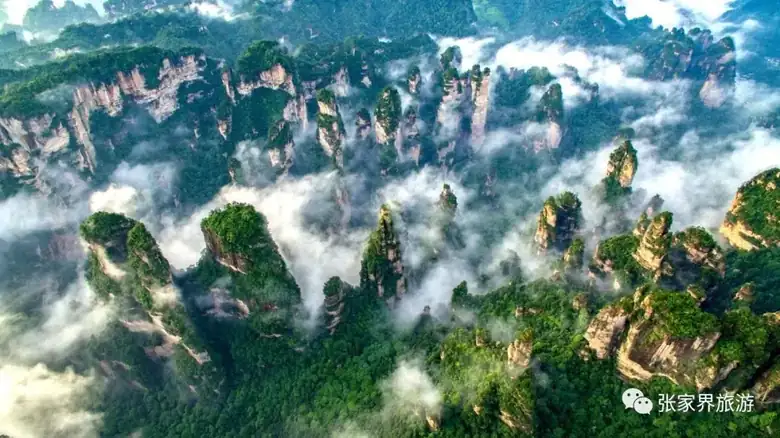
A jade dragon is locked in a ten-thousand-foot-deep ravine. A hundred zhang (approximately 33 meters) of cliffs remain, their beauty etched in history, their two sides piercing the white clouds.
This poem about Zhangjiajie, written by an unknown author, perfectly captures my most direct impressions of Zhangjiajie over the past two days.
I have seen the mountains of Zhangjiajie in many places. Their unique shapes, towering peaks, and continuous, undulating mountain ranges, coupled with the clouds and mist shrouding the mountainsides, are just like a timeless ink painting. They are the most quintessentially Chinese and best represent the mountain ranges that people abroad think of in China. Therefore, foreign tourists flock to Zhangjiajie Wulingyuan from all over the world just to witness the enchanting Chinese scenery.
Itinerary:I spent two days in Wulingyuan, Zhangjiajie. The first day I explored the mountain area, and the second day I explored the lower part of the mountain. The itinerary for the two days was roughly as follows:
Day 1:
Enter from Tianzi Mountain Ticket Station – Environmental Protection Bus (10 min) – Three-way Intersection – Environmental Protection Bus (25 min) – Yangjiajie (visit Wulongzhai, Tianbo Mansion, etc.) – Environmental Protection Bus (8 min) – Yuanjiajie (the prototype of the First Bridge Under Heaven Floating Mountain, Enchanting Terrace) – Bailong Elevator Upper Station Ticket Station – Bailong Elevator Lower Station – Environmental Protection Bus (30 min) – Exit from Wujiayu Ticket Station
the next day:
Wujiayu Ticket Station – 30-minute shuttle bus ride – Ten-Mile Gallery tour – 10-minute shuttle bus ride – Water Surrounds Four Gates – Hiking along the Golden Whip Stream (2.5 hours) – Exit at Forest Park Ticket Station
The core scenic area of Zhangjiajie is Wulingyuan Scenic Area. Many people say that if you go to Zhangjiajie but don't visit Wulingyuan, you've missed out on Zhangjiajie. So if you're planning a trip to Wulingyuan in Zhangjiajie, make sure you get plenty of rest and conserve your energy. Before you go, read this Zhangjiajie travel guide to learn about what the fairyland of Wulingyuan is like, and then embark on your journey.
Our first day's itinerary was mostly on the mountain. After arriving at the Tianzi Mountain ticket station from the hotel, we took an eco-friendly bus to the lower station of the Yangjiajie cable car. From there, we took the cable car straight up into the clouds to reach Yangjiajie. From here, you can begin to appreciate the unique and breathtaking scenery of Yangjiajie.
This is the closest scenic spot to the Yangjiajie cable car station, called the "Natural Great Wall." At first, I didn't quite understand it, wondering if there was a Great Wall inside Zhangjiajie. But when I hurried to the viewing platform, I instantly understood. It turns out that a cluster of mountains in the distance suddenly rises up from the flat ground like a wall, and from a distance, the shape of the mountain peaks connected together looks just like our Great Wall, hence the name "Natural Great Wall."
Sometimes one can't help but marvel at the unique shapes of the mountains in Zhangjiajie. The mountains we usually see are pyramid-shaped, but most of the mountains here rise abruptly from the ground, piercing the clouds without any buffer.
After leaving the "Natural Great Wall," we headed straight for Wulong Village. Along the way, we saw a particularly cute little monkey. It was sitting horizontally on a tree branch, constantly bobbing up and down and shaking the branch. When it got tired of shaking, it gracefully sat down on the branch to rest. Judging from its expression, it seemed a little unhappy.
After navigating the narrow path and climbing the steps, we arrived at Wulongzhai. Located in a remote and treacherous area, Wulongzhai is surrounded by cliffs on all sides, with only one path leading up and down. Its strategic location makes it a place where "one man can hold the pass against ten thousand." During our ascent, we truly felt the perilousness of this pass; even my old, inactive arms and legs were starting to give way.
Tianbo Mansion is located not far from Wulong Village, but it is not connected to Wulong Village. To get to Tianbo Mansion from Wulong Village, you need to climb the iron ladder on the rock wall.
I must say, if you're not brave enough, it's best not to go up there. The iron ladder is really steep, and one of the ladders is suspended in the air. My calves were a little weak when I was climbing it.
Standing in this small pavilion of Tianbo Mansion, you can admire the four naturally formed stone walls, row upon row, piece upon piece, like a battle formation, like soldiers lined up, standing tall like city walls, magnificent and beautiful, with a vast and open space, strange peaks and strange rocks, a natural wonder.
Many people who hear the name Tianbo Mansion before coming to Zhangjiajie assume that it is a mansion built in the mountains. However, this is not the case. Tianbo Mansion in Yangjiajie refers to one of the mountain peaks.
It must be said that the adventure of climbing to Tianbo Mansion was well worth it. The surrounding mountains seen from here are completely different from those seen during the short stops along the way. Under the open view, these mountains, which stand like bamboo shoots, display their own unique charm, some dense, some precipitous, some strange, and some understated. Each one is different and has its own unique style.
Returning along the same route, the descent is more difficult than the ascent. So here's a friendly reminder: if you're going to Zhangjiajie, it's best to bring hiking poles or similar items, as they can help you conserve a lot of energy.
Upon arriving at the Yangjiajie bus stop, we took a bus to Yuanjiajie. It was already noon, and the flowers next to the parking area were in full bloom, looking vibrant and beautiful in the sunlight. After a simple lunch and a short rest, we headed to our next destination, Yuanjiajie.
The name Yuanjiajie is said to have originated in the Later Tang Dynasty. After the failure of Huang Chao's uprising, the imperial court, in order to thoroughly eliminate the rebels, posted notices everywhere to capture the rebels. One of Huang Chao's generals, surnamed Yuan, came to this remote and secluded mountain area—Qingyan Mountain—to evade capture. He built a hut there, cultivated the land, and named the place after his own surname, "Yuanjiajie".
Standing on the viewing platform of Yuanjiajie Scenic Area, one can take in the panoramic view of three thousand unique peaks, majestic, precipitous, beautiful, and wild, each with its own distinct appearance. Deep within the canyons, hundreds of stone peaks and pillars rise abruptly in magnificent splendor. Steep rocks resemble valiant generals; towering peaks resemble brave warriors. Vivid and expressive, seemingly still yet in motion, their lifelike forms appearing almost leapt to life.
There are many famous scenic spots in Yuanjiajie, among which the most famous ones are probably the "First Bridge Under Heaven", "Hallelujah Floating Mountain" and "Enchanting Terrace".
The "First Bridge Under Heaven" is one of the "Ten Wonders of Zhangjiajie." It is also a landmark attraction of Yuanjiajie. It is a natural stone bridge formed between two mountains. The two mountains were originally one, and the bridge is the key part connecting them. However, due to the relatively thin stone in the middle, the bridge was formed by weathering, collapse, sun and rain, water erosion, and mountain torrents over time, eventually creating this special wonder that we see today.
The Hallelujah Floating Mountains enjoy immense fame both domestically and internationally, all thanks to the film *Avatar*, which still holds the record for the highest-grossing film worldwide. It's fair to say that *Avatar* played a significant role in introducing many international tourists to Zhangjiajie.
In December 2008, Hollywood photographer Hansen conducted a four-day location shoot in Zhangjiajie. Many of the landscape photos later became the prototypes for various elements of the "Pandora" planet in the American science fiction blockbuster "Avatar". Among them, the "Southern Sky Pillar" photo became the prototype for the "Hallelujah Mountain", that is, the floating mountain.
There's another particularly interesting mountain here, the one in the photo that looks like four people standing side by side. I didn't find it strange at the time, until the uncle next to me said, "Look at these four side by side peaks, don't they look like the portrait on the old RMB banknotes?"
Indeed, human imagination is often boundless. After this uncle's explanation, when I look at this mountain peak again, all I can think of is RMB (Chinese currency)...
During my trip to Zhangjiajie, besides being amazed by the spectacular scenery, my biggest impression was the sheer number of foreign tourists from all over the world, with the largest number being from South Korea.
I once watched a variety show where the guests were a Korean girl group. They said that Zhangjiajie is one of the must-visit attractions for Koreans when they come to China because it is very famous in Korea and represents their ideal image of China. They said that if Koreans come to China for tourism and don't visit Zhangjiajie, they would feel embarrassed to talk about it when they go back home.
Of course, there's bound to be some exaggeration in these statements, but they do reflect Zhangjiajie's popularity in South Korea. From a Chinese perspective, Zhangjiajie's mountains are already breathtaking enough, but for foreign friends who have little experience of Chinese culture, seeing the misty, fairyland-like Zhangjiajie might elicit an exclamation of "Oh my god!"
Continuing a short distance past the Hanging Mountain, you arrive at the Enchanting Terrace. Some say it's Zhangjiajie's best natural viewing platform, named for the mesmerizing beauty that captivates the soul upon standing upon it. Seeing it today, it's certainly true; the name "Enchanting Terrace" is well-deserved. Standing atop the rugged platform, one can take in a breathtaking panorama. The rocky peaks and pillars resemble tables, chairs, buildings, and pavilions, their shapes strange and wondrous.
Hundreds of stone peaks stand silently in the canyon, piercing the blue sky, like soldiers in formation or a gathering of wise men, each with its own unique posture and extraordinary grandeur. Beautiful scenes such as "Heavenly Dog Gazing at the Moon," "Seashell Emerging from the Water," "Generals in Formation," and "A Pillar Supporting the Sky" are arranged in an orderly manner by the mountain hollows and barriers, making these stone peaks appear even more densely packed and spectacular.
In my personal opinion, this is the place that best represents the charm of Zhangjiajie that I saw today. The mountains here are not only numerous, but also have different shapes and unique characteristics.
After leaving the Enchanted Terrace, we took the Bailong Elevator down the mountain. The construction of the Bailong Elevator has achieved the goal of "touring on the mountain and staying at the foot of the mountain," providing transportation security and bringing the breathtaking scenery of Yuanjiajie's First Bridge Under Heaven, Enchanted Terrace, Sky-Hanging White Silk, Wulongzhai, Yangjiajie, and other scenic spots from behind the scenes to the forefront. It has also connected the boutique tourist routes of Tianzi Mountain, Yuanjiajie, and Golden Whip Stream, solving the transportation bottleneck problem that has plagued the scenic area for many years.
It must be said that the Bailong Elevator, which cost a lot of money, is still very valuable.
That concludes the first day's itinerary. If I had to describe my feelings about the day in a few words, I would say: awe-inspiring, fulfilling, and tiring.
The area of Wulingyuan in Zhangjiajie is simply too vast. Even with our pre-planned route, we could only visit the Yangjiajie and Yuanjiajie areas. We didn't have time to explore many places on the mountain and had to say goodbye in a hurry.
After hiking the mountain route on the first day, our route on the second day was mainly at the foot of the mountain. Compared to the ups and downs of the mountain, the ups and downs were definitely much easier. In fact, when I woke up on the second morning, my legs were noticeably sore. So, walking along the stream at the foot of the mountain was a very nice option.
Today's main destinations are the Ten-Mile Gallery and the Golden Whip Stream.
The Ten-Mile Gallery is a long and beautiful canyon in Zhangjiajie. This scenic area is 5 kilometers long, similar in length to the Golden Whip Stream, but unlike the Golden Whip Stream, it's connected by a mini-train, saving walking time. The mini-train is semi-enclosed, and the staff are exceptionally friendly and diligently maintain order. The train plays audio guides throughout the journey, pointing out the surrounding scenery and explaining the legends behind the rocks and their shapes. I found this quite helpful; otherwise, without a vivid imagination, one might not be able to see what they're looking for.
As we rode the sightseeing bus along the Ten-Mile Gallery, we saw many interesting and vividly depicted mountain peaks on our left. Although it only lasted a few minutes, it was a very enjoyable experience.
The Golden Whip Stream is 6.5 kilometers long and runs through the forest park from west to east. The two banks are lined with strange peaks, the scenery is picturesque, and the playful birds and animals, ancient trees, and leisurely fish make the scenery exceptionally tranquil.
Of course, the Jinbian Stream isn't very full at this time of year; the water level will likely rise significantly after the summer rainy season. Even though the water level is low, the scenery is still quite beautiful. The babbling water flows down the riverbed, crashing against the jagged rocks and splashing up white foam – it's refreshing and lovely. Combined with the lush greenery on both sides and the moss-covered rocks exposed above the water, the stream is vibrant and full of springtime charm.
The area through which Jinbian Stream flows is hailed as "the most beautiful canyon in the world." It boasts numerous scenic spots, such as Drunken Arhat, Divine Eagle Protecting the Whip, Jinbian Rock, Flower and Fruit Mountain, Water Curtain Cave, Splitting the Mountain to Save Mother, A Thousand Miles Meeting, Nanmu Ping, and Water Surrounding Four Gates. Many of these scenic spots have their own stories and legends, and it is these legends and stories that make these attractions even more vivid and interesting.
Today's itinerary felt more like living in the suburbs of the city, with a pace of life that was neither too fast nor too slow. Perhaps I didn't get as much as urban white-collar workers, but I was very content, content with this lifestyle and this pace of life.
Walking the entire Golden Whip Stream would probably take more than four hours, so we didn't finish the whole trip. We started heading back after reaching the point where "a thousand miles meet." There were quite a few tourists on the way, and most of them looked tired, but their spirits were still high, and they were practically flying along the path.
I had heard of Zhangjiajie long ago and knew how beautiful and breathtaking some of its scenery was, but I had never been able to see it with my own eyes.
Although I didn't get to witness Zhangjiajie at its most beautiful moment, I still think it was all worthwhile. Of course, this Zhangjiajie Wulingyuan travel guide isn't particularly detailed, and there are many places I haven't included. I'll leave those regrets for my next trip to Zhangjiajie.
Travel information can change. Check current opening hours, reservations and entry requirements before you travel.

Traveller discussion
Start the conversation with a helpful tip or a question.