
[Wuyishan Self-Guided Tour] Tickets, attractions, and travel routes have all been compiled for you!
Wuyishan, located in northern Fujian Province, is one of the first batch of excellent tourist cities in China, a national key scenic spot, a national key nature reserve, a national tourist resort, and a national first-class air port. It was also listed as a UNESCO World Natural and Cultural Heritage site on December 1, 1999. The area boasts stunni…
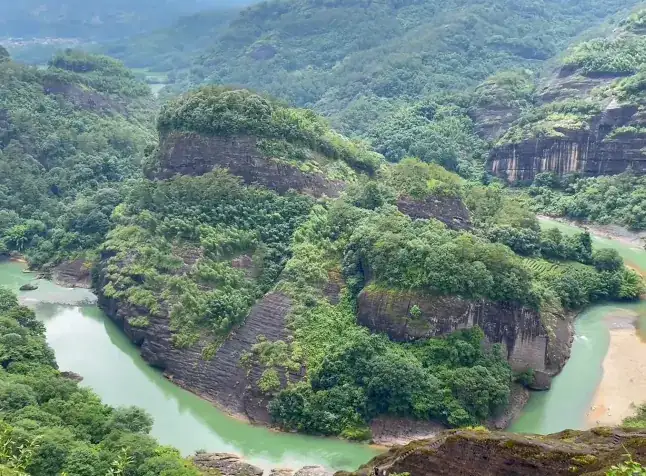
Wuyishan, located in northern Fujian Province, is one of the first batch of excellent tourist cities in China, a national key scenic spot, a national key nature reserve, a national tourist resort, and a national first-class air port. It was also listed as a UNESCO World Natural and Cultural Heritage site on December 1, 1999. The area boasts stunning scenery, rich cultural heritage, numerous historical sites, and abundant resources. With an average annual temperature of 17℃-19℃, it is suitable for tourism year-round.
Wuyishan boasts the most complete and best-preserved Danxia landform on Earth. The peaks and rocks, originally crimson, have been eroded by wind and rain to a lighter shade of burgundy and reddish-brown, displaying a majestic and robust beauty amidst the verdant landscape. The Wuyishan Scenic Area covers 70 square kilometers, dotted with numerous peaks and rocks, each resembling a sword or a scepter, covered in clusters of pine and bamboo, and shrubs, showcasing a vibrant vitality. A simple and elegant bamboo raft ride down the Nine-Bend Stream offers breathtaking views of strangely shaped rocks and peaks, cliffside coffins, cliff carvings, pavilions, and courtyards, allowing visitors to experience the timeless beauty of nature's artistry and human craftsmanship, as if far removed from the hustle and bustle of the world, and immersed in a fairyland.
Wuyishan preserves the most typical, largest, and most complete subtropical primary forest ecosystem at the same latitude in the world, making it a key area for global biodiversity conservation. It boasts 3,728 known plant species and 5,110 known animal species, and the nature reserve is renowned as a "bird paradise," a "snake kingdom," and an "insect world." Wuyishan's rich germplasm resources have long attracted the attention of scientists and research institutions both domestically and internationally, with numerous specimens collected from Wuyishan housed in world-renowned museums in London, New York, Berlin, Hawaii, and other locations.
Wuyishan boasts a rich historical and cultural heritage. On its remote cliffs, the "coffin-like structure built over three thousand years ago" and "rainbow bridge planks" remain. The Minyue King City in Chengcun is the best-preserved ancient Han Dynasty city in southern China. During the ancient Han Dynasty, Wuyishan was designated as a famous mountain and river. In the Tang and Song Dynasties, it was listed as the 16th Taoist Grotto-Heaven. During the Southern Song Dynasty, Zhu Xi wrote and lectured in Wuyishan for more than 40 years, making it the cradle of Zhu Xi's Neo-Confucianism. In the Qing Dynasty, it was listed as one of the "Eight Famous Mountains of China" for Buddhism.
Wuyi rock tea, blessed with a unique geographical environment, possesses a distinctive "rocky charm" and is of exceptional quality. It entered the imperial court in the Song Dynasty and was listed as a tribute item in the Yuan Dynasty. Both black tea and oolong tea, two of the world's six major tea categories, originated in Wuyi. The "Da Hong Pao" tea, considered the king of teas, is a supreme grade, renowned both domestically and internationally. Wuyi tea culture has a long history and its fragrance spreads far and wide, making it a gem in the world's tea culture treasure trove.
Wuyishan Ticket Information
Peak season (March-November): Ticket price is 140 RMB, valid for 3 days.
Off-season (December to February of the following year): Ticket price is 120 RMB, valid for 3 days.
Wuyishan Itinerary Planning
Classic 3-Day Tour Itinerary
Day 1: Morning: Tianyou Peak → Afternoon: Wuyi Palace, Song Street → Evening: Impression Dahongpao Live Performance
Day 2: Morning bamboo rafting on the Jiuxi River → Noon at Dahongpao Scenic Area → Evening stroll along the Yangu Flower Fragrance Trail
Day 3: Qinglong Waterfall → Xiamei Ancient Residence
✅️klook Quick Guide: [China Railway Tour] Fujian Wuyishan & Jiuxi River 2-Day Tour (Jiuxi River Bamboo Rafting Experience + Complimentary Specialty Meal)
Two-day tour itinerary
Day 1: Morning: Tianyou Peak → Afternoon: Wuyi Palace, Song Street → Evening: Impression Dahongpao
Day 2: Morning: Jiuxi River rafting → Dahongpao Scenic Area → Yangu Flower Fragrance Trail
Day trip itinerary
✅️One-day bamboo rafting tour on the Jiuxi River in Wuyishan National Forest Park, Fujian (optional Impression Dahongpao live performance).
Recommended Foods in Wuyishan
Although Wuyishan belongs to Fujian, people there like spicy food and their cuisine is more like that of Jiangxi.
✅Lan Gu Smoked Goose
Almost every restaurant has it. We found a popular restaurant called "Ju Yin Jia" next to Bu Zhi Chun Zhai. It was very cheap with a group purchase deal. The taste was average, nothing amazing, but the dining environment was nice.
✅ Guangbing Dachang
It's also from Ju Yin's family. The light pancakes are delicious, but I don't like the large intestine.
✅Lotus Root Lion's Head
The food at Xiaoqi's shop completely changed my impression of lion's head meatballs. It was really delicious, highly recommended!
✅Purple Creek Powder
I was always curious whether Zixi rice noodles were purple, but later I learned that Zixi is a place name. Zixi rice noodles are just the rice noodles we usually eat, nothing special.
✅ Da Hong Pao Ice Cream
I bought it on Song Street. It cost 20 yuan. It's quite big, but a bit expensive. The taste is okay.
Wuyishan Scenic Spots
Tianyou Peak
Climb Tianyou Peak
Upon arriving at the South Gate of the scenic area, take the scenic area bus to Tianyou Peak. Tianyou Peak is a major attraction on the southern route of Wuyishan. Entering the scenic area from the South Gate, Wuyishan in December is still quite cold. Fortunately, the visitor center provides hot water, hot meals, and places to store bags. After ticket inspection, go to the boarding center, where there is also a corridor that provides shade and shelter from the rain.
It takes about 10 minutes to take a bus from the south gate of the scenic area to the Tianyou Peak stop. After getting off the bus, you still need to walk 850 meters to reach the foot of Tianyou Peak, which takes more than half an hour. The scenery along the way is very beautiful, and you can turn back at any time. Once you get up the mountain, it is a one-way street, only going up and not down. To go down the mountain, you need to cross the highest point and go down from the back of the mountain.
The scenery on the bridge is beautiful, with views of the stream on both sides. Bamboo rafts pass under the bridge, and there are many shallow beaches between the two mountains.
From Chadong, the mountain path to Tianyou Peak begins. The ascent is steep, and while steeper paths are more difficult, they also save time. Wear comfortable shoes and remember to watch your step. Don't take photos, as some steps are very narrow, barely wide enough for one foot. Focusing on your footing will help alleviate any fear of heights.
The scenery along the way to Tianyou Peak is truly beautiful. There's a pavilion about a third of the way up, offering a panoramic view of the area below. The rest of the path is the most challenging, the legendary steep ascent that only allows one person to pass at a time.
Hiking is really physically demanding, so I recommend bringing some snacks to replenish your energy. If there aren't many people, it should only take about 15 minutes to reach the summit after climbing the remaining two-thirds.
At the top of the mountain, there are places to drink tea and sell food, as well as a pavilion. After a short rest, you can descend the mountain from the back of the pavilion. The back mountain also has ups and downs, but it is much easier to climb than the front mountain. There will be a fork in the road, with two paths. You can go directly up the stairs and walk on the path, or you can take the leisurely walking path. If you are afraid of the path, you can try the leisurely walking path. You can still see the Nine-Bend Stream from the middle of the mountain, and the scenery is quite nice.
The image above shows a fork in the road. The upward stairs are the shorter route, while going straight is the longer route.
The mountain path is easy to walk, and even in the light rain, it doesn't feel difficult. You can easily descend the mountain, although the scenery is not as good as that of the front mountain. If you're fast, you can get down the mountain in 15 minutes.
After circling around, we returned to the large lawn we had just climbed.
On the way back to the South Gate from Tianyou Peak, you can stop at Yunu Peak. The Yunu Peak - Huxiaoyan - Yixiantian route also starts from here. If you don't want to hike, you can go through the underground passage to the viewing platform to take pictures of Yunu Peak.
The Jade Maiden Peak viewing platform is flat and offers a great vantage point for viewing the peak. Legend has it that Jade Maiden Peak and King Peak face each other across the river like a pair of lovers gazing tenderly at each other. Jade Maiden Peak features the strange rock formations of Rabbit Ear Ridge. It is one of the typical columnar mountains of Wuyi Mountain, with two vertical joints dividing the columnar structure into three sheared rocks of increasing height, resembling three beautiful jade maiden sisters standing side by side. Bamboo rafts pass through here. Further ahead is the viewing platform of Wanchun Garden.
Nine-Bend Stream
Take a trip on the Nine Bend Stream
The Jiuxi River Scenic Area covers an area of 5.18 square kilometers. It is a small river formed by the confluence of hundreds of streams from the three hundred mountains of Anyuan County, flowing into Dongfeng Lake. The river meanders through the mountains, creating several sharp bends. Shallow beaches and deep pools appear one after another. The river is flanked by towering peaks and dense forests, creating a visually enclosed space that often makes it difficult to discern the direction of the water. The scenic area includes attractions such as Twin Peaks, Plow Peak, Master's Chair Spring, Fishing Hook Pool, Iron Slab Rock, Giant Clam Emerging from the Water, Immortal Finger Peak, and Divine Crocodile Swimming Pool.
The starting point for bamboo rafting is the best spot for taking photos. The terrain here is relatively flat, allowing you to take pictures of the bamboo rafts even without taking a ride. You can also take aerial photos from above, capturing the rafts swimming in the water. The heavy rains of the past few days have washed a lot of silt down from upstream, creating a green and yellow hue that adds a touch of ruggedness to the beautiful Wuyi Mountains.
Besides its delightful interplay of gentle and rapid currents, the most important aspect of the Nine Bend Stream lies in the many different shapes that the mountains on both sides appear to take on when viewed from the water, giving rise to fascinating legends and stories. Over the centuries, scholars and writers have left numerous stone carvings on the cliff faces, but even more mysterious are the suspended coffins built into the cliffside – the method of their construction remains a mystery for thousands of years.
The Nine Bend Stream is located in the southern part of the Wuyishan Scenic Area, running east-west through the area and flowing among numerous unique peaks. It thus concentrates the essence of the mountain and water landscape, connecting them into a unified whole. It's said that a trip to Wuyishan is incomplete without taking a bamboo raft. Sitting on the boat, you can enjoy the scenery: lush vegetation on both banks, verdant trees and bamboo, and clear, flowing water. Counting back and forth, you'll pass through the Nine Bend, Eight Bend, Seven Bend, Six Bend, Five Bend, Four Bend, Three Bend, Two Bend, and finally reach the end of the First Bend, where it merges into the Chongyang Stream.
Before boarding the bamboo raft, wear a disposable raincoat and shoe covers. It's best to put your phone in a waterproof bag and hang it around your neck. The 30-minute sightseeing trip on the water involves many winding bends and downhill sections. If you want to take pictures of the Nine-Bend Bamboo Raft, there are many other places besides the pier. You can take pictures along the way up the mountain path to Tianyou Peak. The Fish Viewing Platform in Wanchun Garden is the last bend of the Nine-Bend Bamboo Raft. The pier behind Song Street is where you disembark, and you can also take pictures there.
If you're taking a bamboo raft, you can board at the cruise ship terminal. If you're buying a ticket for the scenic area's shuttle bus, there's a stop here. There's also public transportation here; take bus number 9 and get off at Xingcun terminal or Jiuqu Wharf station. There are many tea gardens nearby, making it a great place for taking photos. When I came, I also saw many people camping here.
Dahongpao Scenic Area
Tea grows in the mountains, including the king of teas, "Da Hong Pao".
The Da Hong Pao Scenic Area on the northern route is a must-visit attraction in Wuyishan. Many people come here specifically to see the original Da Hong Pao mother trees. After entering the scenic area from the entrance, you walk along the winding stream and through the vast tea garden. Next to the three prominent characters "Da Hong Pao" on the cliff are three original Da Hong Pao mother trees. Although they are not as towering as you might imagine, they are still impressive enough to make you look up in awe.
The original Da Hong Pao tea trees are known as the "King of Teas." These six original Da Hong Pao tea trees can only produce about 20g of tea leaves each year, making them extremely rare. Each tea leaf is imbued with the spirit of the mountains and rivers and absorbs the essence of the sun and moon. Those who have tasted it praise its indescribable flavor.
On the cliff where the tea trees grow, there is a narrow crevice in the rock, from which spring water drips year-round. The spring water contains moss and other organic matter, making the soil moist and fertile. The steep cliffs on either side of the tea trees provide limited sunlight and stable temperatures. Combined with the meticulous care of the tea farmers, and the fact that the best tea masters are always present during harvesting and processing, using specially made equipment, the finished Da Hong Pao tea possesses unique quality and special medicinal properties. Jiulongke is filled with clusters of famous tea bushes, earning it the title of a kingdom of tea trees.
If you're interested in Da Hong Pao tea, you can catch a performance in the evening. "Impression Da Hong Pao," directed by Zhang Yimou, is the world's only large-scale outdoor performance showcasing Chinese tea culture. With its 360° rotating audience seating, the stage visuals are truly stunning. The performance mainly tells the story of Da Hong Pao's origins, tea history, tea-making techniques, and the love myth of Jade Maiden Peak and King Peak.
"Impression Da Hong Pao" presents the profound and rich tea culture through art, condensing the beautiful natural landscape into a high-level artistic feast, making it a truly tangible and experiential cultural tourism project. It showcases the diverse "mountain, water, and tea" culture of Wuyi to audiences around the world.
Zhizhi'an
Visit Zhizhi Nunnery
This place, hidden in the city yet secluded in the countryside, is really hard to find if it weren't for the road signs, but once you've been there, you'll feel it's worth the trip. It's great for taking photos, with winding paths leading to secluded spots, and you can even see red-eyed fish along the way. It's also an excellent spot to view the Jade Maiden Peak.
It's not a popular tourist attraction in Wuyishan, and many trendy routes don't include it. It exists quietly, unnoticed, following its own inherent rhythm. This temple, dating back to the Song Dynasty, retains its natural features: peeling paint, overgrown greenery, and moss on every stone. Compared to other tourist spots that have been excessively artificially created, its roughness and simplicity are more genuine.
You can take a bus to Wuyigong Station, enter the palace gate, walk straight to the end, and turn left to enter the Wanchun Garden Scenic Area. If you have plenty of energy and time, you can climb Dawang Mountain first. If you don't want to climb the mountain, just walk straight after entering the scenic area.
This route is from Wuyi Palace to Wanchun Garden, then to Guanyu Terrace, Zhizhi Nunnery, and finally to Shuiguangyan. It takes about an hour to go round trip. After exiting Wuyi Palace, you can walk all the way back to Sangu Street along the asphalt road.
Chongyang Creek
Take a stroll along Chongyang Creek
The Chongyangxi Promenade route is 5.6 kilometers long, starting from Millennium Hotel – Pinshiyan Road – Impression Dahongpao – Yunhe Night Cruise – World Trade Hotel – Water Show – Jiulong Bay.
Get off at the bus stop in front of the Millennium Hotel, walk 100 meters along the path next to the hotel to reach the boardwalk by the stream, and walk north along the rubberized path to reach the first landscape feature:Auspicious Clouds
Located south of the Dahongpao Theater, the Ruicai Xiangyun Platform is inspired by the famous cloud and mist landscape of Wuyi Mountain. The platform is circular with a radius of about 8 meters and a height of about 2.1 meters. Through its graceful curves and white perforated panel railings, the platform appears to float like auspicious clouds over the Chongyang River, with different views at different distances and heights. As you walk around it, the scenery changes with every step.
The warm winter sun bathed the rubber track and the babbling brook in golden light. At 5 p.m., just as the sun was setting, the afterglow of the sunset made the entire brook sparkle. If the weather is clear, this spot faces west and you can see a beautiful sunset.
From Ruicai Xiangyun, you can walk along the Chongyangxi Trail, or you can go back to where you got off the bus and walk back to the Tea Museum. The road in front of the wooden boardwalk is blocked by the Dahongpao Theater. During the day, the theater's gate is open and you can pass directly. However, if the gate is closed at night, it is recommended to go back to Dawangfeng Road and take a detour.
After passing the Da Hong Pao Theater, the second scenic spot:The King Returns With a diameter of 12 meters and a height of 6.5 meters, the Great King Peak is framed by a Möbius strip, creating an illusion of time and space intersecting. You must come to photograph this landscape before sunset and place the sun in the center for a fantastic perspective effect.
Walking along the Chongyang River, the surrounding green environment is excellent, and there are also play equipment suitable for children. People are fishing and washing clothes on the bank, and many joggers and fitness enthusiasts pass by. During my few days in Wuyishan, I would come to Chongyang River for a walk whenever I had time. Compared to the scenic spots, more locals like to come here to play. The slow pace of life here makes you feel that life is peaceful and you will fall in love with this city.
Located south of Zhu Zi Ferry, the Rainbow Bridge is the third viewing platform. A colorful bridge stretches across the Chongyang River, and with the morning mist, it looks like a ladder to the sky leading to Manting Peak, dreamlike and magical. At night, when the lights are on, it becomes a magnificent rainbow over the Chongyang River.
After passing Lantang Bridge, the Chongyangxi Trail continues, inspired by the rare silver pheasant, a national second-class protected animal. It reflects the beautiful scenery of Wuyishan, the good natural ecological environment, and the ecological civilization of harmonious coexistence between humans and animals, while also conveying the artistic conception of "silver pheasant reflected in jade pool".
The "Fragrant Tea of Fortune" viewing platform is inspired by traditional tea-making tools such as the roasting basket and the shaking tray. This is the fifth viewing platform on the Chongyang Creek Trail. "Fortune Tea" refers to tea from Fujian, a tea symbolizing good fortune. The character "福" (fortune/blessing) represents both the continuation of ancient civilization and an expectation for future life. The platform is both a teahouse and a viewing platform, comprising a 4.5-meter-high teahouse and a 12.5-meter-high roasting basket viewing tower, connected by a bridge, with a total building area of 220 square meters. The entire structure is made of steel and covered with bamboo-colored paint, blending harmoniously with the surrounding environment. The teahouse's all-glass facade reflects light and shadow through the trees, creating a fusion of traditional culture and modern art.
The last viewing platform is the Nine-Bend Boating Platform, located on the northern section of Chongyang Creek in the Sangu Resort Area. The design is inspired by the light and graceful bamboo rafts on the Nine-Bend Creek. Two viewing platforms of different heights are set up on the banks of the creek, facing Sanyang Peak and Chongyang Creek respectively. The higher platform offers a distant view of Sanyang Peak, while the lower platform allows for a close-up view of Chongyang Creek.
Walking the entire Chongyangxi Trail wasn't tiring at all, perhaps because of the beautiful natural scenery along the way. There were famous Wuyishan peaks such as Sanyangfeng, Sangufeng, Mantingfeng, Dawangfeng, and Yunufeng, as well as man-made landscapes that could be used for taking photos. At night, the trail was brightly lit, adding more options for nighttime tourism in Wuyishan. Besides watching performances at the Dahongpao Theater, if you have time, visiting the Chongyangxi Trail can also give you a refreshing experience.
Wuyishan Accommodation Recommendations
Sangu Resort Area:Convenient transportation, close to scenic spots, and easy access to restaurants. A variety of guesthouses are available, ranging from 200-500 RMB, such as Shanshui Mingyuan (quiet and artistic), Jiujie Senhuo, and Wuyishan Yinmo; for a more upscale option, there's Yue Shui Zhuang Garden Villa Hotel.
Lantang Village:Located at the foot of Dawang Peak, the accommodation offers good value for money and beautiful views of Dawang Peak.
Nanyuan Ridge:The area mainly consists of guesthouses, located about 2.5 kilometers from the south entrance of the scenic area. It is convenient for those driving, with an average price of 150-300 RMB. For higher-end options, we recommend Yuehua Hotel and Jiayeshanshe (budget over 1000 RMB, offering views of the tea plantations).
Deren Inn Hotel
Address: No. 13, Liuxiangjian Road, Resort Area
✅️Special offer booking: Trip
Deren Inn Hotel, a small courtyard, a group of enthusiastic people, together tell the story of Wuyishan's gentleness and loveliness, giving you a tranquil yet colorful travel experience.
Wuyishan Natural Homestay
Address: No. 21, Nanyuanling Village
The Tianranju Inn in Wuyishan is described as follows: "Guests who visit Tianranju are truly guests from heaven." This is the first line of a couplet that Emperor Qianlong composed when he visited the Tianranju restaurant, praising the elegance of the name. However, the Tianranju Inn in Wuyishan has a different flavor. When you check in, you might as well try to come up with a matching second line.
Wuyishan Hotel
Address: No. 52, Mantingfeng Road, Resort Area
✅️Special offer booking: Trip
Wuyishan Hotel, synonymous with a good night's sleep, offers a luxurious accommodation environment, a tranquil oasis amidst the bustling city, and a uniquely advantageous location. Gather with a few close friends, sit around a tea table, and enjoy your own private travel time.
Wuyishan Serenity Creekside Inn
Address: No. 165, Xiabinyan Road, Sangu Resort Area
✅️Special offer booking: Trip
Staying at the tranquil guesthouse, you're greeted by the refreshing scent of fresh herbs and trees. Opening the window reveals mountain views, and you can leisurely sip tea – it's the idyllic peace and quiet that those weary of the city's hustle and bustle dream of.
1984 Coffee B&B
Address: No. 37, Block D, Nanyuanling Village
✅️Special offer booking: Trip
1984 Coffee B&B offers a variety of themed rooms, including British, Ancient Egyptian, Bohemian, and Forest styles, to meet all your room needs.
Wuyishan Transportation Routes
External transportation
Friends arriving at "Wuyishan North Station"
You can take the free bus routes 6, 7, 9, or 10 to the entrance of Sangu Resort Area and Wuyishan Scenic Area.
Friends going to "Nanping Station (formerly Wuyishan East)"
You can take the "K1" or "Wuyishan Tram Line 1" to Sangu Resort Area or the South Gate of Wuyishan Scenic Area.
Note:
The Wuyishan Tram passes through Nanyuanling and the south entrance of the Wuyishan Scenic Area, with a one-way fare of 10 yuan. Currently, tickets can be purchased on the "Wuyishan Tram" mini-program, allowing users to select tickets by date or for multiple people, with discounts of up to 50% or more. The Wuyishan Tram also frequently offers free rides on public holidays.
Bus route K1 passes through Nanyuanling, the south entrance of Wuyishan Scenic Area, and Sangu Resort Area, with a one-way fare of 10 yuan. Currently, there are no discounts available.
For choosing a high-speed rail station: If you are heading north to Wuyishan, choose "Wuyishan North Station" (for directions such as Beijing/Shanghai/Nanchang/Hangzhou); if you are heading south to Wuyishan, choose "Nanping Station" (for directions such as Fuzhou/Xiamen/Shenzhen).
Friends going to Wuyishan Airport
You can take bus routes 6, 7, or 9 to the entrance of Sangu Resort Area and Wuyishan Scenic Area.
Currently, Wuyishan Airport has domestic routes to the following cities: Xiamen, Beijing, Xi'an, Qingdao, Jinan, Chengdu, Guangzhou, Shenzhen, and Chongqing.
For those who are driving, we recommend choosing the nearest option, as the "Nine-Bend Expressway" is more convenient.
For those taking a taxi, the journey from the resort area to the north or south entrance of Wuyishan is very convenient, costing only around the starting fare.
Note 1: Except for Route 9 which goes towards Xingcun Town, all other bus routes can go to the resort area, the north and south entrances of Wuyishan Scenic Area, and Nanyuanling.
Note 3: Free rides on the Wuyi Tram will be offered during major holidays. Additionally, in 2026, the Wuyi Tram introduced various ticket options, with eligible passengers potentially receiving a 50% discount.
Note 4: The K1 bus line is not part of the public transportation system in Wuyishan City, so a fee of 10 yuan per trip is required.
Internal transportation
Buses cover most attractions; taxis have a starting fare of 7 yuan; ride-hailing services are more cost-effective; tourist bus lines are charged based on distance; it is recommended to purchase a combined ticket for sightseeing buses within scenic areas.
Travel information can change. Check current opening hours, reservations and entry requirements before you travel.

Traveller discussion
Start the conversation with a helpful tip or a question.