
Ankang City
安康市
Origin of the name: Ankang, known as the "Back Garden of Xi'an," is also called "China's Selenium Valley" due to the rich selenium content in its soil. The name is derived from the auspicious wish for "ten thousand years of abundance, peace, and health." In 280 AD, the Western Jin Dynasty established a new county in the area of present-day Shiqu…
Origin of place name:
Ankang, known as the "back garden of Xi'an," is also called "China's Selenium Valley" due to the rich selenium content in its soil. Its name derives from the auspicious phrase "ten thousand years of abundance, peace, and health." In 280 AD, the Western Jin Dynasty established a new county in the area of present-day Shiquan and Hanyin to resettle refugees from the Bashan region; this county was Ankang County. Thus, the name "Ankang" originated.
Basic introduction:
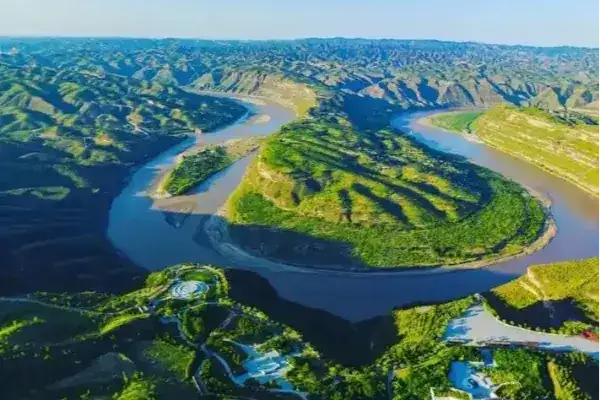
Ankang, formerly known as "Jinzhou," is located in southeastern Shaanxi Province, at the junction of central and western China. It is bordered by the main ridge of the Qinling Mountains to the north and the northern slope of the Daba Mountains to the south, with longitudes ranging from 108°01′ to 110°12′ east and latitudes from 31°42′ to 33°49′ north. Its highest elevation is 2964.60 meters (eastern ridge of the Qinling Mountains), and its lowest elevation is 170 meters (where the Han River exits the city in Baihe County). The city covers a total area of 23,529 square kilometers, accounting for 11.4% of Shaanxi Province's total land area. The Han River, the largest tributary of the Yangtze River, flows 340 kilometers across the entire city. The Qinling Mountains, Daba Mountains, and Han River together form a geographical landscape of "two mountains flanking a river." Ankang is an inland mountainous city primarily engaged in agriculture. The city's total land area is 35.29 million mu, averaging 13.68 mu per capita, including over 6.8 million mu of barren hillsides suitable for afforestation and medicinal herbs. The forest area is 17.61 million mu, with a forest coverage rate of 50.2%. Mountains account for a significant portion of the city's arable land.
View detailed information about Ankang City >>
Honors Ranking:
In January 2026, it ranked 205th in the overall ranking of overseas online influence of Chinese mainland cities in 2025.
In May 2025, the 2025 China City Charm Ranking was released, with Ankang City ranking 277th (a fifth-tier city).
In April 2025, it was named a national model city (county) for supporting the military and giving preferential treatment to families of servicemen.
In May 2024, the 2024 China City Commercial Attractiveness Ranking was released, with Ankang City ranking 273rd.
In October 2023, Ankang City was named one of the third batch of national agricultural product quality and safety cities.
In August 2023, Ankang City was named a model city (county) for supporting the military and giving preferential treatment to families of servicemen in Shaanxi Province.
In May 2023, Ankang City was selected as one of the regions included in the 2023 Home and Community-based Basic Elderly Care Service Improvement Action Project.
In April 2023, the 2023 China City Commercial Attractiveness Ranking was released, with Ankang City ranking 240th.
In March 2023, the Ministry of Human Resources and Social Security announced the list of national demonstration cities for public employment and entrepreneurship services, and Ankang City was selected.
View more honors and rankings of Ankang City >>
Historical background:
During the Xia dynasty, it belonged to Liangzhou.
During the Shang and Zhou dynasties, Yong was a fiefdom, known as "Shangyong".
During the Spring and Autumn and Warring States periods, this area was repeatedly contested by Qin, Chu, and Ba. Chu established Xicheng County four miles west of present-day Ankang City.
During the Qin Dynasty, Xicheng County was established under the Hanzhong Commandery.
During the Western Han Dynasty, the seat of Hanzhong Commandery was moved from Nanzheng to Xicheng County.
In addition to Xicheng County, four new counties were established: Anyang, Changli, Xunyang, and Xi.
In the first year of Jianwu (25) of the Eastern Han Dynasty, the seat of Hanzhong Commandery was moved to Nanzheng County. In the twentieth year of Jian'an (215), Xicheng Commandery was established in Xicheng, and Hanning Commandery was established in Xiyang County of the ancient Hanyin City. It was abolished at the end of the Eastern Han Dynasty.
At the beginning of the Three Kingdoms period, Ankang first belonged to Wei, and later to Shu.
During the Three Kingdoms period, the Wei state reclaimed this area and established Weixing County in the second year of the Huangchu era (221), which belonged to Jingzhou.
Western Jin Dynasty
View detailed historical evolution of Ankang City >>
Travel information can change. Check current opening hours, reservations and entry requirements before you travel.

Traveller discussion
Start the conversation with a helpful tip or a question.