
What restrictions are there for foreigners traveling to Tibet?
What are the restrictions for foreigners traveling to Tibet? Author: Xiao Zhou | Updated: May 25, 2021 Due to Tibet's special status, there are some restrictions for foreigners traveling there, unlike other first- and second-tier cities in China where one can travel freely with just an ID card. Before planning your trip to Tibet, you must be aware…
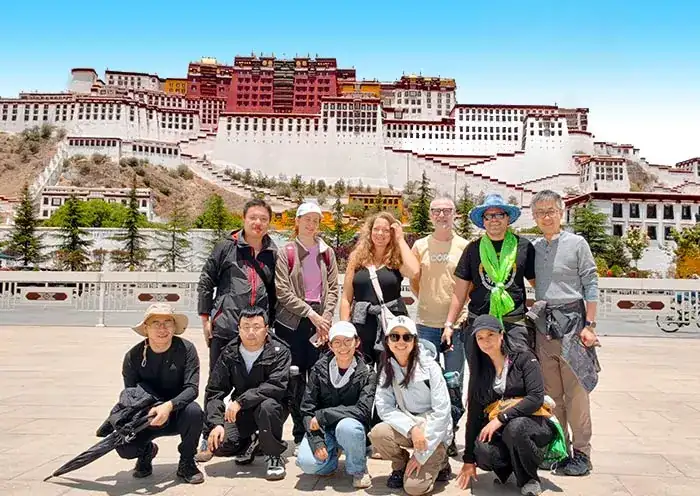
What restrictions are there for foreigners traveling to Tibet?
Author: Xiao Zhou | Updated: May 25, 2021
Due to Tibet's unique circumstances, there are certain restrictions on foreign tourists visiting Tibet, unlike other first- and second-tier cities in China where one can travel freely with just an ID card. Before planning your trip to Tibet, you must be aware of the following restrictions for foreign tourists.
I. Foreign tourists must hold a Tibet Entry Permit to travel to Tibet.
Foreigners traveling to Tibet need not only a valid passport and Chinese visa, but also an Entry Permit (or Tibet Travel Permit) to enter the region. This permit, also known as a Tibet Travel Confirmation Letter or a "Tibet Visa," is issued by the Tibet Tourism Bureau in Lhasa and authorizes you to travel within Tibet. When you arrive in Tibet by plane or train, staff will check your Entry Permit; without it, you will not be allowed entry. Furthermore, travelers cannot apply for the Entry Permit themselves; a travel agency must apply on their behalf.
How do I apply for a Tibet Entry Permit?
1. Contact us to confirm your Tibet travel itinerary. Phone/WeChat: 139 8909 6049;
2. Send us photos or scanned copies of your passport and visa;
3. We will apply to the Tibet Tourism Bureau for your Tibet Entry Permit;
4. After we receive the Tibet Entry Permit, we will send it to you by mail.
II. Foreigners are not allowed to travel independently in Tibet.
According to the regulations of the Tibet Tourism Bureau, foreign tourists cannot travel independently in Tibet; they must join a group tour and be accompanied by a guide throughout the trip. However, when shopping or dining in Lhasa, a guide is not required. You can join a regular tour organized by a travel agency, or you can form your own group and customize your itinerary according to your requirements.
Foreign tourists' trip to Tibet
Third, journalists and diplomats are not allowed to travel to Tibet through travel agencies.
If you are a journalist, diplomat, or media professional and wish to travel to Tibet, only the Chinese Ministry of Foreign Affairs can provide assistance. Travel agencies cannot arrange travel services to Tibet for tourists with these statuses.
IV. Restrictions on Attractions - Some special areas are not open to foreign visitors.
Foreign tourists can visit most attractions in Tibet with the relevant travel documents. A Tibet Entry Permit is required to visit attractions in the Lhasa area. A Foreigner's Travel Permit is required to visit attractions outside Lhasa. A military permit is required to visit areas near the border. In addition, some attractions are not open to foreigners, such as the Yarlung Tsangpo Grand Canyon and Nanyi Valley in Nyingchi, Lhamo Latso and the Tibetan King's Tombs in Shannan, as well as Yadong, Cuona, and Chamdo.
5. Ordinary tourists can only reach the Everest Base Camp near Rongbuk Monastery.
Ordinary tourists can only reach the Everest Base Camp near Rongbuk Monastery and cannot go to the higher Everest areas, but it is enough to enjoy the unparalleled magnificent scenery on the north side of Mount Everest. If you are a mountaineer and want to summit Mount Everest, you must apply for a mountaineering permit from the General Administration of Sport of China and the Tibet Mountaineering Association.
VI. Entry into Tibet is only possible via mainland China or Nepal.
Currently, only mainland China and Nepal have public transportation to Tibet. International flights are limited to Kathmandu-Lhasa, with typically two daily flights during peak tourist season. Domestic flights within China include direct flights from Beijing, Xi'an, Chongqing, Chengdu, and Kunming, as well as flights from Shanghai, Guangzhou, and Hangzhou that stop over in Chengdu, Chongqing, or Xi'an. Trains originating in mainland China to Tibet can be boarded in Beijing, Shanghai, Guangzhou, Xi'an, Chengdu, Chongqing, Lanzhou, and Xining.
7. If traveling from Nepal to Tibet, a group visa is required.
If you wish to travel from Nepal to Tibet, you should apply for a group visa at the Chinese Embassy in Kathmandu. Please note that you cannot apply for this visa in your own country. As a special type of Chinese visa, the group visa also applies to visits to mainland China. After completing your trip to Tibet, you can use the same group visa to extend your journey to other destinations in China. However, you must clearly state your itinerary in the application form. Typically, a group visa takes only 3 working days to obtain.
8. Health Restrictions - Individuals with certain medical conditions are prohibited from traveling to Tibet.
Traveling to high-altitude areas may cause altitude sickness. High-altitude areas are defined as those above 2,438 meters (approximately 8,000 feet) above sea level. Lhasa has an average altitude of 3,650 meters, while Shigatse, Namtso Lake, Mount Everest, and Ngari have even higher altitudes. Most tourists choose to start their journey from Lhasa to allow for gradual acclimatization. Furthermore, individuals with severe colds, severe anemia, high blood pressure, heart disease, or certain respiratory illnesses (including pneumonia, tuberculosis, tracheitis, and bronchitis) should not travel to high-altitude areas, as it could be dangerous. Therefore, it is recommended that you undergo a medical check-up and consult a doctor before traveling to Tibet to determine if you are suitable for high-altitude travel.
Travel information can change. Check current opening hours, reservations and entry requirements before you travel.

Traveller discussion
Start the conversation with a helpful tip or a question.