
Can people with high blood pressure travel to Lhasa? These seven groups of people are not suitable for traveling to Lhasa!
Can People with High Blood Pressure Go to Lhasa? These Seven Groups Are Not Suitable for Traveling to Lhasa! Edited on 2024-08-23 09:41:38. This article will answer a series of questions, including: Can people with high blood pressure go to Lhasa? Who should not go to Lhasa? What precautions should be taken when traveling to Lhasa? This article wi…
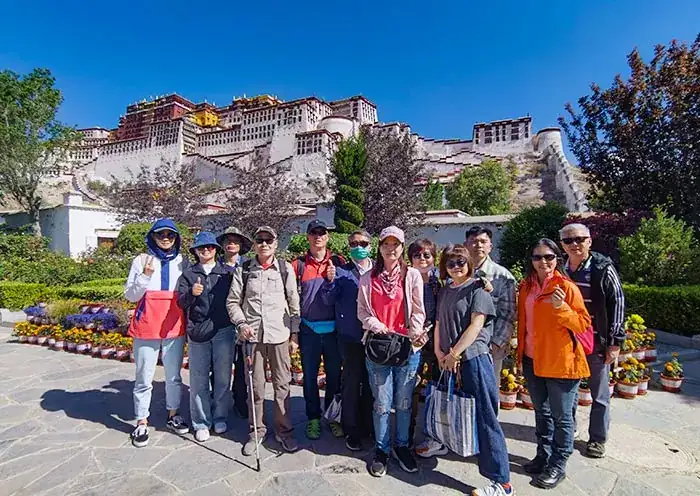
Can people with high blood pressure travel to Lhasa? These seven groups of people are not suitable for traveling to Lhasa!
Edited on 2024-08-23 09:41:38
The beautiful natural scenery and unique cultural customs of Lhasa, Tibet, are often a source of great attraction. However, before planning a trip to Lhasa, many questions may arise, such as: Can people with high blood pressure go to Lhasa? Who should not go to Lhasa? This article will answer these questions one by one, helping you easily understand whether you are suitable to travel to Lhasa and what precautions to take when traveling there.
1. Can someone with high blood pressure travel to Lhasa?
In practice, tourists with high blood pressure are not advised to travel to Lhasa. Lhasa's high-altitude environment can easily trigger high blood pressure and cause altitude sickness. Furthermore, Tibet's overall medical conditions are relatively underdeveloped, and its large size means that if a medical emergency occurs during travel, timely and effective treatment may not be possible. Therefore, people with high blood pressure are generally advised against traveling to Lhasa, Tibet.
Good physical fitness is a prerequisite for traveling in Lhasa.
However, if you really want to travel to Lhasa and your high blood pressure symptoms are relatively mild, such as mild to moderate, and you have no other illnesses, you can consult a professional doctor in advance to confirm whether you can travel to Lhasa. If the doctor agrees, you can travel to Tibet and Lhasa with sufficient preparation, such as carrying high blood pressure medication, a blood pressure monitor, and an oxygen concentrator/oxygen cylinder.
In addition, when choosing a travel route, try to select routes that are easy and have lower altitudes, such as those visiting Lhasa and Nyingchi. For safety reasons, individuals with severe or extremely severe hypertension should avoid traveling to Lhasa, Tibet. Ultimately, health and safety are paramount. If you experience any discomfort during your trip, you must rest and observe; in severe cases, seek medical attention immediately. Only in good health can you fully appreciate the beautiful scenery of Lhasa.
7-Day, 6-Night Group Tour of Lhasa, Nyingchi, Basum Tso, Lulang, Grand Canyon, and Yamdrok Lake
Lhasa-Basum Tso-Nyingchi-Grand Canyon-Lulang-Kading Valley-Lhasa-Yamdrok Lake-Potala Palace-Lhasa
II. Groups of people who are not suitable for traveling to Lhasa
Due to Lhasa's high-altitude geographical environment, it is not suitable for everyone to travel there, especially for those with poor health or serious illnesses. Tourists with the following conditions are advised to consult a professional doctor before considering a trip to Lhasa and should not travel recklessly.
1. People with mental illnesses such as epilepsy or schizophrenia are not advised to travel to Lhasa, mainly because they may not receive timely treatment when an attack occurs, and their behavior is uncontrollable, so they may get lost, which is quite dangerous.
2. People with severe hypertension, heart disease and other cardiovascular diseases, such as coronary artery insufficiency, severe arrhythmia, and various blood diseases, are much less able to adapt to the high-altitude environment than ordinary people. After altitude sickness occurs, it is easy to induce the onset of the disease and there may be some complications. If treatment is not timely, it will endanger their lives.
3. People with various respiratory diseases, such as asthma, bronchiectasis, interstitial lung disease, emphysema, etc., already have difficulty breathing in plains areas. Their breathing difficulties will be even more severe in high-altitude environments with hypoxia. Therefore, it is not recommended for them to go there.
4. People suffering from severe colds, respiratory infections, etc., are advised to wait until they have fully recovered before considering traveling to Lhasa;
5. People with severe gastrointestinal diseases or renal insufficiency may experience loss of appetite in high-altitude environments. This can be quite dangerous for people with severe gastrointestinal diseases, and it is not recommended for them to travel to Lhasa.
6. Individuals with a history of altitude sickness, including high-altitude pulmonary edema, high-altitude heart disease, high-altitude hypertension, high-altitude cerebral edema, and high-altitude polycythemia, are not suitable to travel to Lhasa.
7. People with high myopia or pathological myopia are not suitable to go there, as hypoxia may induce retinal detachment and lead to blindness;
In addition, pregnant women and infants should not travel to Lhasa. Pregnant women are prone to altitude sickness, such as hypoxia, shortness of breath, and chest tightness, which can lead to miscarriage or other accidents in severe cases. Infants' organs are not yet fully developed, and hypoxia at high altitudes may affect organ development.
A safe and enjoyable trip is the true essence of travel.
III. Precautions for Traveling in Lhasa
1. Lhasa is located at a high altitude, and most people will experience some altitude sickness, such as tinnitus, headache, chest tightness, and loss of appetite. As long as you get enough rest and maintain a good attitude, you will gradually adapt. After adapting, it will be easier to visit other attractions in Tibet.
2. After arriving in Lhasa, it is not recommended to wash your hair or take a shower for the first two days to avoid catching a cold and triggering altitude sickness due to lack of oxygen;
3. Lhasa experiences large temperature differences between day and night throughout the year, with strong ultraviolet radiation and a dry climate. When traveling, be sure to take precautions to keep warm, protect yourself from the sun, and moisturize.
Related Articles
Can people with high blood pressure travel to Tibet?
Is it okay to drive to Tibet if I have high blood pressure?
Can a 60-year-old with high blood pressure travel to Tibet?
Can people with high blood pressure travel to Tibet?
What precautions should people with high blood pressure take when traveling to Tibet?
Can someone with mild hypertension and premature ventricular contractions travel to Tibet?
Why can't people with high blood pressure go to Tibet?
Can someone with a congenital high blood pressure (diastolic blood pressure 106) go to Tibet?
Travel information can change. Check current opening hours, reservations and entry requirements before you travel.

Traveller discussion
Start the conversation with a helpful tip or a question.