
The Most Comprehensive Guide for Hong Kong Residents to Drive to Tibet: Route + Pre-Trip Preparations
The Most Comprehensive Guide to Self-Driving in Tibet for Hong Kong Residents: Routes + Pre-Trip Preparations Author: Xiao Zhou | Updated: October 24, 2023 Self-Driving Guide to Tibet for Hong Kong Residents: Hong Kong tourists can choose from five routes to drive to Tibet: the Sichuan-Tibet Highway, the Xinjiang-Tibet Highway, the Yunnan-Tibet Hi…
The Most Comprehensive Guide for Hong Kong Residents to Drive to Tibet: Route + Pre-Trip Preparations
Author: Xiao Zhou | Updated: October 24, 2023
Driving to Tibet has always been a very attractive and appealing way to travel to Tibet, and many Hong Kong tourists are very interested in it, but don't know much about it. This article will provide you with a detailed guide for Hong Kong tourists driving to Tibet, including various driving routes and pre-trip preparations. This one article alone will help you easily plan your self-driving trip to Tibet!
Introduction to self-driving tour routes to Tibet for Hong Kong residents
Currently, there are five main routes for self-driving to Tibet: the Sichuan-Tibet Highway, the Xinjiang-Tibet Highway, the Yunnan-Tibet Highway, the Qinghai-Tibet Highway, and the China-Nepal Friendship Highway. Each route has its own charm and characteristics, and you can choose the most suitable self-driving route to Tibet based on your own circumstances.
Hong Kong to Tibet Self-Driving Route 1: Sichuan-Tibet Highway, the most popular self-driving route to Tibet.
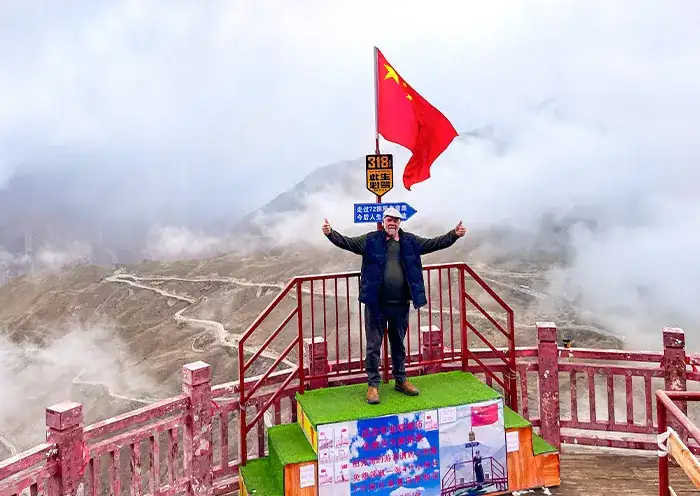
The Sichuan-Tibet Highway is mainly divided into the Southern Sichuan-Tibet Highway (G318) and the Northern Sichuan-Tibet Highway (G317). The Southern Sichuan-Tibet Highway is the most popular route for self-driving enthusiasts, followed by the Northern Sichuan-Tibet Highway. The main difference between the two routes is that the Southern Sichuan-Tibet Highway features more natural scenery, while the Northern Sichuan-Tibet Highway focuses more on cultural and historical sites. Below is an introduction to the road conditions and scenery of both routes.
Sichuan-Tibet Southern Route (G318) - China's Most Beautiful Scenic Highway
Sichuan-Tibet Southern Route Conditions
The Sichuan-Tibet Southern Route stretches approximately 2,140 kilometers from Chengdu, Sichuan Province in the east to Lhasa, Tibet Province in the west. The overall road conditions are good, with most sections being paved roads. Only a few sections are in poor condition and quite bumpy. Most common vehicle types can travel the Sichuan-Tibet Southern Route to Tibet; however, during the rainy season, it is recommended to choose a vehicle with a high ground clearance. Furthermore, self-driving to Tibet is not recommended during summer vacation or other peak tourist seasons, not only because of the increased traffic but also because it requires a higher level of driving experience. It is advisable to choose safer travel options, such as group tours or chartered car tours along the Sichuan-Tibet Southern Route.
Scenery along the southern route of Sichuan-Tibet
The southern route of the Sichuan-Tibet Highway first traverses the edge of the Sichuan Basin, where the mountains are gentle, rivers meander, and the scenery is beautiful. Next, it enters the Hengduan Mountains, where the mountains gradually rise, deep valleys, and sheer cliffs create breathtaking vistas. In the middle section of the Hengduan Mountains, it passes the famous Daocheng Yading, where snow-capped mountains, glaciers, lakes, and forests create a stunning landscape. Continuing on, it enters the Himalayas, where the terrain becomes even more rugged, snow-capped peaks rise majestically, and clouds swirl around them, allowing visitors to experience the grandeur and mystery of nature.
[Southern Sichuan-Tibet Route] 10-Day, 9-Night Group Tour of Hailuogou, Daocheng Yading, Litang, Ranwu, Basongcuo, and Yamdrok Lake
Enjoy the highlights of the Sichuan-Tibet Highway: Hailuogou, Xinduqiao, Moshishi Park, Daocheng Yading, the 18 Bends of the Heavenly Road, Maoya Grassland, Nujiang Grand Canyon, Ranwu Lake, Midui Glacier, Basongcuo Lake, Yamdrok Lake, and more, with breathtaking scenery along the entire route.
The southern route of the Sichuan-Tibet Highway has good road conditions and beautiful scenery.
Sichuan-Tibet Northern Route (G317) - Tibetan Cultural Landscape Avenue
Sichuan-Tibet Northern Route Conditions
The northern route of the Sichuan-Tibet Highway starts from Chengdu in Sichuan Province in the east and ends in Nagqu in Tibet in the west, with a total length of about 2,034 kilometers. The overall road conditions are worse than those of the southern route, the road maintenance progress is also slower, and the terrain along the way is also more complex. It is recommended to drive an off-road vehicle to Tibet.
Scenery along the northern route of Sichuan-Tibet
Compared to the southern route, the northern Sichuan-Tibet route has fewer natural attractions, but it is a route rich in history and culture. The attractions are mostly cultural sites, such as Tibetan villages, Seda Buddhist Academy, Gesar City, Dege Printing House, Jampaling Monastery, and Zizhu Monastery. After entering Tibet, the natural scenery increases, including the Three-Colored Lake, Sapu Mountain, and Namtso Lake. If you are interested in Tibetan culture, this route will be more suitable for you.
[Northern Sichuan-Tibet Route] Chengdu - Seda Buddhist Academy - Dege Printing House - Changdu - Sapu Mountain - Nagqu - Lhasa 10-Day 9-Night Cultural Exploration Tour
Along the way, you'll gain an overview of the Tibetan region's culture and customs, delve into Tibetan Buddhist traditions, find inner peace, and truly enjoy this journey as your most authentic self.
Dege Printing House - Encyclopedia of Tibetan Culture
Hong Kong to Tibet Self-Driving Route 2: Xinjiang-Tibet Highway, the highest altitude self-driving route to Tibet
Highway conditions in Xinjiang and Tibet
The Xinjiang-Tibet Highway starts in Yecheng, Kashgar, Xinjiang in the north and ends in Lazi, Shigatse in the south, with a total length of about 2,140 kilometers. The road conditions are generally good, and it is mostly paved. However, this route is the most dangerous and difficult because the average altitude is high and the elevation difference is large. Most of the route is in uninhabited areas with few people and poor tourism facilities. It is not recommended for novice drivers to drive themselves. It is safest and more reliable to choose to hire a car or go with a tour group.
In addition, most tourists who travel the Xinjiang-Tibet Highway will choose to travel it in reverse, that is, start from Lhasa, Tibet, cross the Xinjiang-Tibet Highway, and travel to Xinjiang.
[8-Day Xinjiang-Tibet Highway Crossing Tour] Lhasa-Shigatse Everest Base Camp-Ali Sacred Mountain and Lake Ngari-Kashgar Old City 8 Days 7 Nights Group Tour
Starting from Lhasa, the holy city, and passing through Shigatse, Ngari, and Yecheng, the journey to Kashgar Old City offers breathtaking scenery along the way, including classic attractions such as Mount Everest, Qilin Gorge, Mount Kailash, Lake Manasarovar, the Guge Kingdom, the Boundary Pass, Dead Man's Gully, Dahongliutan, and the Karakoram Mountains.
Scenery along the Xinjiang-Tibet Highway
While the scenery along the Xinjiang-Tibet Highway may not be as diverse as that of the southern Sichuan-Tibet Highway, it possesses a unique and breathtaking beauty. Traveling this route offers not only endless vistas of Gobi Desert and sand dunes, but also magnificent snow-capped mountains, crystal-clear lakes, and adorable wildlife, making it an absolutely worthwhile trip.
The highest point on the Xinjiang-Tibet Highway—Jieshan Daban—is 5248 meters above sea level.
Hong Kong to Tibet Self-Driving Route 3: Qinghai-Tibet Highway, the Safest Self-Driving Route to Tibet
Qinghai-Tibet Railway Conditions
The Qinghai-Tibet Highway stretches approximately 1,937 kilometers from Xining in Qinghai Province in the east to Lhasa in Tibet in the west. The road conditions are generally excellent, making it one of the best routes to Tibet. It can be traveled by sedan, minivan, or SUV. However, drivers of low-chassis vehicles should exercise caution, as some sections may have large potholes due to heavy vehicles.
Scenery along the Qinghai-Tibet Highway
The Qinghai-Tibet Highway boasts a majestic and diverse landscape, encompassing grasslands, deserts, salt lakes, wastelands, high mountains, snow-capped peaks, and glaciers. Along this route, you'll witness rolling mountains and spectacular canyons, as well as vast grasslands and crystal-clear lakes. The snow-capped peaks and glaciers of the Kunlun and Tanggula Mountains are particularly breathtaking. Furthermore, the Qinghai-Tibet Highway passes by renowned scenic spots such as Namtso Lake and Qinghai Lake, whose stunning beauty is truly unforgettable.
【7-Day Qinghai-Gansu Grand Loop Tour (Route A)】Qinghai Lake + Chaka Salt Lake + Emerald Lake + Mogao Caves + Crescent Lake + Rainbow Mountains + Qilian Mountains and Menyuan 7-Day Group Tour
Explore the highlights of the Qinghai-Gansu route and discover the breathtaking beauty of Qinghai and Gansu; visit the famous Three Lakes and Mogao Caves, and appreciate the cultural and natural beauty of the Rainbow Mountains.
Hong Kong to Tibet Self-Driving Route 4: Yunnan-Tibet Highway, the self-driving route to Tibet with the lowest altitude.
The Yunnan-Tibet Highway can be divided into the Northern Yunnan-Tibet Highway (passing through Deqin County) and the Southern Yunnan-Tibet Highway (passing through Zayu County, also known as the Bingchacha Highway). More tourists choose the Northern Yunnan-Tibet Highway than the Southern Yunnan-Tibet Highway because the road conditions are much better. Below is a description of the road conditions and scenery for both routes.
Northern Yunnan-Tibet Route (via Deqin County)
Yunnan-Tibet Northern Route Conditions
The Yunnan-Tibet Northern Route starts in Kunming, Yunnan, and continues along the route from Dali to Lijiang and Deqin. It merges with the Sichuan-Tibet Southern Route (318) at Mangkang and then extends west to Lhasa, Tibet. The total length is about 1,945 kilometers. The overall road conditions are good, and most family cars can pass through. However, the road conditions are relatively worse on the Sichuan-Tibet Southern Route from Mangkang to Lhasa. But with careful driving, there are generally no major problems. However, during the rainy season, be careful of mudslides or landslides.
Scenery along the northern Yunnan-Tibet route
The northern route of Yunnan and Tibet boasts a landscape that is both rugged and breathtaking, offering a wealth of scenery. Along the way, you can visit famous attractions such as Lijiang Old Town, Shangri-La, Meili Snow Mountain, Ranwu Lake, and Basongcuo Lake. You can also experience the diverse ethnic minority cultures and unique customs that you won't find on other routes.
9-Day Tour of the Classic Scenery of the Yunnan-Tibet Ancient Tea Horse Road (including chartered vehicle)
The main attractions include Tiger Leaping Gorge, Baima Snow Mountain, Feilai Temple, Ranwu Lake, Midui Glacier, Sejila Mountain, Basongcuo Lake, Potala Palace, Jokhang Temple, Barkhor Street, and Yamdrok Lake.
The magnificent and vast Baima Snow Mountain is the second highest peak in Yunnan, with an altitude of 5640m.
The southern route of Yunnan and Tibet (passing through Zayu County, commonly known as the Bingchacha Line)
Road conditions on the Yunnan-Tibet Southern Route (Bingchacha Line)
The Yunnan-Tibet Southern Route starts in Kunming, Yunnan, and continues along Fugong and Zayu from Dali. It merges with the Sichuan-Tibet Southern Route (318) at Mangkang and ends in Lhasa, Tibet, with a total length of about 1,393 kilometers. The overall road conditions are poor. Most of the section from Dali to Mangkang is dirt road or washboard road, which requires high-performance vehicles. It is best to choose an off-road vehicle. The road conditions from Mangkang to Lhasa are much better than the first half of the route, so just drive carefully.
Scenery along the Yunnan-Tibet Southern Route (Bingchacha Line)
Although the road conditions on the southern Yunnan-Tibet route are very poor, the scenery is absolutely stunning, giving one the feeling of "the body is in hell, but the eyes are in heaven" compared to the Sichuan-Tibet route. The abundant landscapes along the way, including canyons, forests, snow-capped mountains, rivers, unique peaks, caves, and villages, are simply breathtaking.
Kunming, Liuku, Yunnan-Tibet Challenge: 11-Day In-Depth Tour of Bingcha, Chahar, Linzhi, and Lhasa
The main attractions include Xiangyang Bridge, Gongshan (Pearl of the Three Rivers), Dulong River, Bingzhongluo, Zayu, Ranwu Lake, Midui Glacier, Sejila Mountain, and Niyang River.
Hong Kong Self-Driving Route to Tibet 5: China-Nepal Friendship Highway, the only international self-driving route to Tibet
The China-Nepal Friendship Highway, or simply the China-Nepal Highway, is mainly divided into two routes: the eastern route, which runs from Tingri to Nyalam, through the Zhangmu border crossing, to the Friendship Bridge, and finally to Kathmandu, the capital of Nepal; and the western route, which runs from Lhatse to National Highway 219, through Gyirong, and finally to Nepal. Below is a description of the road conditions and scenery along both routes.
Both routes have excellent road conditions in the Tibetan section, but poor conditions in the Nepalese section, consisting mostly of winding mountain roads with virtually no guardrails. Therefore, extreme caution is advised. Furthermore, Nepalese vehicles are not permitted to enter Tibet; those wishing to travel this route to Tibet will need to transfer to Chinese vehicles at the border crossing.
The scenery along both the eastern and western routes of the China-Nepal Friendship Highway is quite beautiful. Whether it's the majestic Mount Everest and the scenic Nyalam on the eastern route, or the beautiful Lake Peiku and the towering Shishapangma on the western route, they are all well worth seeing.
In addition, most tourists who travel the China-Nepal Friendship Highway choose to travel the China-Nepal Highway in reverse, that is, starting from Lhasa, Tibet, crossing the border, and heading to Nepal.
[Crossing the Border] 7-Day Tour of Lhasa, Yamdrok Lake, Shigatse, Everest Base Camp, and Gyirong
Enjoy the beautiful scenery of Tibet, then head to the China-Nepal border. Our company also provides a convenient chartered car service to Kathmandu.
Hong Kong Residents' Guide to Pre-Trip Preparations for a Self-Driving Trip to Tibet
Vehicle preparation: Check the tire wear and braking system of your vehicle, and prepare the necessary simple repair tools to ensure the safety of your road trip;
Get to know the road conditions: Check the general road conditions along the way in advance, download offline maps, and choose a suitable vehicle to make your road trip easier and safer;
Documents required: Hong Kong tourists driving to Tibet need to prepare a Home Return Permit, driver's license (mainland driver's license required), vehicle registration certificate, and border permit (required for travel to border areas such as Mount Everest and Ali).
Clothing preparation: Based on the travel time, check the weather conditions of the relevant areas in advance and prepare appropriate clothing according to the temperature. If you are going to high-altitude and cold areas such as Mount Everest, you need to prepare warm clothing, such as down jackets and fleece-lined windbreakers, regardless of when you go.
Medication preparation: You can carry some commonly used medicines with you, such as Rhodiola rosea, gastrointestinal medicine, cold medicine, antipyretics, anti-inflammatory drugs, band-aids, glucose, etc.
Other preparations: sunglasses, hat, sunscreen, moisturizing skincare products, rain gear, charger, bank card, a small amount of cash, etc.
In summary
Hong Kong tourists can choose a suitable route to Tibet by car based on their own circumstances. However, regardless of the route chosen, they need to have rich driving experience and a certain understanding of the complex terrain. If it is a Hong Kong tourist who is driving in mainland China for the first time, it is not recommended to choose to drive into Tibet, because it will be a great test for Hong Kong friends in terms of terrain, driving habits and altitude sickness.
Travel information can change. Check current opening hours, reservations and entry requirements before you travel.

Traveller discussion
Start the conversation with a helpful tip or a question.