
Nagqu City
Nagqu CityNagqu City, also known as Heihe, is a prefecture-level city under the Tibet Autonomous Region, located in northern Tibet in the heartland of the Qinghai-Tibet Plateau. It borders Xinjiang and Qinghai, and neighbors Qamdo to the ea
Nagqu City
Nagqu City, also known as Heihe, is a prefecture-level city under the Tibet Autonomous Region, located in northern Tibet in the heartland of the Qinghai-Tibet Plateau. It borders Xinjiang and Qinghai, and neighbors Qamdo to the east, Lhasa, Xigaze, and Nyingchi to the south, and Ngari to the west. It has a sub-frigid climate with high elevation, cold and low oxygen, and a total area of 353,000 square kilometers. As of June 2026, Nagqu administers 1 district and 10 counties. As of the end of 2025, the permanent resident population was 517,100. "Nagqu" is named after the Nagqu River (upper reaches of the Nu River), formerly translated as "Heihe" (Black River). In October 2017, Nagqu Prefecture was abolished and prefecture-level Nagqu City was established. Nagqu is Tibet's "Northern Gateway," with the Qinghai-Tibet Railway, Qinghai-Tibet Highway, Golmud-Lhasa oil pipeline, Lanzhou-Xining-Lhasa optical cable, and Qinghai-Tibet DC interconnection all passing through over 500 kilometers. It is the source of major rivers including the Yangtze, Nu, and Lancang, known as the "Source of Rivers" and "Water Tower of China." In 2025, the gross regional product was 26.783 billion yuan, up 7.0%.
History
Approximately 10,000–50,000 years ago, the Nagqu area belonged to the Zhangzhung regime. Around the 7th century, the eastern part came under the Supi tribe, later unified under the Tubo Dynasty. During the Song Dynasty (960–1279), Nagqu was one of the "Four Northern Tribes." In 1269, the Yuan Dynasty (1271–1368) established postal relay stations through present-day Nagqu, stationing Mongol troops that later formed the "Thirty-Nine Tribes of Hor." In the 17th–18th centuries, it was under the Khoshut Mongol regime. In 1725, the Qing Dynasty (1644–1912) established the Qinghai Affairs Minister. In 1751, Kannangzong was established under the Tibetan local government (Kashag). In 1942, the Kashag established the Changchak Chikyab, governing 14 counties including Nagqu. In 1956, the Heihe Chikyab Office was established. In 1960, "Heihe Prefecture" was renamed "Nagqu Prefecture." In October 2017, Nagqu Prefecture was abolished and prefecture-level Nagqu City was established.
Administrative Divisions
Evolution
In 1985, Nyima County was established. In 2012, Shuanghu County was established from parts of Nyima County. In October 2017, Seni District was established from the former Nagqu County.
Division Details
As of June 2026, Nagqu administers 1 district and 10 counties: Seni District, Lhari County, Biru County, Nyainrong County, Amdo County, Xainza County, Sog County, Baingoin County, Bachen County, Nyima County, and Shuanghu County, with 89 townships, 25 towns, and 1,283 villages. The City People's Government is seated at No. 3 Zhejiang West Road, Seni District.
Geographical Environment
Location
Nagqu is located in northern Tibet, in the heartland of the Qinghai-Tibet Plateau, between 83°55'–95°5' east longitude and 29°55'–36°30' north latitude, with a total area of 353,000 square kilometers.
Topography
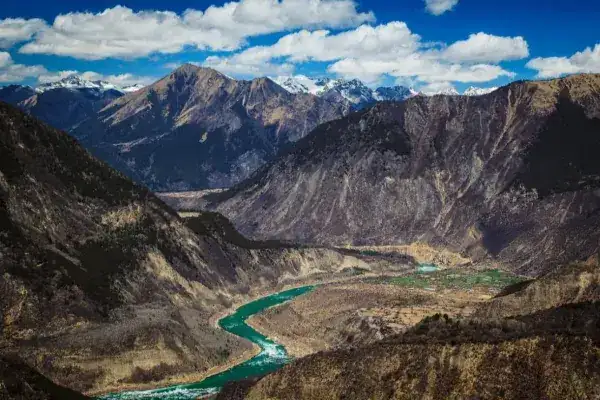
The city is situated between the Tanggula, Nyenchen Tanglha, and Gangdise mountain ranges. The central area features plateau hills with gentle, rounded mountains. The northwest has peaks above 5,500 meters, with the highest, Sangding Kangsang Mountain, at about 6,500 meters. The northern Tanggula area averages above 5,200 meters. The eastern area has elevations of 3,800–4,500 meters with deep gorges. The southern area transitions from plateau hills above 5,000 meters to valleys as low as 3,000 meters near Nyingchi.
Climate
Nagqu has a sub-frigid climate with high elevation, insufficient heat, and cold, arid conditions. Oxygen content is only half of sea level. Annual average temperature: -0.9°C to -3.3°C. Annual relative humidity: 48–51%. Annual precipitation: 100–200 mm. Annual sunshine: 2,852.6–2,881.7 hours. No absolute frost-free period. November–March is the dry, windy period prone to snow disasters; May–September is the relatively warm golden season with 80% of annual precipitation and about 100 days of plant growth.
Hydrology
The Yangtze and Nu rivers originate here, with 20+ tributaries feeding these rivers and 30+ feeding inland lakes and the Yarlung Tsangpo. Nagqu has over 3,000 lakes, including Namtso (one of Tibet's four famous lakes) and Dangra Yumtso (one of Tibet's three sacred lakes).
Natural Resources
Water Resources
Total surface water: 54 billion cubic meters; groundwater: 25.1 billion cubic meters; glacier water: 8.8 billion cubic meters. Nagqu is called the "Source of Rivers," "Water Tower of China," and "Plateau Reservoir."
Biological Resources
Forests cover 220,000 hectares in eastern valleys with 10+ million cubic meters of standing timber, including fir, spruce, cypress, and pine. Wildlife includes 40+ nationally protected species: wild yak, Tibetan wild ass, Tibetan antelope, brown bear, musk deer, white-lipped deer, snow leopard, lynx, argali, blue sheep, black-necked crane, and swan.
Mineral Resources
32 mining areas (4 large, 2 medium, 26 small). Main minerals: coal, iron, chromium, copper, lead, zinc, tin, bismuth, molybdenum, placer gold, silver, magnesite, salt, boron, and crystal.
Population
Population Size
According to the Seventh Census (November 1, 2020), the permanent resident population was 504,838, an increase of 42,457 (9.18%) from the Sixth Census. As of the end of 2025: 517,100 (urban 133,000; rural 384,100). Birth rate: 9.91 per mille; death rate: 4.44 per mille; natural growth rate: 5.47 per mille.
Ethnic Composition
Tibetan: 485,903; other minorities: 3,242; Han: 15,693.
Economy
Overview
In 2025, the gross regional product was 26.783 billion yuan, up 7.0%. By industry: primary 4.993 billion, up 15.3%; secondary 6.718 billion, up 10.0% (industrial 1.391 billion, up 12.5%; construction 5.327 billion, up 9.4%); tertiary 15.072 billion, up 3.5%. Fixed-asset investment up 23.9% (private investment up 35.1%). General public budget revenue: 1.156 billion yuan, up 1.18%. General public budget expenditure: 33.576 billion yuan, up 5.10%. Urban per capita disposable income: 58,662 yuan, up 5.7%; rural: 21,586 yuan, up 7.4%.
Primary Industry
Crop area: 3,376.16 hectares, up 45.68. Grain output: 10,182.64 tons, up 0.98%. Livestock inventory: 5,529,000 head (cattle 2,415,000, up 134,000; sheep 3,112,600, up 161,000). Meat output: 105,900 tons, up 5.3%. Milk: 90,000 tons, up 8.1%.
Secondary Industry
Above-scale industrial added value: 630 million yuan, up 19.2% (mining up 27.1%, 49.4% share; manufacturing up 11.7%, 12.3% share; electricity/heat/gas/water up 13.2%, 38.3% share). Construction output: 801 million yuan.
Tertiary Industry
Total retail sales: 4.248 billion yuan, up 5%. Tourist arrivals: 2.9435 million, up 34.3%; tourism revenue: 957 million yuan, up 31.9%. Express delivery: 897,900 pieces, up 59.69%. Total deposits: 35.097 billion yuan, down 0.17%. Total loans: 22.974 billion yuan, up 22.98%.
Transportation
The Qinghai-Tibet Railway passes through Nagqu with stations at Nagqu and Amdo. The Qinghai-Tibet Highway, Heichang Highway, and Hei'a Highway traverse the city. Nagqu Airport is under construction.
Politics
Social Affairs
Education
Secondary vocational: 1,736 enrolled, 3,816 students, 837 graduated. High school: 4,432 enrolled, 13,534 students. Junior high: 11,289 enrolled, 33,557 students. Primary: 11,737 enrolled, 74,887 students. Nine-year compulsory education consolidation rate: 98.25%.
Science and Technology
233 meteorological monitoring stations (202 ground stations, 2 Beidou sounding stations, 9 lightning stations, 1 weather radar, 13 soil moisture stations, 2 atmospheric composition stations).
Culture
The grand dance epic "Shi Jing - Gesar" premiered. "Happy Singing and Dancing" won the 20th Qunxing Award. Nagqu Guozhuang appeared internationally in Sri Lanka. The Qyiqing Horse Racing Festival received autonomous region "Featured Cultural Activity" recognition for two consecutive years.
Healthcare
155 health institutions (excluding village clinics), including 29 hospitals, 113 health centers, 12 CDCs, and 1 maternal/child center. 2,696 beds. 3,893 health workers (1,557 physicians). 5.3 beds and 7.7 health workers per 1,000.
Social Security
6,300 new urban jobs. Enterprise pension: 24,418; urban-rural pension: 282,600; work injury: 65,373; unemployment: 36,600; urban-rural medical insurance: 524,200. 6,985 urban minimum living (170 million yuan); 34,550 rural minimum living (110 million yuan). 1 child welfare institution (316 children); 12 elderly care institutions (1,148 centralized + 1,066 home-based care).
History and Culture
Origin of the Name
"Nagqu" is named after the Nagqu River (upper Nu River), formerly translated as "Heihe" (Black River). The Khoshut Mongols called it "Kara Usu," which is the Manchu translation of the Tibetan place name.
Folk Customs
Offering Hada: The most common Tibetan ceremonial gesture. Subordinates offer hada to superiors by hand; superiors may hang it directly on the recipient's neck. It symbolizes respect and auspiciousness.
Offering Chemar: A traditional ceremonial vessel used during festivals and celebrations, symbolizing favorable weather, abundant harvests, and prosperity. Made of wood with two compartments filled with tsampa and barley, decorated with barley ears and butter flower petals. Guests take a pinch and toss it upward three times before eating a small amount and saying "Tashi Delek."
Butter Tea Etiquette: When visiting a Tibetan home, the guest doesn't drink immediately after the host pours tea. The host hands the bowl, the guest drinks, returns it, and the host refills. When leaving, the guest drinks several mouthfuls but must leave a little tea at the bottom.
Wine Etiquette: The guest receives the cup with the left hand, dips the right ring finger into the wine and flicks it upward three times. The "three sips one cup" rule: take a sip, the host refills; repeat three times, then drink the full cup. If unable to drink, flick three times and take one sip.
Circumambulation: In Tibetan areas, circumambulation of temples, stupas, mani stone mounds, and prayer flag poles is done clockwise from left to right. Tibetans avoid eating dog, donkey, horse, and mule; some also avoid fish.
Qiangtang Qyiqing Gesar Horse Racing Festival: Held in mid-July (Tibetan calendar), blending politics, economy, culture, and folk customs. Riders pick up white hada scarves from galloping horses. Tug-of-war, wrestling, and stone lifting demonstrate strength. "Cham" religious dance performances are also held.
Nagqu Guozhuang: Bold and vigorous circle dance, characterized by tall, upright movements with large amplitude, reflecting the Tibetan character of simplicity, bravery, and passion, with athletic training value.
Scenic Spots
Local Specialties
Jiali Yak: National geographic indication product from Lhari County, raised above 4,500 meters, known for large build, abundant hair, and rich nutrition (calcium, selenium, copper, amino acids, protein).
Nagqu Cordyceps sinensis: National geographic indication product from Nagqu, a precious medicinal fungus.
Snow Lotus: Grows above 4,000 meters near snow lines, with medicinal properties for dispelling cold, resolving phlegm, and warming the uterus.
Musk: Called "Lazi" in Tibetan, a secretion from the musk deer gland, used as a central nervous system stimulant and topical analgesic.
Cashmere: Known as "diamond fiber" and "soft gold," combed from goats, among the finest animal fibers.
Duoma Mutton: From Duoma sheep raised above 5,100 meters in the Tanggula Mountains, one of 72 nationally protected livestock breeds.
Famous People
Jiangcuo Lamu: Female, Tibetan, born October 1964 in Nagqu, served as Chairwoman of the Tibet Autonomous Region Women's Federation.
Duotuo: Male, Tibetan, born October 1959 in Baingoin County, currently Deputy Director of the Standing Committee of the Tibet Autonomous Region People's Congress.
Redi: Male, Tibetan, born August 1938 in Biru County, former Vice Chairman of the Standing Committee of the National People's Congress, recipient of the "Outstanding Contributor to Ethnic Unity" national honorary title.
External Exchange
On December 17, 2020, Nagqu established a friendly relationship with Tokha City, Nepal.
Honorary Titles
In July 2021, Nagqu was selected as a Tibet Autonomous Region Double Support Model City. In October 2023, named a seventh batch Ecological Civilization Construction Demonstration Zone. In April 2025, selected as a National Double Support Model City (County).
Travel information can change. Check current opening hours, reservations and entry requirements before you travel.
Traveller discussion
Start the conversation with a helpful tip or a question.