
Kunming City
Kunming CityKunming City, abbreviated "Kun" and known as the "Spring City" and "Flower City," is a prefecture-level city, capital of Yunnan Province, and a megacity in southwest China. Located on the Yunnan-Guizhou Plateau, the terrain desc
Kunming City
Kunming City, abbreviated "Kun" and known as the "Spring City" and "Flower City," is a prefecture-level city, capital of Yunnan Province, and a megacity in southwest China. Located on the Yunnan-Guizhou Plateau, the terrain descends stepwise from north to south with interspersed basins and highlands. The city spans three major river basins: the Jinsha, Nanpan, and Hong Rivers. It has a subtropical highland monsoon climate with mild year-round temperatures. The total area is 21,012.54 square kilometers. As of October 2025, Kunming administers 7 districts, 3 counties, 3 autonomous counties, and 1 county-level city. The resident population at the end of 2025 was 8.744 million. The local dialect is Southwestern Mandarin. Kunming is one of the first National Historic and Cultural Cities. In 2025, its GDP reached 863.745 billion yuan (approximately 118.5 billion US dollars), up 4.2% year-on-year. The city focuses on four emerging industries: new materials, biomedicine, electronic information, and advanced equipment manufacturing, while maintaining distinctive industries such as flowers and coffee.
Historical Evolution
Etymology
The term "Kunming" originally referred to an ancient ethnic group in southwest China. The name appears in classical texts as "Kun," "Kunmi," or "Kunni." During the Nanzhao and Dali periods, the Kunming people migrated eastward to the Dianchi Lake area. In 1254, the Yuan dynasty established the Kunming Thousand-Household Office, marking the first use of "Kunming" as a place name.
Administrative History
Approximately 30,000 years ago, early humans inhabited the Longtanshan area near Dianchi Lake. During the Neolithic period, residents built settlements with developed fishing and rudimentary agriculture. Around 298 to 263 BCE, Chu general Zhuang Jiao arrived at Dianchi and established the Dian Kingdom. In 109 BCE, the Western Han dynasty incorporated the area into its territory. In 225 CE, Zhuge Liang pacified the region. From the 3rd to 6th centuries, local clans including the Cuan family controlled the area. In 765 CE, the Nanzhao Kingdom built Tuodong City, marking the founding of Kunming. In 1276, Kunming first became a provincial capital. The municipal government was established in August 1928, and the city was peacefully liberated on December 9, 1949.
Administrative Divisions
As of October 2025, Kunming administers 7 districts (including Wuhua, Panlong, Guandu, Xishan, Dongchuan, Chenggong, and Jinning), 3 counties, 3 autonomous counties, and 1 county-level city (Anning).
Geographical Environment
Location and Area
Kunming is located in central Yunnan Province on the Yunnan-Guizhou Plateau, between approximately 24 degrees 23 minutes to 26 degrees 22 minutes north latitude and 102 degrees 10 minutes to 103 degrees 40 minutes east longitude. The total area is 21,012.54 square kilometers.
Climate
Kunming has a subtropical highland monsoon climate with mild temperatures, cool summers, and warm winters. The annual mean temperature is approximately 15 degrees Celsius, with annual rainfall around 1,000 mm. It is famously known as the "Spring City" for its pleasant year-round weather.
Geology
The city sits on the Yunnan-Guizhou Plateau, with complex geological structures including limestone, sandstone, and shale formations dating from multiple geological periods.
Topography
The terrain descends in a stepwise pattern from north to south, with elevations ranging from about 2,800 meters in the north to approximately 1,900 meters near Dianchi Lake in the south.
Hydrology and Water Conservancy
Kunming spans three major river basins: the Jinsha, Nanpan, and Hong River systems. Dianchi Lake, the largest freshwater lake on the Yunnan-Guizhou Plateau, is the city's most significant water body, covering approximately 330 square kilometers.
Soil
The main soil types include red earth, yellow earth, and paddy soil, supporting diverse agricultural and ecological uses across the region.
Natural Disasters
Kunming is susceptible to droughts, floods, and occasional seismic activity due to its location near active fault zones, though major disasters are relatively infrequent.
Natural Resources
Water Resources
The city's three river basins provide abundant water resources, supplemented by Dianchi Lake and numerous reservoirs supporting urban and agricultural needs.
Land Resources
Cultivated land, forestland, and grassland constitute the primary land-use types, supporting both agriculture and ecological conservation efforts.
Mineral Resources
Kunming has deposits of phosphorus, salt, copper, iron, and coal. The phosphorus reserves are among the largest in China, supporting a major fertilizer industry.
Forest and Grassland Resources
The forest coverage rate exceeds 50%, with vegetation ranging from subtropical evergreen broadleaf forests to alpine meadows across different elevation zones.
Biological Resources
Kunming's biodiversity includes numerous endemic plant and animal species supported by varied climate zones and habitats. The region is renowned for wild mushrooms, medicinal herbs, and diverse floral species.
Population
Population Size
As of the end of 2025, the resident population was 8.744 million, with an urbanization rate exceeding 80%, reflecting rapid urban development.
Ethnic Groups
Kunming is home to multiple ethnic groups, including Han, Yi, Hui, Bai, Miao, and Hani, among others, contributing to a rich multicultural society.
Language
The primary dialect is Southwestern Mandarin, specifically the Kunming dialect. Many ethnic minorities also speak their native languages, preserving linguistic diversity.
Religion
Major religions practiced in Kunming include Buddhism, Taoism, Islam, Catholicism, and Protestantism, reflecting the city's long history of religious and cultural diversity.
Politics
Kunming serves as the political center of Yunnan Province, hosting the provincial party committee and government offices. The municipal government oversees all administrative divisions within the prefecture.
Economy
Overview
In 2025, Kunming's GDP reached 863.745 billion yuan (approximately 118.5 billion US dollars), a 4.2% year-on-year increase. The economic structure is led by the tertiary sector, followed by secondary and primary sectors.
Primary Industry
Agriculture focuses on flowers, vegetables, tobacco, and coffee. Kunming is one of China's largest flower production and trading centers, with the Dounan Flower Market being Asia's largest fresh-cut flower trading market.
Secondary Industry
Key manufacturing sectors include new materials, biomedicine, electronic information, advanced equipment manufacturing, and tobacco processing. The city is developing as a western advanced manufacturing base.
Tertiary Industry
The service sector encompasses tourism, logistics, finance, and commerce. Kunming has launched distinctive tourism products including bird watching, flower appreciation, mushroom dining, leisure travel, and wellness tourism.
Economic Functional Zones
Major zones include the Kunming National High-Tech Industrial Development Zone, the Kunming Economic and Technological Development Zone, and the Dianchi National Tourism Resort, driving industrial innovation and growth.
Major Enterprises
Key companies include Hongta Group in tobacco, Yunnan Baiyao Group in pharmaceuticals, and various flower and coffee enterprises that drive local industry and employment.
Social Affairs
Education
Kunming hosts major universities including Yunnan University, Kunming University of Science and Technology, and Yunnan Normal University, making it the educational center of Yunnan Province.
Healthcare
The city maintains a comprehensive healthcare system with numerous top-tier hospitals serving as regional medical centers for southwest China.
Science and Technology
Kunming is a national science and technology innovation hub, with research institutions focusing on biomedicine, botany, and plateau ecology.
Cultural Affairs
The city maintains libraries, museums, theaters, and cultural centers, preserving both traditional heritage and contemporary cultural expressions.
Sports
Kunming hosts sports facilities and high-altitude training bases, benefiting from its elevation ideal for endurance training programs.
Environmental Protection
Environmental initiatives focus on Dianchi Lake restoration, air quality improvement, and ecological conservation, achieving measurable progress in pollution control.
Social Security
The city has established a comprehensive social security system covering pensions, medical insurance, unemployment insurance, and subsistence allowances for residents.
Transportation
Overview
Kunming is designated as an international comprehensive transportation hub, connecting China with South and Southeast Asia through multiple transport modes.
Highways
An extensive highway network connects Kunming to major cities, including expressways to Chengdu, Guiyang, and Nanning, plus international routes to Myanmar and Laos.
Railways
Kunming is served by multiple rail lines, including the Kunming to Chengdu and Kunming to Shanghai high-speed railways, and the China-Laos Railway enhancing international connectivity.
Aviation
Kunming Changshui International Airport is one of China's major hub airports, serving domestic and international destinations across Southeast Asia and beyond.
Water Transport
Dianchi Lake supports limited water transport primarily for tourism and cargo, complemented by river transport on the Jinsha River system.
Pipeline Transport
Oil and natural gas pipelines connect Kunming to domestic energy sources, supporting the city's industrial and residential energy needs.
Public Transportation
Kunming operates a metro system with multiple lines in service, an extensive bus network, and public bicycle sharing, forming an integrated urban transit system.
Historical Culture
Overview
Kunming's rich cultural heritage spans over 1,200 years, blending Han cultural traditions with diverse ethnic minority customs and arts.
Cuisine
Local specialties include crossing-the-bridge rice noodles, steam-pot chicken, wild mushroom dishes, and Yunnan-style cured meats that are nationally renowned.
Specialties
Notable products include Yunnan Baiyao, Pu'er tea, Dian tea, flowers, coffee, and various wild mushrooms that are sought after across China.
Customs
Ethnic festivals include the Yi Torch Festival, the Hui Corban Festival, and the Suiyue Festival, reflecting the city's multicultural heritage and traditions.
Arts
Traditional arts include Yunnan opera, flower lantern performances, and various ethnic music and dance forms passed down through generations.
Regional Symbols
The camellia is the city flower, the magnolia tree is the city tree, and the "Spring City" identity is widely recognized as Kunming's regional symbol.
Historical Sites
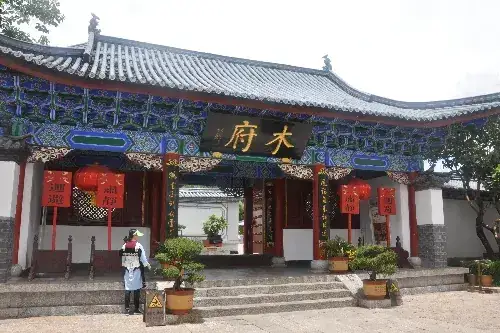
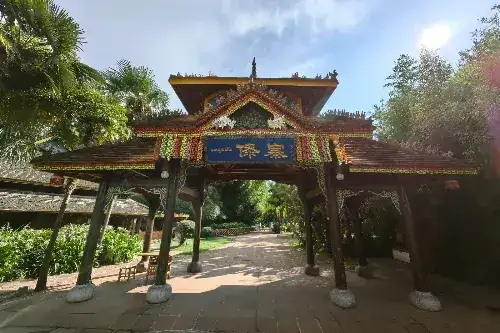
Key sites include Yuantong Temple, the Golden Horse and Jade Rooster archways, and the Grand View Tower (Daguanlou), among numerous others.
Intangible Cultural Heritage
Kunming has 7 national-level intangible cultural heritage items and 27 national key cultural relic protection units, preserving traditional crafts, music, and customs.
Scenic Spots
Overview
Kunming offers diverse attractions combining natural landscapes with cultural heritage, making it a designated international tourism destination.
Major Attractions
Notable attractions include Dianchi Lake, the Stone Forest (Shilin), Western Hills (Xishan), Bamboo Temple, and the Golden Temple, drawing millions of visitors annually.
External Exchange
Kunming serves as a gateway city for South and Southeast Asia, hosting international exchanges, sister city relationships, and regional cooperation platforms.
Notable Figures
Historical and contemporary notable figures include Zheng He, the legendary navigator, and Nie Er, composer of China's national anthem, along with various scholars and officials.
Honorary Titles
Kunming has received numerous honors, including National Civilized City, National Garden City, and China's Best Tourism City, reflecting its status as a livable and attractive destination.
Travel information can change. Check current opening hours, reservations and entry requirements before you travel.
Traveller discussion
Start the conversation with a helpful tip or a question.