
Sanya City
Sanya CitySanya City, abbreviated as Ya and also known as Lucheng (Deer City), historically called Yazhou and Yaxian, is a prefecture-level city under the jurisdiction of Hainan Province. Located at the southernmost tip of Hainan Island, it
Sanya City
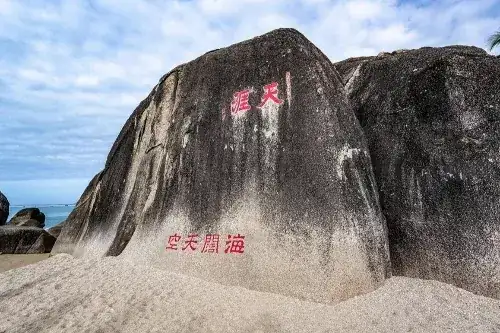
Sanya City, abbreviated as Ya and also known as Lucheng (Deer City), historically called Yazhou and Yaxian, is a prefecture-level city under the jurisdiction of Hainan Province. Located at the southernmost tip of Hainan Island, it borders Lingshui Li Autonomous County to the east, Ledong Li Autonomous County to the west, Baoting Li and Miao Autonomous County to the north, and faces the South China Sea to the south, with a total land area of 1,921 square kilometers. As of March 2026, Sanya administers four districts. As of the end of 2025, Sanya had a registered population of 803,008. Sanya, historically known as Yazhou, boasts a long and rich history. It was incorporated into China's territory in the first year of the Yuanfeng era of the Western Han Dynasty (110 BCE). On September 26, 1987, it was elevated to a prefecture-level city. Due to its remote location far from the imperial capital and its isolation overseas, Sanya has been called the "Ends of the Earth" since ancient times. It was once the fief of Lady Xian of the Qiao State during the Sui Dynasty; the place where the great Tang Dynasty monk Jianzhen drifted ashore and preached; and the place of exile for seven eminent prime ministers and officials during the Tang and Song dynasties. During the Song, Yuan, and Ming dynasties, Sanya's economy saw initial development, with its cotton textile industry leading the nation. Sanya is an international tourism city featuring tropical coastal scenery, also known as the "Oriental Hawaii," with unique coastal landscapes. Surrounded by mountains on three sides, Sanya forms an embrace-like terrain where mountains, sea, and rivers converge, with numerous peaks providing vantage points for viewing the sea, river bays, and cityscapes. In 2023, it was rated as a third-tier city. In October 2025, it was recognized as a National Demonstration City for Rule of Law Government. In 2025, Sanya's GDP reached 103.388 billion yuan (approximately $14.36 billion), a year-on-year increase of 4.8% at constant prices.
History
Sanya derives its name from the Sanya River (ancient name: Linchuan River), where the east and west branches converge in a Y-shape, hence "Sanya" (literally "three Y"). Sanya has a long history, with records of Sanya Village and Sanya Li appearing in the Ming Dynasty's Zhengde Qiongtai Zhi.
According to archaeological evidence, human activity on Hainan Island began at least 10,000 years ago. During the pre-Qin period, Sanya belonged to the Luo Yue branch of the Bai Yue tribes.
During the Qin Shi Huang era, the three southern commanderies were established, and Yazhou was part of the Xiang Commandery.
In the first year of the Yuanfeng era of the Western Han Dynasty (110 BCE), Sanya was incorporated into China's territory.
In the sixth year of the Daye era of the Sui Dynasty (610), the court separated the southwestern region of Hainan Island and established Linzhen Commandery on the basis of Linzhen County.
In the fifth year of the Wude era of the Tang Dynasty (622), Linzhen Commandery was renamed Zhenzhou, with Linchuan County added under its jurisdiction. In the second year of the Zhenguan era (628), a portion of Yande County was separated to create Jiayang County. In the first year of the Tianbao era (742), Zhenzhou was renamed Yande Commandery. In the first year of the Zhide era (756), it was renamed Ningyuan Commandery. In the first year of the Qianyuan era (758), the name Zhenzhou was restored.
During the Five Dynasties and Ten Kingdoms period, the Zhenzhou administrative structure remained, but its territorial holdings decreased, leaving only Ningyuan and Jiayang counties.
In the fifth year of the Kaibao era of the Song Dynasty (972), Zhenzhou was renamed Yazhou. In the sixth year of the Xining era (1073), Yazhou was renamed Zhuya Army. In the seventh year of the Zhenghe era (1117), Zhuya Army was renamed Jiayang Army.
In the first year of the Hongwu era of the Ming Dynasty (1368), Jiayang Army was renamed Yazhou. In the fourth year of the Zhengtong era (1439), Ningyuan County was abolished and its territory directly merged into Yazhou. From then on, Yazhou became an independent department administrative unit.
The Qing Dynasty maintained the administrative structure of the Ming Dynasty. In the thirty-first year of the Guangxu era of the Qing Dynasty (1905), Yazhou was elevated to a directly administered department, governing Wan'an, Lingshui, Changhua, and Gan'en counties.
In the first year of the Republic of China (1912), Yazhou was abolished and renamed Yaxian, subordinated to Qiongya Circuit.
In the eighth year of the Republic of China (1919), the Guangdong provincial government announced the incorporation of the Xisha Islands into Yaxian's administrative area.
From 1949 to 1950, it was the Yu-Ya Special District.
In April 1950, Yaxian was liberated and the County People's Government was established.
In January 1954, Yaxian was placed under the jurisdiction of the Hainan Li and Miao Autonomous Prefecture. In October of that year, the Yaxian County People's Government moved from Yacheng to Sanya Town.
In 1958, it merged with Baoting, Lingshui, and the Xinglong-Niulou area of Wanning to form greater Yaxian. The merger was subsequently dissolved in 1959 and 1961, with Baoting and Lingshui counties re-established. Yaxian retained its current jurisdiction.
In 1958, following the people's commune movement, Sanya Town was reorganized into a people's commune system, successively belonging to the Yulei, Yulin, Sanya, Nanhai, and Nanhai Water Transport communes.
In December 1959, the Xisha Islands were separated from Yaxian and placed under the Xisha, Nansha, and Zhongsha Islands Office of the Hainan Administrative Region.
In May 1961, Sanya was re-established as a town.
In November 1962, Sanya Town and Sanya Commune merged into Sanya Commune.
In June 1964, the Sanya town system was restored. As the seat of Yaxian County, people had become very familiar with the name Sanya.
On May 19, 1984, with State Council approval, Yaxian was abolished and Sanya City (county-level) was established. In November, Sanya Town was abolished and preparations began for the establishment of Hedong and Hexi Subdistrict Offices.
On September 26, 1987, the State Council approved the elevation of Sanya City to a prefecture-level city. On December 30, the prefecture-level Sanya City was officially established and began operations.
Administrative Divisions
Division History
In May 1988, Hedong and Hexi Management Districts were established.
On February 11, 2014, the State Council approved Sanya's reorganization from six towns into four districts: Jiyang District (abolishing the former Hedong Management District, Jiyang Town, and Yalong Bay Management Committee), Tianya District (abolishing the former Hexi Management District, Fenghuang Town, Tianya Town, Sanya Bay Management Committee, and Yucai Town), Haitang District (abolishing the former Haitang Bay Town and Haitang Bay Management Committee), and Yazhou District (abolishing the former Yacheng Town).
On September 30, 2014, Yucai Town was abolished, and within its former administrative area, the CPC Sanya Yucai Ecological District Working Committee and the Sanya Yucai Ecological District Management Committee were established.
On January 2, 2015, Sanya City's Yazhou District, Tianya District, Jiyang District, and Haitang District were officially inaugurated.
Division Details
As of March 2026, Sanya City administers four municipal districts: Haitang District, Jiyang District, Tianya District, and Yazhou District, comprising 57 communities, 92 villages, and 491 natural villages. The Sanya Municipal People's Government is located at No. 257 Xinfeng Street, Jiyang District.
Geography
Location and Boundaries
Sanya is the second-largest city in Hainan Province, located at the southernmost tip of Hainan Island, between 18 degrees 09 minutes 34 seconds and 18 degrees 37 minutes 27 seconds north latitude, and 108 degrees 56 minutes 30 seconds and 109 degrees 48 minutes 28 seconds east longitude. It borders Lingshui Li Autonomous County to the east, Baoting Li and Miao Autonomous County to the north, Ledong Li Autonomous County to the west, and faces the South China Sea to the south. The city spans 91.6 kilometers east to west and 51.8 kilometers north to south. Sanya has a total land area of 1,921 square kilometers and a total sea area of 3,226 square kilometers.
Topography
Sanya's terrain descends from north to south. The northern area features high mountains and rugged ridges with continuous peaks, while the southern coastal plain extends east to west. The city has over 200 peaks of various sizes, mostly at elevations between 300 and 1,090 meters, with the highest peak being Jianling at 1,090 meters. The peaks naturally divide the coastal zone into small plains and bays. At Yalong Ridge, Hutou Ridge, Luhuitou Ridge, Ma Ridge, and Nanshan, mountain cliffs plunge directly into the sea, forming sea-cut cliff terrain. The plains are dominated by depositional landforms, with dry depressions and lagoon basins. The three largest plains are at Haitang Bay, Sanya Bay, and Yacheng, with the rest scattered in band-like formations along the coast or in valleys at Ma Ridge, Tiandu, and other locations. Between the coast and plains are gentle-slope ravine mouths, with irregular mountain terraces along the middle reaches of the Sanya and Ningyuan rivers, as well as hilly terrain.
Climate
Sanya is located at the southernmost tip of Hainan Island, on the northern fringe of the tropics south of the Tropic of Cancer. Strongly influenced by the ocean, it has a tropical oceanic monsoon climate with mild winters, moderate summers, and warm year-round temperatures with perpetual greenery. The 1991 to 2020 average annual temperature is 26.5 degrees Celsius, with the highest monthly average in June at 29.5 degrees and the lowest in January at 22.3 degrees. The extreme maximum temperature is 37.5 degrees and the extreme minimum is 5.1 degrees. Annual rainfall is abundant, with a multi-year average of 1,279 millimeters, a maximum annual rainfall of 1,871 mm and a minimum of 747 mm. Wet and dry seasons are distinct: May to October is the rainy season, accounting for 91.7% of annual rainfall; November to April is the dry season, accounting for 8.3%. The average annual relative humidity is 79%, and annual evaporation is 1,950.7 mm. Sunshine is abundant, with coastal areas averaging 2,588 hours of sunshine annually. The city is frost-free year-round with high accumulated temperatures; the accumulated temperature above 10 degrees Celsius is approximately 9,700 degrees.
Hydrology
Sanya has 12 medium and small rivers within its territory. Those with a catchment area exceeding 500 square kilometers include the Ningyuan River and Tengqiao River; those exceeding 100 square kilometers include the Sanya River, Damao River, and Longjiang River; and those under 100 square kilometers include Jiuqu River, Liudao River, Shaoqi River, Wenchang River, Donggou Stream, and Maopeng River. Based on water resource distribution, Sanya's water systems are divided into central, eastern, and western systems. The central system is centered on the Sanya River, including the Damao River. Four medium-sized reservoirs have been built: Tangta, Fuwan, Banling, and Shuiyuanchi. The central system uses the Fuwan, Shuiyuanchi, and Banling reservoirs as urban water supply sources. The eastern system is centered on the Tengqiao River, including the Tengqiao West and Tengqiao East rivers, with a basin area of 705.46 square kilometers. The Chitian Reservoir has been built on the lower reaches of the Tengqiao West River. The western system is centered on the Ningyuan River, with a basin area of 1,093 square kilometers, ranking first in Sanya and fourth in Hainan. The Dalong Reservoir is under construction at the transition from mountains to plains on its main stream, with a total capacity of 427 million cubic meters. Sanya's total annual surface runoff is 1.15 billion cubic meters, with groundwater dynamic reserves of 142 million cubic meters. Rich geothermal resources include Nantian's "Number One Spring in China," Phoenix Mountain Villa, Banling Hot Spring, and Yacheng Yujing Hot Spring, as well as the Linwang Luogen Tianyang Hot Spring.
Natural Resources
Water Resources
Sanya's surface water resources have a multi-year average rainfall depth of 604 millimeters and an annual total runoff of 1.15 billion cubic meters, with a runoff coefficient of 0.43. In wet years (10% probability), annual runoff is 1.82 billion cubic meters; in normal years (50% probability), 1.08 billion cubic meters; and in dry years (90% probability), 580 million cubic meters. The catchment area is 1,905 square kilometers, with a multi-year average rainfall of 1,417 millimeters. Annual runoff flowing into Tengqiao Town from Baoting Li and Miao Autonomous County is 457.6 million cubic meters in normal years and 228.8 million in dry years. Annual runoff flowing into Yacheng Town from Ledong Li Autonomous County and Baoting Li and Miao Autonomous County is 167.1 million cubic meters in normal years and 79.4 million in dry years. Rainfall is lower in the west than in the east, and runoff decreases from inland to coastal areas.
Plant Resources
Sanya has rich plant resources, with 1,838 species (including 516 cultivated varieties). These include 22 families and 72 species of ferns; 7 families and 26 species of gymnosperms; and 98 families and 1,740 species of angiosperms. Among the angiosperms, there are 1,341 dicotyledonous species and 399 monocotyledonous species.
Animal Resources
Sanya has abundant wildlife resources, with over 300 species of terrestrial wild animals, including 50 mammal species and over 300 bird species. Species under national key protection include the clouded leopard, gray peacock-pheasant, Hainan partridge, silver pheasant, blue-banded pitta, Chinese egret, pangolin, macaque, water deer, black bear, small Indian civet, otter, and Hainan rabbit.
Mineral Resources
Sanya has 29 types of mineral resources: 11 metallic minerals, 14 non-metallic minerals, 1 energy mineral, and 3 water-gas minerals, with particular advantages in construction non-metallic minerals. The minerals being exploited include iron, phosphorus, titanium, limestone, quartz sand, marble, granite, crystal, gold, and construction stone. Limestone, quartz sand, and granite reserves each exceed 100 million tons. Phosphorus, titanium, copper, and iron ores are of excellent quality, with gold ore grades reaching up to 12.2 grams per ton. The waters near Sanya contain rich petroleum resources, and South China Sea natural gas resources account for approximately one-third of China's total natural gas reserves. Two high-yield natural gas wells have been proven: Ya 13-1 and Ya 13-2. The former produces 1.2 million cubic meters of natural gas per day and the latter 250,000 cubic meters per day. Estimated natural gas reserves are 34 to 118.2 billion cubic meters, with recoverable reserves of 51.988 billion cubic meters. Annual well production can reach 5 billion cubic meters, sufficient for 15 to 30 years of gas supply.
Population
According to the Sanya City Seventh National Population Census Bulletin, as of November 1, 2020, Sanya's total resident population was 1,031,396, an increase of 345,988 from 685,408 in the 2010 Sixth National Population Census, representing a 50.48% growth with an average annual growth rate of 4.17%.
As of the end of 2025, Sanya's registered population was 803,008, an increase of 18,007 from the previous year-end. Of these, 400,683 were male and 402,325 female. By ethnicity: 520,861 Han (64.9%), 247,738 Li (30.9%), 13,051 Hui (1.6%), 4,556 Miao (0.6%), 3,108 Zhuang (0.4%), and 13,694 other ethnicities (1.7%).
Sanya is a multi-ethnic region. The four original resident ethnic groups are Li, Han, Hui, and Miao, with over 20 additional ethnic groups migrating in after 1949. As of the end of 2023, by ethnicity: 482,218 Han (63.6%), 245,149 Li (32.4%), 12,117 Hui (1.6%), 4,427 Miao (0.6%), 2,933 Zhuang (0.4%), and 10,830 other ethnicities (1.4%).
Government
Current Leadership
Sister Cities
In August 2025, the 30th session of the Standing Committee of the 8th Sanya Municipal People's Congress reviewed and deliberated the proposal to establish a sister-city relationship between Sanya and the City of St. John's, Antigua and Barbuda. The session approved the establishment of a sister-city relationship between the two cities.
Economy
Overview
In 2025, Sanya's GDP reached 103.388 billion yuan (approximately $14.36 billion), a year-on-year increase of 4.8% at constant prices, accounting for 12.8% of the province's GDP. The primary industry's value added was 11.145 billion yuan (approximately $1.55 billion), up 3.8%; the secondary industry's value added was 13.769 billion yuan (approximately $1.91 billion), down 3.1%; and the tertiary industry's value added was 78.474 billion yuan (approximately $10.90 billion), up 6.4%. The three-industry structure ratio was 10.8:13.3:75.9.
In 2025, Sanya achieved local general public budget revenue of 15.524 billion yuan (approximately $2.16 billion), up 0.7%. Of this, tax revenue was 11.188 billion yuan (approximately $1.55 billion), up 5.9%; non-tax revenue was 4.336 billion yuan (approximately $0.60 billion), down 10.6%. Within tax revenue: value-added tax 2.317 billion yuan, up 4.5%; deed tax 1.966 billion yuan, up 31.0%; property tax 0.979 billion yuan, up 1.9%; urban land use tax 0.396 billion yuan, up 1.7%; urban maintenance and construction tax 0.461 billion yuan, up 9.6%; corporate income tax 1.842 billion yuan, up 44.7%; land value-added tax 2.174 billion yuan, down 22.0%; personal income tax 0.564 billion yuan, down 1.6%. Total local general public budget expenditure was 23.924 billion yuan (approximately $3.32 billion), down 5.3%. Of this: health expenditure 2.483 billion yuan, up 6.5%; education expenditure 3.174 billion yuan, up 11.4%; agriculture, forestry, and water expenditure 2.454 billion yuan, up 3.5%; energy conservation and environmental protection expenditure 0.458 billion yuan, up 155.1%; social security and employment expenditure 2.019 billion yuan, down 6.3%; urban and rural community expenditure 2.811 billion yuan, down 1.5%.
In 2025, Sanya's fixed asset investment (excluding households) grew 0.7% year-on-year. Of this, real estate development investment fell 0.7%, while non-real estate investment grew 2.1%. By composition: construction engineering investment fell 4.8%; installation engineering investment fell 14.5%; equipment and instrument purchase investment grew 21.2%; and other expenses investment grew 7.8%. By industry: primary industry investment fell 53.6%; secondary industry investment fell 11.8%; tertiary industry investment grew 1.6%. Total funding for annual fixed asset investment reached 100.679 billion yuan (approximately $13.98 billion), up 15.0%, with a funding fulfillment rate of 139.8%.
Primary Industry
In 2025, Sanya's total agricultural, forestry, animal husbandry, and fishery output was 15.907 billion yuan (approximately $2.21 billion), up 3.9% at comparable prices. Of this: agricultural output 10.778 billion yuan, up 1.6%; forestry output 0.400 billion yuan, up 12.3%; animal husbandry output 0.819 billion yuan, up 6.9%; fishery output 2.839 billion yuan, up 14.3%; and specialized and auxiliary activities output 1.072 billion yuan, up 6.9%.
Secondary Industry
In 2025, Sanya's total industrial output of above-scale enterprises (excluding power grid) grew 11.0%. Of this: light industry output fell 24.8%; heavy industry output grew 11.3%. By economic type: joint-stock enterprise output grew 11.3%; foreign-invested and Hong Kong/Macau/Taiwan enterprise output grew 4.9%. By industry: non-metallic mineral products output grew 2.5%; gas production and supply output grew 2.3%; electric power and heat production and supply output grew 166.1%; food manufacturing output fell 4.7%; and non-ferrous metal smelting and rolling processing output fell 26.9%.
In 2025, Sanya's construction and installation engineering investment fell 5.1%. The construction industry's value added was 8.893 billion yuan (approximately $1.23 billion), unchanged from the previous year at constant prices. The city had 50 qualified construction enterprises (locally registered), up 2.0%; total contracted amount (including new contracts and carryover) was 19.6 billion yuan (approximately $2.72 billion), down 2.0%; and qualified construction industry total output was 4.426 billion yuan, up 14.9%.
Tertiary Industry
In 2025, Sanya's total retail sales of consumer goods reached 57.306 billion yuan (approximately $7.96 billion), up 12.7%. Among above-scale retail sales: grain and oil products grew 51.6%; gold, silver, and jewelry grew 25.0%; communication equipment grew 21.8%; automobiles grew 125.3%; clothing, footwear, and knitwear fell 10.8%; cosmetics fell 9.8%; and daily necessities fell 8.5%. Off-island duty-free sales reached 18.562 billion yuan (approximately $2.57 billion), down 4.4%.
As of the end of 2025, Sanya's financial institutions had foreign and domestic currency deposit balances of 229.258 billion yuan (approximately $31.84 billion), up 10.5%, and loan balances of 149.973 billion yuan (approximately $20.83 billion), up 9.2%. The city's banking institutions had total assets of 264.976 billion yuan (approximately $36.80 billion), up 9.1%; total liabilities of 262.482 billion yuan, up 10.0%; and a non-performing loan ratio of 3.0%, down 1.9 percentage points year-on-year. The city's securities trading volume grew 96.0%.
Social Affairs
Science and Technology
In 2025, Sanya received approval for 107 National Natural Science Foundation projects and 337 provincial-level research project approvals, with 174 city-level research projects approved. A total of 1,139 technology contracts were registered, with a transaction value of 2.142 billion yuan (approximately $297 million), up 87.9%. Patent grants totaled 2,561, down 3.7%. Effective invention patents reached 3,187, up 72.6%. PCT international patent applications totaled 41, up 24.2%.
Education
In 2025, Sanya had 407 schools of various types (excluding special education), including 8 regular higher education institutions (up 14.3%), 3 secondary vocational education schools (unchanged), 55 regular secondary schools (up 1.9%), 105 primary schools (down 6.3%), and 236 kindergartens (down 1.3%). There were 16,286 full-time teachers: 2,779 in regular higher education, 325 in secondary vocational education, 4,861 in regular secondary schools, 5,638 in primary schools, and 2,683 in kindergartens. Total enrolled students numbered 259,718: 71,406 in regular higher education, 7,638 in secondary vocational education, 22,759 in senior secondary, 41,642 in junior secondary, 84,443 in primary, and 31,830 in kindergarten.
Cultural Affairs
In 2025, Sanya had 1 public library, 1 culture and arts center, 9 museums, 24 cinemas, and 13 various performing arts groups. The comprehensive population coverage rate for television was 98% and for radio was 98%.
Healthcare
In 2025, several major health projects were completed and put into operation, including the Yazhou Bay Science and Technology City General Hospital and the Peking University Stomatological Hospital Sanya branch. Construction of the "Greater Sanya" 120 emergency system, Shanghai Children's Medical Center Hainan Hospital, and the Second People's Hospital was progressing steadily. Average outpatient and inpatient costs at public hospitals decreased. Centrally procured pharmaceuticals saw an average price reduction of over 50%, saving the public 153 million yuan (approximately $21.3 million) in medication costs. Per capita income of primary healthcare institution medical personnel increased by 47.4%. Primary healthcare institutions providing inpatient services increased to 13, township health centers capable of performing first- and second-level surgeries increased to 7, and 15 integrated chronic disease clinics were established at primary healthcare institutions. AED coverage was achieved at all 71 village clinics.
Sports
In 2025, Sanya won 332 medals in various provincial and higher-level competitions, including 145 gold, 120 silver, and 67 bronze medals.
Social Security
In 2025, Sanya had 5,833 urban and rural minimum living security recipients, disbursing 29.905 million yuan (approximately $4.15 million) in minimum living security funds. The urban and rural minimum living security standard was 850 yuan per person per month (approximately $118). There was 1 social welfare home with 260 beds. Urban and rural special hardship assistance covered 1,087 people, an increase of 91 from the previous year, with a basic living subsidy of 1,110 yuan per person per month (approximately $154).
Transportation
Overview
In 2025, Sanya Phoenix Airport handled 22.6858 million passengers, up 5.9%. Of these: departures 11.2425 million, up 5.4%; arrivals 11.4432 million, up 6.4%. Phoenix Airport cargo throughput was 117,100 tons, up 15.4%. Of this: outbound 71,100 tons, up 12.6%; inbound 46,000 tons, up 20.0%. Phoenix Airport operated 138,452 flights, up 6.8%.
Highways
Sanya's main expressways include the Ring Island Expressway and the Tong-San Expressway.
Railways
West Ring: The West Ring Railway was originally built in the 1940s but was later destroyed by storms. On December 5, 2004, the Yuehai Railway passenger service opened, and China's first cross-sea passenger train (Haikou to Guangzhou) K408/407 was officially launched. The current Yuehai Railway is the West Ring Railway, which now operates five cross-sea passenger trains: Sanya to Beijing West, Haikou to Shanghai South, Haikou to Changsha, Haikou to Xi'an, and Haikou to Chengdu East. The newly built Hainan West Ring Railway is 345 kilometers long with a total investment of 27.1 billion yuan (approximately $3.76 billion). Construction began in September 2013, track laying was completed on December 18, 2014, and it was expected to be operational by the end of 2015. The railway runs north from Haikou, along the western coast of the island, through six cities and counties including Chengmai, Lingao, Danzhou, Changjiang, Dongfang, and Ledong, south to Sanya. It is designed as a Class I, double-track, electrified mixed passenger-freight railway with a design speed of 200 km/h and 16 stations (including existing Haikou and Sanya stations).
In May 2016, the train schedule was adjusted to add a pair of Changchun to Sanya passenger trains. On May 15, 2016, at 17:05, train Z384 departed from Changchun, passing through 27 stations and arriving at Sanya Station at 21:25 on May 17. On May 18, 2016, at 6:30, train Z386 departed from Sanya Station, arriving at Haikou Station at 10:49, departing Haikou at 11:20, and arriving at Changchun Station at 11:43 on May 20, a journey of approximately 52 hours.
East Ring: The East Ring Railway is 308 kilometers long with an investment of 20.2 billion yuan (approximately $2.81 billion). It officially opened on December 30, 2010, passing through Haikou Meilan Airport, Wenchang, Qionghai, Bo'ao, Wanning, and Lingshui stations directly to Sanya, with a full journey of about 2 hours. The Sanya to Haikou East service runs from 7:00 to 22:00, with 22 daily round-trip EMU trains on regular days and increased frequency during holidays. An undersea tunnel is also being planned.
Water Transport
Sanya is a coastal city where locals have relied on fishing and shipping since ancient times. Ports are naturally a major gateway for Sanya, and both Yulin Port and Sanya Port bear witness to Sanya's shipping development.
Aviation
Sanya Phoenix International Airport is located 26 kilometers west of Sanya and is one of China's major airports, shouldering the responsibility of connecting Sanya to domestic and international destinations. Sanya Phoenix International Airport (IATA code: SYX) is located in Yanglang Town's Fenghuang Village in the northwest-central part of Sanya, approximately 14 kilometers east of the city center and 5 kilometers west of the Ends of the Earth tourist scenic area. The airport was completed in June 1994 and officially opened on July 1.
Sanya Tianya Helicopter Airport is located in Sanya, Hainan Province, and is a helicopter airport. On September 29, 2024, China's first provincial-level cross-sea helicopter route, from Sanya Tianya Helicopter Airport to Zhanjiang, Guangdong, completed its maiden flight.
Public Transit
The Sanya Tram Demonstration Line runs from Sanya Railway Station to Jiangang Road, with a single trip taking approximately 35 minutes. Stations include: Sanya Railway Station, Yuxiu Road, Fenghuang Road, Shuicheng Road, Sanya Hedong Road, Jiefang Road, Jinjiling Street, Youyi Street, Yingbin Road, Jixiang Street, Tuanjie Street, Xinfeng Street, Guangming Street, Yuejin Street, and Jiangang Road. This demonstration line is China's first tram line built using the PPP model and Hainan's first urban rail transit line. Construction began in July 2016, with a total length of 8.37 kilometers and 15 stations. The fare is a flat rate of 3 yuan per ride (approximately $0.42).
History and Culture
Sanya, historically known as Yazhou, has a long and rich history. In October 1992 and November of the following year, archaeologists discovered the Luobi Cave site in Sanya, a 10,000-year-old human settlement site. This is currently the earliest known human habitation site on Hainan Island and the southernmost Paleolithic cultural site in China, pushing back Hainan's human history by 2,000 to 3,000 years. As early as the first year of the Yuanfeng era of the Western Han Dynasty (110 BCE), Sanya was incorporated into China's territory. Due to its remote location far from the imperial capital and its isolation overseas, it has been called the "Ends of the Earth" since ancient times. However, over the 1,400 years since the Sui and Tang dynasties, its political, economic, and cultural connections with the Central Plains have never been interrupted. It was the fief of Lady Xian of the Qiao State during the Sui Dynasty; the place where the great Tang monk Jianzhen drifted ashore and preached; and the exile destination for seven eminent prime ministers and officials during the Tang and Song dynasties. The southward migration of Central Plains elites objectively served to spread culture and education locally, leaving numerous historical and cultural landmarks and laying the foundation for Sanya's splendid cultural heritage. Historical research shows that during the Song, Yuan, and Ming dynasties, Sanya's economy saw initial development, with the cotton textile industry leading the nation. The story of Huang Daopo learning weaving techniques from local Li women in her early years is a historical testament to this. During the Ming Dynasty, Zhong Fang emerged as one of the "Three Stars of Qionzhou" and a great Confucian scholar of the Lingnan region.
Sanya has rich and widely distributed intangible cultural heritage resources. The city has announced six batches of intangible cultural heritage protection projects totaling 36 items, including 3 national-level representative projects (Li Bamboo Dancing, Yazhou Folk Songs, and Boat Songs); 12 provincial-level representative projects (Miao Panhuang Dance, Li Qianling Double-Sword Stick Dance, Li Folk Tales, Li Primitive Pottery Making, Li Traditional Spinning, Dyeing, Weaving and Embroidery, Yazhou Sour Noodles Making, Yacheng Flat Bean Sauce Making, Qiong Opera, Hui Traditional Wedding, Li Folk Songs, Li Traditional Sports, and Conch Girl Legend); and 21 municipal-level representative projects (Miao Dragon Invocation Dance, Li Fire-Making by Wood Drilling, Miao Three-Color Rice Making, Sanya Glutinous Rice Wine Making, Li Rattan-Bamboo Weaving, Miao Embroidery, Gangmen Noodles Making, Sanya Paper-Clay Sculpture, Hongsha Mooncake Making, Tengqiao Ribs Making, Gong-Procession Festival, Miao Traditional Wedding, Sanya Dragon King Folk Sacrifice, Saya Dragon Boat Race, Legend of Huang Daopo in Yazhou, Mai Folk Songs, Yazhou Junhua Folk Songs, Huo TCM Visual Diagnosis, Li Bone Injury Therapy, Li Bamboo-Wood Instruments, and Coconut Carving). There are 105 intangible cultural heritage representative inheritors: 2 national-level, 12 provincial-level, and 91 municipal-level. Eight heritage transmission centers and eight heritage workshops have been established.
Li Brocade: Generally includes folk crafts such as counted-thread embroidery, needlework, tie-dye (ancient term: jiaoxie dyeing), and batik. In Hainan's Li villages, one can see Li women's tubular skirts, jackets, head caps, flower caps, decorative bands, chest hangings, waist wraps, handbags, dragon blankets, and wall hangings. The Book of the Later Han: Treatise on the Southern Man records: "In the late reign of Emperor Wu of Han (87 BCE), Sun Xing, governor of Zhuya from Kuaiji, requisitioned broad-width cloth for tribute. The people could not bear the corvee and attacked the commandery, killing Xing." At that time, the tube-top upper garment worn by the Li people was made from this broad-width cloth, which was produced by Li women using wild kapok.
Miao Cuisine: Three-Color Rice is a Miao specialty made from upland glutinous rice, traditionally prepared during the Sanyuesan Festival (the third day of the third lunar month). Originally Five-Color Rice in red, yellow, blue, white, and black, all colored with natural plant juices and mixed with upland glutinous rice, then steamed in a special wooden steamer. Five-Color Rice is brightly colored, fragrant, and delicious, known as a cooling food that stimulates the appetite and reduces internal heat. Today, it has been simplified to Three-Color Rice in red, yellow, and black, colored with fresh red sunflower, turmeric, and triangular maple juices. Drinking is a customary practice among Miao men, with moderate consumption normally but larger quantities during festivals or when entertaining guests. They generally do not press others to drink. The wine is home-brewed, and every Miao household knows how to make wine with their own brewing equipment.
Religion: Sanya has three religious traditions: Buddhism, Islam, and Christianity, with 11,466 believers. Of these: 550 Buddhist believers, 66 monks, and 86 lay Buddhists; 3,200 Christian believers with 1 pastor; and 7,716 Muslim believers with 33 ahongs. Nine religious activity venues have been approved and registered by the government: Nanshan Temple (Buddhist); 6 mosques (Nan Temple, Nankai Temple, Old Temple, North Grand Mosque, West Temple, and East Temple); and 2 Christian churches (Hongsha Church and Nanbianhai Fishing Village Church).
Scenic Attractions
Local Specialties
Notable Figures
Honorary Titles
- The southernmost coastal tourism city in China's territory
- One of the first batch of national-level ecological demonstration cities in China
- The Chinese city with the highest ratio of tourism revenue to GDP (79% in 2000)
- The city with the longest sunshine duration in China (over 300 days of annual sunshine in Sanya)
- The city with the best air quality in China
- The city with the most suitable average annual temperature in China (annual average approximately 25 degrees Celsius)
- Home to China's most beautiful bay: Sanya Bay
- The city with the best living environment in China
- China's top preferred tourism and vacation destination
- China's largest and best diving base
- International Best Wellness City
- The longest-living region in China (average life expectancy of 80 years)
- Home to China's first five-star resort hotel: Yalong Bay Gloria Resort
- The first city to host the Miss World Final
- Home to the world's largest gold-and-jade Buddha statue: Nanshan Gold-and-Jade Guanyin
- Home to the world's largest inkstone: "Number One Dragon Inkstone Under Heaven"
- The first city to host the World Tai Chi Health Conference
- Ranked among the top 100 Chinese cities on the Comprehensive Well-Off Index
Travel information can change. Check current opening hours, reservations and entry requirements before you travel.


Traveller discussion
Start the conversation with a helpful tip or a question.