
Shantou City
Shantou CityShantou City, abbreviated "Shan," is a prefecture-level city in Guangdong Province, a provincial sub-center, and a Special Economic Zone in eastern Guangdong, bordering Chaozhou and Jieyang to the north and facing the South Chin
Shantou City
Shantou City, abbreviated "Shan," is a prefecture-level city in Guangdong Province, a provincial sub-center, and a Special Economic Zone in eastern Guangdong, bordering Chaozhou and Jieyang to the north and facing the South China Sea to the south. As of June 2026, it administers 6 districts and 1 county, covering 2,199 km², with a resident population of 5.5769 million (end-2025). The local dialect is Teochew. In 2025, GDP reached 302.383 billion yuan (~$42.0 billion USD), up 0.1%. Historically the political-economic center of eastern Guangdong, Shantou ranked among China's top seven commercial cities in the 1930s, with its port third nationally in throughput.
Name Origin
The name "Shantou" derives from coastal sand ridges formed by Han River sediment deposits shaped by tidal action. The elevated ridge crests were called "shan," and the coastal starting point "shashantou," later shortened to "Shantou." The name first appeared in 1685 when the Qing dynasty established the Canton Customs Office with "Shantou Kou" as a sub-station. The urban area, once a peninsula, was nicknamed "Tuodao" (Island of Tuo) for the abundance of small fish in the bay.
Historical Evolution
Ancient Period
Shantou was established as Jieyang County under the Qin dynasty (214 BCE), the earliest administrative division in eastern Guangdong. In 413 CE, the Eastern Jin established Yi'an Commandery. In 591 CE, the Sui dynasty reorganized it into Chaozhou, the origin of the regional name. The area was Chaozhou Prefecture through the Ming and Qing dynasties. In 1563, Chenghai County was established, placing Shantou under its jurisdiction. The names "Shashan" (1530) and "Shashanping" (1575) preceded the official "Shantou Kou" customs station in 1685.
Modern Period
Shantou opened as a treaty port in 1860 after the Second Opium War, gradually replacing Chaozhou as the Chaoshan region's political, economic, and cultural center. In 1921, the Shantou Municipal Government was established — Guangdong's second city. In 1925, Zhou Enlai directed the first CCP branch in the Chaoshan area. The Eastern Guangdong Revolutionary Base (1927–1935) maintained a secret supply route from Shanghai through Hong Kong and Shantou to the Central Soviet Area in Jiangxi, escorting over 200 Party leaders including Zhou Enlai and Liu Shaoqi.
Modern Era
After the founding of the People's Republic of China in 1949, Shantou became a prefecture-level city. The Chaoshan Special District was established, later renamed Shantou Special District in 1956. In 1981, the Shantou Special Economic Zone was established. In 1983, the city-administering-county system was implemented. In 1991, the original Shantou area was divided into three prefecture-level cities: Shantou, Chaozhou, and Jieyang. In 2011, the Special Economic Zone was expanded to cover the entire city.
Administrative Divisions
As of June 2026, Shantou administers 6 districts (Jinping, Longhu, Chenghai, Haojiang, Chaoyang, and Chaonan) and 1 county (Nan'ao). The municipal government is located at No. 28 Yuejin Road, Jinping District.
Physical Geography
Location and Extent
Shantou lies in eastern Guangdong at the southern end of the Han River Delta (23°02'–23°38'N, 116°14'–117°19'E), bordering Chaozhou, Jieyang, and the South China Sea. Total land area is 2,199 km² with 4,332 km² of sea area and 289.1 km of coastline. The city is 187 nautical miles from Hong Kong and 180 from Kaohsiung, Taiwan, and was a key node on the ancient Maritime Silk Road.
Geology
Shantou's geology belongs to the South China fold system, with Yanshanian granite in uplands and Quaternary sediments in delta plains. Major structures include the Xinfeng–Junbu–Dashan composite fold, the Nan'ao deep fault zone, and the Shantou–Huilai deep fault zone — the primary sources of seismic activity.
Topography and Landforms
Landforms include alluvial plains (63.62%), hills and mountains (30.40%), and terraces (5.98%). The terrain slopes from northwest to southeast. The highest peak is Gaozhangchongdajian Mountain on Nan'ao Island at 587.1 meters. The city has 82 islands; Nan'ao Island is the largest.
Climate
Shantou has a southern subtropical maritime monsoon climate with mild temperatures. Annual average temperature is 21.4–21.8°C with 1,978–2,155 sunshine hours. The coldest month averages 13.9°C and warmest 28.1°C. Annual precipitation is 1,300–2,200 mm.
Hydrology and Water Conservancy
Major rivers include the Han River (470 km), Rong River (175 km), Lian River (72 km), Hao River, and Leiling River. The city has 84 dikes (908 km), 490 reservoirs (323.5 million m³ capacity), and 998 water gates. Coastal tides follow an irregular semi-diurnal pattern.
Soil
Shantou is in the lateritic red earth zone with predominantly acidic soils from granite parent rock. Vertical distribution includes yellow earth at upper elevations, red earth at mid-levels, and lateritic red earth below.
Natural Disasters
Main natural disasters are typhoons (July–September), storm surges, and pests. The city is also seismically active. Historical records show 469 disasters from the Song dynasty to 1949. From 1986 to 2000, direct economic losses reached 6.866 billion yuan (~$953 million USD).
Natural Resources
Water Resources
Total water resources are 1.912 billion m³ (surface runoff 1.642 billion m³, groundwater 739 million m³). Per capita water resources are 426 m³ — 17% of Guangdong's and 20% of China's average.
Land Resources
As of 2019, Shantou had 28,618 ha of cultivated land, 57,840 ha of forest, 5,603 ha of wetland, and 39,477 ha of water areas.
Mineral Resources
Minerals are predominantly non-metallic: construction granite, mineral water, and geothermal water. Forty-two mineral types have been identified across 180 locations, with 19 having proven reserves including tungsten, tin, zircon, and rare earths.
Biological Resources
The city has 1,773 plant species in 203 families, 25.4% forest coverage, and 830,000 mu of forest. Marine fish number 417 species, with over 100 of economic value.
Marine Resources
Shantou has 103 developable port sites and 749,000 mu of shallow sea and tidal flats. The marine area contains 471 fish species, 17 shrimp/crab species, over 30 mollusk species, and nearly 20 algae species.
Renewable Resources
Nan'ao Island has exceptional wind energy resources (annual average 8.54 m/s), making it one of China's three major wind power bases. The Guolaoshan area records 10.14 m/s — the highest among all Chinese wind farms — surpassing Northern European and North American levels.
Population
Population Size
End-2025 resident population: 5.5769 million, urbanization rate 71.92%. Birth rate 7.89‰, death rate 7.32‰, natural growth rate 0.57‰.
Ethnic Groups
Shantou has 17 ethnic minorities (Hui, Manchu, Mongol, etc.), mostly migrants for work or marriage. Longhu District had approximately 1,400 minority residents as of 2023.
Language
The local dialect is Teochew (Chaoshan dialect), a Southern Min branch preserving ancient Chinese features with Malay and English loanwords. In 2006, the Chinese Academy of Social Sciences designated the Shantou dialect as representative of Chaoshan dialects.
Religion
Shantou has strong folk belief and polytheist traditions with intertwined Buddhist-Taoist practices. All five major religions are present. As of 2017: 469 religious venues and approximately 115,000 adherents.
Politics
Shantou is a prefecture-level city and provincial sub-center under Guangdong Province, with Special Economic Zone status providing significant administrative and economic autonomy.
Economy
Overview
Shantou's economy spans agriculture, traditional manufacturing (textiles, toys, printing), and a growing tertiary sector. In 2025, GDP was 302.383 billion yuan (~$42.0 billion USD, +0.1%), with a three-sector ratio of 4.7:37.6:57.7 and per capita GDP of 54,227 yuan (~$7,530 USD). Public budget revenue: 17.036 billion yuan (~$2.37 billion USD). Trade total: 51.82 billion yuan (~$7.2 billion USD).
Primary Industry
Five key agricultural sectors: grain, vegetables, aquatic products, livestock, and fruit. In 2025: grain 463,400 tons, vegetables 1.832 million tons, fruit 385,500 tons, aquatic products 486,300 tons. The distinctive lion-head goose produces over 8 million birds annually.
Secondary Industry
Key sectors: textiles, toys, chemicals, printing, plus emerging intelligent equipment, IT, new materials, and biomedicine. In 2025, industrial value-added was 100.428 billion yuan (~$13.9 billion USD); high-tech manufacturing was 10.8% of above-scale output. Wind power generation: 3.584 billion kWh (+17.9%).
Tertiary Industry
In 2025: retail sales 148.323 billion yuan (~$20.6 billion USD); FDI 1.298 billion yuan (~$180 million USD, +136.8%); tourism revenue 22.96 billion yuan (~$3.2 billion USD) with 10.16 million overnight visitors; financial deposits 601.161 billion yuan (~$83.5 billion USD).
Economic Functional Zones
The Shantou Comprehensive Bonded Zone (8.38 km², upgraded 2020) specializes in bonded processing, logistics, and services. The Overseas Chinese Economic and Cultural Cooperation Experimental Zone (est. 2014, planned 480 km²) is a national-level platform including East Coast and Zhugang New Cities.
Social Affairs
Science and Technology
In 2025: 22,727 patents granted (931 inventions); 735 high-tech enterprises; 8 provincial key labs; 233 provincial engineering research centers; 2 national enterprise technology centers. Technology contract transactions: 139 million yuan.
Education
Shantou University (est. 1981) is a comprehensive provincial university co-funded by the Li Ka Shing Foundation, with 20,000+ students. Guangdong Technion–Israel Institute of Technology (est. 2016) is China's first Sino-foreign cooperative university with Israeli resources. Total enrollment across all levels: 1.2893 million.
Cultural Affairs
111 cultural institutions, 8 public libraries (3.91 million volumes), 15 museums. In 2024, cultural industry added value was 34.511 billion yuan (~$4.8 billion USD, 11.0% of GDP). Key facilities: Shantou Museum, Chaoshan History and Culture Expo Center, Opening Port Cultural Exhibition Hall.
Healthcare
End-2025: 2,647 health institutions, 25,700 beds, 38,100 health professionals (14,800 physicians). Six Class A tertiary hospitals, including the First Affiliated Hospital of Shantou University Medical College, ranked among China's top 100 prefecture-level city hospitals.
Sports
Known as a "cradle of world champions." In 2004, Ma Lin won Olympic table tennis gold at Athens — Shantou's first. In 2025, athletes won 35 medals including 15 golds in major competitions.
Social Security
2025 per capita disposable income: 36,216 yuan (~$5,030 USD) — urban 40,569 yuan, rural 25,285 yuan. 1.149 million in employee pension insurance, 3.87 million in resident medical insurance, 82,800 on minimum living allowances.
Environmental Protection
2025: AQI compliance 98.9%; all 34 drinking water sources met standards; 94.3% of nearshore waters at Class I–II; PM2.5 average 19 μg/m³. Forest optimization covered 8,600 mu with 730,200 trees planted.
Transportation
Overview
Integrated highway-waterway-railway system. In 2025: freight 82.33 million tons; port throughput 36.56 million tons and 1.7021 million TEU; passengers 7.92 million trips; civilian vehicles 1.1935 million (119,600 new energy).
Highways
4,034 km of roads with a multi-ring expressway network. Major expressways: Shenshan, Shanfen (National G15), Shanmei (G78), and Chaohui. National highways G324 and G206 connect to Guangzhou, Shenzhen, and Xiamen.
Railways
In 1904, overseas Chinese built the Chaoshan Railway — China's first commercially operated railway funded by overseas Chinese. The new Shantou Station (11 platforms, 24 tracks) opened in September 2024. The Shanshan High-Speed Railway achieved full operation in December 2025.
Water Transport
Shantou Port is one of China's 25 major ports, with 11 berths above 10,000-ton class and 5,013 meters of quay length. It maintains freight connections with over 260 international ports and operates container routes to the Mediterranean, South America, Southeast Asia, Japan, Korea, and West Africa.
Aviation
Civil aviation operates from Jieyang Chaoshan International Airport (28.5 km from Shantou, replaced Waisha Airport in 2011), handling 4.5 million passengers annually with B767-class capability.
Public Transit
As of 2023: 1,935 buses on 149 routes (3,301 km), 109.47 million annual riders; 4 ferries (3.68 million passengers); 1,172 taxis (15.43 million passengers).
Culture
Overview
Shantou is a birthplace of Chaoshan culture, which formed in the Qin-Han era, developed through Tang-Song, flourished in Ming-Qing, and innovates today. Distinctive features include Teochew opera, music, cuisine, Gongfu tea, and folk crafts.
Cuisine
A birthplace of Teochew cuisine — one of three major Cantonese branches — known for light, fresh seafood flavors. Famous dishes: braised lion-head goose, fish rice, abalone in broth, charcoal-grilled conch. Snacks: beef balls, fish balls, oyster omelets, rice cakes. Several techniques are intangible cultural heritage.
Customs
"Chu Huayuan" (Exiting the Garden) is a unique Chaoshan coming-of-age ceremony held during the Qixi Festival, featuring ritual bathing, red clogs, and ceremonial meals marking the transition to adulthood.
Intangible Cultural Heritage
National-level intangible heritage: Teochew opera, Chaoyang Yingge dance, centipede dance, paper cutting, inside painting, riddles, porcelain inlay, drawn work, micro-calligraphy on ceramics, and traditional Chaoshan architecture.
Historical Relics and Sites
Key sites: Eastern Expedition Army former site, Opening Port Cultural Exhibition Hall, Qiaopi (overseas Chinese remittance) Archives, and the Zheng Zhengqiu–Cai Chusheng Film Museum.
Image Songs
Various image songs promote the city's cultural identity and maritime heritage.
Tourism Songs
Tourism-themed songs promote Shantou's scenic attractions and cultural destinations.
City Theme Songs
Official theme songs reflect the city's treaty port heritage and modern development aspirations.
Regional Symbols
Regional symbols reflect maritime heritage, Teochew cultural identity, and significance as a Maritime Silk Road port.
Architecture
Architecture blends traditional Chaoshan style with Western treaty port influences — arcade buildings (qilou), colonial waterfront structures, and modern landmarks like the Shantou Bay Bridge and East Coast New City.
Scenic Spots
Overview
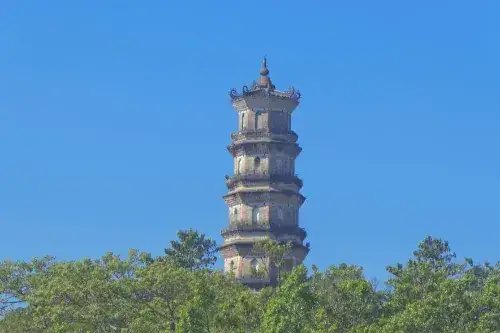
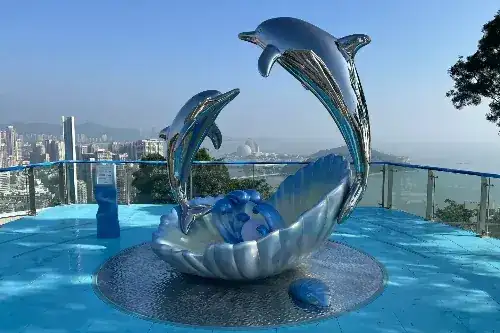
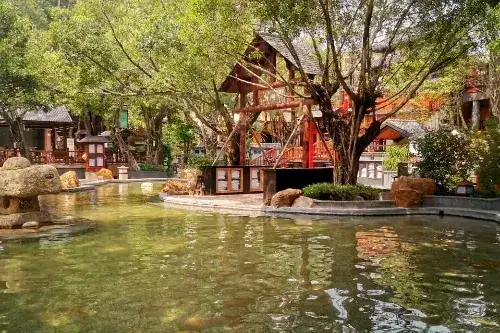
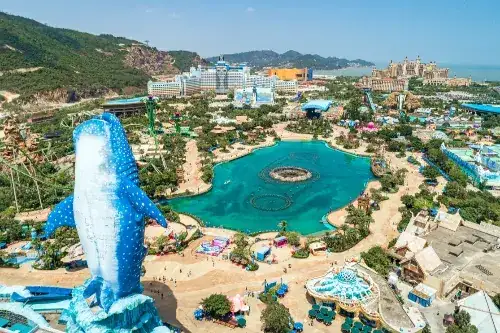
Designated "China Excellent Tourism City" with 22 city branding titles. Major attractions: Queshi Scenic Area, Zhongxin Resort, Sun Yat-sen Park, and Nan'ao Island ecological tourism area.
National A-Level Scenic Areas
Multiple national A-level areas including Queshi Scenic Area (AAAA), Nan'ao Island ecological tourism area, and Lotus Mountain, offering coastal landscapes, historical sites, and nature reserves.
Eight New Sights of Shantou
The Eight New Sights showcase Shantou's iconic coastal scenery, mountain vistas, and cultural sites reflecting its unique geographical and historical character.
External Exchange
Shantou maintains sister city relationships and serves as a cross-strait exchange base, leveraging its large overseas Chinese diaspora from the Chaoshan region to promote international cooperation.
Notable Figures
Notable figures include business magnate Li Ka-shing, Olympic table tennis champion Ma Lin, and various scholars and revolutionary leaders from the Chaoshan region.
Major Honors
22 city branding titles include "China Excellent Tourism City," "National Model City for Double Support," "China's Famous Food City," and "National Civilized City."
Travel information can change. Check current opening hours, reservations and entry requirements before you travel.
Traveller discussion
Start the conversation with a helpful tip or a question.