
Hengyang City
Hengyang CityHengyang City, also known as Yancheng (Goose City) and Hengzhou, is a prefecture-level city in Hunan Province, located in southern China in the central-southern part of the province. It features a typical basin topography, high
Hengyang City
Hengyang City, also known as Yancheng (Goose City) and Hengzhou, is a prefecture-level city in Hunan Province, located in southern China in the central-southern part of the province. It features a typical basin topography, higher in the south and lower in the north, with warm winters and elevated spring temperatures. Precipitation is concentrated after spring begins, with abundant rainfall in summer and autumn. The total area is 15,310 square kilometers. As of September 2025, Hengyang administers 5 districts, 5 counties, and 2 county-level cities. As of the end of 2025, the permanent population was 6.3636 million. Hengyang is a national key regional city, a provincial sub-center, a Type II large city, and a Tier-3 city. It is an important member of the urban agglomeration in the middle reaches of the Yangtze River and the political, economic, military, and cultural center of the Xiangnan (southern Hunan) region. Designated by the state as a key city in the central region, its urban area straddles the Xiang River, making it one of the important transportation hubs of Hunan Province and the south-central region. It is an important industrial city in south-central China, one of the pilot demonstration cities for "Made in China 2025," and home to Hunan's first comprehensive bonded zone and national-level high-tech zone. It is designated as a national demonstration zone for industrial transfer and a key base for processing trade. Hengyang is also a national pilot city for comprehensive service industry reforms, a national ecological civilization pioneer demonstration zone, a national health city, and a national garden city. The city is known for the "Eight Scenic Spots of Hengzhou," including Yanfeng Misty Rain, Shigu River and Mountain, Zhuling Rear Cave, Qingcao Fisherman's Home, Huayao Spring Stream, Yueping Snow Clearing, Dongzhou Peach Waves, and West Lake White Lotus. In 2025, Hengyang achieved a regional GDP of 468.955 billion yuan (approximately $65.1 billion), a year-on-year increase of 5.2%.
History
In the fifth year of Emperor Gaozu of the Western Han Dynasty (202 BCE), Lingxian County was first established at present-day Linghu Township in Zhuhui District. During the Three Kingdoms period, Hengyang was divided between Hengyang Commandery and Xiangdong Commandery. In the Kaihuang era of the Sui Dynasty (589 CE), the Sui conquered Chen and merged the Xiangdong and Hengyang commanderies into Hengzhou, combining Linzheng, Xincheng, and Chongan into Hengyang County—the first recorded use of the name "Hengyang" for a county. During the Tang Dynasty (621 CE), Hengzhou was reestablished. In 733 CE, the Hunan Observation Commission was set up in Hengzhou, marking the first appearance of the name "Hunan" in China's administrative history. During the Five Dynasties and Ten Kingdoms period, Ma Yin founded the Chu Kingdom in Hunan, with Hengyang as part of Hengzhou.
During the Yuan Dynasty, the provincial system was established and Hengzhou Route was created. In the early Ming Dynasty, Hengzhou Prefecture was established under Huguang Province. In 1652, during the Qing unification wars, Li Dingguo of the Great Western Army ambushed Qing forces near Hengzhou, killing Prince Nikan in what became known as the "Battle of Hengzhou." In 1676, Wu Sangui proclaimed himself emperor in Hengyang, naming his state Zhou and designating Hengyang as Yingtian Prefecture. In 1914, Hengyang Circuit was established, administering 34 counties in southern Hunan. In 1942, Hengyang City was formally established, becoming a province-administered city in 1943. On October 8, 1949, the People's Liberation Army entered Hengyang. In 1983, Hengyang Prefecture was merged with Hengyang City, implementing a city-administering-county system.
Administrative Divisions
Division History
In 2001, the State Council approved the reorganization of Hengyang's urban districts: the former Jiangdong, Chengnan, Chengbei, and Suburban districts were replaced by Zhuhui, Yanfeng, Shigu, and Zhengxiang districts.
Division Details
As of September 2025, Hengyang administers 5 districts (Yanfeng, Shigu, Zhuhui, Zhengxiang, Nanyue), 5 counties (Hengyang, Hengnan, Hengshan, Hengdong, Qidong), and 2 county-level cities (Leiyang, Changning). The municipal government is located at 16 Jiefang Avenue, Zhengxiang District.
Geography
Location
Hengyang is located in the central-southern part of Hunan Province, in the middle reaches of the Xiang River, south of Mount Heng. It lies between 110°32'16"E and 113°16'32"E longitude, and 26°07'05"N and 27°28'24"N latitude. It borders Zhuzhou to the east, Chenzhou to the south, Yongzhou and Shaoyang to the west, and Loudi and Xiangtan to the north. The city spans 150 km north-south and 173 km east-west, with a total area of 15,310 square kilometers.
Topography
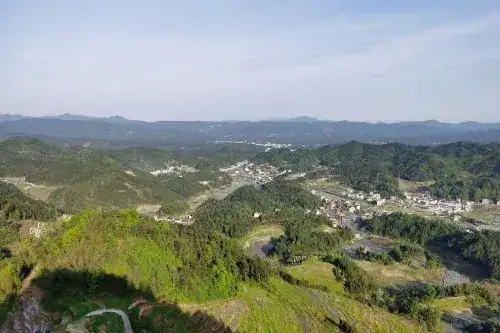
Hengyang sits in the axial zone of Hunan's concave surface, surrounded by discontinuous ridges of ancient rock formations that form a typical basin. The Hengyang Basin is higher in the south and lower in the north, with elevations descending in four levels: 1,000 m, 700–800 m, 300–400 m, and 150 m. Mountainous areas account for 21% of the total area, hills 27%, tablelands 27%, plains 21%, and water bodies 4%. The highest point is Zhurong Peak of Mount Heng at 1,300.2 meters; the lowest is Pengbigang in Hengdong at 39.2 meters.
Climate
Hengyang has warm winters and elevated spring temperatures, with concentrated precipitation after spring begins. Summer and autumn feature abundant rainfall and relatively cool conditions. The average annual sunshine duration is 1,520.2 hours.
Hydrology
The Xiang River, originating in Xing'an, Guangxi, enters Hengyang at Guiyang Town in Qidong and flows 226 km within the city. Hengyang has 393 rivers and streams with lengths of 5 km or more, totaling 8,355 km of waterways. Major tributaries include the Chongling, Zheng, Lei, and Mishui rivers. Hydropower resources have a theoretical capacity of 876,100 kW, with 641,700 kW developable. The Xiang River accounts for 39.7% of its total length within Hunan flowing through Hengyang.
Natural Resources
Water Resources
Hengyang has per capita water resources of 1,139 cubic meters, average annual precipitation of 1,228.4 mm, and total water consumption of 3.367 billion cubic meters. In 2024, total water resources reached 14.21 billion cubic meters. Urban air quality was excellent on 337 days (92.1% rate), with PM10 at 53 micrograms per cubic meter and PM2.5 at 35 micrograms per cubic meter. All 27 surface water assessment sections met quality standards.
Fauna
Hengyang has over 200 species of mammals and birds, including 30 mammal species and more than 170 bird species across 17 orders and 40 families. Nationally protected Class I animals include the clouded leopard, white stork, and Chinese merganser. Class II protected animals include the pangolin, tiger frog, otter, large civet, small civet, and masked palm civet.
Flora
Hengyang has 99 families, 342 genera, and 1,047 species of woody plants. Nationally protected Class I species include ginkgo, golden larch, and dove tree. Class II species include Cephalotaxus, Eucommia, and Chinese yew. Notable economic species include bamboo, oil-seed camellia, and chestnut.
Mineral Resources
Hengyang has discovered 69 types of minerals, with 57 having proven reserves, including 6 energy minerals, 29 metallic minerals, 33 non-metallic minerals, and 1 water-gas mineral. Major deposits include iron, manganese, lead, zinc, tungsten, copper, tin, gold, uranium, kaolin, and barite. Lead-zinc reserves rank first in the province at 2.1447 million tons of metal; tin reserves account for 66% of the provincial total; gold reserves approach 50%; and feldspar reserves account for 99%.
Population
Population Size
According to the seventh national census, Hengyang's permanent population was 6,645,243, accounting for 10% of Hunan's total. As of the end of 2025, the permanent population was 6.3636 million, with an urbanization rate of 58.51%, up 0.68 percentage points from the previous year.
Ethnic Composition
Hengyang has 40 ethnic minorities, with the main five being Yao, Tujia, Miao, Zhuang, and Hui.
Politics
Economy
Overview
In 2025, Hengyang achieved a GDP of 468.955 billion yuan (approximately $65.1 billion), growing 5.2% year-on-year. The primary industry added 49.064 billion yuan ($6.8 billion, +4.4%), the secondary industry 146.039 billion yuan ($20.3 billion, +5.1%), and the tertiary industry 273.852 billion yuan ($38.0 billion, +5.4%). Per capita GDP was 73,286 yuan (approximately $10,180), up 6.3%. The industrial structure was 10.5:31.1:58.4.
Fixed asset investment decreased 9.8%. Local general public budget revenue was 18.635 billion yuan ($2.6 billion, -4.9%). Resident per capita disposable income was 40,550 yuan (approximately $5,630, +5.0%), with urban residents at 49,844 yuan ($6,920, +4.0%) and rural residents at 30,171 yuan ($4,190, +5.7%). Per capita consumption expenditure was 30,584 yuan (approximately $4,250, +4.4%).
Primary Industry
In 2025, agriculture, forestry, animal husbandry, and fishery total output value reached 88.662 billion yuan ($12.3 billion, +4.6%). Grain output was 3.1944 million tons (+1.1%), oilseed output 388,300 tons (+4.7%), and vegetable and edible mushroom output 2.4968 million tons (+3.9%). Slaughtered pigs numbered 7.1034 million (+3.5%), and aquatic products reached 343,100 tons (+4.7%).
Secondary Industry
In 2025, industrial value added above designated size grew 5.9%. Key sectors included non-ferrous metal smelting (+11.3%), general equipment manufacturing (+12.7%), electrical machinery manufacturing (+9.0%), and ferrous metal smelting (+13.5%). Major products: raw salt 3.9368 million tons (+3.2%), cement 4.6443 million tons (-10.9%), steel 1.8318 million tons (+2.1%), and ten non-ferrous metals 837,300 tons (+7.8%). Construction output grew 5.6%, with building construction area of 28.3408 million square meters (+5.3%).
Tertiary Industry
In 2025, total retail sales of consumer goods reached 198.232 billion yuan ($27.5 billion, +4.8%). Urban retail sales accounted for 169.403 billion yuan ($23.5 billion, +4.7%) and rural sales 28.829 billion yuan ($4.0 billion, +5.3%). Hengyang actually utilized $23.42 million in foreign investment (+34.0%). The city received 84.1025 million domestic and international tourists (+12.5%), generating domestic tourism revenue of 86.881 billion yuan ($12.1 billion, +13.8%) and international tourism revenue of $20.82 million (+12.8%). Postal business volume was 4.184 billion standard units (+15.4%), with express delivery volume of 293.31 million parcels (+15.6%). Real estate development investment was 15.54 billion yuan ($2.2 billion, -15.5%). Financial institution deposits reached 685.597 billion yuan ($95.2 billion) and loans 431.809 billion yuan ($59.9 billion).
Social Affairs
Science and Technology
In 2025, Hengyang had 1,281 high-tech enterprises, ranking third in the province. Technology contract transactions exceeded 62.643 billion yuan ($8.7 billion). The city operated 240 provincial-level and above innovation platforms, including key laboratories and engineering technology research centers.
Education
Hengyang had 535 inclusive kindergartens with 49,647 children enrolled, achieving a coverage rate of 91.4%. The city added 8,586 compulsory education seats. In the national college entrance examination (gaokao), 29,989 students achieved undergraduate admission, with a pass rate of 51.5%; 10 students were admitted to Peking University and Tsinghua University, ranking second in the province.
Culture
Hengyang has 10 performing arts troupes, 13 cultural centers, 14 public libraries, and 21 museums and memorial halls. It has 8 national-level and 49 provincial-level intangible cultural heritage projects. The city operates 8 radio stations, 16 FM and TV relay stations, 9 TV stations, and 500,000 cable TV subscribers.
Healthcare
Hengyang has 4,726 health institutions, including 403 hospitals and health centers, 13 maternal and child health centers, with 18,400 practicing physicians and 28,000 registered nurses. Community health centers and township health centers number 225, with 12,571 beds.
Sports
Hengyang has 19,090 sports venues, including 7 large gymnasiums, 922 track and field venues, and 150 swimming facilities. The city's regular sports participants reached 2.64 million, with 240 mass fitness events held. Athletes won 8 world championships, 2 Asian championships, and 16 national championships.
Social Security
In 2025, Hengyang added 72,400 new urban jobs and provided 38,500 subsidized vocational training sessions. Basic medical insurance covered 5.285 million people, and basic pension insurance covered 3.3273 million people. Minimum living allowances supported 152,100 rural residents and 26,100 urban residents, with expenditure of 737 million yuan ($102 million). Social welfare lottery sales reached 609 million yuan ($84.5 million).
Transportation
Highways
Hengyang is one of China's 45 highway transportation hub cities. Major expressways include the G4 Beijing-Hong Kong-Macao Expressway, G72 Quannan Expressway, and S80 Hengshao Expressway, along with National Highways 107 and 322. As of 2025, Hengyang had 1.2482 million civilian vehicles, including 904,600 automobiles and 483,800 private cars. Key urban arteries include the Second Ring Road, Yuncheng Avenue, and Chuanshan East Road.
Railways
Hengyang is served by the Beijing-Guangzhou Railway, Beijing-Guangzhou High-Speed Railway, Xianggui Railway, Xianggui High-Speed Railway, Jiheng Railway, and Huaishao-Heng Railway. Hengyang Station is the primary railway station on the Beijing-Guangzhou line. Hengyang East Station is a high-speed rail station connected to the urban center via Hengzhou Avenue and Chuanshan East Road. Hengyang North Station is one of China's 12 regional marshaling yards. Additional stations include Hengyang West, Hengyang South, Leiyang, Leiyang West, Hengshan, Hengshan West, Qidong, Qidong North, and Xidu stations.
Water Transport
The Xiang River is navigable year-round, with Hengyang Port capable of handling 2,000-ton vessels connecting to the Yangtze River, reaching Shanghai and global destinations. Hengyang Port is one of Hunan's eight major ports, with the Dingjiaqiao 1,000-ton-class wharf at the Baishazhou Industrial Park and the Songmu and Jintanghe ports in the Songmu Industrial Park.
Aviation
Hengyang Nanyue Airport, located in Yunji Town, Hengnan County, officially opened on December 23, 2014. It is a national 4C regional airport with a 2,400-meter runway, serving 16 routes and 26 domestic destinations in the 2024 summer-autumn season. In 2025, passenger throughput reached 1.145 million (+10.1%). Future plans include extending the runway to 3,200 meters for 4D classification.
History and Culture
Dialects
Hengyang dialects include Xiang (both Old and New Xiang), Gan, and Southwestern Mandarin. The urban Hengyang, Hengyang County, and Hengnan County dialects are considered authentic local dialects. Qidong dialect belongs to the Loudao subgroup of Old Xiang, while the urban area, Hengnan, Hengshan (including Nanyue District), and Hengdong belong to the Chang-Yi subgroup of New Xiang. Leiyang and Changning dialects fall within the Gan language area.
Folk Customs
Yonghe Township in Hengshan County has a long tradition of dragon boat racing during the Dragon Boat Festival. The Shatou Village old pier, built during the Ming Dynasty Jiajing period, has been an important venue for dragon boat competitions. In Huangzhou Village, a treasured "old dragon head" is preserved, with the village dragon boat team organizing worship ceremonies on the first and fifteenth of each lunar month.
Cultural Heritage Protection
As of December 2018, Hengyang had 177 cultural heritage protection sites, including 12 national-level, 54 provincial-level, and 111 municipal-level sites.
Intangible Cultural Heritage
As of the end of 2022, Hengyang had 8 national-level and 27 provincial-level intangible cultural heritage projects.
Local Specialties
Hengyang's specialty foods include Yulin Xiangyao, Hengyang snails, fish head tofu, Zhang Fei wine, Xiangzhi wine, Shugu crispy mooncakes, black lotus seeds, Qidong daylily, Qidong betel nut taro, Nanyue cloud-mist tea, Leiyang rice noodles, jar-pickled vegetables, and Hengyang rice noodles.
Scenic Spots
Overview
Hengyang is a China Excellent Tourism City and a Chinese Anti-Japanese War Memorial City. National-level protected sites include the Nanyue Loyal Martyrs' Shrine, Nanyue Grand Temple, Caihou Shrine, Hengzhou Kiln, and the former residence of Luo Ronghuan. The city is known for the "Eight Scenic Spots of Hengzhou."
Main Attractions
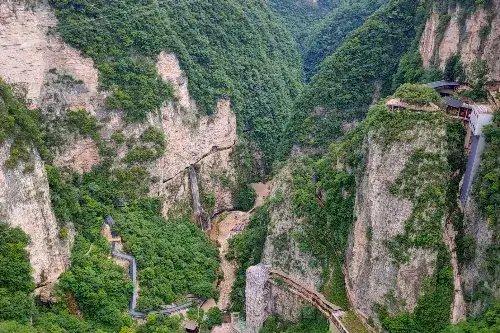
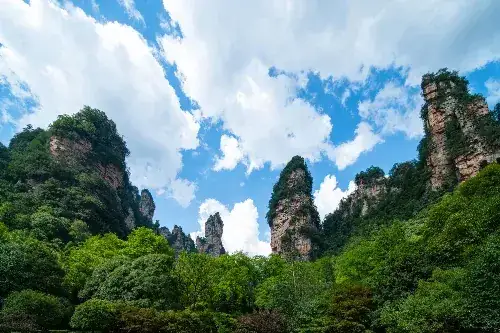
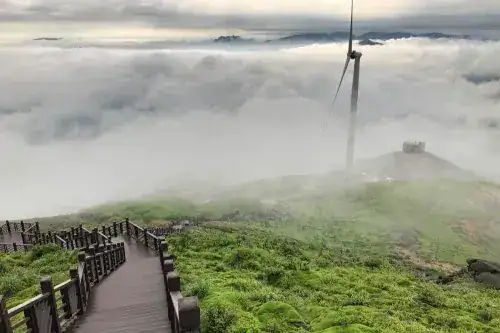
Mount Heng (Nanyue) is one of China's Five Great Mountains, known as the "Mountain of Longevity." Located in Nanyue District, it is a national 5A-level tourist attraction, national nature reserve, and national key scenic area. Zhurong Peak reaches 1,300.2 meters. Mount Heng was among the first national key scenic areas designated by the State Council in 1982.
Cailun Bamboo Sea covers 160,000 mu across more than 200 hills, designated as a national water conservancy scenic area and provincial-level scenic area. Jiangkou Bird Island, 18 km from urban Hengyang in Hengnan County, is a national key bird nature reserve with 114 bird species and over 100,000 birds. Shigu Academy, founded in 810 CE during the Tang Dynasty, is one of China's "Four Great Academies," alongside Yingtian, Bailudong, and Yuelu academies. It was destroyed during the Battle of Hengyang in 1944 and rebuilt in 2008 following the Qing Dynasty layout. Dongzhou Island, situated in the Xiang River, along with Changsha's Juzizhou and Yueyang's Junshan, forms the three great islands of Huxiang historical culture.
Sister Cities
Famous People
Ancient
Notable historical figures from Hengyang include Cai Lun (inventor, improver of papermaking), Cao Chenghui (Northern Song Minister of War), Zhao Fang (Southern Song official), Zhao Kui (Southern Song Privy Council Commissioner), Wang Fuzhi (philosopher, thinker, and historian of the Ming-Qing transition), Peng Yun (Qing Dynasty top scholar), and Peng Yulin (late Qing Minister of War).
Modern
Modern figures include Luo Ronghuan (one of China's Ten Marshals), Fu Dingyi (first director of the Central Literature and History Research Institute), Xia Minghan (revolutionary), Tang Qunying (female revolutionary), and Liu Daoyi.
Contemporary
Contemporary figures include Ma Ying-jeou (former leader of Taiwan, former KMT chairman), Liu Zhaoxuan (former Taiwan "Premier"), Qiong Yao (writer and screenwriter), Luo Fu (renowned poet), Hai Yan (playwright), Liu Heping (screenwriter), and numerous other notable figures in literature, arts, military, and public service.
Honorary Titles
Hengyang has received numerous honors, including National Garden City (2017), China's Top 100 Cities (88th in 2019), National Health City (2021), National Comprehensive Transportation Hub City (2021), National Innovative City (2021), National Double Support Model City (2020, 2025), National Civilized City (2025), and National Rule of Law Government Demonstration City (2025).
Travel information can change. Check current opening hours, reservations and entry requirements before you travel.
Traveller discussion
Start the conversation with a helpful tip or a question.