
Zhuzhou City
Zhuzhou CityZhuzhou City, known as Jianning in ancient times, is a prefecture-level city in Hunan Province and a member city of the Changsha-Zhuzhou-Xiangtan metropolitan circle. Located in eastern Hunan along the lower reaches of the Xiang
Zhuzhou City
Zhuzhou City, known as Jianning in ancient times, is a prefecture-level city in Hunan Province and a member city of the Changsha-Zhuzhou-Xiangtan metropolitan circle. Located in eastern Hunan along the lower reaches of the Xiang River, it borders Pingxiang City, Lianhua County, Yongxin County, and Jinggangshan City in Jiangxi Province to the east, connects with Hengyang and Chenzhou to the south, adjoins Xiangtan to the west, and neighbors Changsha to the north. The terrain rises toward the southeast and descends toward the northwest, with a mild climate and four distinct seasons, covering a total area of 11,200 square kilometers. As of the end of 2025, Zhuzhou administers 5 districts, 3 counties, and 1 county-level city. The permanent resident population was 3.8204 million at the end of 2025. Zhuzhou sits at the north-south and east-west crossroads of China, serving as a core city of the Changsha-Zhuzhou-Xiangtan urban cluster and a member of the middle Yangtze River urban agglomeration. It was one of the first eight key industrial cities developed after the founding of the People's Republic of China and remains an important old industrial base. The Beijing-Guangzhou and Shanghai-Kunming railways intersect here, forming an important cross-shaped railway hub. Zhuzhou boasts a deep cultural heritage where agricultural civilization, revolutionary culture, and modern industrial heritage intertwine. It is the resting place of Emperor Yan (Shennong), a legendary ancestor of the Chinese nation, and a land of heroes in the revolutionary era. The city has earned the titles of National Greening City, National Health City, National Civilized City, National Garden City, and National Public Transit Demonstration City. In October 2025, it was awarded the National Rule of Law Government Demonstration City. In 2025, the city GDP reached 406.346 billion yuan (approximately USD 56.0 billion).
History
In ancient times, the Zhuzhou area was already inhabited by early peoples. The Luyuan Slope in Yanling County is the burial site of Emperor Yan (Shennong), a legendary ancestor of the Chinese nation. Archaeological discoveries include a 6,000-year-old Daxi Culture site from the early Neolithic period at Mount Moshan near Piaosha Well in Zhuzhou County, overlaid by a 4,000-year-old Longshan Culture site from the late Neolithic period.
During the Spring and Autumn and Warring States periods, Zhuzhou belonged to Qianzhong Commandery of the Chu State. In 223 BCE, after Qin conquered Chu, Zhuzhou remained under Qianzhong Commandery. In 202 BCE, the Changsha Kingdom was established, and Zhuzhou was part of its territory.
In 214 CE, during the Eastern Han Dynasty, Sun Quan established Jianning County along the eastern bank of the Xiang River, marking the beginning of Zhuzhou as a county-level entity. The county seat was moved several times between Zhuzhou and Gantian during the Three Kingdoms period. During the Western Jin Dynasty, Jianning County remained based at Zhuzhou under Changsha Commandery of Jingzhou. The Sui Dynasty abolished Jianning County and merged it into Xiangtan County in 589 CE. The Tang Dynasty briefly restored Jianning County in 621 CE under Nanyun Prefecture, but it was abolished again in 627 CE.
In 1908, during the Qing Dynasty, the Zhuzhou Subprefecture was established. After the founding of the Republic of China in 1912, the Zhuzhou Subprefecture was dissolved and reverted to Xiangtan County. In 1934, Zhuzhou Town was established, and in 1947, it was merged with Baiguan and Zhaoyang townships into Zhuzhou Township.
On August 3, 1949, the People's Liberation Army liberated Zhuzhou, and on August 12, the Zhuzhou District People's Government was established. In 1951, Zhuzhou was established as a county-level city under Changsha Prefecture. In 1953, it was upgraded to a province-administered city. In March 1956, Zhuzhou was elevated to a prefecture-level city, becoming the first prefecture-level city in Hunan Province besides the provincial capital Changsha. In 1983, the city adopted the system of administering counties, incorporating Youxian, Chaling, Liling, and Lingxian Counties. In 1997, the urban districts were reorganized into Hetang, Lusong, Shifeng, and Tianyuan Districts. In 2018, Zhuzhou County was abolished and replaced by Lukou District of Zhuzhou.
Administrative Divisions
As of 2025, Zhuzhou administers 5 districts (Tianyuan, Lusong, Hetang, Shifeng, and Lukou), 3 counties (Youxian, Chaling, and Yanling), and 1 county-level city (Liling), along with the Yunlong Demonstration Zone and Zhuzhou Economic Development Zone. The municipal government is located at No. 58 Tiantai Road, Tianyuan District.
Geography
Location and Boundaries
Zhuzhou is located in eastern Hunan Province along the lower Xiang River, between 26 degrees 03 minutes 05 seconds and 28 degrees 01 minutes 07 seconds North latitude, and 112 degrees 57 minutes 30 seconds and 114 degrees 07 minutes 15 seconds East longitude. It borders Jiangxi Province to the east, Hengyang and Chenzhou to the south, Xiangtan to the west, and Changsha to the north, with a total area of 11,200 square kilometers.
Topography
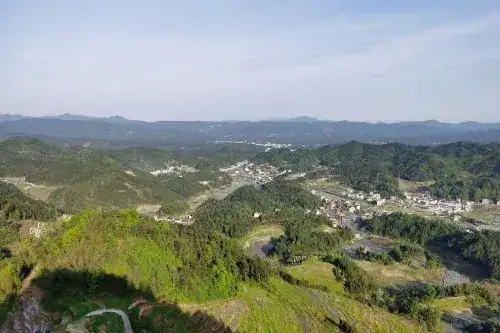
Zhuzhou is situated at the western foot of the Luoxiao Mountains, on the transitional slope from the Nanling Mountains to the Jianghan Plain. The overall terrain rises toward the southeast and descends toward the northwest. The north-central area features alternating ridges and valleys with belt-shaped basins, while the southeast is mountainous. Water bodies cover 5.66% of the area, plains 16.37%, low terraces 12.87%, high terraces 6.56%, hills 17.02%, and mountains 41.52%.
Climate
Zhuzhou falls within the subtropical monsoon climate zone, characterized by mild temperatures, four distinct seasons, abundant heat, and ample rainfall. The annual average temperature ranges between 17 and 18 degrees Celsius, making it one of the warmer regions in Hunan. Summer days with temperatures reaching 35 degrees Celsius or above average 35 to 39 days per year, even exceeding the so-called three furnaces of the Yangtze River basin (Chongqing, Wuhan, and Nanjing) by 4 to 20 days.
Hydrology
Zhuzhou has 341 rivers exceeding 5 kilometers in length, all part of the Xiang River system. The Xiang River main stream flows 88 kilometers through the city. Major tributaries include the Mishui River (197.8 km, covering 57.3% of the city area) and the Lushui River (80 km, covering 24.4% of the city area).
Natural Resources
Water Resources
Eight large bridges span the Xiang River in Zhuzhou, including the Qingshuitang Bridge completed on August 28, 2023. Key reservoirs include the Qingnian, Guanzhuang, Taoshui, Jiubujiang, and Baiguan Reservoirs, all maintaining excellent water quality.
Plant Resources
Zhuzhou has 884 plant species across 296 genera and 106 families, including ferns, gymnosperms, and angiosperms, with forest vegetation divided into 2 major zones and 12 types.
Animal Resources
Common bird species include egrets, wild ducks, eagles, pheasants, woodpeckers, swallows, and magpies. The yellow-bellied tragopan is under national first-class protection. Common mammals include hedgehogs, macaques, pangolins, otters, wild boars, and various deer species.
Mineral Resources
Zhuzhou has proven reserves of over 40 mineral types, including coal, iron, tungsten, lead, zinc, gold, tin, uranium, molybdenum, copper, silver, niobium, tantalum, rare earths, fluorite, gypsum, kaolin, limestone, and granite, earning it the reputation of a hometown of non-ferrous metals.
Population
Population Size
As of the end of 2025, Zhuzhou had a permanent resident population of 3.8204 million, a decrease of 17,400 from the previous year. The urban population was 2.8458 million (increase of 14,900), the rural population was 974,600 (decrease of 32,300), and the urbanization rate was 74.49%, up 0.73 percentage points.
Ethnic Composition
Zhuzhou is a multi-ethnic area with 46 ethnic minorities and a permanent ethnic minority population of approximately 23,000, accounting for 0.56% of the total population.
Politics
Current Leadership
The municipal leadership governs through the CPC Zhuzhou Municipal Committee and the Zhuzhou Municipal People's Government, exercising prefecture-level administrative and economic management authority.
Sister Cities
Zhuzhou maintains sister-city relationships with several domestic and international cities to promote exchange and cooperation.
Economy
Overview
In 2025, Zhuzhou GDP reached 406.35 billion yuan (approximately USD 56.0 billion), growing 5.6%. The primary, secondary, and tertiary industries contributed 29.50 billion yuan (approximately USD 4.07 billion), 186.86 billion yuan (approximately USD 25.77 billion), and 189.99 billion yuan (approximately USD 26.20 billion), growing 4.3%, 7.1%, and 4.2% respectively. The industrial structure ratio was 7.3:46.0:46.7. Per capita GDP was 106,120 yuan (approximately USD 14,640), up 6.0%. Industrial value added grew 8.1%, accounting for 39.9% of GDP.
Fixed asset investment declined 6.8% in 2025. By sector, primary industry investment fell 6.7%, secondary industry investment rose 2.6%, and tertiary industry investment fell 19.7%. Investment in scientific research and technical services surged 107.9%, while manufacturing investment grew 5.8%.
General public budget expenditure totaled 49.03 billion yuan (approximately USD 6.76 billion), with education spending of 7.49 billion yuan (approximately USD 1.03 billion, up 5.2%) and social security and employment spending of 6.44 billion yuan (approximately USD 0.89 billion, up 6.3%).
Urban and rural per capita disposable income reached 51,343 yuan (approximately USD 7,080), up 4.4%. Urban per capita disposable income was 61,297 yuan (approximately USD 8,455), and rural per capita disposable income was 32,453 yuan (approximately USD 4,476), with an urban-rural income ratio of 1.89:1.
Primary Industry
In 2025, the agriculture, forestry, animal husbandry, and fishery sectors achieved a value added of 30.93 billion yuan (approximately USD 4.27 billion), growing 4.4%. Grain output rose 0.7%, vegetable output 4.1%, and fruit output 5.6%. The city implemented 11 high-standard farmland construction projects covering 204,000 mu (approximately 13,600 hectares).
Secondary Industry
In 2025, industrial value added above designated scale grew 9.6%. By ownership, state-controlled enterprises grew 12.9%, and foreign-controlled enterprises grew 16.3%. By sector, metal products grew 36.9%, electrical machinery 25.7%, ceramics 14.2%, and automobile manufacturing 11.0%. Industrial parks at or above provincial level contributed 80.3% of scaled industrial value added. Above-scale industrial enterprises achieved total profits of 20.46 billion yuan (approximately USD 2.82 billion), down 3.7%. The construction industry value added reached 25.09 billion yuan (approximately USD 3.46 billion), up 2.2%.
Tertiary Industry
In 2025, the wholesale and retail sector achieved a value added of 54.77 billion yuan (approximately USD 7.56 billion), growing 5.8%. Total retail sales of consumer goods reached 144.85 billion yuan (approximately USD 19.98 billion), up 4.9%. Total import and export volume was 26.29 billion yuan (approximately USD 3.63 billion), up 6.5%. Actual foreign investment utilized reached USD 19.71 million, up 95.5%.
Financial institution deposits reached 562.27 billion yuan (approximately USD 77.56 billion), up 10.5%, and loans reached 442.85 billion yuan (approximately USD 61.08 billion), up 10.0%. The city hosted 70.343 million domestic tourists with tourism spending of 74.24 billion yuan (approximately USD 10.24 billion).
Social Services
Science and Technology
In 2025, the high-tech industry value added reached 68.38 billion yuan (approximately USD 9.43 billion), growing 7.9%. The city had 4 national key laboratories and 22 provincial key laboratories, with 77 provincial-level engineering technology research centers. Technology contract transactions totaled 52.17 billion yuan (approximately USD 7.20 billion), with 5,318 patents granted.
Education
As of the end of 2025, Zhuzhou had 10 regular higher education institutions. Graduate graduates numbered 1,176, undergraduate graduates 39,114, and adult higher education graduates 20,531. The primary school enrollment rate was 100%, and the gross high school enrollment rate was 98.5%.
Culture
Zhuzhou had 4 state-owned performing arts troupes, 10 public libraries, and 10 museums and memorial halls. Two items were listed on the national intangible cultural heritage protection list, and 37 on the provincial list. There were 6 broadcasting stations with 100% comprehensive population coverage.
Healthcare
As of the end of 2025, Zhuzhou had 3,005 health institutions, including 99 hospitals and 1,531 village clinics. There were 32,000 health technical personnel, including 13,000 licensed physicians and 15,000 registered nurses. Hospitals had 20,900 beds in total.
Sports
Zhuzhou had 12,338 sports venues, including 476 sports fields and 136 swimming pools. The city produced 3 world champions, 2 Asian champions, and 9 national champions in 2025.
Social Security
In 2025, Zhuzhou created 65,400 new urban jobs. Basic pension insurance covered 1.627 million urban and rural residents, and basic medical insurance covered 3.507 million people. Urban and rural minimum living security expenditures were 90 million yuan (approximately USD 12.4 million) and 280 million yuan (approximately USD 38.6 million) respectively. The city renovated 113 old urban residential areas.
Transportation
Overview
Zhuzhou is a vital north-south and east-west transportation hub with the largest railway freight marshaling station in southern China. The Beijing-Hong Kong-Macau and Shanghai-Kunming expressways crisscross the city. It is only a 30-minute drive from Changsha Huanghua International Airport, and 1,000-ton vessels can navigate to the sea.
In 2025, the total highway mileage reached 15,800 kilometers, growing 12.9%. Expressway mileage reached 575 kilometers, with 61 kilometers newly added. Civilian motor vehicle ownership reached 759,000 vehicles.
Aviation
Zhuzhou is only 40 kilometers from Changsha Huanghua International Airport, reachable in 30 minutes via the Changsha-Zhuzhou Expressway. The Zhuzhou General Aviation Airport, located 10 kilometers southeast of the city in Lusong District, has an 800-meter runway rated for aircraft under 5,500 kg.
Railway
Zhuzhou is a cross-shaped national railway hub, paired with Zhengzhou as North Zheng, South Zhuzhou. Major stations include Zhuzhou Station (a special-class station on the Beijing-Guangzhou line), Zhuzhou North Station (a special-class freight and marshaling station), Zhuzhou West Station (on the Beijing-Guangzhou high-speed railway), and Liling East Station (on the Shanghai-Kunming passenger line). The Changsha-Zhuzhou-Xiangtan intercity railway, opened in December 2016, enables a 30-minute commute between downtown Zhuzhou and downtown Changsha.
Highway
National Highways 106 and 320, the Beijing-Hong Kong-Macau Expressway (G4), Shanghai-Kunming Expressway (G60), and Quannan Expressway (G72) all pass through Zhuzhou. Seven bridges cross the Xiang River within the city, forming a three-rings, seven-spokes road pattern.
Water Transport
The Xiang River is navigable year-round, connecting Zhuzhou to Hengyang and Yongzhou upstream, and to Changsha, Dongting Lake, and the Yangtze River downstream. Vessels of 1,000 tons can travel via the Xiang River, the Yangtze River, to Shanghai and global ports. Zhuzhou Port is one of the eight major ports in Hunan.
Public Transit
Zhuzhou public transit system leads the nation in energy-efficient innovation. In 2011, it became China first all-electric bus city after replacing all 627 buses on core routes with electric vehicles. Urban bus fare is uniformly 1 yuan (approximately USD 0.14) regardless of route or vehicle type. The city operates approximately 70 bus routes covering urban and suburban areas. A public bicycle rental system launched in 2011, offering free rides for the first 3 hours with a 200-yuan deposit.
Plans include 4 subway lines totaling 108.6 kilometers in a windmill-radiating pattern, with Lines 1 and 2 as the core framework and Lines 3 and 4 as future reserved lines.
History and Culture
Origin of the Name
Zhuzhou was known as Jianning in ancient times and later as Zhuzhou. The character zhu likely derives from Zhutian, a place already well-known during the Five Dynasties period. The character zhou refers to the sandbars along the Xiang River. Another theory suggests the name comes from the abundance of oak trees (pronounced zhu), which led to the name Zhuzhou. The name was officially adopted in 1190 during the Southern Song Dynasty and has been used ever since.
Festivals and Customs
The Emperor Yan Mausoleum sacrificial ceremony is a tradition of over a thousand years, honoring Emperor Yan contributions. Official sacrifices date back to 967 CE, with continuous observance through the Yuan, Ming, and Qing dynasties. The Three-Person Dragon of Yanling is a unique folk art form combining dance, music, and competitive elements, performed at festivals, weddings, and memorial events. Dragon boat racing during the Dragon Boat Festival in Youxian is a major highlight, known for the large number of boats and fierce competition.
Dialects
Zhuzhou dialects are complex, with the main urban area speaking a variant between Changsha and Xiangtan dialects. County-level dialects are heavily influenced by Gan and Hakka, making them difficult to understand across different localities.
Intangible Cultural Heritage
As of the end of 2024, Zhuzhou possessed 2 national-level and 37 provincial-level intangible cultural heritage items.
Historical Sites
Archaeological sites in Zhuzhou include dinosaur fossil sites, the 6,000-year-old Piaoshajing Moshan Culture site, the Zaoshi Dulingao Culture site in Chaling, and numerous ancient city and kiln sites dating back over 2,000 years, testifying to the region rich history of human settlement and ancient handicrafts.
Scenic Spots
Overview
Zhuzhou is a revolutionary old base area with numerous historical revolutionary sites. Key sites include the Emperor Yan Mausoleum in Yanling, the Red Army Slogan Museum, the Workers and Peasants Government site in Chaling, and the former residences and memorial sites of revolutionary leaders such as Mao Zedong investigation sites, Li Lisan former residence, and General Zuo Quan memorial.
Attractions
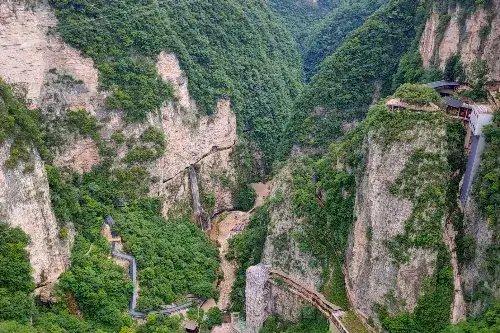
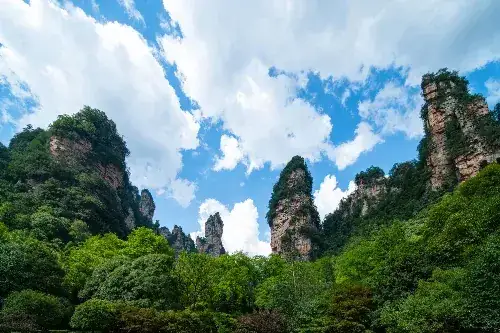
Major attractions include the Xiang River Scenic Belt, the Emperor Yan Mausoleum, the Shennong Valley National Forest Park, and various revolutionary memorial sites across the city districts and counties.
Landmarks
Zhuzhou iconic landmarks include the Zhuzhou Bridge, the railway station complex, and the various bridges spanning the Xiang River, symbolizing the city industrial heritage and modern development.
Notable People
Zhuzhou has produced numerous notable figures, including revolutionary leaders Tan Zhenlin, Zuo Quan, Li Lisan, Geng Biao, Song Shilun, and Yang Dezhi; historical figures Cheng Qian, Chen Mingren, and Cai Shenxi; and contemporary figures in science, arts, and culture including Su Jilan, Li Duo, and Ma Ke.
Honors and Titles
Zhuzhou has received numerous national honors, including National Greening City, National Health City, National Civilized City, National Garden City, National Public Transit Demonstration City, and National Rule of Law Government Demonstration City.
Travel information can change. Check current opening hours, reservations and entry requirements before you travel.
Traveller discussion
Start the conversation with a helpful tip or a question.