
2027 Hexi Corridor Travel Guide: Nine Steps to Easily Plan Your Perfect Gansu Silk Road Trip!
2027 Hexi Corridor Travel Guide: Nine Steps to Easily Plan Your Perfect Gansu Silk Road Trip! Author: Emily | Updated: October 24, 2025 How to explore the Hexi Corridor? This comprehensive travel guide to the Hexi Corridor will take you deep into this "walking epic," containing all-around travel information including history, must-see attractions,…
2027 Hexi Corridor Travel Guide: Nine Steps to Easily Plan Your Perfect Gansu Silk Road Trip!
Author: Emily | Updated: October 24, 2025
If you're planning a memorable trip to the Hexi Corridor, this latest and most practical travel guide will be your perfect travel assistant. In just nine steps, you can easily explore the essence of this ancient Silk Road's golden passage: from historical culture to stunning scenery, from authentic flavors to unique experiences, covering everything to embark on a captivating journey along the Gansu Silk Road.
Step 1: Understanding the rich history of the Hexi Corridor
The Hexi Corridor, a narrow passage stretching approximately 1,000 kilometers between the Qilian and Beishan Mountains, is a vital section of the ancient Silk Road and a "cultural corridor" where Central Plains and Western Regions civilizations collided. It connects popular areas in Gansu, including Lanzhou, Zhangye, Jiayuguan, and Dunhuang. Since Emperor Wu of Han sent Zhang Qian to the Western Regions, it has been a bustling transportation route for merchants and camel caravans. Buddhism spread eastward along this route, and cultural treasures such as the Dunhuang murals, the Jiayuguan Great Wall, and the Maijishan Grottoes have stood the test of time for over a thousand years. Today, the Gobi Desert, Danxia landforms, snow-capped mountains, and oases intertwine to create a unique landscape, while ancient cities, grottoes, and passes tell tales of past prosperity, awaiting your exploration!
The Splendor of the Silk Road in the Hexi Corridor
Historical Highlights:
1. Huo Qubing's campaign in Hexi swept away the Xiongnu, and Emperor Wu of Han established "four commanderies (Wuwei, Zhangye, Jiuquan, and Dunhuang) and two passes (Yangguan and Yumenguan)" as a result, thus building the western gateway to the Central Plains.
2. Zhang Qian's mission to the Western Regions opened up exchanges between Eastern and Western civilizations.
3. The rise of grotto complexes such as Mogao Grottoes and Yulin Grottoes became a testament to the eastward transmission of Buddhism.
Step Two: Master the must-see attractions and essential activities in the Hexi Corridor
1. Must-see attractions in Lanzhou
Zhongshan Bridge:Known as the "First Bridge Across the Yellow River," you can stand on the century-old iron bridge and watch the Yellow River rush eastward, or sit at a tea stall and listen to the old people tell stories of Lanzhou. At dusk, the bridge lights up, reflecting on the river, creating a beautiful and atmospheric scene that you can easily capture in photos.
Gansu Provincial Museum:Concealing the graceful form of the "Flying Horse of Gansu," this bronze horse from the Eastern Han Dynasty has all four limbs in the air, as if it's about to leap out of the display case at any moment. Furthermore, visitors can learn about the stories behind Silk Road artifacts, as if traveling back in time to an era filled with the sounds of camel bells.
In addition, you can also visit popular places such as the Waterwheel Expo Park, White Pagoda Mountain Park, Dunhuang Art Museum, and Zhengning Road Night Market.
2. Must-see attractions in Wuwei
Leitai Han Tomb:The tomb where the "Horse Trampling a Flying Swallow" was unearthed features Han Dynasty brick paintings that vividly recreate scenes of ancient life. You can use a flashlight to illuminate the details of the murals and count how many vehicles were in the tomb owner's "funerary procession".
Tiantishan Grottoes:Revered as the "ancestor of Chinese grottoes," Cave 13 features a magnificent Buddha statue that is about 28 meters high and 19 meters wide, making it well worth a visit.
In addition, you can also visit places like the Wuwei Confucian Temple and the Han-Tang Tianma City.
3. Must-see attractions in Zhangye
Pingshan Lake Grand Canyon:Known as the "Colorado of China," its canyons are crisscrossed with ravines and steep cliffs. You can hike and stroll through them, experiencing the wonders of nature. After reaching the top, you can overlook the vast Gobi Desert, and every snapshot you take will be a stunning masterpiece for your social media.
Rainbow Mountains:One of China's most beautiful Danxia landforms, with layers of red, yellow, orange, and green colors spreading out and extending, it is breathtakingly beautiful even without filters. The colors are most intense after rain or at sunset. You can climb up to Rainbow Terrace No. 4 to watch the sunset gild the hills, and every shot you take is wallpaper-worthy.
The vibrant colors of Zhangye Danxia Landform
In addition, don't miss the cultural treasures such as the Zhangye Giant Buddha Temple and the Mati Temple Grottoes!
4. Must-see attractions in Jiayuguan
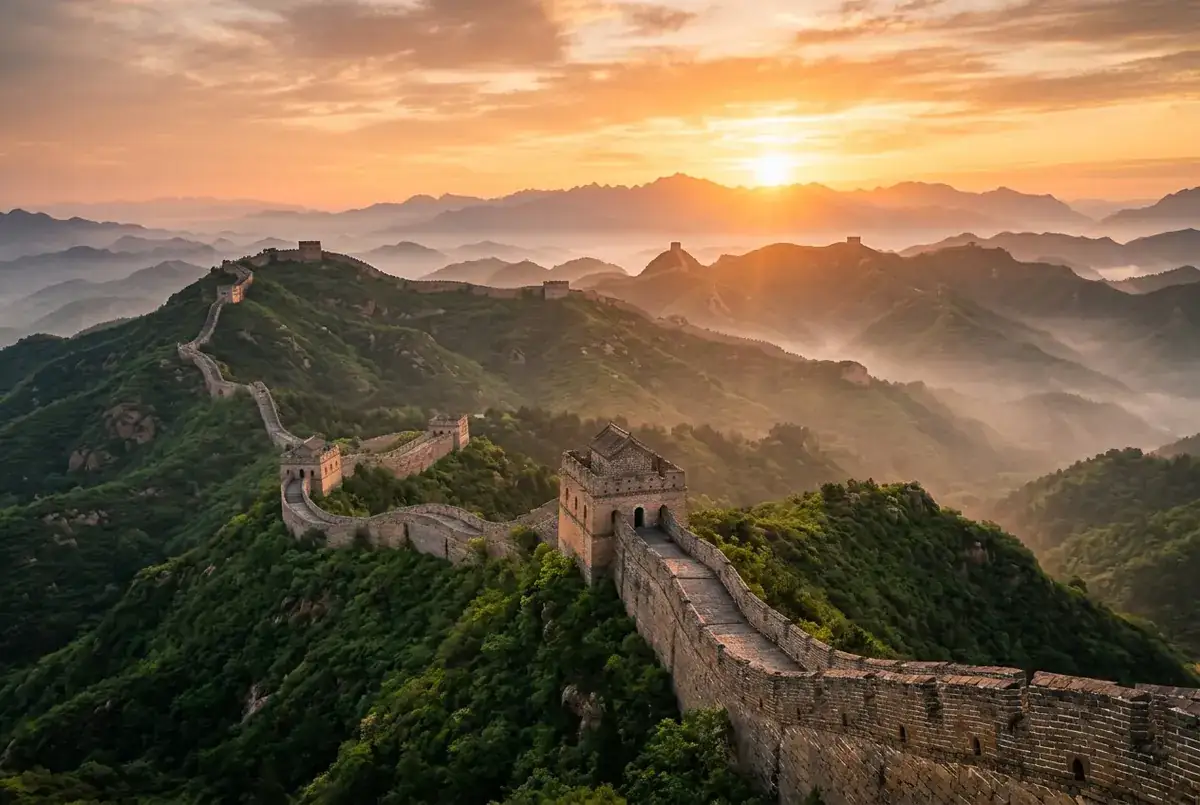
Jiayuguan Fortress:The westernmost starting point of the Ming Great Wall is known as the "First Pass Under Heaven". You can climb the city tower and enjoy a panoramic view of the Qilian Snow Mountain. The ancient city wall bears clear traces of time under the sunlight, as if you can hear the shouts of the Ming Dynasty soldiers guarding the border.
The First Beacon Tower Under Heaven:The Great Wall and the Taolai River meet at a treacherous place, where ruins stand on the cliffs, the river rushes below, and the vast Gobi Desert stretches into the distance. Although it lacks the prosperity of a fortified pass, it possesses a desolate beauty reminiscent of "horses drinking at the Great Wall under the cold moon at night." The scenery at sunset is particularly breathtaking.
If you have enough time, be sure to check out the Overhanging Great Wall, which resembles an inverted dragon!
The majestic Jiayuguan
5. Must-see attractions in Guazhou
Suoyang City Ruins:A thousand-year-old city, submerged by the Gobi Desert, still retains glimpses of its former street layout amidst its ruins. Standing atop the city walls and gazing into the distance, one can almost see the bustling merchants who once rested here, their camel bells fading into the distance. Furthermore, pottery shards can occasionally be found at the base of the city walls.
Yulin Caves:The "sister cave" of Mogao Grottoes has far fewer tourists than Mogao Grottoes. You can calmly listen to the guide explain the story behind each mural and feel the delicacy of Silk Road art. The highlight is the colorful "Amitayurdhyana Sutra Transformation" in Cave 25.
If you have enough time, you can also visit the Gobi Sculpture Art Gallery and take photos of artworks such as "Son of the Earth".
6. Must-see attractions in Dunhuang
Mogao Caves:A gem among World Heritage sites, the murals and painted sculptures inside the caves span more than ten dynasties. You can follow the guide to appreciate the gentle beauty of the "most beautiful Bodhisattva" in Cave 57, the grandeur of the early Tang Dynasty murals in Cave 220, and experience the accumulation of a thousand years of art.
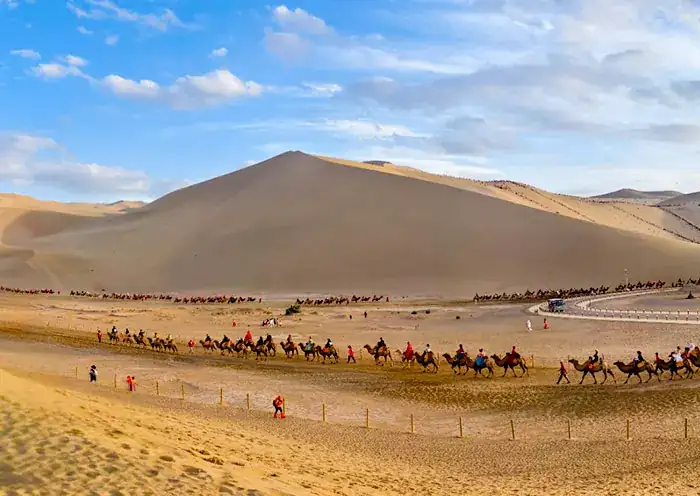
Mingsha Mountain and Crescent Lake:Experience the unique spectacle of "sand and water coexisting" in the desert. You can ride camels along the route of the "Western Regions caravans" and feel the charm of the Silk Road. At dusk, climb the sand dunes to appreciate the beauty of "a lone plume of smoke rising straight from the desert, the setting sun round over the long river." If you're interested, you can also camp here at night to admire the dazzling starry sky.
Tourists taking photos at Mingsha Mountain and Crescent Lake
In addition, popular destinations such as Yangguan Pass, Yumenguan Pass, Yadan National Geological Park, West Thousand Buddha Caves, and Shazhou Night Market are also not to be missed!
Step 3: Choose popular and classic Hexi Corridor tourist routes
1. A classic 6-day, 5-night tour of the Hexi Corridor
Day 1: Arrival in Lanzhou: Free time
Day 2: Lanzhou to Zhangye High-Speed Railway Trip: Liujiaxia Reservoir + Bingling Temple Grottoes
Day 3: Zhangye to Jiayuguan day trip: Giant Buddha Temple + Zhangye Danxia Landform
Day 4: Jiayuguan to Dunhuang Day Trip: Jiayuguan + Overhanging Great Wall
Day 5: Dunhuang Day Trip: Mogao Caves + Mingsha Mountain and Crescent Lake + Shazhou Night Market (Optional)
Day 6: Departure from Dunhuang
6-Day Tour of the Highlights of the Hexi Corridor in Gansu: Lanzhou + Zhangye + Jiayuguan + Dunhuang
Lanzhou, Gansu - Liujiaxia Reservoir - Bingling Temple Grottoes - Zhangye (Giant Buddha Temple - Rainbow Mountains Scenic Area) - Jiayuguan - Dunhuang (Mogao Grottoes - Mingsha Mountain and Crescent Lake)
If you want to start your trip from Dunhuang and explore the Hexi Corridor, we recommend...
6-Day Classic Silk Road Tour of Gansu: Dunhuang + Jiayuguan + Zhangye + Lanzhou
Dunhuang (Mogao Grottoes - Mingsha Mountain and Crescent Lake) - Jiayuguan - Zhangye (Giant Buddha Temple - Rainbow Mountains) - Lanzhou - Liujiaxia Reservoir - Bingling Temple Grottoes
If you only want to visit the highlights of the Hexi Corridor, I recommend
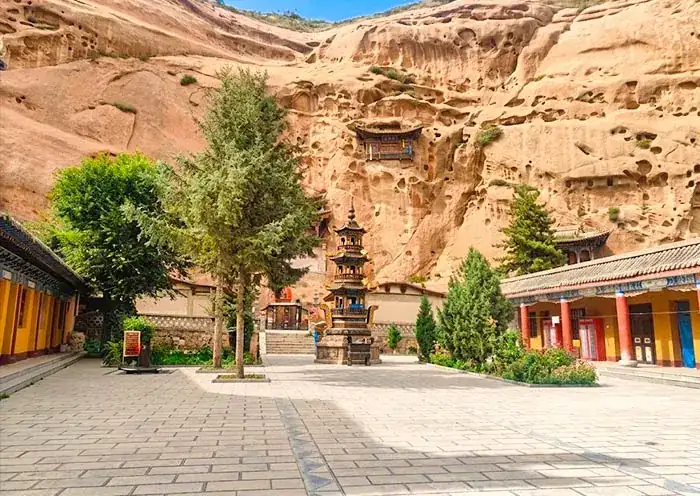
A 6-day tour of Gansu's stunning cultural and scenic corridors: Dunhuang + Jiayuguan + Zhangye
Dunhuang (Mogao Grottoes - Mingsha Mountain and Crescent Lake) - Jiayuguan - Zhangye (Giant Buddha Temple - Rainbow Mountains Scenic Area - Pingshan Lake Grand Canyon - Mati Temple Grottoes)
2. A 9-day, 8-night panoramic tour of the Hexi Corridor in China
Day 1: Arrival in Xi'an: Ancient City Wall + Muslim Quarter + Grand Mosque
Day 2: Xi'an Day Trip: Terracotta Warriors + Big Wild Goose Pagoda + Tang Paradise
Day 3: Xi'an to Tianshui, Gansu High-Speed Railway Trip: Maijishan Grottoes
Day 4: High-speed rail journey from Tianshui to Lanzhou: Free time
Day 5: Lanzhou to Zhangye High-Speed Railway Trip: Liujiaxia Reservoir + Bingling Temple Grottoes
Day 6: Zhangye to Jiayuguan day trip: Giant Buddha Temple + Zhangye Danxia National Geological Park
Day 7: Jiayuguan to Dunhuang Day Trip: Jiayuguan Fortress + Overhanging Great Wall
Day 8: Dunhuang Day Trip: Mogao Caves + Mingsha Mountain and Crescent Lake + Shazhou Night Market (Optional)
Day 9: Departure from Dunhuang
3. Short trip along the Hexi Corridor
If you have limited time, about 3-5 days, you can focus on visiting Zhangye, Jiayuguan and Dunhuang, the three golden sections of the Hexi Corridor, and enjoy the charming natural and cultural customs of the ancient Silk Road.
Dunhuang Silk Road Classic 3-Day Tour: Yumenguan Ruins + Mingsha Mountain and Crescent Lake + Mogao Caves
Dunhuang (Yumenguan Pass - Han Great Wall Ruins - Yadan National Geological Park - Mingsha Mountain and Crescent Lake - Mogao Caves)
5-Day Tour of Gansu's Natural and Cultural Highlights: Zhangye + Jiayuguan + Dunhuang
Zhangye (Rainbow Mountains Scenic Area - Giant Buddha Temple) - Jiayuguan - Dunhuang (Mogao Caves - Mingsha Mountain and Crescent Lake)
5-Day High-Speed Rail & Photography Tour of Gansu Hexi Corridor: Dunhuang + Zhangye
Dunhuang (Mogao Grottoes - Mingsha Mountain and Crescent Lake) - Zhangye (Giant Buddha Temple - Rainbow Mountains Scenic Area - Mati Temple Grottoes - Pingshan Lake Grand Canyon)
In addition, Zhangye is relatively close to Badain Jaran Desert in Inner Mongolia. After visiting the best scenic spots such as Dunhuang, Jiayuguan and Zhangye, if you have enough time, you can add 2 days to your trip to visit the breathtaking Badain Jaran Desert.
7-Day Desert Adventure Tour of Gansu & Inner Mongolia: Dunhuang + Jiayuguan + Zhangye + Badain Jaran
Dunhuang (Mogao Caves - Mingsha Mountain and Crescent Lake) - Jiayuguan - Zhangye (Giant Buddha Temple - Rainbow Mountains - Pingshan Lake Grand Canyon) - Badain Jaran Desert
Step 4: Find out when is the best time to visit the Hexi Corridor.
The best time to visit the Hexi Corridor is from April to October (late spring, summer, and early autumn). During this period, you can encounter the most beautiful natural and cultural landscapes of the Hexi Corridor and have a richer experience.
April to May:At this time, the temperature in the Hexi Corridor gradually warms up, the grasslands are turning green and full of life, and the colors of the Danxia landforms are softer under the warm spring sun. There are fewer tourists at sites like the Mogao Grottoes and the Giant Buddha Temple, allowing for a more tranquil exploration of historical sites and artifacts, and an experience of the charm of the ancient Silk Road. In addition, there is a chance to taste freshly ripened local fruits.
June to August:At this time of year, the Hexi Corridor enjoys abundant sunshine, resulting in the highest color saturation at the Rainbow Mountains scenic area. The colors are particularly vibrant after rain, making it the best time to appreciate the Danxia landforms. Furthermore, the temperature difference between day and night is significant; the Mingsha Mountain and Crescent Lake are relatively cool in the evening, with the sand feeling refreshing, offering opportunities to capture breathtaking sunsets.
September to October:At this time of year, the climate in the Hexi Corridor is comfortable, and the golden poplar forests of Jinta are a beautiful sight, contrasting beautifully with the clear waters. With light clouds and high visibility, the vibrant colors of the Rainbow Mountains and the sunset are absolutely stunning; every snapshot is a masterpiece.
Step 5: Determine your mode of transportation to the Hexi Corridor: plane, train, or road.
1. By Air: Efficient direct flights to core cities
All major cities along the Hexi Corridor have airports. Among them, Lanzhou Zhongchuan International Airport (LHW) and Dunhuang Mogao International Airport (DNH) have the most flights, and there are direct flights to major cities such as Beijing, Shanghai, Chengdu, and Xi'an.
Lanzhou Zhongchuan International Airport:Located approximately 70 kilometers from the city center, it is accessible by intercity train (about 40 minutes) and airport bus (about 1 hour) directly to the city center, and also offers transfers to popular destinations such as Dunhuang and Zhangye.
Dunhuang Mogao International Airport:Located about 13 kilometers from the city center, it is accessible by airport shuttle bus, which takes about 20 minutes. It is also close to Mingsha Mountain and Crescent Lake, making travel very convenient.
In addition, if you want to start your trip directly from Zhangye, you can fly directly from cities such as Beijing and Xi'an to Zhangye Ganzhou Airport (YZY), which is about 25 kilometers from the city center and takes about 30 minutes by car. You can also go directly to Zhangye Danxia National Geological Park, which takes about 1 hour by car.
PS:During peak tourist season in Gansu, air or train tickets can be difficult to purchase. We recommend choosing our Gansu tour packages, which can help you book air or train tickets and make your trip to the Hexi Corridor much easier.
2. Train: A cost-effective option, offering scenic views along the way.
High-speed rail is the preferred mode of intercity travel. The Lanzhou-Xinjiang High-Speed Railway traverses the Hexi Corridor, connecting key cities such as Lanzhou, Zhangye, Jiayuguan, and Dunhuang, offering both speed and comfort. The journey from Lanzhou to Zhangye takes approximately 3 hours, from Zhangye to Jiayuguan approximately 1.5 hours, and from Jiayuguan to Dunhuang approximately 3 hours, offering stunning views of alternating deserts and oases along the way. Furthermore, all high-speed rail stations are located in or near city centers, making travel extremely convenient.
PS:Regular trains are cheaper and suitable for travelers on a budget, while overnight trains can save on accommodation costs.
3. Highways: Self-driving/chartering a vehicle offers more flexibility
Step 6: Learn about the must-try local delicacies and snacks of the Hexi Corridor
1. Lanzhou cuisine
Beef noodles, liangpi (cold skin noodles), jiangshui noodles, sweet fermented rice, hand-pulled mutton, and gray bean soup, etc.
2. Wuwei Cuisine
Liangzhou Three-Piece Set Meal (a set meal consisting of Fu tea, noodles, and braised meat), Liangzhou Cold Noodles, Liangzhou Hot Pot, Minqin Lamb, etc.
3. Zhangye cuisine
Shandan fried noodles, Ganzhou minced meat noodles, Linze Siba steamed cakes, beef rice, chopped fish balls, fried rice cakes, etc.
4. Jiayuguan cuisine
Jiayuguan barbecue, mutton rolls, fish-shaped noodles, roasted lamb leg, and roasted shells, etc.
5. Dunhuang cuisine
Donkey meat noodles, poplar-flavored braised pancakes, apricot peel water, fried dough sticks, and beef pancakes with scallions, etc.
In addition, Guazhou melons are incredibly sweet with delicate and juicy flesh. One bite and the juice bursts out, making them a "sweet supplement" for your journey through the Gobi Desert. They can be bought at roadside stalls, so if you pass through Guazhou, be sure to give them a try.
Step 7: Understand the accommodation situation in the Hexi Corridor and how to avoid pitfalls
1. Recommended accommodations in Lanzhou
Prioritize Chengguan District, which is close to Zhongshan Bridge and Zhengning Road Night Market, making transportation and dining convenient. It offers a wide range of accommodations, from budget hotels to high-end guesthouses.
2. Recommended accommodations in Wuwei
I recommend staying in the city center of Liangzhou District, which is close to Leitai Han Tomb and Confucian Temple, and is affordable and offers good value for money.
3. Accommodation recommendations in Zhangye
If you want a convenient way to explore Danxia, you can choose a guesthouse near the Danxia Scenic Area, which is also convenient for watching the sunrise the next day; if you want to experience the local atmosphere, stay in Ganzhou District, which is close to Ganzhou Alley Food Street.
4. Recommended accommodations in Jiayuguan
The preferred location is in the city center of Jingtie District, about a 20-minute drive from Jiayuguan Fortress Scenic Area. It offers convenient transportation, a wide selection of hotels, and a quiet and comfortable atmosphere at night.
5. Recommended accommodations in Dunhuang
I recommend staying near Shazhou Night Market, as it's super convenient to stroll around the market at night; you can also choose a guesthouse around Mingsha Mountain, which gives you plenty of time to wait for the beautiful sunset and you can walk to see the sunrise in the morning.
Dunhuang Shazhou Night Market
If you are interested in the Yulin Caves, the "sister caves" of Mogao Grottoes, it is recommended to stay in the center of Guazhou County for easy access the next day.
PS: Tips for avoiding accommodation pitfalls
① Avoid "cheap and trendy homestays". Some cheap homestays do not match the pictures. It is recommended to check real reviews from the past 3 months in advance, and pay attention to keywords such as "soundproofing", "cleanliness" and "parking" to avoid accommodations that are cheap but have many bad reviews;
② During the peak tourist season in Gansu, especially holidays, it is recommended to book hotels 1-2 months in advance, especially around Dunhuang and Zhangye Danxia, to avoid price increases, lack of rooms, or being ripped off when booking on-site;
③ Be sure to ask about the amenities, including whether breakfast is included, whether parking is free, and the distance from the scenic area, to avoid hidden costs.
④ Some guesthouses around scenic spots have limited facilities, so ask in advance whether they provide toiletries to avoid trouble, especially in winter, and make sure there is heating or air conditioning.
Step 8: Five practical tips for traveling in the Hexi Corridor
1. Sun protection and wind protection:The Hexi Corridor has strong ultraviolet radiation and frequent sandstorms, so it is recommended to bring sunscreen (SPF50+), a sun hat, goggles, a headscarf, a face towel, sunglasses, etc., and wear long sleeves and trousers. The onion layering method of dressing is recommended.
2. Hydrate and moisturize:The local climate is dry, so it is recommended to carry a thermos, drink plenty of hot water, and also bring moisturizing cream, lip balm, and other items.
3. Respect culture:When visiting religious sites such as the Mogao Grottoes and the Giant Buddha Temple, please keep quiet, do not touch the murals or statues, and please see the notices regarding whether photography is permitted.
4. Prepare cash:Signal strength is poor in some remote scenic areas (such as Ping Shan Lake Grand Canyon and the Overhanging Great Wall), so it is recommended that you prepare a small amount of cash in case of emergency.
5. Wear comfortable shoes:Many scenic spots in the Hexi Corridor require hiking (such as Mingsha Mountain and the Grand Canyon), so we recommend that you wear non-slip and comfortable sports shoes to avoid foot fatigue.
6. Commonly Used Medications:It's good to have your own commonly used medications, such as gastrointestinal medicine, cold medicine, and motion sickness medicine, as medical facilities are limited in some remote scenic areas.
Professional and worry-free:A seasoned guide will accompany you throughout the trip. Knowledgeable about the history and culture of the Hexi Corridor, they will help you avoid crowds and unlock hidden gems known only to locals (such as the Danxia sunset spot and the best vantage point for poplar reflections).
Flexible customization:The itinerary can be customized to individual preferences, whether it's for photography enthusiasts chasing sunrises and sunsets or families looking for a relaxing trip;
Quality Assurance:We carefully select high-quality local hotels and distinctive restaurants, rejecting low-price shopping tours, ensuring a pure travel experience with no hidden costs;
In-depth experience:Exclusive arrangements include intangible cultural heritage experiences (such as copying Dunhuang murals and Yugur ethnic handicrafts), allowing you to not only see the scenery but also understand the cultural warmth of the Hexi Corridor.
Photo gallery
Travel information can change. Check current opening hours, reservations and entry requirements before you travel.

Traveller discussion
Start the conversation with a helpful tip or a question.