
Wuhan
WuhanWuhan, abbreviated as "Han" and also known as "Jiangcheng" (River City), is the provincial capital of Hubei Province. It is the only sub-provincial city among the six central provinces and a megacity designated by the State Council as
Wuhan
Wuhan, abbreviated as "Han" and also known as "Jiangcheng" (River City), is the provincial capital of Hubei Province. It is the only sub-provincial city among the six central provinces and a megacity designated by the State Council as a central city of China's central region. Wuhan is a National Famous Historical and Cultural City, an international comprehensive transportation hub, and serves as the economic, scientific innovation, commerce and logistics, foreign exchange, and middle Yangtze shipping center of central China. It is also the headquarters of the People's Liberation Army Joint Logistic Support Force and a Comprehensive Innovation Reform Pilot Zone. The city administers 13 districts with a total area of 8,569.19 square kilometers. As of end-2025, the permanent resident population was 13.8619 million. Located in the eastern Jianghan Plain at the middle reaches of the Yangtze River, where the Yangtze and its largest tributary, the Han River, converge, Wuhan's Three Towns (Wuchang, Hankou, Hanyang) stand across the river. Water area accounts for one-quarter of the total area, earning it the designation of International Wetland City. As China's economic and geographic center, Wuhan has long been called the "Thoroughfare of Nine Provinces" -- the largest inland water-land-air transportation hub with direct flights to five continents. Wuhan is an important birthplace of Chu Culture and a military and commercial stronghold since the Spring and Autumn and Warring States periods. In 2025, Wuhan achieved a regional GDP of 2,214.735 billion yuan (approximately $305.5 billion USD).
History
Archaeological findings date human activity in the Wuhan area back 6,000-8,000 years to the Neolithic period. The Panlongcheng site, about 3,500 years old, was a vassal state palace city of the Shang Dynasty. During the Spring and Autumn and Warring States periods, Wuhan belonged to the State of Chu.
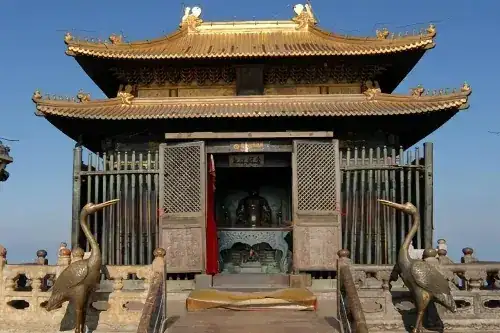
Local administration began during the Western Han Dynasty as part of Jiangxia Commandery. In 223 CE, Sun Quan of Eastern Wu built Xiakou Castle on Sheshan (Snake Hill) in Wuchang and erected the landmark Yellow Crane Tower. During the Sui and Tang dynasties, Wuchang and Hanyang became prefectural seats and commercial towns along the Yangtze. The Tang poet Li Bai wrote "Blowing jade flute at Yellow Crane Tower, plum blossoms fall in River City in May," giving Wuhan its enduring nickname Jiangcheng.
In 1281, Wuchang became the seat of Huguang Province -- Wuhan's first time as a provincial-level administrative center. During the Ming Dynasty, the Han River changed course, and the new town of Hankou emerged on the north bank, laying the geographic foundation for the Three Towns. By the late Ming and early Qing, Hankou was ranked among the "Four Great Gathering Places" alongside Beijing, Suzhou, and Foshan.
In 1858, the Treaty of Tianjin opened Hankou as a treaty port, and five foreign concessions (British, German, Russian, French, and Japanese) were established. On October 10, 1911, the Xinhai Revolution erupted in Wuchang, declaring independence from the Qing Dynasty and establishing the Republic of China. In 1927, the three towns were unified under the name "Wuhan" as the provisional capital. After the founding of the People's Republic in 1949, Wuhan became a centrally administered municipality and was redesignated as a provincial city under Hubei in 1954.
Administrative Divisions
Division History
Administrative boundaries shifted frequently from the 1950s through the 1990s. In 1983, Huangpi and Xinzhou counties were transferred to Wuhan. Between 1992 and 1998, Hanyang County became Caidian District, Wuchang County became Jiangxia District, and Huangpi and Xinzhou counties became districts, bringing the total to 13. In 2022, the Wuhan Changjiang New Area was formally established.
Division Details
As of 2026, Wuhan administers 13 districts: Jiangan, Jianghan, Qiaokou, Hanyang, Wuchang, Qingshan, Hongshan, Caidian, Jiangxia, Huangpi, Xinzhou, Dongxihu, and Hannan. It also has six functional zones including the Wuhan Economic and Technological Development Zone, East Lake High-Tech Development Zone, and Changjiang New Area. The municipal government is located at 188 Yanjiang Avenue, Jiangan District.
Geography
Location
Wuhan is located in central China, eastern Hubei, at the confluence of the Yangtze and Han rivers, between 113 degrees 41 minutes and 115 degrees 05 minutes east longitude and 29 degrees 58 minutes and 31 degrees 22 minutes north latitude. The maximum east-west span is 134 km and north-south span about 155 km.
Topography
Wuhan's terrain transitions from southeastern hills through the Jianghan Plain to the low mountains of the southern Dabie range. Low mountains account for 5.8%, hills 12.3%, ridge plains 42.6%, and flat plains 39.3% of the total area. Elevations range from 19.2 m to 873.7 m, with most land below 50 m.
Climate
Wuhan has a northern subtropical monsoon climate with abundant rainfall, sufficient heat, and four distinct seasons. Average annual temperature ranges from 15.8 to 17.5 degrees Celsius, with an extreme high of 41.3 degrees Celsius (1934) and extreme low of -18.1 degrees Celsius (1977). Annual precipitation is 1,150-1,450 mm, with about 40% falling from June to August.
Hydrology
Wuhan is traversed by numerous rivers and dotted with lakes. Rivers including Sheshui, Fuhe, Daoshui, Jushui, Jinshui, and the Dongjing River flow into the Yangtze from both sides. Total water area covers 2,217.6 square kilometers (26.1% of the city's land). There are 165 rivers over 5 km and 166 lakes -- earning Wuhan the title "City of a Hundred Lakes." Tangxun Lake (47.6 square kilometers) is China's largest urban lake; East Lake (33.9 square kilometers) ranks second in the urban core.
Natural Resources
Freshwater Resources
Wuhan has the largest water surface area of any major Chinese city. Per capita water resource ownership is about 40 times the national average and 10 times the global average. The city has 277 reservoirs with a total capacity of 925 million cubic meters. Surface water totals 714.5 billion cubic meters, and theoretical hydropower potential is 20,000 kW.
Wetland Resources
Wuhan ranks among the top three inland cities globally for wetland area, with 3,358.35 square kilometers covering 39.54% of the city's territory. Six national wetland parks -- including Jinyin Lake, East Lake, and Houguan Lake -- make Wuhan the city with the most national wetland parks in China.
Biological Resources
Wuhan has 1,066 plant species across 106 families, with mixed evergreen and deciduous broadleaf forests. Fish resources include 88 species; "Wuchang Fish" (blunt-snout bream) is a prized commercial species. The Yangtze finless porpoise and baiji are among protected aquatic species. In 2024, a new wild Epimedium species was discovered and named "Shizhen Epimedium."
Mineral Resources
Wuhan has identified 33 mineral types across 154 sites, with potential economic value exceeding 840 billion yuan (approximately $115.9 billion USD). Metallurgical and construction materials form the largest reserves, including the nation's largest flux limestone, dolomite, and quartz sandstone bases. Bentonite reserves exceed 118 million tons, ranking first nationally.
Population
According to the Seventh National Census (2020), Wuhan's total population was 12.45 million. As of end-2025, the permanent resident population reached 13.8619 million, with an urbanization rate of 85.22%. The registered (hukou) population was 9.6134 million. Wuhan is a multi-ethnic city, with Tujia and Hui being the largest minority groups.
Politics
Wuhan is governed by the Chinese Communist Party Municipal Committee and the Municipal People's Government, following China's standard municipal governance framework.
Economy
Overview
In 2025, Wuhan achieved a GDP of 2,214.735 billion yuan (approximately $305.5 billion USD), growing 5.6% year-on-year. By sector: primary industry added 48.121 billion yuan (approximately $6.6 billion), up 3.8%; secondary industry 658.972 billion yuan (approximately $90.9 billion), up 5.0%; and tertiary industry 1,507.642 billion yuan (approximately $207.8 billion), up 5.9%. The three-sector ratio was 2.2:29.7:68.1. Local general public budget revenue reached 174.306 billion yuan (approximately $24.0 billion USD), up 4.5%.
Primary Industry
In 2025, agriculture, forestry, animal husbandry, and fisheries added 52.788 billion yuan (approximately $7.3 billion USD) in value, up 4.0%. Major outputs included 915,500 tons of grain, 8.8414 million tons of vegetables, 517,900 tons of aquatic products, and 2.2077 million slaughtered pigs.
Secondary Industry
Wuhan is a major industrial base with complete systems in steel, automobiles, optoelectronics, chemicals, textiles, shipbuilding, and pharmaceuticals. The city is building three world-class industrial clusters in optoelectronic information, automobiles and parts, and biomedicine. In 2025, above-scale industrial value-added grew 6.2%, with high-tech manufacturing up 16.6%. The construction industry produced 1,376.716 billion yuan (approximately $189.9 billion USD) in output value.
Tertiary Industry
Wuhan is one of China's first cities to open along the Yangtze and the preferred destination for foreign investment in central China. It has the highest French investment in China, accounting for one-third of all French investment in the country. Companies including Anheuser-Busch InBev and Beiersdorf have China headquarters in Wuhan. Wuhan is also a financial center -- home to the People's Bank of China Wuhan Branch (the only cross-provincial branch in central China) and the first pilot city for the "New Third Board" over-the-counter market.
In 2025, total retail sales of consumer goods reached 901.396 billion yuan (approximately $124.3 billion USD), up 4.5%. Total import and export volume reached 454.85 billion yuan (approximately $62.7 billion USD), up 12.7%. Actual foreign investment utilized was $901 million. Financial institution deposits reached 4,304.626 billion yuan (approximately $593.7 billion USD) and loans 5,262.5 billion yuan (approximately $725.5 billion USD).
Social Affairs
Education
Wuhan is one of China's four major science and education cities and a national intelligence-dense area. In 2025, the city had 225,300 graduate students, 1.2187 million undergraduate and junior college students, and 850,200 primary school students.
Science and Technology
Wuhan is the third city (after Beijing and Shanghai) to host two national manufacturing innovation centers. In 2025, the city had 97 research institutions and 41 national key laboratories, with 43 CAS academicians and 49 CAE academicians. Technology contract transactions reached 272.8 billion yuan (approximately $37.6 billion USD). Patent grants totaled 61,361, including 28,801 invention patents.
Cultural Affairs
As of 2025, Wuhan had 2 municipal public libraries with 5.3453 million volumes, 11 museums receiving 10.42 million visitors, 192 cinemas, and 24.531 million moviegoers. Major publishing groups include Hubei Changjiang Publishing and Media Group.
Healthcare
Wuhan is the second Chinese city authorized to issue internationally recognized trauma emergency care certifications. Major hospitals include Tongji Hospital and Union Hospital (Huazhong University of Science and Technology), and Renmin Hospital and Zhongnan Hospital (Wuhan University). As of end-2025, the city had 6,725 health institutions with 105,600 beds, 144,500 health professionals, and 31 Grade-III Class-A hospitals.
Sports
Wuhan hosts the Wuhan Open (WTA, 2014-2028) and China's largest horse racing facility. In 2019, Wuhan hosted the 7th CISM Military World Games with 9,308 athletes from 109 countries. In 2025, the city held 44 sporting events and won 24 gold medals in major competitions.
Social Security
As of end-2025, enrollment in basic pension, medical, unemployment, work injury, and maternity insurance reached 7.6217 million, 6.4345 million, 3.5148 million, 4.6697 million, and 4.0231 million respectively. The city had 292 social welfare institutions with 46,489 beds, and minimum living allowances covered 42,300 urban and 54,800 rural residents.
Transportation
Overview
Wuhan sits at the crossroads of the Yangtze golden waterway and the Beijing-Guangzhou railway artery. It is China's largest inland water-land-air transportation hub and the first city designated as a national comprehensive transportation hub pilot. In 2025, total social logistics reached 5.45 trillion yuan (approximately $751.7 billion USD), freight volume was 788.2 million tons, and passenger volume was 144.85 million, up 24.1%.
Highways
Wuhan's highway network connects to major expressways radiating in all directions, forming a comprehensive road transport system.
Railways
Wuhan is a major railway hub at the intersection of the Beijing-Guangzhou and Shanghai-Wuhan-Chengdu high-speed rail arteries, ranking as China's fourth-largest railway passenger center. The Wuhan North Station is one of Asia's largest classification yards. The Wuhan EMU depot is the world's largest bullet train maintenance base, handling about 40% of China's total. The city plans a "super-rice-pattern" high-speed rail network with 12 directions and a "five-main, three-auxiliary" passenger station system.
Water Transport
Wuhan Port is the shipping center of the middle Yangtze. In 2025, container throughput reached 1.95 million TEU, ranking first in the middle and upper Yangtze. The Yangluo Port achieved rail-water intermodal transport of 231,600 TEU in 2024, up 44%, enabling direct cargo transfer from ship to train bound for Central Asia and Europe.
Aviation
Wuhan Tianhe International Airport, opened in 1995, is central China's first gateway airport and the region's only 4F-class airport. In 2024, annual passenger throughput exceeded 30 million. The city had 238 civil aviation routes in 2025, including 22 international. The China-Europe (Wuhan) freight train reached 40 countries and 121 cities, operating 1,168 trains.
Public Transit
Wuhan Metro's first line opened on July 28, 2004, making Wuhan the first city in central and western China with rail transit. As of May 2026, 13 lines were in operation with 335 stations and 553 km of track, carrying 1.443 billion passengers -- 72.1% of public transit ridership. The long-term plan envisions a 1,100 km network by 2049. In 2023, the Guanggu Sky Train -- a suspended monorail -- opened as China's first commercial sky train, running 10.5 km in fully autonomous mode. The city's bus network covers 2,783.8 km with 9,588 vehicles.
Wuhan has built over 1,300 bridges. The Wuhan Yangtze River Bridge, completed in 1957, was the first highway bridge across the Yangtze -- earning the title "First Bridge of the Ten-Thousand-Li Yangtze."
History and Culture
Dialect
Wuhan dialect belongs to the southwestern Mandarin system, sharing similarities with dialects in Yunnan, Guizhou, Sichuan, Hunan, and Guangxi. Hankou speech, known as "Hanqiang," is the most prominent variety.
Arts
Wuhan is the birthplace of the "High Mountains and Flowing Water" tale of finding a kindred spirit. The Wuchang Art Academy was one of China's first three art academies. In 2017, Wuhan was designated a UNESCO Creative City of Design. The Wuhan International Acrobatic Art Festival is one of the world's top three international acrobatics festivals. Han embroidery, dating to the Chu State era, won gold at the 1910 Nanyang Exposition and 1915 Panama International Exposition.
Religion
Five religions are practiced: Buddhism, Daoism, Islam, Catholicism, and Protestantism. The city has over 600 religious activity venues, with Guiyuan Temple, Baotong Temple, and Changchun Temple among the most prominent.
Historical Sites
Wuhan has 339 historical sites and 33 National Key Cultural Heritage Protection Units, including the Panlongcheng site, Wuchang Uprising Military Government site, and August 7 Meeting site.
Intangible Cultural Heritage
Wuhan maintains numerous intangible cultural heritage items including Han embroidery and wood carving boat modeling.
Mascot
On April 8, 2026, the Wuhan Municipal People's Congress designated the Yangtze finless porpoise as the city mascot -- the first Chinese city to establish a mascot through a local people's congress decision.
Scenic Spots
Wuhan is among the first batch of China Excellent Tourism Cities and hosts the annual Wuhan International Tourism Festival. As of end-2025, the city had 72 A-level tourist attractions (including 3 AAAAA-level), 491 tourist restrooms, and 41 star-rated hotels.
Local Cuisine
Wuhan's culinary culture centers on morning breakfast (guozao) and late-night dining (xiaoye), with the saying "breakfast at Hubuxiang, supper at Jiqing Street." Famous specialties include hot dry noodles (reganmian), three-fresh bean skin (doupi), duck necks, Wuchang fish, and lotus root pork rib soup. Wuhan is recognized as a "Capital of Gastronomy."
Foreign Exchange
Overview
In December 2024, Wuhan signed a "2025 Cooperation Action Plan" with Manchester, UK, during the China-UK Clean Energy Cooperation Forum.
Institutions in Wuhan
Since the first foreign consulate was established in 1861, numerous countries have maintained consular presence. In 1998, France opened the first foreign consulate in central China since the founding of the PRC. With consulates from France, the United States, South Korea, the United Kingdom, and a planned Russian consulate, all four permanent UN Security Council members are represented.
Sister Cities
Wuhan established its first international sister city relationship with Oita, Japan, in 1979. As of end-2023, the city had 29 international sister cities and 85 friendship exchange cities. The 2018 China International Friendship Cities Conference was held in Wuhan -- the first time in a central Chinese city.
Notable People
Wuhan has been home to numerous historical and contemporary figures across politics, military, arts, and sciences, reflecting its long history as a cultural and political center.
Honors
Wuhan has received numerous national and international recognitions, including UNESCO City of Design, International Wetland City, and National Civilized City designations.
Travel information can change. Check current opening hours, reservations and entry requirements before you travel.
Traveller discussion
Start the conversation with a helpful tip or a question.