
Xinxiang City
Xinxiang CityXinxiang, formerly known as Muye, is a prefecture-level city in Henan Province. Located in northern Henan, it borders the Yellow River to the south (facing Zhengzhou and Kaifeng), rests against the Taihang Mountains to the nort
Xinxiang City
Xinxiang, formerly known as Muye, is a prefecture-level city in Henan Province. Located in northern Henan, it borders the Yellow River to the south (facing Zhengzhou and Kaifeng), rests against the Taihang Mountains to the north (adjacent to Hebi and Anyang), connects to Jiaozuo to the west (bordering Shanxi), and reaches Puyang to the east (linking with Shandong). Total area: 8,291 square kilometers. As of June 2026, Xinxiang administers 4 districts, 5 counties, and 3 county-level cities. End-2025 resident population: 6.091 million. The terrain slopes from north to south—mountains and hills in the north, Yellow River alluvial plain in the south. It has a warm temperate continental monsoon climate with distinct seasons. Xinxiang is a National Civilized City, National Health City, National Forest City, and China's Battery Industry Capital. Major industries include biomedicine, equipment manufacturing, and electronic information. In the early PRC, Xinxiang was the capital of Pingyuan Province. The city has a rich history dating back to the Yangshao and Longshan cultures and is an important birthplace of the Classic of Poetry (Shijing). The Battle of Muye, Zhang Liang's assassination attempt on the Qin Emperor, and the Chenqiao Mutiny all occurred here. The city has 2 national 5A-level and 10 4A-level scenic areas. In 2025, GDP reached 368.707 billion yuan (approximately US$50.8 billion), up 5.0%.
Name Evolution
The name "Xinxiang" originates from the Xinzhong Township of Ji County during the Western Han Dynasty. In 111 BC, Emperor Wu visited Xinzhong Township and, upon receiving the head of rebel minister Lu Jia of Nanyue, established a county there, renaming it Huojia County. In 586 AD (Sui Dynasty), parts of Ji and Huojia counties were combined to form a new county, taking the first and last characters of "Xinzhong Township" to create the name "Xinxiang."
Historical Evolution
Pre-Qin Period
By the mid-primitive society, the area had entered the Yangshao and Longshan cultural periods. During the Xia Dynasty, it was a central area of the Xia people. During the Spring and Autumn period, the area belonged to the states of Wei, Zheng, and later Jin. After the Partition of Jin in 403 BC, most of the area belonged to Wei, and after 266 BC, came under Qin control.
Qin-Han to Northern and Southern Dynasties
After Qin unified China, the area had 8 counties under Sanchuan and Dong commanderies. During the Western Han, 12 counties were established under 4 commanderies across 2 inspectorates. The area changed hands among various states during the Sixteen Kingdoms period. Under the Northern Wei, 11 counties belonged to 3 commanderies of Sizhou.
Sui-Tang to Song-Yuan Period
The Sui Dynasty reorganized the area into 10 counties under 4 commanderies. The Tang Dynasty implemented a three-tier system of circuits, prefectures, and counties. The Song Dynasty had 10 counties under 3 circuits. Under the Yuan Dynasty, 9 counties were under direct and provincial administrations.
Ming-Qing Period
During the Ming Dynasty, 10 counties were under Kaifeng, Weihui, and Kaizhou prefectures. The Qing Dynasty maintained 9 counties under 2 provinces and 3 prefectures.
Republic of China Period
After the 1911 Revolution, the prefecture system was abolished. In 1914, Hebei Circuit was established governing 8 counties. During the Anti-Japanese War, most county towns fell by early 1938. The area was gradually liberated, and in November 1948, Xinxiang City was established. By May 1949, the city was fully liberated.
After the Founding of the PRC
On August 20, 1949, the CCP established Pingyuan Province with Xinxiang as its capital. In 1952, Pingyuan Province was dissolved, and Xinxiang was incorporated into Henan Province. In 1982, Xinxiang was elevated to a prefecture-level city. In 1988, Ji County became Weihui City and Hui County became Huixian City. In 2019, Changyuan County was upgraded to Changyuan City.
Administrative Divisions
As of June 2026, Xinxiang administers 4 districts (Weibin, Hongqi, Muye, Fengquan), 5 counties (Xinxiang, Huojia, Yuanyang, Yanjin, Fengqiu), and 3 county-level cities (Changyuan, Huixian, Weihui), plus 3 functional zones. The city has 38 townships, 80 towns, 36 sub-districts, 3,561 villages, and 261 communities.
Natural Geography
Location
Xinxiang is located in the heartland of the Central Plains, in northern Henan, between 113 degrees 23 minutes and 115 degrees 1 minute East longitude, and 34 degrees 53 minutes and 35 degrees 50 minutes North latitude. Total area: 8,291 square kilometers.
Geology
Xinxiang belongs to the North China Platform, at the transition zone between the Taihang Mountains and the North China Plain. The strata are predominantly Quaternary, with bedrock exposed only in the northern hills. The Taihang piedmont fault zone is a key geological boundary and active seismic belt.
Terrain and Landforms
The terrain features mountains, hills, intermontane basins, and plains in a northeast-southwest band. The highest point, Shizi Ridge, reaches 1,732 m. Mountains account for 12.43%, hills 6.22%, and plains 81.35% of the total area.
Climate
The climate is warm temperate continental monsoon with distinct seasons. Annual average temperature: 14 degrees Celsius (July 27.3, January 0.2). Annual precipitation: 573.4 mm, concentrated in July-August. Frost-free period: 205 days. Annual sunshine: approximately 2,400 hours.
Hydrology
Rivers belong to the Hai River system (3,985 square km, northwest) and the Yellow River system (4,184 square km, southeast). The Yellow River flows 165 km through the city. Major tributaries include the Tianran Canal, Wenyan Canal, Jindi River, and Wei River. Diversion channels include the People's Victory Canal.
Soil
The city has 8 soil types and 156 soil species. Fluventic soil accounts for 72.33% and cinnamon soil for 13.76%, making them the primary agricultural soils with good tilth and moderate fertility.
Natural Disasters
Xinxiang is prone to cold waves, floods, hail, and drought. In July 2021, severe flooding affected over 1.28 million people, with 121,658 hectares of crops damaged. In April 2022, thunderstorms with winds up to 29.1 m/s struck Weihui and Huixian, damaging approximately 2,000 mu of crops.
Natural Resources
Water Resources
In 2022, total water resources amounted to 1.22 billion cubic meters. The city has 32 reservoirs, including Tagang (completed 1958, 234 square km catchment) and Chenjiayuan (built 1966-1969, 80 m dam, 13.7 million cubic meters capacity).
Land Resources
Based on the Third National Land Survey (2019), Xinxiang has 455,700 hectares of arable land, 20,294 hectares of orchard land, 126,031 hectares of forest land, and 3,036 hectares of wetland. Arable land is concentrated in Fengqiu, Yuanyang, Yanjin, and Changyuan.
Biological Resources
The city has 1.89 million mu of forest land (23.6% coverage) and 1,759 higher plant species, including 2 national Class-I protected species (Chinese yew, ginkgo). Wildlife includes 249 species, with 9 Class-I and 34 Class-II protected animals. Notable reserves include the Yellow River Wetland Bird Nature Reserve (22,780 hectares, home to the Baer's Pochard) and the Taihang Mountain Macaque Nature Reserve (56,600 hectares, the northernmost macaque habitat in Asia).
Mineral Resources
Xinxiang has 27 mineral types, including coal, petroleum, iron, copper, gold, and 16 non-metallic minerals. Proven reserves: 2.495 billion tons of coal and 1.194 billion tons of cement-grade limestone.
Politics
Xinxiang operates under the standard Chinese municipal governance system with a Party secretary, mayor, and People's Congress, serving as a key political center in northern Henan.
Population
Population Size
End-2025 resident population: 6.091 million (61.8% urbanization rate). Birth rate: 6.23 per thousand; death rate: 8.19 per thousand; natural growth rate: -1.97 per thousand.
Ethnicity
Xinxiang has 45 ethnic groups in a typical scattered-residence pattern. The Hui and Mongolian are the largest minorities, with one Hui ethnic township in Fengqiu County.
Language
The Xinxiang dialect formed through fusion of Qin-Jin and Bian-Luo dialects. Western areas retain ancient entering tone features, while eastern areas preserve the sharp-rounded consonant distinction characteristic of Central Plains Mandarin.
Religious Beliefs
Five major religions are practiced—Buddhism, Daoism, Islam, Catholicism, and Protestantism—with 380 religious activity venues and 31 patriotic religious organizations.
Economy
Overview
Xinxiang ranks fourth in economic competitiveness in Henan Province. It is a national commodity grain base and China's battery industry capital, with 35 of 41 industrial categories. In 2025, GDP reached 368.707 billion yuan (approximately US$50.8 billion), up 5.0%. The three-sector structure was 8.0:42.7:49.3. Per capita GDP was 60,424 yuan (approximately US$8,335). Per capita disposable income was 33,277 yuan (approximately US$4,590), with urban at 42,644 yuan (approximately US$5,880) and rural at 24,111 yuan (approximately US$3,325).
Primary Industry
Grain crops are mainly wheat, corn, and rice, with brands like "Yanjin Wheat" and "Yuanyang Rice." In 2025, grain output was 4.813 million tons. Total meat output was 414,600 tons, and aquatic products totaled 54,100 tons.
Secondary Industry
The secondary industry centers on four pillar sectors (equipment manufacturing, food processing, textile-garment, modern home furnishings), five strategic emerging industries (biotech, batteries and NEVs, information, new energy, new materials), and four traditional industries (chemicals, building materials, paper, coal power). Four sectors form 100-billion-yuan industrial clusters. In 2025, above-scale industrial value-added grew 7.5%, with revenue of 298.023 billion yuan (approximately US$41.1 billion). Renewable energy accounted for 60.13% of installed capacity.
Tertiary Industry
The service sector focuses on modern logistics and cultural tourism, building logistics clusters like "Xinxiang International Land Port." Key tourism projects are along the Yellow River and Grand Canal National Cultural Parks. In 2025, retail sales reached 149.43 billion yuan (approximately US$20.6 billion), up 4.3%. Import-export value was 18.43 billion yuan (approximately US$2.54 billion). Bank deposits reached 619.713 billion yuan (approximately US$85.5 billion), and loans 402.333 billion yuan (approximately US$55.5 billion). The city has 11 listed companies.
Social Services
Science and Technology
Xinxiang hosts 4 national research institutes and 1,480 R&D platforms with over 130,000 personnel. Achievements include the world's first H1N1 vaccine and China's first rechargeable battery. The city ranks 66th nationally in innovation capacity, with 853 high-tech enterprises and 2 national key laboratories. Technology contract transactions totaled 13.028 billion yuan (approximately US$1.8 billion).
Education
The city has 25,500 students in regular higher education. Notable universities include Henan Normal University, Henan Pharmaceutical University, and Henan Institute of Science and Technology. Institutions hold 13 doctoral and 52 master's first-level discipline authorization points.
Culture
The city has 9 performing troupes, 13 public libraries, and 16 museums. There are 21 national-level and 72 provincial-level cultural heritage sites, and 5 national-level intangible cultural heritage items. The Xinxiang Museum, established in 1949, holds tens of thousands of artifacts.
Healthcare
The city has 6,375 health institutions including 173 hospitals, with 43,300 beds and 57,100 health professionals. Major hospitals include the First Affiliated Hospital of Xinxiang Medical College (Grade 3A, founded 1896) and Xinxiang First People's Hospital (founded 1936).
Sports
In 2025, Xinxiang athletes won 103 gold medals in various competitions.
Environmental Protection
In 2025, 100% of monitored surface water met Class I-III standards. Air quality was good on 69.0% of days, with PM2.5 at 41 micrograms per cubic meter and PM10 at 72 micrograms per cubic meter.
Social Security
As of 2025, 1.5653 million people participate in urban employee pension insurance and 4.7298 million in urban-rural medical insurance. The city provided 3.73 billion yuan (approximately US$514 million) in rural minimum living allowances for 124,600 recipients.
Transportation
Overview
Xinxiang is a key transportation hub in the Zhengzhou metropolitan area. Major railways and expressways traverse the city. It is 50 minutes from Zhengzhou International Airport and 2.5 hours to Beijing. China-Europe freight trains connect to Belgium, Japan, and Korea.
Highways
National highways include G107, G234, and G327. The expressway network forms a "two vertical, two horizontal" layout. As of 2025, expressway mileage reached 633 km, with highway freight of 151 million tons.
Railways
Major stations include Xinxiang Station and Xinxiang East Station. The rail network has 437 km of operating track, including 162 km of high-speed rail. Freight and passenger HSR lines intersect in an X-shaped pattern at Xinxiang East.
Aviation
Plans include general aviation airports in Changyuan and Tangzhuang, with additional sites to achieve county-level coverage. The Changyuan airport project involves 1 billion yuan (approximately US$138 million) investment.
Water Transport
In the late Qing era, over 700 cargo ships operated between Xinxiang and Tianjin. By the 1960s, 1,700+ vessels carried 836,000 tons annually. Shipping ceased in 1969 due to water depletion.
Public Transportation
As of 2025, the city has 1.4283 million civilian motor vehicles. A planned 5-line rail transit system spanning 151.6 km will radiate from the city center to surrounding counties.
Cultural History
Overview
Xinxiang, anciently called Muye, is a birthplace of Chinese civilization. The Battle of Muye, Battle of Guandu, and Chenqiao Mutiny all occurred here. Poetry from ancient Xinxiang accounts for one-quarter of the Guofeng section of the Classic of Poetry.
Customs
Traditional folk arts include the Beizhuang and Taige carrying performances (Qing Dynasty), Changyuan's Flower Stage with five-colored silk decorations, and the 600-year-old Mapi (Horsehide) Dance featuring a 7-meter leather whip.
Regional Symbols
The pomegranate tree is the city tree and the pomegranate flower is the city flower of Xinxiang.
Cultural Relics
Xinxiang has 22 national-level, 52 provincial-level, and over 440 municipal/county-level protected cultural heritage sites, with 11 museums and memorial halls.
Intangible Cultural Heritage
The city has 4 national, 31 provincial, and 115 municipal intangible cultural heritage projects, with 4 national-level and 21 provincial-level inheritors.
Scenic Areas
Overview
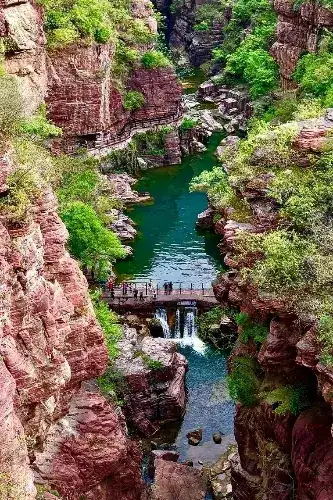
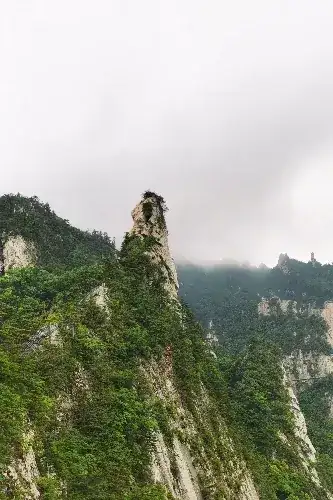
Xinxiang features a 170-km Yellow River corridor with 1,290 square km of floodplain—the largest in Henan. Major attractions include the South Taihang landscapes (Bali Valley, Baoquan, Wanxian Mountain) and cultural sites (Baiquan Springs, Prince Lu's Mausoleum, Bigan Temple). The city has 2 national 5A-level and 10 4A-level scenic areas.
Important Attractions
Prince Lu's Mausoleum, a 4A-level site 13 km north of Xinxiang, is China's largest and best-preserved Ming Dynasty princely mausoleum, twice listed on the World Heritage tentative list. Wanxian Mountain features red rock canyons and Guoliang Village. Bali Valley, a 5A-level national geological park covering 109 square km, is known for its Taihang Mountain landscapes. Jinghua Garden is a 4A-level cultural theme park opened in 1992.
Local Cuisine
Specialties include Weihui Shikui Beef, Changyuan Shredded Pork with Mung Bean Sheets, and Niu Zhongxi Sesame Cake.
External Exchange
Xinxiang maintains international cooperation through China-Europe freight train services and sea-rail intermodal routes, forming a multidimensional open corridor integrating rail, road, air, and sea transport.
Famous People
Notable historical figures from Xinxiang include statesman Zhang Liang, who attempted to assassinate the First Qin Emperor, along with prominent scholars, military leaders, and officials throughout Chinese history.
Important Honors
Xinxiang has been designated a National Civilized City, National Health City, National Forest City, National Garden City, China's Outstanding Tourist City, National Circular Economy Demonstration City, China's Battery Industry Capital, and China's Vibration Capital, among numerous other national honors.
Travel information can change. Check current opening hours, reservations and entry requirements before you travel.
Traveller discussion
Start the conversation with a helpful tip or a question.