
2027 Sichuan Chengdu Qingcheng Mountain Travel Guide (Including Weather, Tickets, Attractions, Itinerary, and Hiking Routes)
2027 Sichuan Chengdu Qingcheng Mountain Travel Guide (Including Weather, Tickets, Attractions, Itinerary, and Hiking Routes) Author: Xiao Zhou | Updated: April 28, 2025 Want to deeply explore the Taoist culture and natural beauty of Qingcheng Mountain? This comprehensive and practical Qingcheng Mountain travel guide integrates information on Qingc…
2027 Sichuan Chengdu Qingcheng Mountain Travel Guide (Including Weather, Tickets, Attractions, Itinerary, and Hiking Routes)
Author: Xiao Zhou | Updated: April 28, 2025
Mount Qingcheng, hailed as "the most secluded place under heaven," is one of the birthplaces of Chinese Taoist culture. Its stunning natural scenery and profound Taoist cultural heritage attract countless tourists from home and abroad. Whether you are a fitness enthusiast, a nature lover, or a spiritual seeker, you can find tranquility and beauty here. This highly practical Mount Qingcheng travel guide will guide you deep into this hidden mountain paradise, immersing you in the charm of Chinese Taoist culture and embarking on an unforgettable spiritual journey.
I. Introduction to Qingcheng Mountain
Tickets:Front mountain: 80 yuan/person; Back mountain: 20 yuan/person
Opening hours:8:00~17:00(March 2nd~November 30th);8:00~18:00(December 1st~March 1st)
Recommended visit time:0.5~1 day
Highlights:Taoist culture, distinctive Taoist temples, natural scenery, hiking, Qingcheng Kung Fu
address:Located on Qingchengshan Road, Qingchengshan Town, Dujiangyan City, Chengdu, Sichuan Province, China
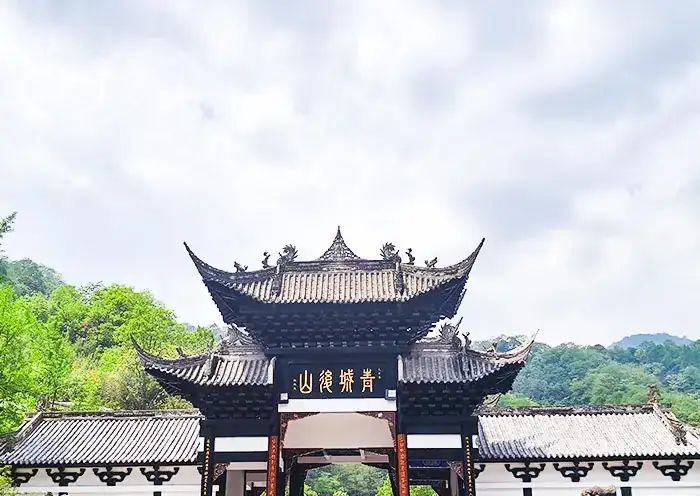
Introduction to Qingcheng Mountain
Mount Qingcheng, one of China's four sacred Taoist mountains and a renowned World Heritage Site, is a sacred site of Taoism. Zhang Daoling, the founder of Taoism during the Eastern Han Dynasty, established the Celestial Masters sect on Mount Qingcheng. More than ten Taoist temples, including Jianfu Palace and Tianshi Cave, still exist here, earning it the title of "Fifth Taoist Grotto-Heaven." The mountain is deep and secluded, shrouded in mist, with ancient and simple Taoist temples, exuding a profound sense of "Tao follows nature." Strolling along the mountain paths, one can hear the rustling of pines, admire cascading waterfalls and flowing springs, and feel the influence of a thousand years of Taoist culture. Furthermore, Mount Qingcheng is divided into the front and back mountains. The front mountain is dotted with Taoist temples, while the back mountain boasts waterfalls and flowing springs, offering scenic views in all four seasons. It is a "natural oxygen bar" and a cultural holy site that Chengdu tourists should not miss.
Qingcheng Mountain
II. Hiking routes and classic activities in Qingcheng Mountain
1. Front Mountain (Cultural Heritage Site)
Recommended hiking routes:Mountain Gate → Jianfu Palace → Natural Picture → Tianshi Cave → Chaoyang Cave → Shangqing Palace → Laojun Pavilion → Cable Car Down the Mountain (Suitable for light hikers)
If you want to save energy and have a more relaxed trip, you can choose...A combination of boat and cable car travel:Scenic Area Entrance → Sightseeing Bus → Yuecheng Lake (boat crossing available) → Cable Car up the mountain to Shangqing Palace → Walk to Laojun Pavilion at the summit → Return via the same route
Recommended classic gameplay:The main activity at the front of Qingcheng Mountain is to visit various Taoist temples and monasteries, admire exquisite Taoist architecture and historical sites, and experience the rich Taoist cultural atmosphere. If interested, you can also experience Qingcheng Kung Fu, a style of martial arts that emphasizes "overcoming strength with softness."
2. Back Mountain (Natural Paradise)
Recommended hiking routes:Tai'an Ancient Town → Wulonggou → Youyicun → Baiyun Temple → Baiyun Ancient Village → Cuiying Lake → Feiquangou → Tai'an Ancient Town (approximately 22 kilometers in total, suitable for hiking enthusiasts)
Recommended classic gameplay:The main activity on the back of Qingcheng Mountain is hiking to enjoy the scenery, experience the natural beauty of the mountains and rivers, and enjoy the unique pleasure of boating across Cuiying Lake.
III. Eight Must-Visit Attractions in Qingcheng Mountain (Front Mountain + Back Mountain)
1. Lao Jun Pavilion
Lao Jun Pavilion, at an altitude of approximately 1260 meters, is the highest point of Qingcheng Mountain and its best viewpoint, known as the "Summit of Qingcheng." From here, one can overlook the magnificent panoramic view of Qingcheng Mountain and the sea of clouds surrounding its peaks. Especially when shrouded in mist, Lao Jun Pavilion resembles a suspended celestial pavilion, utterly mysterious. Furthermore, the bronze lotus-seated statue of Laozi enshrined inside is a landmark and not to be missed.
2. Shangqing Palace
Shangqing Palace is the largest Taoist temple on Mount Qingcheng and one of the ancestral temples of Taoism on the mountain. It was first built in the Jin Dynasty and has a history of over a thousand years. Its architecture perfectly integrates the Taoist concept of "harmony between man and nature" and is very simple and exquisite. In addition, remember to check out the cliff carvings at the entrance of Shangqing Palace: "Fifth Famous Mountain Under Heaven" and "First Peak of Qingcheng".
Qingcheng Mountain
3. Tianshi Cave
Tianshi Cave is the place where Zhang Daoling (Zhang Tianshi), the founder of Taoism during the Eastern Han Dynasty, practiced and preached. It is a place with ancient trees reaching for the sky, a tranquil environment, and a stone statue of Zhang Tianshi. It is a good place to learn about Taoist culture. In addition, the thousand-year-old ginkgo tree in Tianshi Cave is said to have been planted by Zhang Tianshi himself and is considered a "treasure of Qingcheng Mountain."
4. Jianfu Palace
Jianfu Palace is one of the oldest Taoist temples in Qingcheng Mountain and the starting point of the front gate of Qingcheng Mountain. The palace is surrounded by ancient trees and has elegant architecture. It is known as the "Number One Taoist Temple in Qingcheng". The 394-character long couplet from the Qing Dynasty hanging in the hall is known as "Qingcheng Wonder". Strolling through it, you can appreciate the charm of Chinese Taoist architecture and culture.
5. Yuecheng Lake
Yuecheng Lake, located at the foot of Mount Qingcheng, is an epitome of the saying "Qingcheng is the most secluded place under heaven." Like a bright mirror embedded in the mountains, it reflects the lush green hills around it. Especially at dawn and dusk, the reflections of clouds create a breathtaking scene of "morning glow and evening shadows, clouds rising and draped in rosy hues." You can take a boat trip on the lake to fully enjoy its beauty and experience its tranquil atmosphere.
6. Wulonggou
Wulonggou is one of the core scenic spots in the back mountain of Qingcheng Mountain. It is about 8 kilometers long and is known for its deep canyons, waterfalls, plank roads and myths. The vegetation along the way is rich, and hiking through it allows you to immerse yourself in the wild fun of a "natural green maze".
7. Feiquangou
Feiquan Valley is one of the main scenic spots on the back mountain of Qingcheng Mountain. It is about 10 kilometers long and is known for its canyons, streams, waterfalls and primeval forests. Among them, the scenery of "Flying Spring in the Valley", "Hundred-foot Bridge" and "Double Spring Water Curtain" are the most spectacular.
8. Emerald Lake
Cuiying Lake is a secluded waterscape in the back mountains of Qingcheng Mountain. Surrounded by primeval forests, the lake water is emerald green, reflecting the beautiful surrounding mountains. You can take a boat trip and enjoy this charming landscape.
IV. Popular Itineraries for Qingcheng Mountain Tourism
1. One-day tour of Dujiangyan and Qingcheng Mountain
Highlights:Enjoy a one-day tour of Dujiangyan and Qingcheng Mountain, including a visit to the Dujiangyan Panda Base, where you can volunteer as a "panda keeper" for a day and interact closely with the national treasure, the giant panda; explore Qingcheng Mountain, one of China's four famous Taoist mountains, gain a deeper understanding of Taoist culture, and experience the profound meaning of "Tao follows nature." No hidden costs throughout the tour, offering excellent value for money and allowing you to fully enjoy the charm of nature and culture.
Panda Volunteer Trip | Chengdu + Dujiangyan Panda Base + Qingcheng Mountain (Kung Fu Panda Village) One-Day Tour
Chengdu - Dujiangyan Base of China Conservation and Research Center for the Giant Panda - Qingcheng Mountain
2. Dujiangyan and Qingcheng Mountain 2-Day Tour
Highlights:Enjoy a unique 2-day tour of Dujiangyan and Qingcheng Mountain, where you can become a panda "guardian" at the Dujiangyan Panda Base and get up close and personal with adorable giant pandas; visit the Dujiangyan Irrigation System and marvel at the ancient people's superb wisdom in water management; hike up Qingcheng Mountain, learn about Taoist culture, experience a unique Qingcheng Kung Fu course, and embark on a fantastic Kung Fu Panda journey.
Kung Fu Panda Tour | Chengdu + Dujiangyan Panda Base + Qingcheng Mountain + Dujiangyan 2-Day Tour (Panda Volunteers + Kung Fu Class + Water Conservancy Project)
Chengdu - China Conservation and Research Center for the Giant Panda Dujiangyan Base (Volunteer Activities) - Qingcheng Mountain (Kung Fu Class) - Dujiangyan (Water Conservancy Project)
3. Chengdu, Dujiangyan, and Qingcheng Mountain Classic 2-Day Tour
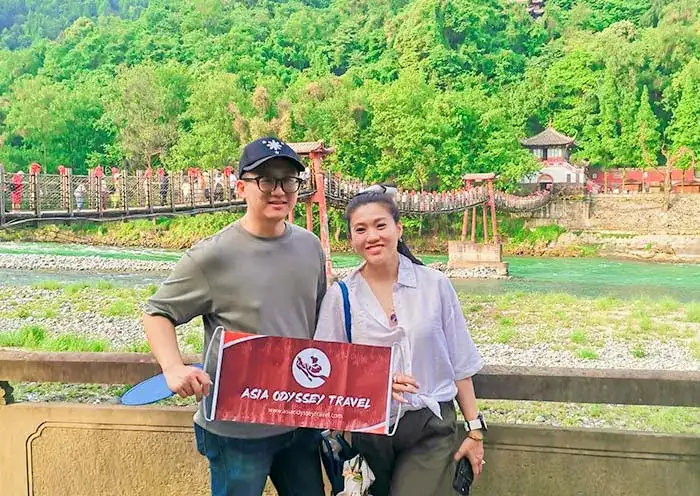
Highlights:This classic 2-day tour of Chengdu, Dujiangyan, and Qingcheng Mountain includes a visit to the Chengdu Panda Base to get up close and personal with the adorable giant pandas; a stroll through People's Park and Jinli Ancient Street to experience Chengdu's leisurely lifestyle; and a visit to Dujiangyan and Qingcheng Mountain, two World Cultural Heritage sites, to appreciate the wisdom of millennia-old water conservancy engineering and the Taoist philosophy of "following the natural way."
A Brief Tour of Chengdu | Chengdu + Panda Base + Dujiangyan Irrigation System (Water Conservancy Project) + Qingcheng Mountain 2-Day World Heritage Tour
Chengdu - Panda Base - Wenshu Monastery - People's Park - Jinli Ancient Street - Dujiangyan Irrigation System (Water Conservancy Project) - Qingcheng Mountain
4. Chengdu, Dujiangyan, and Qingcheng Mountain Highlights 4-Day Tour
Highlights:This 4-day tour of the highlights of Chengdu, Dujiangyan, and Qingcheng Mountain includes visits to the Chengdu Panda Base and Wolong Panda Base, where you can experience panda volunteer activities; check off the two World Heritage sites of Qingcheng Mountain and Dujiangyan, and experience the millennia-old water conservancy project and Taoist culture. If you are interested, you can also experience Qingcheng Kung Fu classes, and fully appreciate the natural scenery and cultural charm of Sichuan.
Chengdu Highlights Tour | 4-Day Tour of Chengdu Panda Base + Wolong Panda Base + Qingcheng Mountain + Dujiangyan + Kuanzhai Alley + Jinli Ancient Street
Chengdu Research Base of Giant Panda Breeding - Wolong Natural and Earthquake Museum - Wolong Base of China Conservation and Research Center for Giant Pandas - Qingcheng Mountain (Kung Fu Class) - Dujiangyan Irrigation System (Water Conservancy Project) - Kuanzhai Alley - People's Park - Chunxi Road - Jinli Ancient Street
V. Weather and Best Time to Visit Qingcheng Mountain
1. Weather Overview of Qingcheng Mountain
Qingcheng Mountain has a subtropical humid monsoon climate, with mild and humid weather all year round and an average annual temperature of around 15℃. In spring (March to May), the temperature rises and the mountains and forests are adorned with flowers, making it a perfect place for spring outings. In summer (June to August), although the heat gradually intensifies, the lush mountains and forests are cool and refreshing, making it an ideal place to escape the summer heat. In autumn (September to November), the sky is high and the air is crisp, with red leaves covering the mountains and the scenery is picturesque. In winter (December to February), the temperature is low and there is occasional snowfall, turning the mountains and forests into a silver-clad wonderland.
2. Best time to visit Qingcheng Mountain
Qingcheng Mountain is suitable for tourism all year round. Among them, spring (March to May) and autumn (September to November) are the most beautiful seasons, with comfortable temperatures that are neither too hot nor too cold. Spring offers the best opportunity to enjoy the blooming wildflowers, while autumn showcases the colorful forests and provides the best hiking experience. In summer (June to August), the mountain vegetation is even more lush, and the temperature is lower than in the city. You can also enjoy water activities, making it an excellent place to escape the summer heat. In winter (December to February), you can quietly enjoy the stunning snow scenery and explore the tranquil beauty of the silver branches and ice adorning the eaves.
Vegetable stalls in Qingcheng Mountain
VI. Qingcheng Mountain Transportation Guide
1. Chengdu to Qingcheng Mountain
Chengdu is about 70 kilometers from Qingcheng Mountain, which isn't too far. You can take a high-speed train and then a bus or a direct bus to get there, which would be more convenient.
High-speed rail + bus:You can take the high-speed train from Chengdu East/Chengdu South to Qingchengshan Station, which takes about 1 hour. Alternatively, you can take the high-speed train from Chengdu Xipu Station to Qingchengshan Station, which takes about 30 minutes. From there, you can take a bus to the Qingchengshan Scenic Area, which takes about 40 minutes.
Direct bus:You can take a direct bus to Qingcheng Mountain Scenic Area from Chengdu Xinnanmen or Chadianzi Bus Station. The journey takes about 1 to 1.5 hours.
2. From Dujiangyan to Qingcheng Mountain
Dujiangyan is about 14 kilometers from Qingcheng Mountain, very close by. These two places are often visited together to experience the charm of "Paying homage to the waters of Dujiangyan and seeking enlightenment at Qingcheng Mountain." You can take the suburban train from Dujiangyan to Qingcheng Mountain Station; there are multiple round-trip trains between the two cities, the journey takes about 8 minutes and costs 5 yuan, making it very quick. Alternatively, you can take bus route 101 from downtown Dujiangyan, the journey takes about 1.5 hours and costs 2 yuan.
3. Chengdu tour groups
Choose our Chengdu tour group and enjoy a worry-free, one-stop Chengdu travel experience. The entire journey is convenient and comfortable, with completely transparent pricing and no hidden costs, allowing you to fully immerse yourself in a relaxed and enjoyable travel atmosphere. Book in advance to enjoy exclusive additional discounts, adding more surprises and delights to your Chengdu trip and making it easy to explore Qingcheng Mountain and surrounding attractions.
Qingcheng Mountain Laojun Pavilion
VII. Precautions for traveling to Qingcheng Mountain
1. Comfortable shoes:The stone steps on Mount Qingcheng can be slippery, especially after rain, and the paths on the back of the mountain are quite rugged. Therefore, we recommend that you wear comfortable, non-slip shoes to better explore Mount Qingcheng.
2. The weather is changeable:The weather in Qingcheng Mountain changes rapidly, so we recommend that you carry rain gear and warm clothing just in case. In addition, there are many mosquitoes in summer, so we suggest you bring mosquito repellent.
3. Respect customs:Qingcheng Mountain is a sacred site of Taoism. Please respect the local Taoist culture and customs, especially by maintaining quiet when visiting Taoist temples.
4. Prepare cash:Cell phone signal may not be very good in the mountains. If you need to buy water or take a boat, you cannot pay by mobile phone and can only use cash.
Photo gallery
Travel information can change. Check current opening hours, reservations and entry requirements before you travel.


Traveller discussion
Start the conversation with a helpful tip or a question.