
Binzhou City
Binzhou CityBinzhou City, a prefecture-level city in Shandong Province, is located in northern Shandong on the eastern North China Plain and in the heartland of the Yellow River Delta. Situated at the intersection of the Bohai Rim Economic
Binzhou City
Binzhou City, a prefecture-level city in Shandong Province, is located in northern Shandong on the eastern North China Plain and in the heartland of the Yellow River Delta. Situated at the intersection of the Bohai Rim Economic Circle and the Jinan Metropolitan Circle, the terrain slopes from higher south to lower north, generally tilting from southwest to northeast. The city has a temperate monsoon climate with a total area of 9,660 square kilometers. As of March 2026, Binzhou administers 2 districts, 4 counties, 3 development zones, and 1 county-level city. As of end 2025, the permanent population was 3.8477 million. Binzhou has a long history: Bin Zhou was established in 956 CE during the Later Zhou dynasty, and it was upgraded to a prefecture-level city in 2000. The city is one of the birthplaces of Yellow River culture and Qi culture, and was the center of the Bohai revolutionary base area. Bordering both the river and the sea, Binzhou is the northern gateway of Shandong Province, with territory spanning both banks of the Yellow River. It is a national-level transportation hub connecting Jiangsu, Shandong, Beijing, and Tianjin, with multiple expressways and railways forming a comprehensive transportation network. In 2025, Binzhou achieved a regional GDP of 355.817 billion yuan (approximately US$48.7 billion), up 5.3 percent.
Historical Evolution
The area was part of the Pugu state during the Shang dynasty. Counties were first established under the Qin dynasty. From the Western Han onward, commanderies and principalities were successively established. The Zhou (prefecture) level administration began under the Sui dynasty. During the Qing dynasty, the zhou was elevated to a fu (prefecture). In the early Republic of China period, circuits were briefly established, and the Kuomintang government set up the Fifth and Tenth Administrative Inspectorates and the Lubei Administrative Office. During the War of Resistance Against Japan and the War of Liberation, the area served as the headquarters of the Bohai revolutionary base area.
In May 1950, the Bohai Administrative Region was abolished and the Huimin Special District was established, headquartered in Huimin County, administering 12 counties. In October 1952, the administrative seat moved to Beizhen in Bin County. In October 1958, Huimin Special District merged with Zibo to form Zibo Special District, with the seat relocated to Zhangdian. In January 1961, Huimin Special District was restored. In August 1982, the State Council approved the establishment of county-level Binzhou City. In 1984, the administrative seat was renamed from Beizhen to Binzhou. In March 1992, Huimin District was renamed Binzhou District. In 2000, it was upgraded to a prefecture-level city.
Administrative Divisions
Division History
In September 2014, the State Council approved the conversion of Zhanhua County to Zhanhua District. In July 2018, the State Council approved the conversion of Zouping County to the county-level city of Zouping.
Division Details
As of March 2026, Binzhou administers 2 districts (Bincheng and Zhanhua), 4 counties (Huimin, Yangxin, Wudi, and Boxing), and the county-level city of Zouping, totaling 29 sub-districts, 58 towns, and 4 townships. The municipal government is located at No. 385 Huanghe Fifth Road.
Geography
Location
Binzhou is located in northern Shandong, in the heartland of the Yellow River Delta on the southwestern shore of the Bohai Bay. It faces the sea to the north, borders Dongying to the east, Zibo to the south, Jinan to the southwest, and Dezhou to the west, and faces Haixing County and Huanghua City of Hebei Province across the Zhangweixin River to the northwest. The city spans both banks of the Yellow River, with geographic coordinates of 36 degrees 41 minutes to 38 degrees 16 minutes N and 117 degrees 15 minutes to 118 degrees 37 minutes E. The maximum east-west span is 120 km, the maximum north-south span is 175 km, and the total area is 9,660 square kilometers.
Geology
Binzhou is located in the Jiyang Subsidence of the Cenozoic North China subsidence zone. The underlying bedrock consists of Paleozoic sedimentary strata and pre-Sinian metamorphic rock systems, divided by several northeast-trending faults into small fault blocks. Except for the southern mountain area of Zouping, the surface is mostly covered by Quaternary deposits. South of the Xiaoqing River, the alluvial plain has strata thickness of 100 to 200 meters; north of the Xiaoqing River, Yellow River alluvial deposits range from 200 to 400 meters, with the thickest deposits between the Xiaoqing River and Yellow River reaching 400 meters. The organic-rich marine, lacustrine, and alluvial interbedded sediments are favorable for petroleum generation.
Topography
The terrain slopes from higher south to lower north, gradually transitioning to the sea. South of the Xiaoqing River, the Changbai Mountains in southern Zouping form a low hilly area, with the highest peak, Mohe Ding, reaching 826.8 meters—the city's highest point. North of the Xiaoqing River is the Yellow River alluvial plain with elevations of 1 to 20 meters, characterized by low ridges, gentle slopes, and shallow depressions formed by historical Yellow River course changes and flooding.
Climate
Binzhou has a temperate monsoon climate. The annual average temperature is 12.7 degrees C, precipitation 564.8 mm, and sunshine hours 2,632.0. Winter winds are predominantly northerly, summer winds southerly, with an annual average wind speed of 2.7 m/s. The annual average ground temperature is 14.7 degrees C, maximum frost depth approximately 50 cm, and frost-free period 205 days.
Hydrology
Besides the Yellow River, Binzhou is divided by the river into the Xiaoqing River basin to the south and the Hai River basin to the north, all flowing northeast into the Bohai Sea. The Yellow River enters from Miaojia in northwestern Zouping and exits into Dongying near Laogaijia Village in Boxing, with a 94 km in-city stretch. The Xiaoqing River system includes four major rivers: Xiaoqing, Xiaofu, Xinghua, and Zhimai. The Hai River system includes six major rivers: Tuhai, Dehuixin, Majia, Zhangweixin, Qinkou, and Chao.
Natural Resources
Water Resources
The total water resources amount to 3.067 billion cubic meters, including 1.016 billion cubic meters of local water and 2.052 billion cubic meters of external water. Per capita water resources are 265 cubic meters. In 2015, total water supply was 1.541 billion cubic meters, of which 1.073 billion came from the Yellow River. Agricultural irrigation accounted for 70 percent of total water use.
Marine Resources
Binzhou has 238.9 km of coastline along the Bohai Bay, with mudflat area of 93,700 hectares and shallow sea area of 200,000 hectares. The waters host 66 species of phytoplankton, 42 species of zooplankton, 84 species of benthic animals, 52 species of intertidal animals, and 85 species of nekton including fish, shrimp, and crabs.
Biological Resources
Binzhou has 608 species of higher plants across 111 families, 272 species of birds across 47 families, and diverse aquatic and terrestrial fauna. Endangered plant species include Vitex trifolia var. simplicifolia and Ephedra sinica; vulnerable plants include wild licorice, Periploca sepium, wild soybean, and Salix integra. Endangered animals include the badger and leopard cat.
Mineral Resources
Binzhou has discovered 30 types of minerals (20 percent of Shandong's 150 types), including 4 energy minerals (coal, petroleum, natural gas, geothermal), 7 metallic minerals (iron, copper with associated molybdenum, gold, silver, zinc, lead), and 16 non-metallic minerals. Eighteen types have proven reserves.
Population
According to the Seventh National Census (November 2020), the permanent population was 3,928,568. As of end 2025, the permanent population was 3.8477 million, with 2.4729 million urban residents and an urbanization rate of 64.27 percent, up 1.24 percentage points from the previous year.
Politics
Binzhou's political leadership operates under standard prefecture-level administrative structures, including the Municipal Party Committee and Municipal People's Government.
Economy
Overview
In 2025, Binzhou's GDP reached 355.817 billion yuan (approximately US$48.7 billion), up 5.3 percent. The primary industry contributed 32.121 billion yuan (approximately US$4.4 billion, up 4.1%), the secondary industry 159.865 billion yuan (approximately US$21.9 billion, up 4.6%), and the tertiary industry 163.831 billion yuan (approximately US$22.4 billion, up 6.1%). The three-industry structure was 9.0:44.9:46.1. General public budget revenue was 31.826 billion yuan (approximately US$4.4 billion, up 3.7%), with tax revenue of 22.354 billion yuan. General public budget expenditure was 51.672 billion yuan (approximately US$7.1 billion), with livelihood spending accounting for 80.3 percent. Per capita disposable income was 40,098 yuan (approximately US$5,490), up 5.6 percent—urban residents 49,990 yuan (approximately US$6,848) and rural residents 26,487 yuan (approximately US$3,628). Per capita consumption expenditure was 24,782 yuan (approximately US$3,394).
Primary Industry
In 2025, total agricultural, forestry, animal husbandry, and fishery output value was 64.181 billion yuan (approximately US$8.8 billion), up 4.3 percent. Grain output was 3.8814 million tons. Meat production reached 731,900 tons, and aquatic products totaled 613,600 tons. The city has 480 municipal-level and above agricultural industrialization leading enterprises, including 8 national-level and 87 provincial-level. Agricultural machinery total power reached 6.1789 million kW.
Secondary Industry
In 2025, total industrial value added was 143.668 billion yuan (approximately US$19.7 billion), up 5.2 percent. Above-scale industrial value added grew 6.0 percent, with mining up 14.2 percent and manufacturing up 6.7 percent. There were 505 qualified construction enterprises with total output of 30.08 billion yuan (approximately US$4.1 billion), up 0.9 percent.
Tertiary Industry
In 2025, the service sector achieved value added of 163.831 billion yuan (approximately US$22.4 billion), up 6.1 percent, accounting for 46.1 percent of GDP and contributing 54.4 percent to economic growth. Total retail sales of consumer goods reached 114.776 billion yuan (approximately US$15.7 billion), up 4.8 percent. Total import and export value was 130.831 billion yuan (approximately US$17.9 billion), up 0.9 percent, with exports of 54.772 billion yuan and imports of 76.059 billion yuan. Actual foreign investment utilized was US$489 million. Financial institution deposits reached 594.36 billion yuan (approximately US$81.4 billion) and loans 479.75 billion yuan (approximately US$65.7 billion). The city has 10 listed companies.
Social Services
Science and Technology
In 2025, 837 invention patents were granted, with 6,291 valid invention patents by year end—16.11 per 10,000 population. There were over 800 national high-tech enterprises, and 2,001 technology-based small and medium enterprises entered the national database. The Binzhou Aluminum Industry Advanced Manufacturing Provincial Laboratory was inaugurated.
Education
As of 2025, Binzhou has 927 schools of all types (excluding technical colleges) with 576,600 students and 58,200 staff. One higher vocational college was newly selected for the national Double High Plan. Tuition exemptions and grants totaling 160 million yuan benefited 162,000 students.
Culture
As of end 2025, Binzhou has 8 art performance troupes, 8 cultural centers, 8 public libraries, 17 state-owned museums, and 9 private museums. Radio and television coverage both reach 100 percent.
Healthcare
As of end 2025, Binzhou has 3,462 medical institutions, including 112 hospitals and 3,310 primary care institutions. There are 36,190 health professionals, including 15,314 licensed physicians and 15,462 registered nurses, with 29,064 beds.
Sports
In 2025, 229 new or renovated fitness venues were built, with per capita sports area reaching 3.07 square meters. Athletes won 2 gold medals in international competitions and 11 in national competitions. The city hosted 136 events with over 500 participants each.
Social Security
As of end 2025, basic pension insurance covered 1.1365 million workers and 2.042 million residents; basic medical insurance covered 844,700 workers and 2.8447 million residents. Urban minimum living allowance covered 1,800 people at 1,070 yuan per person per month; rural minimum living allowance covered 69,000 people at 864 yuan per person per month. There are 112 elderly care institutions with 20,200 beds. In 2025, 38,900 new urban jobs were created.
Transportation
Binzhou is crossed by multiple expressways including Rongwu, Qingyin, Changshen, Qinbin, Donglu, and Binlai, as well as National Highways 205 and 220, serving as a vital corridor connecting Jiangsu, Shandong, Beijing, and Tianjin. Binzhou Port, with cumulative investment of 6.9 billion yuan (approximately US$945 million), is the only and nearest sea outlet for the Jinan metropolitan circle. In 2025, highway passenger volume was 2.23 million, highway freight volume 140 million tons, railway freight 22.6 million tons, and port throughput 59.815 million tons.
Culture and History
Food Culture
Binzhou cuisine features wheat-based staples including steamed buns, flatbreads, and noodles, alongside fresh vegetables and occasional meat, poultry, and fish. Banquets feature cold dishes, stir-fries, whole chicken and fish, and sweets. Yangxin ya pear, horseshoe flatbread, and the Weiji donkey feast are local specialties.
Folk Arts
Luju opera originated in the Binzhou area around 1870, when farmers turned to singing local folk songs to survive natural disasters. It evolved into a distinct regional opera with four role types (sheng, dan, jing, chou) and basic musical patterns including Siping, Erbang, and Liushui. Qinghe Town woodblock New Year paintings, originating from Yangliuqing in Tianjin, feature vibrant multicolor printing and were listed in the first batch of Shandong Intangible Cultural Heritage in 2006. Blue calico (indigo-printed cloth) dyeing technique, a folk craft from the Boxing area, was listed in the second batch of Shandong Intangible Cultural Heritage in 2009.
Local Specialties
Special Crops
Zhanhua Winter Jujube is a unique late-ripening variety, known for its large fruit (average 25 g), thin skin, crisp texture, and rich nutrition—vitamin C content 70 times that of apples. Changshan Yam, cultivated since the Tang dynasty over 1,300 years, earned Zouping's Changshan Town the title Hometown of Chinese Yam in 2001. Wudi Golden Thread Jujube, with sugar content of 70 to 80 percent, has been recorded in the Compendium of Materia Medica. Huimin Honey Peach features beautiful appearance and fine texture, with an average fruit weight of 257 g. Huanghe Wudaokou Rice from Qingtian Subdistrict covers 666.67 hectares with annual output of 6 million kilograms.
Local Snacks
Guozi Bing is a traditional Binzhou snack of pan-fried stuffed flatbread, created in the late Qing dynasty by the Xing family. Sesame Crisp Candy is a traditional product with over 70 years of history, available in pineapple, orange, osmanthus, and hawthorn flavors.
Scenic Sites
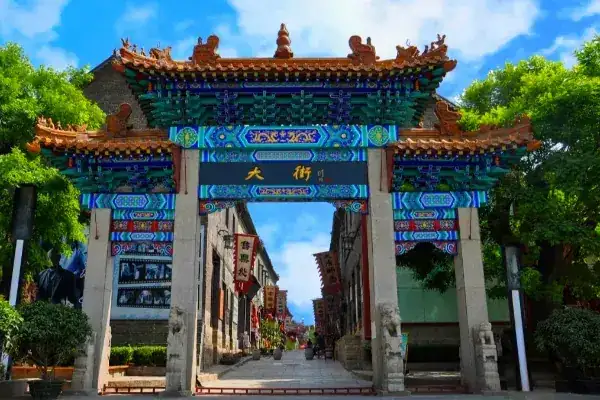
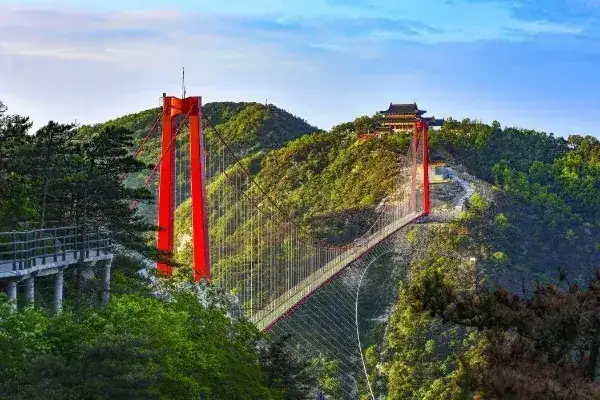
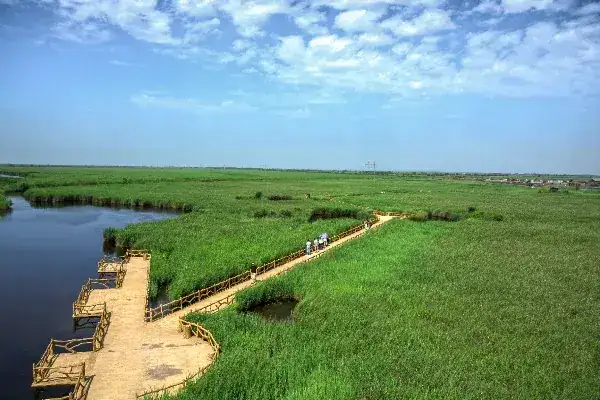
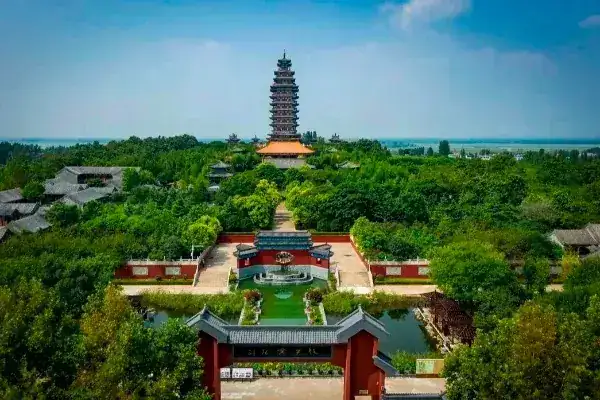
The Sun Wu Ancient City Tourist Area is a national AAAA scenic area built on Song dynasty ruins, themed around Sun Tzu culture. The Wei Family Manor, a national AAA and key cultural heritage site, is the best-preserved castle-style manor in northern China, built 1890 to 1893. Heban Mountain National Forest Park in Zouping covers 480 hectares with nearly 90 percent forest coverage. The Former Residence of Du Shoutian, tutor to the Xianfeng Emperor, is a national AAAA scenic area with 28 courtyards. Wudi Ancient City features 18 scenic nodes. The Yellow River Delta Ecological Culture Tourism Island is a national AAAA scenic area and national wetland park. Jieshi Mountain is the only exposed volcano on the North China Plain, formed 730,000 years ago. Bohai Shell Ridge Island and Wetland National Nature Reserve features rare shell ridges along the coast. Other attractions include Diaowo Valley, Tangli Temple, Fan Gong Temple, Liquan Temple, Maliandao Lake, Qinhuang River Wetland Park, and Sanhe Lake.
Notable People
Notable figures from Binzhou include Sun Wu (author of The Art of War, circa 535 BCE), Fu Sheng (founder of the New Text Book of Documents), Dong Yong (a famous filial son from the Han dynasty), Liu Hui (mathematician of the Wei-Jin period who wrote Commentary on the Nine Chapters on the Mathematical Art), Tang Sai'er (Ming dynasty peasant uprising leader), Du Shoutian (tutor to the Xianfeng Emperor), Li Guangtian (poet and former president of Yunnan University), and contemporary figures including Xin Changxing (Party Secretary of Jiangsu), Zhang Jun (Chief Justice of the Supreme People's Court), Ning Gaoning (former chairman of ChemChina and COFCO), and Ning Guang (academician of the Chinese Academy of Engineering).
Honors and Titles
Binzhou has been designated as a National Garden City, National Health City, National Double Support Model City, and National Forest City. It was selected for the 14th Five-Year Plan Zero-Waste City list in 2022, and was named a National Civilized City in 2025.
Travel information can change. Check current opening hours, reservations and entry requirements before you travel.
Traveller discussion
Start the conversation with a helpful tip or a question.