
Tai'an City
Tai'an CityTai'an is a prefecture-level city under Shandong Province, classified as a Type II large city, located in central Shandong. It is bounded by Mount Tai and Jinan to the north, connected to Jining to the south, separated from Liaoc
Tai'an City
Tai'an is a prefecture-level city under Shandong Province, classified as a Type II large city, located in central Shandong. It is bounded by Mount Tai and Jinan to the north, connected to Jining to the south, separated from Liaocheng and Puyang (Henan Province) by the Yellow River to the west, and adjacent to Jinan, Zibo, and Linyi to the east. The total area is 7,762 square kilometers. As of June 2023, Tai'an administers 2 municipal districts, 2 county-level cities, and 2 counties. As of the end of 2025, the permanent population was 5.2318 million with an urbanization rate of 67.36%. The city derives its name from Mount Tai — "When Mount Tai is at peace, all under heaven is at peace" — symbolizing national prosperity and people's well-being. The urban area sits at the southern foot of Mount Tai, built along the mountain with city and mountain integrated as one. Mount Tai is a national key scenic area acclaimed as "Foremost of the Five Sacred Mountains" and "The First Mountain Under Heaven," and is a World Natural and Cultural Heritage site. In 1982, Tai'an was designated by the State Council as one of the first batch of cities open to tourism. It is a central city of the Luzhong region, a China Excellent Tourism City, and a National Historical and Cultural City. In 2025, Tai'an achieved a regional GDP of 380.35 billion yuan (approximately $52.8 billion), comprising a primary industry value of 37.45 billion yuan ($5.2 billion), secondary industry of 153.68 billion yuan ($21.3 billion), and tertiary industry of 189.22 billion yuan ($26.3 billion). The three-sector structure was 9.8:40.4:49.8.
History
Human habitation in the Tai'an area dates back 50,000 years. The flourishing Dawenkou Culture emerged here approximately 6,000 years ago. During the Xia and Shang dynasties, the area belonged to Qingzhou and Xuzhou. In the Zhou dynasty, it was divided between the states of Qi and Lu. Under the Qin dynasty, it fell under Qi Commandery. In the early Western Han, Taishan Commandery was established under the Yanzhou Inspectorate, initially headquartered at Bo County. Over subsequent dynasties — Northern Wei, Northern Qi, Sui, and Song — administrative boundaries shifted frequently. The Jin dynasty established Tai'an Military in 1182 as Tai'an Prefecture, headquartered at Daiyue Town. Under the Yuan it remained a prefecture; in the Ming dynasty it was subordinate to Jinan Prefecture; and in the Qing dynasty under Emperor Yongzheng, Tai'an Prefecture was formally established. During the Republic of China era, administrative reorganizations reassigned the area multiple times. After the founding of the People's Republic, the Tai'an Special District was established in 1950, abolished in 1958, restored in 1961, and elevated to a prefecture-level city on March 27, 1985.
Administrative Divisions
Division History
In 1985, the Tai'an Special District was reorganized into a prefecture-level city, with the original Tai'an City restructured into Taishan and Suburban districts. Several counties were reassigned among neighboring cities. Over the following decades, numerous boundary adjustments and renaming occurred, including the renaming of the suburban district to Daiyue District in 2000.
Current Divisions
As of June 2023, Tai'an administers 2 municipal districts (Taishan and Daiyue), 2 county-level cities (Xintai and Feicheng), and 2 counties (Ningyang and Dongping). The municipal government is located at No. 3 Wangyue East Road, Taishan District.
Geography
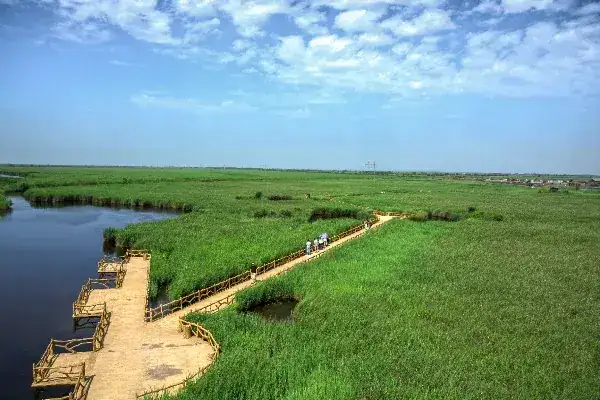
Tai'an is situated at the southern foot of Mount Tai in central Shandong, between 116 degrees 20 minutes and 117 degrees 59 minutes east longitude and 35 degrees 38 minutes and 36 degrees 28 minutes north latitude, covering 7,762 square kilometers. The terrain slopes from northeast to southwest, encompassing mountains, hills, plains, depressions, and lakes. Mountains (18.3% of total area, 400 to 800 meters elevation) concentrate in the north and east. Mount Tai's main peak Yuhuangding at 1,532.7 meters is the highest point in Shandong. Culai Mountain (1,028 meters) lies centrally, and Lianhua Mountain is in Xintai. Hills account for 41.1% of the area (120 to 400 meters), plains 36.1% (60 to 120 meters), and depressions 4.5%. Dongping Lake, the largest lake in the city and second-largest freshwater lake in Shandong, is in Dongping County.
Climate
Tai'an has a temperate continental semi-humid monsoon climate with four distinct seasons. The annual average temperature is 12.9 degrees Celsius, with July the hottest (26.4 degrees) and January the coldest (-2.6 degrees). Extremes reach 41 and -27.5 degrees. Average annual sunshine is 2,627.1 hours, and the frost-free period averages 195 days. Annual precipitation averages 697 millimeters, with 65.2% falling in summer. Mount Tai's summit averages 5.2 degrees but receives 1,163.8 millimeters of rain, while valley areas can exceed 14 degrees.
Natural Resources
Water Resources
Tai'an's total usable water resources average 1.34 billion cubic meters annually, including 520 million cubic meters of surface water and 850 million cubic meters of extractable groundwater.
Land Resources
As of 2019, Tai'an had 283,669 hectares of cultivated land, 69,184 hectares of garden land, and 184,147 hectares of forest land.
Plant Resources
The Mount Tai forest area harbors diverse tree species, herbs, and medicinal plants, with rich botanical biodiversity.
Animal Resources
The region supports various wildlife species, particularly in the Mount Tai scenic area, including birds, mammals, and aquatic life in Dongping Lake.
Mineral Resources
Tai'an is rich in mineral resources, with significant deposits including iron, coal, gypsum, limestone, granite, and natural mineral water.
Population
As of the end of 2025, Tai'an's permanent population was 5.2318 million with an urbanization rate of 67.36%. The Han ethnic group constitutes the majority, with various minority groups also present.
Politics
The city is governed by the Tai'an Municipal People's Government under the leadership of the Communist Party of China Tai'an Municipal Committee, with the Municipal People's Congress exercising legislative authority.
Economy
Overview
In 2025, Tai'an achieved a regional GDP of 380.35 billion yuan (approximately $52.8 billion), with the three-sector structure at 9.8:40.4:49.8.
Primary Industry
The primary sector generated 37.45 billion yuan ($5.2 billion), driven by agriculture, forestry, animal husbandry, and fisheries, with notable production in grain, vegetables, and Feicheng peaches.
Secondary Industry
The secondary sector contributed 153.68 billion yuan ($21.3 billion), with key industries including equipment manufacturing, chemicals, building materials, and energy production.
Tertiary Industry
The tertiary sector led the economy at 189.22 billion yuan ($26.3 billion), bolstered by tourism centered on Mount Tai, along with commerce, logistics, and modern services.
Transportation
Transport
Tai'an has a well-developed transportation network served by the Beijing-Shanghai High-Speed Railway, conventional rail lines, and several national expressways.
Transport
The city's road network connects to major expressways including the G2 Beijing-Shanghai and G3 Beijing-Taipei routes. Public transportation includes bus systems and taxi services connecting all districts and counties.
Social Affairs
Science and Technology
Tai'an maintains research institutions and technology enterprises with growing investment in innovation and research and development.
Education
The city hosts several universities and colleges and maintains a comprehensive system of primary and secondary schools.
Culture
Cultural facilities include libraries, museums, and cultural centers promoting local heritage and community engagement.
Sports
Public sports facilities and community fitness programs are widely available throughout the city.
Healthcare
Tai'an has a network of hospitals and clinics providing comprehensive medical services, including traditional Chinese medicine facilities.
Social Security
Pension, healthcare insurance, and other social welfare systems cover both urban and rural residents.
Infrastructure
Urban infrastructure includes water supply, gas distribution, district heating, and waste management systems.
Environmental Protection
Environmental initiatives focus on air quality improvement, water pollution control, and ecological restoration around Mount Tai and Dongping Lake.
Safety Production
The city implements workplace safety regulations and emergency response systems across industrial and mining sectors to ensure production safety.
Historical Culture
Historical Sites
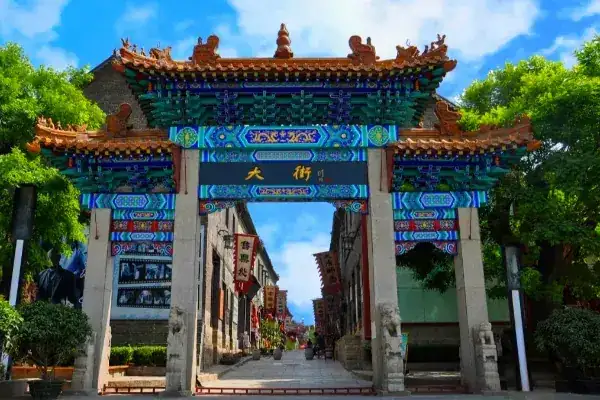
The Dai Temple (Daimiao) at the foot of Mount Tai is the most prominent heritage site — a grand imperial temple complex used for imperial sacrifices to the mountain. Numerous other ancient temples, stele inscriptions, and archaeological sites dot the region.
Intangible Cultural Heritage
Mount Tai worship ceremonies and local folk arts are recognized as intangible cultural heritage at national and provincial levels.
Folk Legends
The region is rich in folklore associated with Mount Tai, including legends of the deity Dongyue Dadi and various folk tales passed through generations.
City Flower and Tree
The city flower is the Chinese rose and the city tree is the Chinese pine, both symbolizing the resilience and beauty of the Tai'an spirit.
Scenic Spots
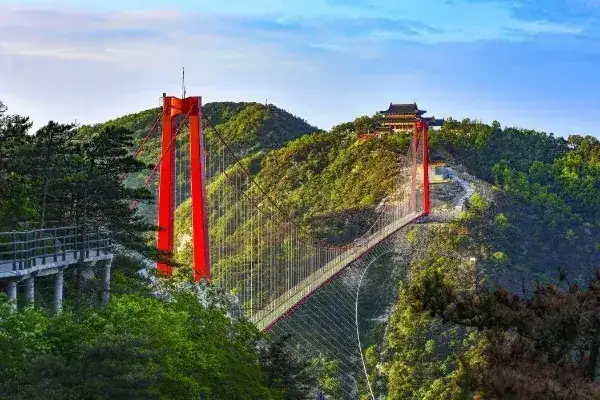
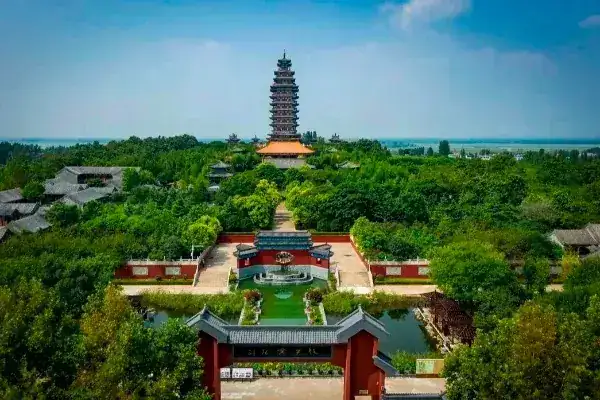
Mount Tai is the crown jewel of Tai'an's tourism, offering sunrise viewing, ancient stone inscriptions, temples, and pilgrimage routes. The Dai Temple at its base and Bixia Temple on the summit are major attractions. Dongping Lake and the Culai Mountain area also provide scenic landscapes.
Local Specialties
Notable local products include Tai'an Jianbing (savory crepe), Feicheng peach, Dongping Lake aquatic products, and various agricultural goods from the region's fertile lands.
Local Snacks
Tai'an is famous for local cuisine, particularly Tai'an Jianbing, Tofu Banquets, and various noodle dishes reflecting the region's culinary traditions.
Famous People
Ancient Celebrities
The Tai'an region has been associated with notable historical figures. Confucius climbed Mount Tai, and various scholars, officials, and military leaders originated from or were connected to the area throughout Chinese history.
Modern Celebrities
In modern times, Tai'an has produced numerous notable figures in politics, academia, military service, and the arts who have contributed to national development.
Honorary Titles
Tai'an holds several national titles including National Historical and Cultural City, China Excellent Tourism City, National Garden City, and National Civilized City.
External Relations
Tai'an maintains sister-city relationships and international cooperation programs, and regularly hosts the Mount Tai International Climbing Festival, attracting participants from around the world.
Travel information can change. Check current opening hours, reservations and entry requirements before you travel.
Traveller discussion
Start the conversation with a helpful tip or a question.