
Jining City
Jining CityJining City, a prefecture-level city under Shandong Province, is also known as the "Capital of the Grand Canal" and historically called Jizhou Prefecture. It is classified as a Type II large city and a third-tier city, located in
Jining City
Jining City, a prefecture-level city under Shandong Province, is also known as the "Capital of the Grand Canal" and historically called Jizhou Prefecture. It is classified as a Type II large city and a third-tier city, located in southwestern Shandong Province, bordering Linyi to the east, Heze to the west, Zaozhuang and Xuzhou to the south, and Tai'an to the north. The terrain is predominantly plains and lowlands sloping from east to west, with a warm temperate monsoon climate and four distinct seasons. The total area is 11,000 square kilometers. As of March 2025, the city administers 2 districts, 7 counties, and 2 county-level cities. As of the end of 2024, the resident population was 8.1873 million. On August 30, 1983, Jining was reorganized from a prefecture to a city. Jining is one of the central cities of the Huaihai Economic Zone, a historically and culturally famous city, and a waterfront ecological tourism city. It is an important birthplace of Dongyi culture, Huaxia civilization, Confucian culture, Water Margin culture, and Canal culture. The Yellow Emperor, Confucius, Mencius, Yan Hui, and the historian Zuo Qiuming were all born here. The "Three Confucian Sites" (San Kong) and the Beijing-Hangzhou Grand Canal are World Cultural Heritage sites. The city has 41 national key cultural relics protection units and national 5A-level tourist attractions such as the Weishan Lake Tourist Area. The Lunan High-Speed Railway has 6 stations within Jining, and the Beijing-Hangzhou Grand Canal runs through the entire territory with a main channel of 210 kilometers and shipping capacity of 100 million tons. In 2025, Jining's GDP was 612.8 billion yuan (approximately $84.5 billion USD), up 5.8% at constant prices. The primary industry added value was 64.9 billion yuan (approximately $8.96 billion USD), up 3.9%; the secondary industry added value was 221.9 billion yuan (approximately $30.6 billion USD), up 5.1%; and the tertiary industry added value was 326.0 billion yuan (approximately $44.97 billion USD), up 6.7%. In October 2025, Jining was awarded the title of National Model City for Rule of Law Government Construction.
Historical Evolution
During the Xia Dynasty, the Ren State (also called Reng State) was established in the territory. During the Shang Dynasty, additional vassal states included Yan, Jue, and Bianming, with Yan once serving as the Shang capital under King Nan Geng. During the Western Zhou Dynasty, the territory had the states of Ren, Jue, Zhu, Ji, Mao, and Lu, with Lu being the fief of the Duke of Zhou granted by King Wu after conquering Shang.
During the Eastern Zhou Dynasty, the Ren State belonged to Lu during the Spring and Autumn Period, then to Song and Qi during the Warring States Period. The State of Lu was conquered by Chu in 249 BC. During the Qin Dynasty, the Ren State was abolished and Rencheng and Kangfu Counties were established under Xue Commandery, with Lu Commandery set up in Qufu.
During the Western Han, the territory was reassigned to Jidong State (144 BC), renamed Dahe Commandery (116 BC), then Dongping State (52 BC). During the Eastern Han, Rencheng State was carved out from Dongping State (84 AD) at Luqiao Town, Weishan County. During the Three Kingdoms, Rencheng State became Rencheng Commandery (223 AD). During the Western Jin, Nanpingyang Marquis State was established and later restored to Rencheng State (277 AD).
During the Eastern Jin, the territory was successively occupied by Later Zhao, Former Yan, Former Qin, and Later Yan. During the Northern and Southern Dynasties, Gaoping Commandery was maintained, with Rencheng merged into Kangfu County (420 AD) and later restored (518 AD). During the Sui and Tang, Lu Commandery was established, later changed to Jizhou, then Jiyang Commandery and Taining Army. During the Song Dynasty, Yanzhou was elevated to Xiqing Prefecture (1118 AD). During the Jin Dynasty, Jizhou relocated from Juye to Rencheng (1150 AD).
During the Yuan Dynasty, Jizhou was elevated to Jining Prefecture (1271 AD) and Jining Route was established (1279 AD), governing 3 prefectures and 7 counties. During the Ming Dynasty, Jining Route became Jining Prefecture (1368 AD) governing 3 prefectures and 12 counties, later downgraded to a department (1385 AD). During the Qing Dynasty, Jining was elevated to a directly governed department (1724 AD), changed to a regular department (1730 AD), then restored as directly governed (1776 AD).
During the Republic of China, Jining Directly Governed Department was abolished (1912), and Jining Circuit was established (1914) governing 25 counties. Jining was liberated in January 1946, occupied by Nationalist forces in September, then liberated again on July 14, 1948. In 1950, Jining was downgraded to a county-level city under Tengxian Special District. In 1953, Tengxian and Huxi Special Districts merged to form Jining Special District. In 1967, it was renamed Jining Region. On August 30, 1983, with State Council approval, Jining Region was abolished and reorganized as a prefecture-level city.
Administrative Divisions
Evolution of Divisions
In 221 BC, the territory was divided between Xue and Lu commanderies. Through the Han, Three Kingdoms, Jin, and Northern and Southern Dynasties, administrative changes were minimal, with Rencheng State or Commandery governing 3 counties. After the Sui unification, Yanzhou became Lu Commandery governing 10 counties. During the Tang Dynasty, Jizhou was established (952 AD). During the Jin Dynasty, Jizhou moved to Rencheng (1150 AD) governing 4 counties. During the Yuan Dynasty, Jining Route was established (1279 AD) governing 3 prefectures and 7 counties. During the Ming Dynasty, Jining Prefecture governed 3 prefectures and 12 counties (1368 AD). During the Qing Dynasty, the directly governed department's jurisdiction changed several times through 1789.
After the People's Republic was founded, Jining belonged to Tengxian Special District (1950), then Jining Special District (1953). After numerous reorganizations, in November 2013, the former Central District and Rencheng District merged into a new Rencheng District, and Yanzhou City became Yanzhou District.
Division Details
As of March 2025, Jining City administers 2 districts, 7 counties, and 2 county-level cities: Rencheng District, Yanzhou District, Qufu City, Zoucheng City, Weishan County, Yutai County, Jinxiang County, Jiaxiang County, Wenshang County, Sishui County, and Liangshan County, comprising 51 sub-districts, 102 towns, and 3 townships. The municipal government is at No. 13 Hongxing Middle Road, Rencheng District.
Geographical Environment
Location and Territory
Jining is located at the junction of the Huang-Huai-Hai Plain and the central-southern Shandong mountains, spanning 167 km north-south and 158 km east-west, covering 11,000 square kilometers. The northernmost point is at 35 degrees 57 minutes N (Liangshan County), the southernmost at 34 degrees 26 minutes N (Weishan County), the easternmost at 117 degrees 36 minutes E (Sishui County), and the westernmost at 115 degrees 52 minutes E (Liangshan County).
Topography and Landforms
Jining's terrain features plains and lowlands sloping from east to west. The eastern hills have elevations of 50-100+ meters, with notable peaks including Mount Fenghuang (648.8 m, Jining's highest), Mount Yao (582 m), Mount Yi (545 m), Mount Laozhai (532 m), and Mount Ni (344 m). The central area has the South Four Lakes (Weishan, Nanyang, Zhaoyang, and Dushan) running north-south, forming a basin-like depression with the lowest lake bottom at 30 meters elevation.
Climate
Jining has a warm temperate monsoon climate with four distinct seasons. Summers bring southerly winds, high temperatures, and abundant rainfall; winters bring northerly winds and cold, clear weather. The annual average temperature ranges from 13.3 to 14.1 degrees Celsius, with an average frost-free period of 199 days. Annual precipitation averages 597-820 mm.
Natural Resources
Water Resources
Jining's total natural water resources amount to 5.5 billion cubic meters annually (3.4 billion surface water, 2.1 billion groundwater), with total usable resources of 3.037 billion cubic meters.
Land Resources
Jining's total land area is 11,187 square kilometers, with cultivated land at 54.6%, forest land 5.6%, orchard land 0.9%, and grassland 0.7%.
Plant Resources
Jining has over 900 species of higher plants across 127 families. Main crops include wheat, rice, corn, sweet potato, and cotton. Notable local varieties include Qufu fragrant rice, Jinyu No. 1 rice, Jin millet, and Sishui small mixed beans. Medicinal plants total 357 species across 92 families.
Animal Resources
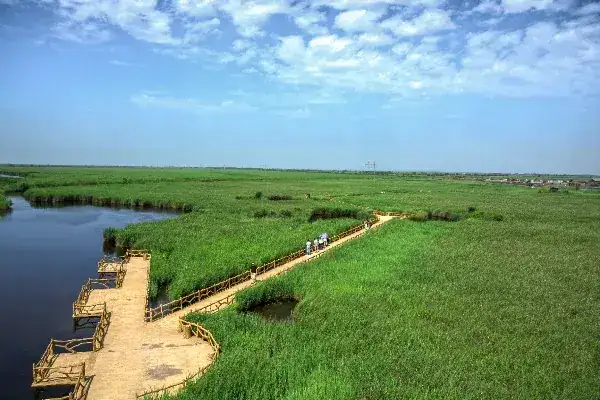
Jining has over 30 domesticated animal species, 82 freshwater fish species, and 36 mollusk species. The four major economic fish are silver carp, bighead carp, Zhongnan fish, and tilapia. Jining has 201 bird species, including protected red-crowned cranes, white cranes, swans, and mandarin ducks. The Weishan Lake area has the province's largest waterbird population.
Mineral Resources
Jining has identified over 70 mineral types, primarily coal, plus limestone, gypsum, barite, rare earths, phosphate, iron ore, copper, and lead. Coal-bearing areas cover 4,826 square kilometers (45% of total area), with reserves of 178 billion tons above 1,500 meters. Total coal reserves of 26 billion tons account for 50% of Shandong's total, making Jining one of China's eight key coal bases. Rare earth deposits at Qishan, Weishan County, have geological reserves of 12.75 million tons, second only to Baiyun Obo in Inner Mongolia.
Population
Population Numbers
According to the Seventh National Census (November 1, 2020), Jining's resident population was 8,357,897. As of end 2024, it was 8.1873 million (5.2506 million urban, 2.9367 million rural), with an urbanization rate of 64.13%, up 1.08 percentage points.
Ethnic Composition
Besides the Han majority, Jining has 38 ethnic minorities totaling approximately 50,000, with the Hui people being the largest at 42,000. Other groups include Manchu, Buyei, Zhuang, Korean, Mongolian, Yi, and Miao. The distribution pattern is "widely dispersed, locally concentrated," with about half in urban areas.
Politics
The city's political leadership operates under the municipal Party Committee and People's Government system at the prefecture level.
Economy
Overview
In 2024, Jining's GDP was 586.75 billion yuan (approximately $80.93 billion USD), up 5.8%. The primary industry added value was 63.60 billion yuan (approximately $8.78 billion USD), up 3.4%; secondary industry 217.60 billion yuan (approximately $30.02 billion USD), up 5.1%; tertiary industry 305.54 billion yuan (approximately $42.15 billion USD), up 6.8%. The three-sector ratio was 10.8:37.1:52.1. Fixed asset investment grew 3.3%, with 1,523 projects exceeding 100 million yuan. General public budget revenue reached 49.63 billion yuan (approximately $6.84 billion USD), up 4.5%. General public budget expenditure was 80.02 billion yuan (approximately $11.04 billion USD), with livelihood spending at 82.6%.
Primary Industry
In 2024, agriculture, forestry, animal husbandry, and fisheries output totaled 124.08 billion yuan (approximately $17.12 billion USD), up 3.9%. Grain production exceeded 10 billion jin (5 billion kg) for the first time, reaching 10.03 billion jin. Vegetable output was 8.226 million tons. Meat production was 475,000 tons. Aquaculture output was 315,000 tons, up 3.6%.
Secondary Industry
In 2024, industrial value-added above designated size grew 7.5%: mining 9.8%, manufacturing 6.3%, and utilities 6.7%. Among 33 major products, 20 achieved growth (60.6% coverage), with construction machinery, graphite products, and industrial robots growing 90.4%, 56.5%, and 53.1%. Construction output was 96.54 billion yuan (approximately $13.32 billion USD), up 7%.
Tertiary Industry
In 2025, total import and export trade reached 127.44 billion yuan (approximately $17.58 billion USD), a record high, up 7.4%, maintaining 11 consecutive years of growth. Exports were 106.24 billion yuan (approximately $14.65 billion USD), up 7%; imports 21.2 billion yuan (approximately $2.93 billion USD), up 9.4%. Private enterprise exports exceeded 100 billion yuan for the first time, reaching 105.28 billion yuan (approximately $14.52 billion USD).
In 2024, the service sector above designated size achieved revenue of 67.82 billion yuan (approximately $9.36 billion USD), up 11.0%. Retail sales reached 291.04 billion yuan (approximately $40.14 billion USD), up 6.5%. Financial deposits reached 982.8 billion yuan (approximately $135.55 billion USD), with loan balances of 822.78 billion yuan (approximately $113.49 billion USD). Actual foreign investment was $935 million.
Social Affairs
Science and Technology
In 2024, Jining had 2,507 technology-based SMEs and 1,821 high-tech enterprises, with 8 provincial key laboratories and 3 academician workstations. Patent grants reached 14,982. The city attracted 51,000 young talent including 227 doctoral and 3,886 master's degree holders.
Education
As of end 2023, Jining had 2,893 schools with 1.7543 million students, including 7 regular universities, 23 vocational schools, 61 high schools, 277 junior high schools, 805 primary schools, and 1,703 kindergartens. There were 8,548 graduate students and 165,200 undergraduate students.
Culture
In 2024, Jining hosted the International Confucius Cultural Festival and Nishan Forum on World Civilizations, organizing over 15,000 rural performances. The city had 73 museums, 13 public libraries, and 156 cultural stations, with 18 national and provincial-level cultural industry demonstration parks.
Healthcare
In 2024, Jining had 7,368 medical institutions including 221 hospitals. It built 1 national and 6 provincial regional medical centers, with 8 national and 81 provincial key specialties.
Sports
In 2024, Jining athletes won 2 gold and 1 silver at the First National Youth Three-Ball Games. The city held over 800 youth fitness events, 2 international and 11 national competitions, and 7,710 community sports meets.
Social Security
In 2024, Jining achieved its 20th consecutive year of minimum living standard increases, supporting 149,000 recipients and 39,000 extremely impoverished persons. Standards were raised to 993 yuan (approximately $137 USD) and 816 yuan (approximately $113 USD) per month. The city built 1,566 elderly care facilities with nearly 70,000 beds.
Cultural News
The film "Yilu Fuxing" (All the Best), with local themes and creative team from Jining, premiered on December 30, 2025, with nationwide release on January 1, 2026.
Transportation
Overview
In 2024, Jining built 719 km of new highways, bringing total mileage to 21,655 km including 499 km of expressways. Jining Airport served 33 cities with 1.408 million passengers. The city operated 6,244 commercial vessels handling 96.66 million tons of port throughput.
Railways
North-south: Beijing-Shanghai Railway, Beijing-Jiujiang Railway, Beijing-Shanghai High-Speed Railway, and Beijing-Xiongan-Shangqiu High-Speed Railway. East-west: Xinxiang-Yanzhou-Shijiu Railway, Lunan High-Speed Railway, and Watang-Rizhao Railway. The Lunan High-Speed Railway opened its Qufu-Heze-Zhuangzhai segment on December 26, 2021. Jining has 13 passenger stations.
Highways
North-south: Beijing-Taipei Expressway, Ji-Guang Expressway, Jinan-Xuzhou Expressway, and National Highways 220, 104, 105. East-west: Rizhao-Lankao Expressway, Zaozhuang-Heze Expressway, and National Highway 327.
Aviation
Jining Airport operates flights to 33 cities, handling 1.408 million passengers and 2,588.2 tons of cargo in 2024.
Water Transport
The Beijing-Hangzhou Grand Canal passes through Jining with ports including Jining, Liangshan, Weishan, Longgong, Taiping, Jiaxiang, Yutai, Jinxiang, and Wenshang ports.
Public Transit
Jining intercity bus service began June 26, 2013. After full interconnection, 18 routes totaled 820 km with 660 stops, 452 buses, and 60,000 daily passengers. Seniors over 65, disabled persons, and disabled military personnel ride free. An urban rail transit network of 239 km across 5 lines is planned, with the first round comprising 3 lines totaling 65.5 km and 37 stations.
Historical Culture
Cultural Relics Protection
As of end 2024, Jining had 41 national key cultural relics protection units, 260 provincial-level, and 387 municipal-level units, with over 1.3 million movable cultural relics.
Intangible Cultural Heritage
As of January 2025, Jining had 19 national-level, 102 provincial-level, and 283 municipal-level intangible cultural heritage projects, with 10 national, 64 provincial, and 262 municipal heritage transmitters.
Festivals and Customs
Traditional festivals reflect Jining's Confucian heritage, with celebrations tied to the birthdays of Confucius and Mencius, as well as canal-related folk traditions.
Scenic Spots
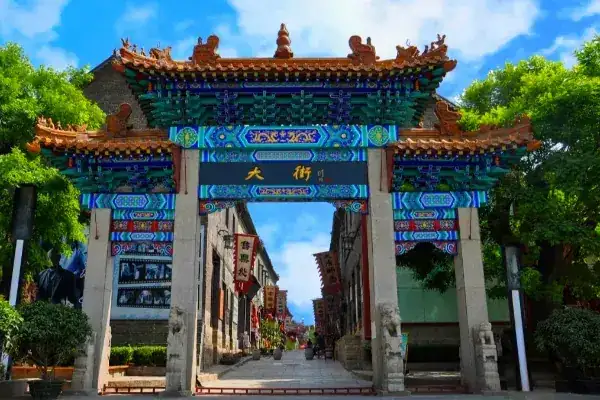
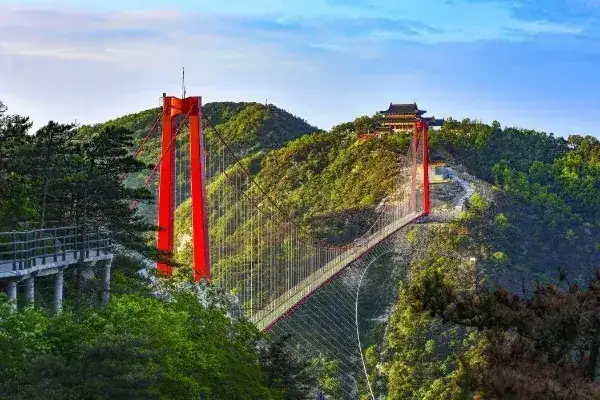
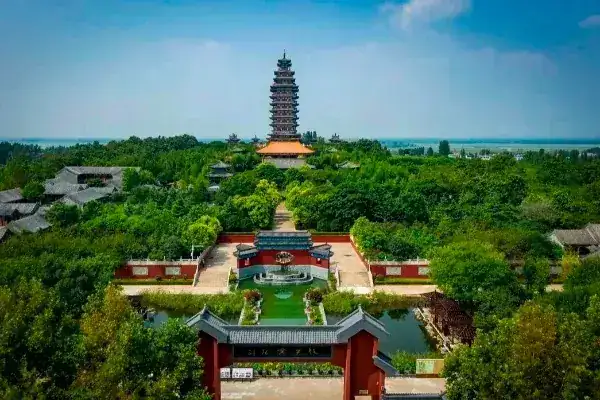
As of end 2024, Jining had 100 A-level scenic spots including 2 at 5A and 20 at 4A level. The Qufu Ming Old City (Three Confucian Sites) was among China's first 5A-level scenic spots. Taibai Lake Resort, 6 km south of the city center, was designated provincial-level in 1996. Nishan Cultural Tourism Resort at the junction of Qufu, Zoucheng, and Sishui is Confucius's birthplace. Jining has 40 known Han Dynasty stele varieties, primarily at the Jining Han Stele Museum, Qufu Confucian Temple, and Jiaxiang Wu Family Shrine. The Ancient Eight Views include Iron Pagoda Chanting, Taibai Evening View, Ink-Flower Spring, Phoenix Terrace Sunset, Guan Mound Clear Smoke, South Pool Lotus, West Reed Fish Song, and Huolin Evening Ferry.
Local Specialties
Jining is known for Qufu fragrant rice, Jin millet, Sishui small mixed beans, Weishan Lake fish products, and traditional Confucian cuisine.
Famous People
Notable figures born in Jining include the Yellow Emperor, Confucius, Mencius, Yan Hui, and historian Zuo Qiuming, making it one of China's most culturally significant birthplaces.
Honorary Titles
In February 2023, Jining was selected for the 2022 Information Consumption Model City list. In April 2025, it was awarded "National Double Support Model City."
Sister Cities
Since establishing its first sister city relationship with Ashikaga, Japan in 1984, Jining has developed 7 sister city and 35 friendly exchange relationships with 42 local governments across 21 countries. In August 2021, Jining signed a friendly cooperation agreement with Pskov, Russia.
Travel information can change. Check current opening hours, reservations and entry requirements before you travel.
Traveller discussion
Start the conversation with a helpful tip or a question.