
How to prevent altitude sickness when traveling to Tibet? Ten essential tips for preventing altitude sickness before traveling to Tibet.
How to Prevent Altitude Sickness When Traveling to Tibet? Ten Essential Tips for Preventing Altitude Sickness Before Entering Tibet (Edited 2024-02-20 09:42:12) The ten most effective measures to prevent altitude sickness: 1. Maintain a calm and relaxed mindset. 2. Take altitude sickness medication in advance. 3. Choose a city with a lower altitud…

How to prevent altitude sickness when traveling to Tibet? Ten essential tips for preventing altitude sickness before traveling to Tibet.
Edited on 2024-02-20 09:42:12
Tibet is a dream destination for countless travelers, but altitude sickness is often the first challenge they face when entering Tibet. However, with the right preventative measures, altitude sickness can be easily managed. This article details ten effective measures to prevent altitude sickness, helping you overcome it and enjoy your trip to beautiful Tibet.
1. Maintain a calm and relaxed state of mind.
Maintaining a calm and peaceful mindset is the best way to prevent altitude sickness when traveling to Tibet. Many tourists experience anxiety, worry, excitement, or other negative emotions before or after arriving in Tibet. In fact, these excessive emotional fluctuations can make you more susceptible to altitude sickness and worsen your symptoms. Therefore, it is very important to maintain a peaceful, relaxed, and optimistic attitude when traveling to Tibet.
If you are worried about altitude sickness, you can learn about the symptoms and related knowledge of altitude sickness in advance. You will find that altitude sickness is not so scary. It is a very common phenomenon in high-altitude areas, and most tourists can adapt within 1 to 2 days.
If you feel excited or agitated after arriving in Tibet, try taking deep breaths, relaxing your mind and body, or shifting your focus to keep your mind calm.
Maintaining a calm and peaceful mindset is the best way to prevent altitude sickness when traveling to Tibet.
2. Take altitude sickness prevention medication in advance.
Before traveling to Tibet, you can consult a doctor in advance and take appropriate altitude sickness prevention medications, such as Rhodiola rosea, under the doctor's advice or guidance. This can help you effectively prevent altitude sickness and alleviate its symptoms. However, it is important to note that you should not take these medications blindly; they should only be used under the guidance of a doctor.
3. Choose a city with a lower altitude as your first stop.
For your first stop when traveling to Tibet, I recommend Lhasa or Nyingchi. These two cities have relatively lower altitudes, which will help you acclimatize to the high altitude more quickly and reduce altitude sickness symptoms. Furthermore, if you have enough time, I suggest spending 1-2 days in Lhasa/Nyingchi before visiting higher altitude areas such as Shigatse, Shannan, and Ngari.
Average altitude of various regions in Tibet
4. Choose a professional and reliable Tibet travel agency.
Choosing a professional and reliable travel agency is crucial for preventing altitude sickness when traveling to Tibet. A good travel agency will have a complete tour team, a reasonable and scientific itinerary, and comprehensive support measures to provide full protection for your trip, allowing you to enjoy your journey more easily.
As a long-established travel agency in Tibet, our Tibet tour routes are all carefully planned and arranged to ensure you can visit the attractions you want in the most comfortable state. In addition, our company will also equip the vehicles with emergency medical oxygen tanks and professional and knowledgeable tour guides, so you can seek help from them in time if you feel unwell during the trip.
5. Choosing to fly to Tibet is more comfortable.
Choosing the right mode of transportation when traveling to Tibet can help prevent altitude sickness. Many people believe that taking the train to Tibet allows for a gradual acclimatization to the altitude and makes it easier to adapt to the high-altitude environment. However, this isn't entirely accurate, as it overlooks the physical impact of long-distance travel. For most people, a 6-8 hour train journey is already exhausting and uncomfortable, let alone the 20-hour journey to Tibet. Excessive fatigue can actually make you more susceptible to altitude sickness. Therefore, if possible, it's recommended to fly to Tibet, which only takes 2-3 hours and allows you to acclimatize to the altitude in a more comfortable state.
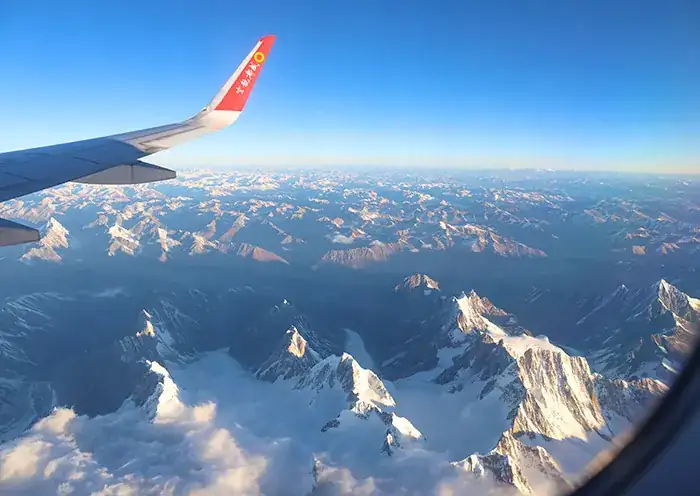
Traveling to Tibet by plane allows you to gradually acclimatize to the high altitude at your hotel after arrival.
6. Slow down your movements and avoid strenuous exercise.
At high altitudes, the body's oxygen supply capacity is limited due to the reduced oxygen concentration. Therefore, upon arriving in Tibet, it is essential to slow down and avoid strenuous activities such as running and jumping, as these can increase oxygen consumption and trigger or worsen altitude sickness.
7. Get some rest.
In high-altitude areas, getting plenty of rest is one of the key measures to prevent altitude sickness. Because of the thin air at high altitudes, the body needs more time to adapt to the new environment. Sometimes you may not have any symptoms when you first arrive in Tibet, but after a few hours, some altitude sickness symptoms may gradually appear. Therefore, after arriving in Tibet, be sure to rest. It is recommended to go to your hotel to rest first and not rush out to sightsee.
8. Drink plenty of water and eat a balanced diet.
Tibet has a relatively dry climate, and the high altitude environment can affect the body's metabolism and digestive function. Therefore, it is necessary to drink more water to promote metabolism and eat more easily digestible and light foods. However, it is not advisable to overeat, which can burden the stomach and intestines.
9. Keep warm and avoid catching a cold.
Tibet has generally low temperatures and significant temperature differences between day and night, so it's essential to take precautions against the cold when traveling there to avoid catching a cold. Additionally, it's advisable to avoid showering or washing your hair on your first night in Tibet to prevent catching a cold or triggering altitude sickness.
10. If you experience altitude sickness, seek help immediately.
Whether upon arrival in Lhasa or during your trip, if you experience altitude sickness, be sure to contact your travel agency staff immediately for timely and effective assistance. Furthermore, all our vehicles are licensed tourist buses, and each is equipped with oxygen cylinders. If you experience discomfort during your journey, you can use oxygen to alleviate your symptoms.
In conclusion, Tibet's breathtaking scenery is worth experiencing for everyone, but travel safety is equally important. By following this guide to preventing altitude sickness in Tibet and taking appropriate precautions, you will be able to more easily enjoy the magnificent panorama of snow-capped mountains, lakes, temples, and blue skies. We wish you a fulfilling and safe journey in Tibet!
Little-known facts about Tibet
Bomi—Jiangnan of the Snowy Region
Bomi, located at the junction of the Nyainqêntanglha Mountains and the Himalayas, has long been known as the "Switzerland of Tibet," the "Pearl in the Green Sea," the "Jiangnan of the Snow Region," and a "Tourist Paradise." Influenced by the southwest monsoon from the Indian Ocean, Bomi enjoys a unique subtropical semi-humid climate. Its mild climate, abundant rainfall, and lush biodiversity, coupled with mild winters and cool summers, make it a typical Jiangnan-style climate. This humid climate contributes to its beautiful natural landscape. Furthermore, its rich highland atmosphere, strong local character, vibrant snow-covered landscapes, and distinctive folk customs make Bomi a top tourist destination.
Location: Bomi County, Nyingchi City, Tibet Autonomous Region
Transportation: Accessible by Lhasa city bus line
Related Articles
Can Taiwanese travel to Tibet in 2026? A comprehensive guide including Tibet travel permit, itinerary, costs, altitude sickness, and group tours.
15 Must-Know Questions for Traveling from Chengdu to Tibet in 2026: Transportation, Itinerary, Costs, Altitude Sickness, and Documentation Explained (A Beginner's Guide to Avoiding Pitfalls)
What is the altitude of Lhasa? A complete guide to altitude sickness prevention and coping strategies for attractions in Lhasa city in 2026.
What is the altitude of Nyingchi? Will I experience altitude sickness in Nyingchi? A complete guide to altitude sickness prevention and acclimatization!
Is altitude sickness more likely to occur in Tibet during winter than in summer? Is altitude sickness more severe?
Will I experience altitude sickness if I go to Everest Base Camp? Is it dangerous?
Is altitude sickness more severe when taking the train to Lhasa than when taking a plane?
Will I experience severe altitude sickness after flying to Lhasa?
Will I experience severe altitude sickness if I engage in a lot of physical activity in Lhasa?
Will I get a refund if I experience altitude sickness during my trip to Tibet?
Photo gallery
Travel information can change. Check current opening hours, reservations and entry requirements before you travel.


Traveller discussion
Start the conversation with a helpful tip or a question.