
[2027 Sichuan-Tibet Southern Route G318 Travel Guide] Ten Steps to Easily Plan Your Perfect Sichuan-Tibet Trip
[2027 Sichuan-Tibet Southern Route G318 Travel Guide] Ten Steps to Easily Plan Your Perfect Sichuan-Tibet Trip Author: Xiao Zhou | Updated: December 4, 2024 This article provides you with a highly practical 2027 Sichuan-Tibet Southern Route G318 travel guide, covering comprehensive information including a Sichuan-Tibet route map, must-see attracti…
[2027 Sichuan-Tibet Southern Route G318 Travel Guide] Ten Steps to Easily Plan Your Perfect Sichuan-Tibet Trip
Author: Xiao Zhou | Updated: December 4, 2024
The G318 Southern Sichuan-Tibet Highway is a vital road connecting Chengdu, the "Land of Abundance," and Lhasa, the holy city of Tibet. It is one of China's most beautiful highways and a top route for domestic and international tourists traveling to Tibet. The route traverses numerous high mountains, deep valleys, grasslands, lakes, and snow-capped peaks and glaciers, offering breathtaking natural scenery that will leave you wanting more. To help you better enjoy the beauty of the G318 Southern Sichuan-Tibet Highway and save you the trouble of creating a travel itinerary, this article provides a carefully crafted 2025 travel guide for the G318 Southern Sichuan-Tibet Highway. Just ten simple steps will help you easily plan your perfect Sichuan-Tibet journey.
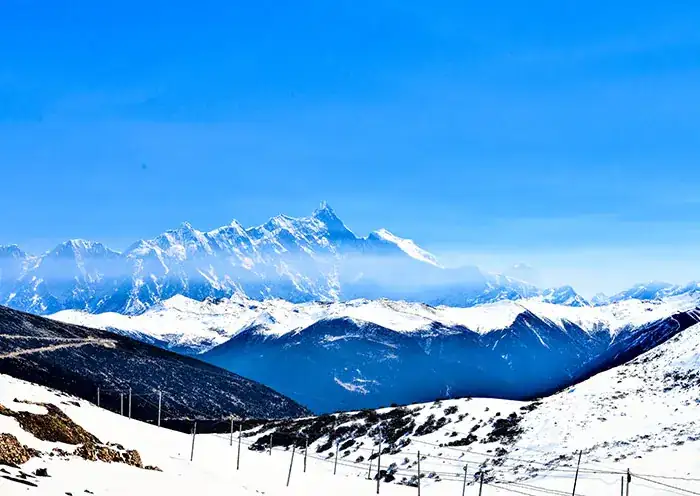
View of Namcha Barwa Peak bathed in sunlight from Sejila Pass
Step 1: Understand the route of the G318 Sichuan-Tibet Highway
The G318 Sichuan-Tibet Highway is 2,146 kilometers long, starting in Chengdu and passing through Xinduqiao, Litang, Mangkang, Linzhi, and other places before finally reaching the holy city of Lhasa. To fully appreciate the scenery along the way and allow time to acclimatize to the high altitude, a leisurely 15-day trip is recommended, offering a more relaxed itinerary. Of course, if time is limited, the specific travel time can be determined according to your travel plans and preferences.
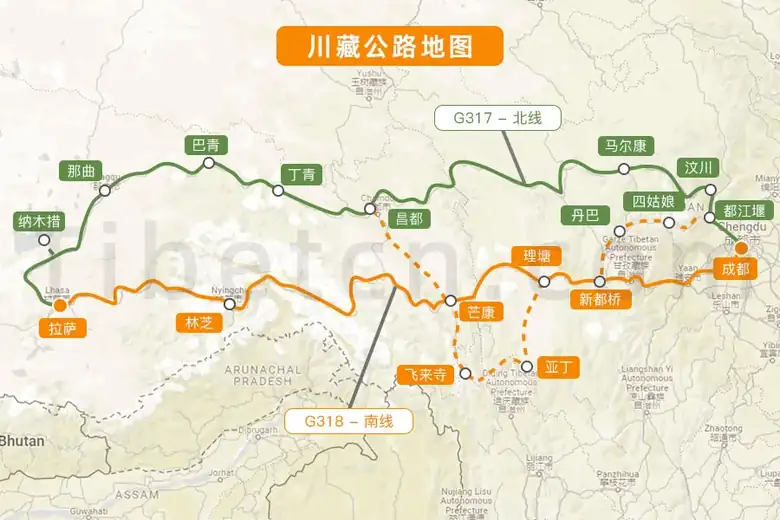
Information on the G318 Sichuan-Tibet Highway
Step Two: Understanding why we chose the G318 Southern Sichuan-Tibet Highway.
Reason 1: Magnificent natural sceneryThe G318 Sichuan-Tibet Southern Route is known as "China's Scenic Highway" because of its numerous beautiful landscapes, including snow-capped mountains, glaciers, rivers, plateaus, lakes, forests, canyons, and alpine lakes.
Reason 2: Unique Tibetan CultureThe G318 southern route of the Sichuan-Tibet Highway connects several Tibetan-inhabited areas and boasts numerous Tibetan Buddhist temples, Tibetan-style architecture, and folk cultural landscapes, offering a deep understanding of Tibetan traditional culture and lifestyle.
Reason 3: Stable road conditionsThe overall road conditions of National Highway 318, the southern route of the Sichuan-Tibet Highway, are relatively stable, with dedicated personnel for maintenance, making the road more accessible.
Reason 4: Long history and cultureThe southern route of the Sichuan-Tibet Highway was once part of the Ancient Tea Horse Road and the Tang-Tibet Ancient Road, boasting a glorious history and splendid culture. Here, you can appreciate ancient historical sites up close and explore stories from the past.
Reason 5: Abundant food optionsThe G318 southern route of the Sichuan-Tibet Highway passes through many popular cities in Sichuan and Tibet, where you can taste the special delicacies and snacks of different regions along the route.
Step 3: Learn about the top ten must-see attractions along the G318 southern Sichuan-Tibet Highway.
NO.1 Hailuogou (altitude approximately 2900 meters)
Hailuogou is located in Luding County, Ganzi Tibetan Autonomous Prefecture, Sichuan Province. It is known as "China's most beautiful glacier". Here, you can admire the most spectacular snow-capped mountain and glacier scenery up close, experience natural hot springs, and enjoy the beautiful scenery of Mount Gongga, known as the "King of Sichuan Mountains". Alternatively, you can visit the surrounding villages and experience the unique ethnic customs of Tibetan, Qiang and other ethnic groups.
NO.2 Zheduo Mountain (approximately 4298 meters above sea level)
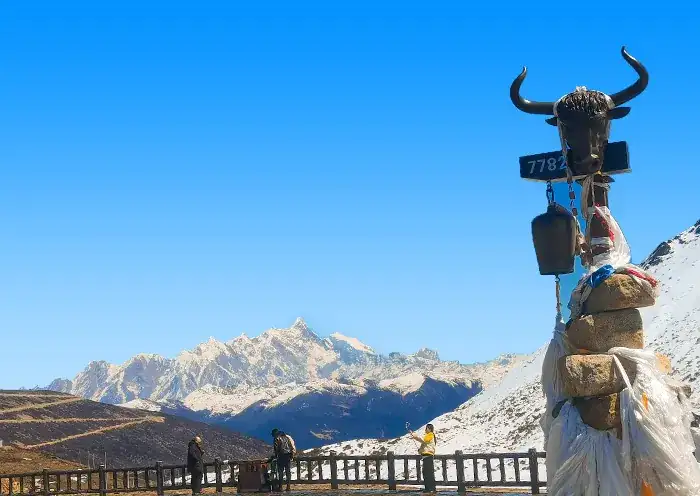
Zheduo Mountain, located in Ganzi Tibetan Autonomous Prefecture, Sichuan Province, is the first natural barrier to enter the Tibetan region and is known as the "First Pass of Kham". Standing at the Zheduo Mountain pass, you can see towering white stupas and prayer flags fluttering in the wind. The snow-capped mountains in the distance are extremely spectacular, especially at dawn and dusk when the area is shrouded in mist and clouds, resembling a fairyland, which is very beautiful.
Zheduo Mountain
NO.3 Xinduqiao (altitude approximately 3500 meters)
Xinduqiao, located in the western part of Kangding City, Ganzi Tibetan Autonomous Prefecture, Sichuan Province, is renowned for its magnificent natural landscapes and the interplay of light and shadow, earning it the reputation of "photographer's paradise." Every frame is breathtakingly beautiful. Especially in autumn, the mountains and fields are ablaze with a rich variety of colors, with dark green, golden yellow, orange-red, and fiery red painting a dreamlike autumn scene. Under the warm sunlight, the interplay of light and shadow is perfectly executed, creating a truly stunning spectacle.
Xinduqiao
NO.4 Litang (altitude approximately 4000 meters)
Litang, located in southwestern Ganzi Tibetan Autonomous Prefecture, Sichuan Province, is a hidden gem deep in western Sichuan, known as the "Holy Land of Snow." It gained fame after being associated with a young Tibetan man named Dingzhen. Here, you can wander through ancient streets, temples, and Tibetan villages, gaining a deeper understanding of the long history and culture of the Tibetan people. You can also ride horses across the grasslands, enjoying pure freedom and the simple, honest ethnic customs.
【Slow Travel on G318 Sichuan-Tibet Highway】10-Day, 9-Night Classic Group Tour of the Southern Route of G318 Sichuan-Tibet Highway from Chengdu to Lhasa
Chengdu-Kangding-Xinduqiao-Yajiang-Litang-Cuopu Valley-Mangkang-Basu-Bomi-Nyingchi-Lhasa
NO.5 Daocheng Yading (altitude approximately 4000 meters)
Daocheng Yading, located in Daocheng County, Ganzi Tibetan Autonomous Prefecture, Sichuan Province, is a tourist destination that integrates plateau scenery including snow-capped mountains, glaciers, lakes, canyons, meadows, and forests. It is considered the soul of Shangri-La in China and is hailed as "the last pure land on the blue planet." Here, you can enjoy distant views of sacred mountains such as Xiannairi, Yangmaiyong, and Xiannaduoji, and admire the plateau lakes like Milk Lake, Five-Color Lake, and Pearl Lake up close. Especially in autumn, the golden poplar forests and fiery red grasslands are particularly spectacular and well worth seeing.
Milk Sea
NO.6 Maoya Grassland (altitude approximately 4200 meters)
Maoya Grassland, located west of Litang County in Ganzi Tibetan Autonomous Prefecture, Sichuan Province, is a vast grassland hailed as one of "China's six most beautiful grasslands." Its scenery varies with the seasons: vibrant in spring, lush with green grass and wildflowers in summer, golden in autumn, and snow-covered in winter. It is an excellent place to explore nature and culture, and a great destination to experience life in a high-altitude pastoral area.
Maoya Grassland
NO.7 Haizi Mountain (approximately 4685 meters above sea level)
Haizi Mountain, located at the border of Litang and Daocheng in Ganzi Tibetan Autonomous Prefecture, Sichuan Province, is the largest ancient glacial relic on the Qinghai-Tibet Plateau and is known as the "Glacier Museum." Here, you can enjoy breathtaking alpine lake scenery and unique landforms, as well as observe interesting wild flora and fauna up close.
Sister Lakes at the foot of Haizi Mountain
NO.8 Ranwu Lake (approximately 3850 meters above sea level)
Ranwu Lake, located in Baxu County, Changdu City, Tibet, is the largest lake in eastern Tibet and the most beautiful lake along the Sichuan-Tibet Highway. Known as the "Tears of Heaven," it is famous for its azure waters and the reflections of snow-capped mountains, creating a truly enchanting landscape. Here, you can enjoy the dreamlike scenery of the lake and mountains, as well as the breathtaking reflections of the snow-capped peaks. If you're lucky, you might even witness a stunning sunrise or sunset.
Ranwu Lake
NO.9 Basongcuo (approximately 3480 meters above sea level)
Basum Tso, located in Gongbo'gyamda County, Nyingchi City, Tibet, is a tourist destination that integrates natural landscapes such as snow-capped mountains, lakes, and forests. It is also one of the largest glacial freshwater barrier lakes in eastern Tibet and is known as the "Sacred Lake." Its waters are crystal clear and turquoise, surrounded by snow-capped mountains, with lush green trees lining the shores, creating a picturesque and extremely beautiful scene. You can take a boat trip on the lake or stroll along its banks to fully enjoy the tranquility and beauty of nature.
The magnificent autumn scenery of Basongcuo
NO.10 Potala Palace (approximately 3700 meters)
The Potala Palace, located in the heart of Lhasa, Tibet, is the largest existing palace complex in China, the highest ancient palace in the world, and a landmark of Lhasa and Tibet, often referred to as the "Pearl of the Roof of the World." Visitors can stroll through the palace, admiring its exquisite Tibetan architecture, viewing precious cultural relics and artworks, and gaining a deeper understanding of Tibetan history and culture.

Group photo at Potala Palace
Step 4: Choose the best travel route and way of traveling along the G318 southern Sichuan-Tibet Highway.
If this is your first time exploring the southern Sichuan-Tibet Highway and you're unsure how to plan your G318 tour, you can refer to the two popular routes below, which basically cover the essential tourist attractions along the Sichuan-Tibet Highway. Alternatively, a group tour is the preferred way to travel the Sichuan-Tibet Highway. Experienced guides and drivers accompany you throughout the trip, ensuring a safer and more enjoyable journey. These tours also offer diverse route options, allowing you to easily appreciate the beauty of Sichuan and Tibet and making your trip more comfortable.
1. 10-Day In-Depth Tour of Sichuan and Tibet
Trip Highlights: The entire trip takes 10 days, starting from Chengdu, Sichuan, and traveling along the southern Sichuan-Tibet Highway to Lhasa, Tibet. Along the way, you will explore the majestic Zheduo Mountain, the picturesque Xinduqiao, the stunning Litang, the vast Maoya Grassland, the breathtaking Cuopu Valley, the amazing Dongda Mountain, the magnificent Ranwu Lake, the crystal-clear Midui Glacier, the picturesque Basongcuo Lake, the magnificent Potala Palace, and other stunning landscapes, while experiencing the unique local culture and customs.
【Slow Travel on G318 Sichuan-Tibet Highway】10-Day, 9-Night Classic Group Tour of the Southern Route of G318 Sichuan-Tibet Highway from Chengdu to Lhasa
Chengdu-Kangding-Xinduqiao-Yajiang-Litang-Cuopu Valley-Mangkang-Basu-Bomi-Nyingchi-Lhasa
2. Classic 7-Day Tour of the Southern Sichuan-Tibet Route
Trip Highlights: The entire trip takes 7 days and will take you to visit the major classic scenic spots along the southern route of Sichuan and Tibet. Starting from Chengdu, Sichuan, the route passes through Luding, Xindu, Litang, Daocheng, Mangkang, Basu, Ranwu, Linzhi and other places, and finally arrives in the holy city of Lhasa. The scenery along the way is breathtaking, making it one of the best routes for first-time travelers to Tibet via the Sichuan-Tibet Highway.
[A Brief Tour of Sichuan and Tibet] 7 Days 6 Nights Essential Tour of Chengdu + Xinduqiao + Daocheng Yading + Ranwu + Linzhi + Lhasa
Chengdu-Luding-Xinduqiao-Litang-Daocheng Yading-Shangri-La Town-Litang-Mangkang-Basu-Ranwu-Bomi-Nyingchi-Lhasa
Step 5: Find out the best time to travel the G318 Southern Sichuan-Tibet Highway.
The best time to visit the G318 Southern Sichuan-Tibet Highway is from April to October. During this period, the climate is comfortable, the scenery is beautiful, the vegetation is lush, and the oxygen levels are high, allowing for better acclimatization to the high-altitude environment. April and May are particularly beautiful, with temperatures rising and flowers in full bloom. The scenery along the Southern Sichuan-Tibet Highway is especially stunning, particularly in April when the peach blossoms in Nyingchi are in full bloom, creating a breathtaking spectacle. From June to August, the scenery along the Southern Sichuan-Tibet Highway is even more refreshing and vibrant. Mountains such as Zheduo Mountain, Haizi Mountain, and Sejila Mountain are shrouded in mist, resembling a fairyland, and are truly magnificent. Lakes like Ranwu Lake and Basongcuo Lake are crystal clear, reflecting the surrounding blue sky, white clouds, snow-capped mountains, and meadows, creating a breathtaking scene. In addition, the summer offers a wealth of traditional festivals, such as the Shoton Festival and the Horse Racing Festival, which are well worth experiencing. September and October are the most beautiful months along the southern Sichuan-Tibet Highway. The scenery along the way is draped in a golden hue, with scenic spots such as Xinduqiao, Hailuogou, Daocheng Yading, and Cuopu Valley ablaze with color, creating breathtaking vistas. The fiery red grasslands are particularly unique and worth visiting.
[In-depth Pure Travel] Chengdu + Hailuogou + Daocheng Yading + Litang + Ranwu + Basongcuo + Lhasa + Yamdrok Lake Classic 10-Day Tour
Chengdu-Hailuogou-Xinduqiao-Litang-Daocheng Yading-Batang-Mangkang-Zuogong-Basu-Ranwu-Bomi-Nyingchi-Basongcuo-Lhasa-Yamdrok Lake-Lhasa
learn more:Best time to travel the Sichuan-Tibet Highway
Step 6: Understand the altitude and altitude sickness situation along the G318 southern Sichuan-Tibet Highway.
1. Altitude of the G318 Southern Sichuan-Tibet Highway
The G318 Southern Sichuan-Tibet Highway, at an altitude of approximately 3500-4000 meters, is a major highway connecting Sichuan and Tibet. With its unique scenery, it is a top choice for first-time road travelers to Tibet. The route begins in Chengdu (approximately 503 meters above sea level), passing through Ya'an (approximately 620 meters), Luding (approximately 1320 meters), Kangding (approximately 2560 meters), Yajiang (approximately 2600 meters), Litang (approximately 4014 meters), Batang (approximately 2580 meters), Mangkang (approximately 3850 meters), Zuogong (approximately 3780 meters), Bangda (approximately 4350 meters), Basu (approximately 3260 meters), Bomi (approximately 2725 meters), and Nyingchi (approximately 2900 meters), finally arriving in Lhasa (approximately 3650 meters above sea level).
The altitude of major cities along the Sichuan-Tibet Southern Route (National Highway 318)
The route will also cross more than ten mountain ranges with an altitude of over 4,000 meters, such as Zheduo Mountain (approximately 4,298 meters), Gaersi Mountain (approximately 4,412 meters), Jianziwan Mountain (approximately 4,659 meters), Kazila Mountain (approximately 4,429 meters), Haizi Mountain (approximately 4,685 meters), Zongbala Mountain (approximately 4,170 meters), Lawu Mountain (approximately 4,338 meters), Dongda Mountain (approximately 5,130 meters), Yela Mountain (approximately 4,658 meters), Anjiula Mountain (approximately 4,325 meters), Sejila Mountain (approximately 4,559 meters), and Mila Mountain (approximately 5,013 meters).
The main mountain ranges along the Sichuan-Tibet Southern Route (National Highway 318) have varying elevations.
2. Is altitude sickness common on the G318 southern route of the Sichuan-Tibet Highway?
The G318 Southern Sichuan-Tibet Highway is 2,146 kilometers long, a relatively long route with varying altitudes. Mild altitude sickness symptoms may occur, but acclimatization usually occurs within 1-2 days. Furthermore, although the Southern Sichuan-Tibet Highway passes through more than ten areas above 4,000 meters in altitude, the stops are generally short, and the route moves to lower altitudes. Before reaching higher altitudes, the route has already been traveled for some time, allowing for significant acclimatization. Therefore, there is no need to worry excessively about altitude sickness.
If you are still concerned, you can choose to join our Sichuan-Tibet tour group. Experienced local guides will accompany you throughout the trip to ensure your safety. If altitude sickness occurs, we can provide immediate assistance to help you cope with the situation, making your trip safer and more worry-free.
【Slow Travel on G318 Sichuan-Tibet Highway】10-Day, 9-Night Classic Group Tour of the Southern Route of G318 Sichuan-Tibet Highway from Chengdu to Lhasa
Chengdu-Kangding-Xinduqiao-Yajiang-Litang-Cuopu Valley-Mangkang-Basu-Bomi-Nyingchi-Lhasa
3. Six measures to prevent altitude sickness
a. Take medication to prevent altitude sickness in advance:Take medications such as Rhodiola rosea to prevent altitude sickness 5-7 days in advance to better cope with it, but remember to strictly follow your doctor's instructions.
b. Plan your itinerary reasonably:The overall itinerary can be arranged to be more relaxed, allowing the body enough time to adapt and avoiding a rapid transition from low to high altitudes.
c. Get plenty of rest:Avoid overexertion throughout the trip, get plenty of rest, and absolutely avoid staying up late;
d. A balanced diet:Drink plenty of water, eat more vegetables and fruits to maintain your body's energy and nutritional needs. It is recommended to eat light and easily digestible foods.
e. Avoid strenuous exercise:In high-altitude areas, avoid strenuous activities such as running, brisk walking, and jumping, as these will deplete the body's oxygen and trigger altitude sickness.
f. Keep warm:In high-altitude areas, temperatures are low, so be sure to keep warm and wear thicker clothes to avoid catching a cold, as a cold can lower your body's immunity and make you more susceptible to altitude sickness.
learn more:Sichuan-Tibet Highway Altitude
Step 7: What can you eat along the G318 Sichuan-Tibet Southern Route?
The southern Sichuan-Tibet Highway is not only scenic, but its cuisine is also a major highlight. From Sichuan to Tibet, you will be able to sample a variety of authentic local delicacies. Below are some recommended dishes along the southern Sichuan-Tibet Highway that are worth trying:
1. Yak hot pot
Yak hot pot is a classic delicacy along the Sichuan-Tibet Highway, beloved by tourists for its unique flavor. It uses free-range yak meat from the plateau as the main ingredient, resulting in tender and chewy meat. The broth is typically made with a variety of spices and herbs, preserving the original flavor of the yak meat while adding rich layers of complexity.
Sichuan-Tibet Cuisine - Yak Hot Pot
2. Jiajia Noodles (Mangkang area)
Jiajia noodles are a specialty snack originating from Mangkang region of Tibet, renowned for their unique eating style and delicious taste. The noodles are made from buckwheat flour and served in a special minced meat broth, resulting in a flavorful and nutritious dish. Traditionally, people start eating Jiajia noodles from a small bowl, gradually increasing to larger bowls until they are full—a process filled with fun and a sense of ritual.
3. Tibetan chicken and Tibetan pig (Bomi region)
Tibetan chickens and pigs from Bomi region are renowned for their unique growing environment and raising methods. They roam freely in pristine nature, feeding on natural herbs, resulting in exceptionally tender and fragrant meat. Whether roasted or stewed, their unique flavor shines through. Dishes made with Tibetan chicken, such as Tibetan chicken soup, are particularly unforgettable.
4. Stone Pot Chicken (Lulang area)
Lulang Stone Pot Chicken is a famous dish from the Nyingchi region, cooked using a stone pot from Medog. This type of stone pot is not only rich in many trace elements but also has excellent heat conductivity, making the chicken more tender, juicy, and nutritious.
[Sichuan-Qinghai Exit] Chengdu-Xinduqiao-Daocheng Yading-Linzhi-Lhasa-Tuotuohe-Golmud-Qinghai Lake-Xining 15-Day 14-Night Group Tour
Chengdu-Xinduqiao-Daocheng Yading-Mangkang-Ranwu-Bomi-Nyingchi-Lhasa-Nagqu-Golmud-Qinghai Lake-Xining
5. Tsampa and butter tea/sweet tea (Lhasa)
Tsampa is an indispensable staple food in the daily lives of Tibetans. It is made from roasted barley flour, mixed with butter tea, and then shaped into balls for consumption. Tsampa is not only easy to carry but also highly nutritious, providing ample energy. Butter tea is made by mixing tea leaves with milk, salt, and butter, and is known for its invigorating properties; sweet tea is made by adding sugar and milk to tea, resulting in a sweeter taste.
Sichuan and Tibetan cuisine - Tsampa and butter tea/sweet tea
Step 8: Find out about accommodation options along the G318 Sichuan-Tibet Southern Route
The Sichuan-Tibet Southern Route passes through many cities, but accommodation conditions and services vary from place to place. Chengdu, Kangding, Linzhi, and Lhasa offer relatively complete accommodation facilities and comfortable environments, such as star-rated hotels and characteristic guesthouses. Small towns and villages offer simpler but more local-style accommodation options, such as Tibetan-style houses or small hotels. When choosing accommodation, it is recommended to consider places at lower altitudes to reduce the risk of altitude sickness. In addition, if you plan to travel the Sichuan-Tibet Southern Route during peak season, accommodation along the way can be in high demand. It is recommended that you book accommodation in advance to avoid not having a place to stay. You can also join our Sichuan-Tibet tour group, which will help you arrange suitable accommodation and interesting itineraries to enhance your travel experience.
Step 9: Learn practical travel tips for the G318 Southern Sichuan-Tibet Highway
2. Warm clothing:The weather along the southern Sichuan-Tibet Highway is changeable, especially at high altitudes where temperatures are low. It is recommended to bring warm clothing such as thermal underwear, down jackets, sweaters, thermal underwear, scarves, gloves, hats, and snow boots.
3. Preparation of essential items:Bring sunscreen to cope with the strong ultraviolet radiation along the southern Sichuan-Tibet Highway; high-calorie foods such as chocolate and Snickers can replenish the body's energy; moisturizing skincare products can cope with the dry weather at high altitudes; and bring your own commonly used medications for emergencies.
4. Prepare cash:In some remote areas along the southern Sichuan-Tibet Highway, cell phone signal is not very good, and mobile phones may not be able to complete payments. It is advisable to prepare a few hundred yuan in cash for emergencies.
5. Portable oxygen cylinder:Oxygen inhalation can effectively alleviate altitude sickness. If you have mild altitude sickness, you can adapt to the altitude on your own and avoid using oxygen inhalation to allow for a faster adaptation.
Dongda Mountain Pass
Step 10: Explore the beauty of the G318 Sichuan-Tibet Southern Route with our company.
Photo gallery
Travel information can change. Check current opening hours, reservations and entry requirements before you travel.



Traveller discussion
Start the conversation with a helpful tip or a question.