
[Altitude of the Sichuan-Tibet Highway] What is the altitude of the Sichuan-Tibet Highway (National Highways 318 and 317)? Will altitude sickness occur?
[Altitude of the Sichuan-Tibet Highway] What is the altitude of National Highways 318 and 317 on the Sichuan-Tibet Highway? Will altitude sickness occur? Author: Xiao Zhou | Updated: November 29, 2024 The average altitude of National Highway 318 (southern route) is approximately 3500-4000 meters, while the average altitude of National Highway 317 …

[Altitude of the Sichuan-Tibet Highway] What is the altitude of the Sichuan-Tibet Highway (National Highways 318 and 317)? Will altitude sickness occur?
Author: Xiao Zhou | Updated: November 29, 2024
The Sichuan-Tibet Highway, hailed as "China's most beautiful scenic highway," is divided into the southern and northern routes. It is renowned for its pristine natural landscapes, including forests, glaciers, grasslands, snow-capped mountains, rivers, canyons, lakes, hot springs, and villages, as well as its rich and diverse cultural attractions. Visitors can experience all four seasons in a single day. However, the Sichuan-Tibet Highway has a relatively large altitude difference. Many people are concerned about the altitude of the Sichuan-Tibet Highway and whether altitude sickness is a possibility. Below, we will answer these questions one by one, allowing you to easily understand the altitude conditions of the southern and northern routes of the Sichuan-Tibet Highway and how to deal with altitude sickness.
I. Average altitude of the Sichuan-Tibet Highway: approximately 4000 meters
1. Sichuan-Tibet Highway - Southern Route (G318): Altitude approximately 3500~4000 meters
The Sichuan-Tibet Highway (National Highway 318, Southern Route) has an average altitude of approximately 3,500-4,000 meters. It is a major highway connecting Sichuan and Tibet, renowned for its magnificent natural scenery and rich cultural landscape. Its unique scenery makes it a top choice for first-time road travelers to Tibet. However, the Sichuan-Tibet Highway 318 has a significant altitude variation, with the highest point reaching approximately 5,130 meters. It also crosses more than ten mountain passes above 4,000 meters. However, there's no need to worry excessively about altitude sickness, as by the time you reach these high-altitude locations, you've already traveled a considerable distance along the Sichuan-Tibet Highway and will have largely acclimatized. Furthermore, the journey to these high-altitude locations is usually short-lived, with travelers quickly moving to lower altitudes. Therefore, there's no need to fret about altitude sickness.
Sichuan-Tibet Highway 318
The altitude of major cities along the southern Sichuan-Tibet Highway (National Highway 318)
The southern route of the Sichuan-Tibet Highway starts in Chengdu (approximately 503 meters), passing through Ya'an (approximately 620 meters), Luding (approximately 1320 meters), Kangding (approximately 2560 meters), Yajiang (approximately 2600 meters), Litang (approximately 4014 meters), Batang (approximately 2580 meters), Mangkang (approximately 3850 meters), Zuogong (approximately 3780 meters), Bangda (approximately 4350 meters), Basu (approximately 3260 meters), Bomi (approximately 2725 meters), and Nyingchi (approximately 2900 meters), finally arriving in Lhasa (approximately 3650 meters). The altitude information is as follows:
The altitude of major cities along the Sichuan-Tibet Southern Route (National Highway 318)
The main mountain ranges along the southern route of the Sichuan-Tibet Highway (National Highway 318) have an elevation of [missing information].
Zheduo Mountain (approx. 4298 meters), Gaersi Mountain (approx. 4412 meters), Jianziwan Mountain (approx. 4659 meters), Kazila Mountain (approx. 4429 meters), Haizi Mountain (approx. 4685 meters), Zongbala Mountain (approx. 4170 meters), Lawu Mountain (approx. 4338 meters), Dongda Mountain (approx. 5008 meters), Yela Mountain (approx. 4658 meters), Anjiula Mountain (approx. 4325 meters), Sejila Mountain (approx. 4559 meters), Mila Mountain (approx. 5013 meters)
The main mountain ranges along the Sichuan-Tibet Southern Route (National Highway 318) have varying elevations.
2. Sichuan-Tibet Highway - Northern Route (G317) Altitude: Approximately 3200 meters
The average altitude of National Highway 317 (Northern Route) along the Sichuan-Tibet Highway is approximately 3,200 meters. While the overall altitude variation is not significant, the high altitude within the region may cause altitude sickness. With proper precautions, acclimatization can be achieved in a relatively short time. Furthermore, the Northern Route of the Sichuan-Tibet Highway is renowned as the "Cultural Highway of Tibet" and is an important part of the ancient Tea Horse Road, offering captivating cultural and historical sites along the way.
The altitude of major cities along the northern Sichuan-Tibet Highway (National Highway 317)
The northern route of the Sichuan-Tibet Highway also starts in Chengdu (approximately 503 meters), passing through Dujiangyan (approximately 720 meters), Wenchuan (approximately 1236 meters), Lixian (approximately 2700 meters), Ma'erkang (approximately 3500 meters), Luhuo (approximately 3860 meters), Ganzi (above 3500 meters), Dege (approximately 3188 meters), Changdu (above 3500 meters), Leiwuqi (approximately 4500 meters), Dingqing (approximately 3873 meters), Baqing (approximately 4500 meters), Suoxian (approximately 4100 meters), and Nagqu (above 4500 meters), finally arriving in Lhasa (approximately 3650 meters). The altitude information is as follows:
The altitude of major cities along the Sichuan-Tibet Northern Route (National Highway 317)
The main mountain ranges along the northern Sichuan-Tibet Highway (National Highway 317) have varying elevations.
Balang Mountain (approx. 4477m), Que'er Mountain (approx. 5050m), Aila Mountain (approx. 4452m), Zonglayi Mountain (approx. 4494m), Zhujiaola Mountain (approx. 4615m), Qiongniela Mountain (approx. 4460m), Xiela Mountain (approx. 4890m), Gangla Mountain (approx. 4809m), and Nyainqentanglha Mountain (approx. 4575m).
The main mountain ranges along the Sichuan-Tibet Northern Route (National Highway 317) have varying elevations.
II. Altitude of Popular Scenic Spots Along the Sichuan-Tibet Highway
1. Popular tourist attractions along the Sichuan-Tibet Highway (National Highway 318)
Hailuogou Altitude: Approximately 2900 meters
Hailuogou, at an altitude of approximately 2,900 meters, boasts some of China's most beautiful glacier landscapes. Here, in addition to admiring the crystal-clear glaciers up close, visitors can also witness the stunning scenery of Mount Gongga, known as the "King of Sichuan Mountains," and observe fascinating and lively rare animals. Furthermore, visitors can experience natural hot springs.
[In-depth Pure Travel] Chengdu + Hailuogou + Daocheng Yading + Litang + Ranwu + Basongcuo + Lhasa + Yamdrok Lake Classic 10-Day Tour
Chengdu-Hailuogou-Xinduqiao-Litang-Daocheng Yading-Batang-Mangkang-Zuogong-Basu-Ranwu-Bomi-Nyingchi-Basongcuo-Lhasa-Yamdrok Lake-Lhasa
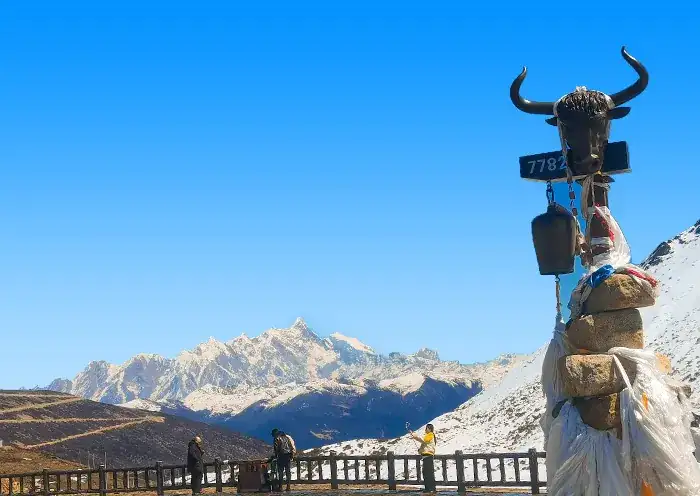
Zheduo Mountain's altitude: approximately 4298 meters
Zheduo Mountain, with an altitude of about 4,298 meters, is the first natural barrier to enter the Tibetan area and is known as the "First Pass of Kham". It is shrouded in clouds and mist all year round, especially at dawn and dusk, when the dreamlike scenery is like a fairyland and is very beautiful.
【Slow Travel on G318 Sichuan-Tibet Highway】10-Day, 9-Night Classic Group Tour of the Southern Route of G318 Sichuan-Tibet Highway from Chengdu to Lhasa
Chengdu-Kangding-Xinduqiao-Yajiang-Litang-Cuopu Valley-Mangkang-Basu-Bomi-Nyingchi-Lhasa
Zheduo Mountain
Xinduqiao's altitude: approximately 3500 meters
Xinduqiao, at an altitude of approximately 3,500 meters, is renowned for its magnificent natural scenery and unique Tibetan culture, earning it the title of "photographer's paradise." The best time to visit Xinduqiao is from May to November, when visitors can enjoy the enchanting sea of flowers covering the mountains and witness breathtaking views of light and shadow interplay.
Xinduqiao
Daocheng Yading Altitude: Approximately 4000 meters
Daocheng Yading, at an altitude of about 4,000 meters, is a tourist destination that integrates natural landscapes such as glaciers, snow-capped mountains, lakes, grasslands, and forests. It is also the soul of Shangri-La in China and is known as "the last pure land on the blue planet". The best time to visit Daocheng Yading is from April to October each year.
[A Brief Tour of Sichuan and Tibet] 7 Days 6 Nights Essential Tour of Chengdu + Xinduqiao + Daocheng Yading + Ranwu + Linzhi + Lhasa
Chengdu-Luding-Xinduqiao-Litang-Daocheng Yading-Shangri-La Town-Litang-Mangkang-Basu-Ranwu-Bomi-Nyingchi-Lhasa
Daocheng Yading - Milk Sea
Haizi Mountain's altitude: approximately 4685 meters
Haizi Mountain, with an altitude of approximately 4,685 meters, is the largest ancient glacial relic on the Qinghai-Tibet Plateau and is known as the "Glacier Museum." The best times to visit Haizi Mountain are April to May and September to October, when the weather is more comfortable and visitors can immerse themselves in appreciating the magnificence and mystery of the glaciers.
[Sichuan-Qinghai Exit] Chengdu-Xinduqiao-Daocheng Yading-Linzhi-Lhasa-Tuotuohe-Golmud-Qinghai Lake-Xining 15-Day 14-Night Group Tour
Chengdu-Xinduqiao-Daocheng Yading-Mangkang-Ranwu-Bomi-Nyingchi-Lhasa-Nagqu-Golmud-Qinghai Lake-Xining
Mugecuo Altitude: Approximately 3777 meters
Mugecuo, at an altitude of about 3,777 meters, is the birthplace of the "Kangding Love Song" and is known as the "Lover's Lake of Kangding". The best time to visit Mugecuo is from April to June and from September to October, when the climate is mild and the scenery is very pleasant, making it perfect for outdoor adventure and photography.
Ranwu Lake's altitude: approximately 3850 meters
Ranwu Lake, at an altitude of approximately 3,850 meters, is the largest lake in eastern Tibet and is known as the "Jade Pool of the Western Paradise." It is famous for its azure waters and the reflections of snow-capped mountains, creating a truly captivating scene. The best time to visit Ranwu Lake is from October to December, when the waters are crystal clear and the surrounding mountains are ablaze with color, making it exceptionally beautiful.
【Slow Travel on G318 Sichuan-Tibet Highway】10-Day, 9-Night Classic Group Tour of the Southern Route of G318 Sichuan-Tibet Highway from Chengdu to Lhasa
Chengdu-Kangding-Xinduqiao-Yajiang-Litang-Cuopu Valley-Mangkang-Basu-Bomi-Nyingchi-Lhasa
Ranwu Lake
Basongcuo Lake Altitude: Approximately 3480 meters
Basum Tso, at an altitude of approximately 3,480 meters, is one of the largest glacial freshwater barrier lakes in eastern Tibet. Its clear, turquoise waters and surrounding scenery have earned it the reputation of a "sacred lake." The best times to visit Basum Tso are from March to May and from September to November, when the climate is pleasant and the scenery is beautiful.
[In-depth Pure Travel] Chengdu + Hailuogou + Daocheng Yading + Litang + Ranwu + Basongcuo + Lhasa + Yamdrok Lake Classic 10-Day Tour
Chengdu-Hailuogou-Xinduqiao-Litang-Daocheng Yading-Batang-Mangkang-Zuogong-Basu-Ranwu-Bomi-Nyingchi-Basongcuo-Lhasa-Yamdrok Lake-Lhasa
The magnificent autumn scenery of Basongcuo
Potala Palace Altitude: Approximately 3700 meters
Located at an altitude of approximately 3,700 meters, the Potala Palace is the largest existing palace-fortress complex in China and the highest palace-fortress complex in the world, earning it the reputation of "Pearl of the Roof of the World." As a landmark building of Lhasa and even Tibet, its exquisite architecture, distinctive Tibetan style, and rich historical and cultural significance attract countless tourists to explore it.
[A Brief Tour of Sichuan and Tibet] 7 Days 6 Nights Essential Tour of Chengdu + Xinduqiao + Daocheng Yading + Ranwu + Linzhi + Lhasa
Chengdu-Luding-Xinduqiao-Litang-Daocheng Yading-Shangri-La Town-Litang-Mangkang-Basu-Ranwu-Bomi-Nyingchi-Lhasa
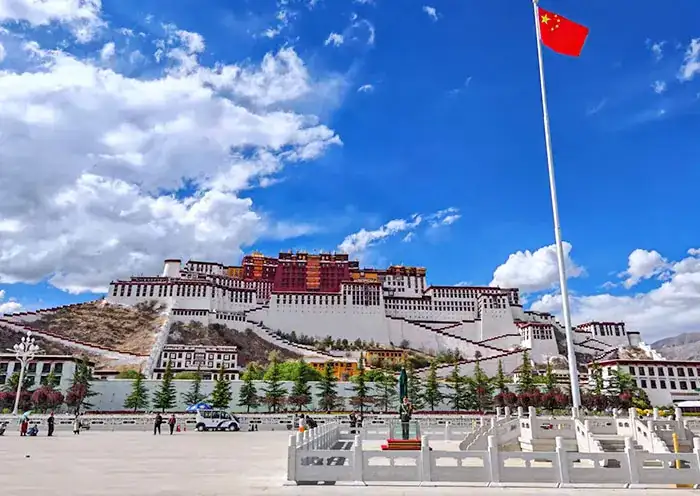
Potala Palace under the morning light
2. Popular tourist attractions along the Sichuan-Tibet Highway (National Highway 317)
Bipenggou's altitude: approximately 2015~5922 meters
Bipenggou, with an altitude ranging from approximately 2015 to 5922 meters, is one of the most popular tourist attractions in Sichuan Province. It is renowned for its natural landscapes, including glaciers, snow-capped mountains, forests, and streams, and is often referred to as "Little Switzerland of Western Sichuan." The best times to visit Bipenggou are from September to November and from December to March of the following year. In autumn, visitors can admire the breathtaking red leaves, while in winter, they can enjoy the most beautiful snowscapes.
4-Day Chengdu to Bipenggou Western Sichuan Tour: Classic City Attractions + Bipenggou + Ganbao Tibetan Village
Chengdu (Panda Base - Wenshu Monastery - People's Park - Jinli Ancient Street) - Bipenggou - Ganbao Tibetan Village - Chengdu
Mount Siguniang's altitude: approximately 3500 meters
Mount Siguniang, with an altitude of approximately 3,500 meters, is renowned for its precipitous peaks and magnificent natural scenery, making it a paradise for outdoor hiking enthusiasts and earning it the reputation of "Oriental Sacred Mountain." Spring and autumn are the best times to visit Mount Siguniang, as the weather is comfortable, ideal for hiking, and the scenery is exceptionally pleasant.
【G317 Sichuan-Tibet Highway】11-Day, 10-Night All-Inclusive Group Tour from Chengdu to Lhasa on the G317 Northern Sichuan-Tibet Highway
Chengdu - Mount Siguniang - Jiaju Tibetan Village - Moshishi Park - Ganzi - Jiangda - Karma Valley - Dingqing - Zizhu Temple - Baqing - Nagqu - Damxung - Namtso - Lhasa
Danba Tibetan Village Altitude: Approximately 3000 meters
Danba Tibetan Village, located at an altitude of approximately 3,000 meters, was once named "China's Most Beautiful Place" by *Chinese National Geography* and is renowned as "China's Most Beautiful Ancient Town and Village." Built against the mountainside, the village features yellow, black, and white watchtowers and houses arranged in a harmonious and impressive manner, creating a magnificent sight. The surrounding scenery is also exceptionally beautiful, resembling a paradise on earth.
Tagong Grassland Altitude: Approximately 3700 meters
Tagong Grassland, at an altitude of approximately 3,700 meters, is one of the most famous grasslands in Ganzi Prefecture, China. Renowned for its beautiful natural scenery and rich Tibetan culture, it is known as "the pure land most loved by Bodhisattvas." The best time to visit Tagong Grassland is from June to October, when it is at its most beautiful and vibrant. Those interested in Tibetan Buddhist culture can also visit the magnificent Tagong Monastery.
Larung Gar Buddhist Academy, altitude: approximately 4000 meters
Larung Gar Buddhist Academy, situated at an altitude of approximately 4,000 meters, is one of the largest and most mysterious Tibetan Buddhist academies in the world, often referred to as the "Jerusalem of the East." Built against the mountainside, tens of thousands of crimson Tibetan-style bungalows stretch for kilometers, resembling a vast red ocean—a truly magnificent and awe-inspiring sight.
Larung Gar Buddhist Academy
3. Is altitude sickness common on the Sichuan-Tibet Highway?
The Sichuan-Tibet Highway is quite long, and the altitude varies considerably along the route, which may lead to different symptoms of altitude sickness, such as shortness of breath, insomnia, tinnitus, dizziness, chest tightness, loss of appetite, and fatigue. Most symptoms are mild and acclimatization usually occurs within 1-2 days, depending on individual physical condition. However, it should be noted that people with high blood pressure, heart disease, or various respiratory illnesses are not advised to travel there. Furthermore, our Sichuan-Tibet tour groups are accompanied by experienced local guides throughout the trip to ensure your safety and provide immediate assistance in case of altitude sickness, making your journey safer and more worry-free.
【Slow Travel on G318 Sichuan-Tibet Highway】10-Day, 9-Night Classic Group Tour of the Southern Route of G318 Sichuan-Tibet Highway from Chengdu to Lhasa
Chengdu-Kangding-Xinduqiao-Yajiang-Litang-Cuopu Valley-Mangkang-Basu-Bomi-Nyingchi-Lhasa
IV. Prevention and mitigation measures for altitude sickness along the Sichuan-Tibet Highway
1. Take medication to prevent altitude sickness in advance:Take medications such as Rhodiola rosea to prevent altitude sickness 5-7 days in advance to better cope with it, but remember to strictly follow your doctor's instructions.
2. Plan your trip accordingly:The overall itinerary can be arranged to be more relaxed, allowing the body enough time to adapt and avoiding a rapid transition from low to high altitudes.
3. Get plenty of rest:Avoid overexertion throughout the trip, get plenty of rest, and absolutely avoid staying up late;
4. A balanced diet:Drink plenty of water, eat more vegetables and fruits to maintain your body's energy and nutritional needs. It is recommended to eat light and easily digestible foods.
5. Avoid strenuous exercise:In high-altitude areas, avoid strenuous activities such as running, brisk walking, and jumping, as these will deplete the body's oxygen and trigger altitude sickness.
6. Keep warm:In high-altitude areas, temperatures are low, so be sure to keep warm, wear thicker clothing, and avoid catching a cold, as a cold can lower your immune system and make you more susceptible to altitude sickness.
7. Replenish energy:If you experience altitude sickness, you can drink glucose and eat high-calorie foods such as chocolate and Snickers to give your body enough energy to cope with the altitude.
8. Relieves fatigue and discomfort:Sucking on American ginseng can effectively relieve fatigue, while acidic foods or fruits, yak butter tea, etc. can alleviate loss of appetite and discomfort caused by altitude sickness, and pain relievers such as ibuprofen and fenbid can effectively relieve headache symptoms;
9. Oxygen therapy:Oxygen inhalation can effectively alleviate altitude sickness. If you have mild altitude sickness, you can adapt to the altitude on your own and avoid using oxygen inhalation to allow for a faster adaptation.
In summary,The average altitude of National Highway 318 (southern route) along the Sichuan-Tibet Highway is approximately 3,500 to 4,000 meters, while the average altitude of National Highway 317 (northern route) along the Sichuan-Tibet Highway is approximately 3,200 meters.Taking preventative and coping measures can effectively help you adapt to altitude sickness. During your trip, you should also pay close attention to your physical condition. If you feel unwell, you should promptly inform your tour guide or fellow travelers. If the symptoms of altitude sickness are severe, it is recommended to return to a lower altitude area as soon as possible.
Photo gallery
Travel information can change. Check current opening hours, reservations and entry requirements before you travel.




Traveller discussion
Start the conversation with a helpful tip or a question.