
2027 Kailash Kora Guide: Route + Equipment + Documents + Best Time + Avoiding Pitfalls - All in One Article
In Ngari, Tibet, lies a sacred mountain revered as the "center of the world" by Tibetan Buddhism, Hinduism, Bon, and Jainism—it is not Mount Everest, yet it is even more sacred: Mount Kailash. If you wish to embark on this journey where "the body is in hell, the eyes are in heaven, and the soul returns home," this comprehensive guide to the Mount …
In Ngari, Tibet, there lies a snow-capped mountain revered as the "center of the world" by Tibetan Buddhism, Hinduism, Bon, and Jainism—it is not Mount Everest, yet it is even more sacred; this is Mount Kailash. If you wish to embark on this journey where "the body is in hell, the eyes are in heaven, and the soul returns home," this comprehensive guide to the Mount Kailash pilgrimage will cover everything from routes and equipment to documents, accommodation, food, altitude sickness, and taboos, ensuring a safe, smooth, and unforgettable pilgrimage.
Tips:Tibetans say that circumambulating the mountain once washes away a lifetime of sins; circumambulating it ten times averts five hundred cycles of suffering in hell; and circumambulating it once in the Tibetan Horse Year (the year of Shakyamuni's birth) is equivalent to the merit of thirteen circumambulations in a normal year, a once-in-twelve-years opportunity for spiritual practice. 2026 is the Tibetan Horse Year, a rare golden year for circumambulating the mountain.
Mount Kailash pilgrimage
[2026 Year of the Horse Kailash Pilgrimage: A Quick Overview]
Best time:May–June and September–October (off-peak travel is recommended for the Year of the Horse).
The trek around the mountain is:The outer loop is about 52km long, and a 3-day itinerary is the safest option, even for hiking beginners.
Required documents:ID card + Ali Prefecture border pass (both are required; Taiwanese compatriots and foreign tourists also need Tibet entry permit and military region permit).
Highest altitude:The Zhuomala Pass is at 5648m. You need to drive slowly and pay close attention to altitude sickness.
Overall difficulty:⭐⭐⭐⭐ (High-altitude trekking, suitable for beginners).
Cost per person:1000–1500 yuan/day (excluding personal meals, horse rental, porter hire, etc.).
Significance of the Year of the Horse:One circumambulation of the mountain is equivalent to the merit of 13 circumambulations in a normal year, a rare occurrence that happens only once every twelve years.
1. Why is it necessary to make the pilgrimage around Mount Kailash? (Faith + Meaning)
Anyone who has seen Mount Kailash will be awestruck by its pyramid-shaped mountain: the snow that never melts glitters in the sunlight, prayer flags flutter at its foot, and pilgrims prostrate themselves every three steps, measuring their faith with their bodies—a truly awe-inspiring sight.
1. Faith Blessing:Circumambulating Mount Kailash once can wash away all sins of a lifetime; circumambulating it ten times can save one from the suffering of hellish reincarnation; circumambulating it 108 times can lead to Buddhahood in this lifetime. The Tibetan Year of the Horse is the birth year of Mount Kailash, and circumambulating it once is equivalent to the merit of thirteen circumambulations in a normal year. It is a golden opportunity that comes once every twelve years (2026 is the best year), and it is also the lifelong obsession of countless believers.
2. Exquisite scenery:Ali is known as the "roof of the roof of the world". Along the pilgrimage route, snow-capped mountains, sacred lakes, grasslands, river valleys and ancient temples accompany you all the way. The 52-kilometer journey hides world-class wilderness beauty.
3. Cultivating Oneself in Life:Hiking at an average altitude of nearly 5,000 meters is one of the most challenging hikes in life, often described as a journey where the body is in hell, the eyes are in heaven, and the soul returns home. Walking alongside pilgrims prostrating themselves along the way, watching prayer flags flutter and the sacred lake azure, this is not just a hike, but a spiritual journey of self-reflection.
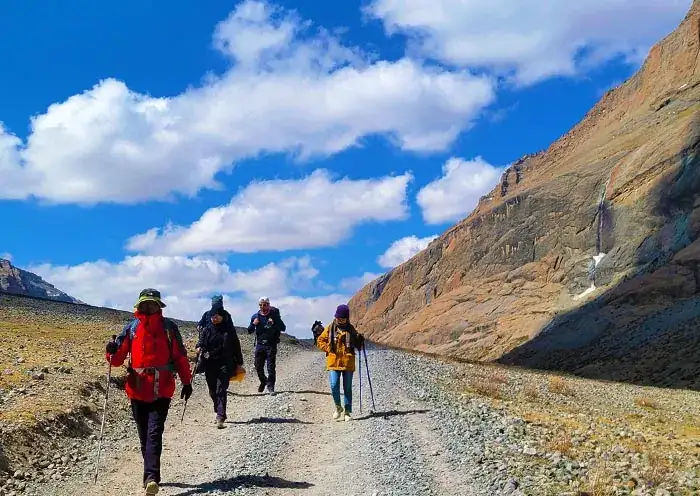
Pilgrims on the pilgrimage route around Mount Kailash
II. Best Time for the Kailash Pilgrimage in Ngari, Tibet (Special Reminder for the Year of the Horse, 2026)
1. Best season:From May to October, Ali experiences its most stable climate, with temperatures ranging from 5 to 15°C. The roads are dry, and all supply stations along the route are open.
2. Golden Hour:May–June and September–October (highly recommended!). These months avoid the rainy season and peak tourist season in July and August, offering more sunny days, high visibility, and an 80% chance of seeing Mount Kailash and the golden sunrise. The crowds are also relatively moderate.
3. Peak Season Reminder:The rainy season in July and August is when the scenery is at its greenest, but some sections of the road are muddy and slippery, there may be snow accumulation at the mountain pass, and the number of people will surge in the Year of the Horse.
4. Tips to avoid pitfalls:From November to March of the following year, heavy snow closes the mountain passes, temperatures are extremely low, roads are dangerous, and the risks are extremely high. Unauthorized entry by non-professional teams is strictly prohibited.
Special reminder for the Year of the Horse 2026
The number of people making the pilgrimage around Mount Kailash will surge in the Year of the Horse, and accommodation and supplies along the pilgrimage route in Darchen will be in high demand. It is recommended to book tickets and accommodation 1-2 months in advance and travel during off-peak seasons (such as early May or late September) for a more comfortable experience.
III. Essential documents for the Kailash Kora pilgrimage in Ngari, Tibet (all are indispensable; apply in advance to avoid panic)
| crowd | Required documents | Application Instructions (Honest Advice from Someone Who's Been There) |
|---|---|---|
| Mainland Chinese tourists | ID card + border pass | The border pass must specify "Ali Prefecture, Purang County"! It can be processed for free at the local police station where your household registration is located; just bring your ID card and a photo, and it takes about 10 minutes. Applying through an agent in Lhasa is expensive and troublesome, so it is not recommended. |
| Chinese tourists from Hong Kong, Macao and Taiwan | Home Return Permit/Taiwan Compatriot Permit + Border Pass | Hong Kong and Macao tourists can directly apply for border permits with their Home Return Permits; Taiwanese tourists need to apply for Tibet Entry Permits and Military Region Permits separately, and must book their trip to Ali through a Tibet travel agency. It is recommended to use a reputable travel agency to handle the application process for the most reliable outcome. |
| Foreign tourists | Passport + Chinese Visa + Tibet Entry Permit + Travel Document + Border Permit + Military Region License | Foreign tourists are not allowed to travel independently! They must book a tour through a Tibet travel agency, and all documents will be handled by the travel agency. Please prepare one month in advance. |
✅Important Reminder
Without a border pass, you simply cannot enter Ali! They will conduct strict checks at the checkpoints, so don't take any chances. Make sure you have all the necessary documents before you set off.
IV. Classic Kailash Kora Route in Ngari, Tibet (3 days is the safest option, beginners can copy this without thinking)
The Kailash pilgrimage is divided into an outer and an inner circuit, with 99% of tourists choosing the outer circuit (the inner circuit requires completing 13 laps to qualify for the outer circuit, which is steep, dangerous, and easy to get lost on; non-professionals should choose this route with caution). The outer circuit is 52 kilometers long, and completing it in 3 days is the most suitable pace for ordinary people, allowing them to fully experience the meaning of the pilgrimage without rushing.
Map of the Kailash Kora trekking route in Ali, Tibet
Detailed itinerary for the outer loop of the pilgrimage (including how to walk each day and what to see).
Day 1 Darchen (4675m) → Dhire Monastery (5100m) | Approx. 20km, 7–8 hours
Road conditions:The entire route is flat, mostly gravel roads and river valley roads, and the difficulty is relatively low. The main purpose is to allow the body to adapt to the high altitude.
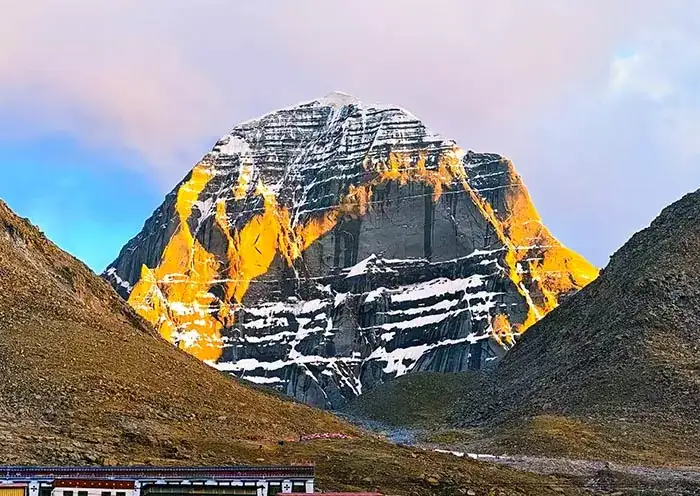
Highlights along the way:After setting off, you will pass through a prayer flag square where colorful prayer flags flutter in the wind, marking the starting point of the pilgrimage. Along the way, you will pass through Qugu Temple, which has many ancient murals and you can stop briefly to pray for blessings. The final stop, Zhire Temple, is an excellent viewpoint with a direct view of the north slope of Mount Kailash. The golden sunrise on the mountain at dusk will be an unforgettable experience.
stay:Zhire Temple is a guesthouse with basic facilities (no private bathroom, no hot shower), but you can stay in a room that directly faces the sacred mountain, which is great value for money. Remember to bring a sleeping bag for better hygiene.
Day 2: Zhire Temple (5100m) → Zhuomala Pass (5648m, highest point) → Zuchu Temple (4830m) | Approx. 20km, 10–11 hours
Difficulty:⭐⭐⭐⭐⭐ (The most tiring day of the entire trip, with the greatest physical exertion, continuous uphill climbs and steep gravel slopes, extremely challenging).
Itinerary details:
morning:Starting from Zhire Temple, climb a steep slope for 3 hours to reach Zhuomala Pass (5648m), which is the highest point of the pilgrimage. It is windy and cold, so be sure to wear warm clothes. Hang prayer flags and pray at the pass, take photos and check in, and then hurry down the mountain. Don't stay too long.
halfway:You will pass by Compassion Lake (Toji Tso), whose water is emerald green. Legend has it that drinking from it can wash away the dust of the soul. You can stop and drink a sip of the lake water to feel the power of faith. You will also pass by the sky burial site, which is the most sacred sky burial site in Ali. Please keep quiet, do not take pictures or make noise.
afternoon:The downhill path is mostly gravel and slippery, so be sure to use trekking poles to maintain your balance, walk slowly, and don't rush.
stay:The guesthouses at Zuchu Monastery are slightly better than those at Zhire Monastery, where you can enjoy hot Tibetan noodles and sweet tea, get a good rest, and recover your strength.
Day 3: Tsurtrup Monastery (4830m) → Darchen (4675m) | Approx. 10.6km, 2–3 hours
Road conditions:The entire route was downhill with a flat surface, making it the easiest day and more comfortable and relaxing for hiking.
Highlights along the way:The journey will take you through grasslands and valleys, where you can see marmots (adorable local creatures; please do not feed them and keep your distance), and you can also look back at Mount Kailash, allowing you to savor the 3-day trip.
end:Back in Darchen, the pilgrimage around the sacred mountain is complete! You can celebrate with a hot Tibetan meal in Darchen, or head straight to Lake Manasarovar to experience the double awe of the "sacred mountain and sacred lake".
Best itinerary for a trip to Mount Kailash in Ngari, Tibet:
V. Equipment List for the Kailash Kora in Ngari, Tibet (Simplified Version for High-Altitude Survival)
The Ali Plateau experiences "four seasons in one day," meaning it can be sunny in the morning and snowy at noon. Therefore, your gear should be minimal but practical; avoid carrying too much and adding unnecessary burden.
1. Clothing (warmth + windproof + sun protection)
core:High-top waterproof hiking boots (essential! Wear old shoes, not new ones that rub your feet), 2 sets of quick-drying underwear (dries quickly after sweating to avoid catching a cold), 1 fleece jacket (core warmth), 1 set of waterproof jacket and pants (windproof and waterproof to cope with sudden weather changes), 1 lightweight down jacket (essential for the Zhuomala Pass, it gets bitterly cold).
Accessories:Warm hat (to protect the ears), windproof gloves, 3-4 pairs of wool socks (sweat-absorbing and warm, change them promptly when wet), and sun-protective headscarf (to cover the face and protect against UV rays).
2. Outdoor gear (primarily for survival)
Two trekking poles (essential! They can save 30% of your energy, protect your knees, and are especially important when going downhill), a headlamp with spare batteries (in case you're hiking at night, as phone flashlights are not very bright and don't last long), a thermos (it's so important to drink hot water at high altitudes to stay hydrated), snow gaiters (essential for trekking in May-June, to prevent snow from getting into your shoes), a small backpack (to carry your personal belongings, don't use a large backpack), and a sleeping bag (accommodation is basic, so a clean and warm sleeping bag is essential; choose one that can be kept below 0°C).
3. Medicine + Supplies (Essential for emergencies)
drug:Altitude sickness medication (take it a day in advance, such as Rhodiola rosea, but this varies from person to person), ibuprofen (for headaches, an essential for altitude sickness), oral glucose solution (for quick energy replenishment and fatigue relief), cold medicine, gastrointestinal medicine (a light diet is recommended at high altitudes to avoid gastrointestinal discomfort), and band-aids (for rubbing feet and bumps).
supply:Chocolate, beef jerky, energy bars, and nuts (high in calories, easy to carry, and can be eaten anytime on the mountain trail); don't bring too many snacks to increase your load, as you can buy instant noodles and sweet tea at the supply stations along the way.
4. Other (Don't miss any details)
ID card, border pass (make two copies for backup), a small amount of cash (signal is poor along the way, WeChat and Alipay are not readily available), power bank (to keep your phone charged for easy communication), wet wipes (to wipe your face and hands when you can't shower), garbage bags (for the Leave No Trace trek, don't litter, protect the plateau ecosystem), sunscreen SPF50+, lip balm (the plateau is dry, and lips are prone to chapped), sunglasses (to prevent snow blindness, especially when crossing the Drolma La Pass).
VI. Accommodation and meals during the Kailash Kora pilgrimage in Ngari, Tibet (simple conditions, please be prepared).
Ali in Tibet is located in a remote area, and the accommodation and food conditions along the pilgrimage route are incomparable to those in the city. Preparing mentally beforehand will help you be more at ease.
1. Accommodation:Accommodation at Zhire Temple and Zunzhu Temple consists of shared rooms (dormitory-style beds or bunk beds), without private bathrooms or hot showers. Power outages are possible at night (power is supplied periodically by generators). It is recommended to bring your own sleeping bag and a waterproof sleeping bag for warmth and hygiene. Accommodation prices are approximately 100-200 RMB per person per night, but prices may increase in the Year of the Horse.
2. Catering:There are 7-8 supply stations along the way where you can eat instant noodles, Tibetan noodles, butter tea, sweet tea, rice, stir-fried dishes, etc., but the prices are relatively high (for example, a bowl of Tibetan noodles costs 30 yuan, and a bucket of instant noodles costs 20 yuan). The taste is average, but it can fill your stomach. It is recommended to bring your own high-calorie snacks to eat whenever you are hungry. Don't expect to eat anything fancy, just enough to fill your stomach.
3. Drinking water:Hot water is available at the supply stations, so be sure to bring a thermos and fill it up; the stream water along the way may look clean, but it may contain parasites, so don't drink it directly.
VII. Safety and Religious Taboos for the Kailash Pilgrimage in Ngari, Tibet (Must Read to Avoid Trouble)
1. Direction of the pilgrimage:Buddhists and Hindus circumambulate the mountain clockwise, while Bon believers circumambulate it counterclockwise. Tourists should simply follow the main group and walk clockwise, not counterclockwise, as this is a sign of respect for their faith.
2. Religious Taboos:Do not step on prayer flags or mani stones (prayer flags are symbols of blessings, and mani stones represent the wishes of believers; stepping on them is considered disrespectful); do not take photos of pilgrims prostrating themselves (if you want to take a photo, ask for their permission first); do not make noise or take photos inside temples (most temples prohibit photography, and there will be signs at the entrance).
3. High-reaction pair:The entire pilgrimage route is at an altitude of over 4600 meters, so be sure to go "slow"! Don't run, don't walk fast, don't stay up late, drink plenty of water (2-3 liters per day), eat plenty of carbohydrates (rice, noodles), and avoid alcohol and greasy food. If you experience severe headache, persistent vomiting, difficulty breathing, or bluish lips, stop the pilgrimage immediately, rest where you are, contact the aid station staff, and if necessary, descend to Darchen for medical treatment.
4. Safety details:The wind is strong and the temperature is low at the Zhuomala Pass. Do not stay there for more than 10 minutes to avoid frostbite. The downhill path is full of loose rocks and is slippery. Be sure to use trekking poles and watch your step. Cell phone signal is intermittent on the mountain path. Arrange a meeting point with your companions in advance and do not act alone.
5. Ecological protection:Ali's ecosystem is very fragile. Please do not litter (bring your own trash bags and take your trash back to Darchen), do not feed marmots, Tibetan wild asses, or other wild animals, keep your distance, and do not damage their habitat.
Wildlife along the Kailash pilgrimage route - marmots
The pilgrimage around Mount Kailash is a journey of challenge, but also a path of spiritual practice, testing not only physical strength but also healing the soul. In 2026, the Year of the Horse, this once-in-twelve-years opportunity presents a chance to embark on this journey to the heart of the world, measuring faith with your footsteps and capturing paradise with your eyes. When you stand breathless at the Dolma La Pass, watching the pilgrims around you with wrinkled faces but unwavering eyes; when you stop by the Lake of Compassion, listening to the fluttering prayer flags; when you finally complete the 52 kilometers and return to Darchen, you will find that all fatigue has vanished, leaving only peace and tranquility within.
9. Frequently Asked Questions (FAQ) about the Kailash Kora in Ngari, Tibet (Most Important Questions for Tourists, Easy to Understand)
1. Is the merit gained from circumambulating the mountain in the Year of the Horse (2026) really 13 times greater?
Yes, according to Tibetan Buddhist tradition, the Year of the Horse is the birth year of Mount Kailash, and circumambulating the mountain once is equivalent to the merit of thirteen circumambulations in a normal year. 2026 is a very auspicious year.
2. Can beginners or people with average physical strength complete the pilgrimage around the mountain?
Absolutely. Choose a relaxed 3-day itinerary, walk at a slower pace, and rest when you get tired. 90% of ordinary tourists can complete it successfully. If you are worried about your physical strength, you can hire porters in Darchen to carry your luggage, which will save you a lot of energy. The porters are all locals who know the route and can also tell you interesting stories about the pilgrimage around the mountain.
3. How many days does it typically take to circumambulate Mount Kailash?
For the average person, 3 days is the safest option; those with exceptional stamina can complete the trip in 2 days; it is not recommended to try to finish in one day, as the risk of altitude sickness and exhaustion is extremely high.
4. Is a border permit required for pilgrimage around the mountain? What's the easiest way to obtain one?
It is mandatory. The Ngari Prefecture and Purang County must be specified. The most convenient way is to apply for it for free at the local police station where your household registration is located, or you can have a Tibet travel agency handle it for you, which is even easier. Foreign tourists and Taiwanese compatriots can only travel through Tibet travel agencies, and all documents will be handled by the travel agency.
5. Do I need to book tickets in advance for the pilgrimage around Mount Kailash in 2026 (Year of the Horse)?
Reservations are required. Due to the large number of visitors during the 2026 Year of the Horse pilgrimage, tickets are subject to reservation management. Reservations can be made in advance through the official mini-program or authorized travel agencies. Tickets cost 150 yuan per person and are valid for 3 days.
6. What is the altitude of the highest point of the pilgrimage? What should I do if I experience severe altitude sickness?
The highest point, the Dolma La Pass, is 5648 meters above sea level. It is recommended to acclimatize in Lhasa for at least 3 days in advance and carry glucose and oxygen with you; if severe altitude sickness occurs, stop immediately and descend to Darchen.
7. Do I need a guide or porters for the pilgrimage? How much does it cost?
If you are traveling alone, it's your first time in Tibet, or you have a poor sense of direction, it's recommended to hire a guide (approximately 300-500 yuan/day) or a porter (approximately 200-300 yuan/day). Guides are familiar with the route, know the best supply points and viewpoints, and can handle altitude sickness or other emergencies promptly, making your trip safer and more reassuring. If you are traveling with companions and have hiking experience, you may not need to hire one.
8. Can elderly people and children go on the pilgrimage around Mount Kailash?
Seniors: Those under 60 years old, in good health, without cardiopulmonary diseases, and able to adapt to high altitudes can try it. The itinerary should be as easy as possible. It is not recommended to avoid crossing the Drolma La Pass. In addition, it is not recommended for those over 60 years old to do the Kailash pilgrimage. Children: It is not recommended for children under 12 years old. The high altitude is too much of a burden on children's bodies, and the pilgrimage route is also long, which can easily lead to physical exhaustion.
9. Is there cell phone signal on the pilgrimage route? Can I charge my phone there?
There is no signal in most sections of the road. Only at supply points such as Darchen, Dhire Temple, and Zunzhu Temple is there a weak signal, so don't expect to be able to use your phone. Accommodation will use generators to provide electricity at night, so you can charge your phone (this may cost 10-20 yuan per charge). It is recommended to bring a high-capacity power bank for safety.
10. Is it okay to bring a drone for aerial photography during a pilgrimage?
No. Mount Kailash is a sacred religious site and a heavily controlled area. Drones are prohibited, and checkpoints will conduct strict inspections. Violations may result in confiscation or fines.
11. What should I do if I can't finish the pilgrimage or run out of energy?
There are rescue contact methods in Darchen; you can arrange for vehicle assistance to evacuate you. The cost depends on the distance. Safety first; don't try to push yourself.
12. Are foreign nationals and tourists from Hong Kong, Macau, and Taiwan allowed to trek around the mountain?
Yes. Tourists from Hong Kong, Macau, and Taiwan need a Home Return Permit and a Border Permit; foreign tourists need a passport, visa, Tibet Entry Permit, etc., and must book a tour through a formal travel agency; independent travel is not allowed.
13. After completing the pilgrimage around the mountain, what other nearby attractions can I visit?
After completing the pilgrimage around Mount Kailash, it is highly recommended to visit Lake Manasarovar (one of the three holy lakes of Tibet, known as the "sacred mountain and holy lake" along with Mount Kailash) and Lake Rakshastal (the "ghost lake"). If you have enough time, you can also visit the Zanda Earth Forest and the ruins of the Guge Kingdom (the ruins of a thousand-year-old kingdom, which are incredibly breathtaking at sunset), completing the classic Ali tour in one trip.
When is the best month to visit Tibet? This guide details the best travel seasons in Tibet, including seasonal climate, monthly activities, and optimal times for destinations like Lhasa, Nyingchi, Mount Everest, and Ngari. It covers the best times for sightseeing, photography, trekking, and self-driving/cycling trips, helping you quickly choose the right time to travel to Tibet, avoid pitfalls, and enjoy more beautiful scenery and a better experience.
Every year, Lhasa hosts the annual Shoton Festival, also known as the Yogurt Festival, a traditional Tibetan folk festival. It begins on a certain day in August each year and lasts for about a week. The specific schedule for the annual Shoton Festival is as follows.
The Tibetan New Year of 2027 is just around the corner, and February 18th is the New Year for the Tibetan people. This article provides some information on the Tibetan calendar festivals in 2027 and their corresponding dates.
Every year, Tibet hosts many festivals and celebrations according to the Tibetan calendar. When are the important festivals in Tibet in 2027? This article mainly discusses the important festivals and their schedules in Tibet in 2027.
The Tibetan New Year, the first day of the first month of the Tibetan calendar, falls on February 18, 2025 in the Gregorian calendar. It is the largest and most culturally significant Tibetan New Year celebration, characterized by its lively atmosphere. People toast each other with barley wine and butter tea, enjoying family reunions. The joyous Guozhuang and Xianzi dances are grand and enthusiastic, and every day offers a feast for the eyes with the diverse customs and costumes of the Tibetan people. Their distinctive traditional clothing is a unique and beautiful sight in the winter of the plateau, adorning the blue skies and clear waters of the snowy plateau.
Located on National Highway 318, Bomi Peach Blossom Valley is more than 17 kilometers away from Bomi County. It takes only 24 minutes to drive there from Bomi County. Along the way, peach blossoms stretch for 30 kilometers in full bloom, creating a dreamy and enchanting pink sea of flowers. It is also full of Tibetan style, making it an ideal choice for spring outings.
Which travel agency is best for your trip to Tibet? This article introduces the top 5 local travel agencies in Tibet, their main services, addresses, contact numbers, user reviews, and how to choose a good agency so you can plan your Tibet trip with peace of mind!
This article provides a detailed 16-day itinerary for the Ali Grand Loop tour of Tibet, including tour package prices, a list of essential items, and important notes, making it easy for you to plan your Ali Grand Loop trip.
Gala Peach Blossom Village is located about 5-6 kilometers southeast of Bayi Town in Linzhi, at an average altitude of 3,000 meters. It is a representative place of peach blossoms in Linzhi and the best place to admire peach blossoms along the Niyang River. Gala Peach Blossom Village is open all day and can be visited at any time. The entrance fee is only 30 yuan per person.
Every year, many photography enthusiasts flock to Nyingchi during the Peach Blossom Festival. This article provides the latest and most detailed photography guide for Nyingchi peach blossoms, including the best locations, times, routes, and techniques for shooting peach blossoms.
As March approaches, many tourists are concerned about when is the best time to visit Nyingchi, Tibet to see the peach blossoms. In fact, the best time to see peach blossoms in Nyingchi is generally from March 20th to April 10th, but the peak blooming time varies slightly in different areas of Nyingchi.
The 2027 Nyingchi Peach Blossom Festival will officially kick off on March 23rd in Gala Village, Bayi District, Nyingchi City. This year's peach blossom season will begin around March 15th and last until April 20th. With the festival approaching, let's learn about the Nyingchi peach blossom season, the best time to view the blossoms, and the best viewing locations. Let's meet in this fairyland of peach blossoms on the Tibetan Plateau!
Photo gallery
Travel information can change. Check current opening hours, reservations and entry requirements before you travel.


Traveller discussion
Start the conversation with a helpful tip or a question.