
Jincheng City
Jincheng CityJincheng, historically known as Jianxing, Zezhou, and Zezhou Prefecture, is a prefecture-level city in Shanxi Province, located in the southeastern part of the province. The entire city sits in the Jincheng Basin, surrounded by
Jincheng City
Jincheng, historically known as Jianxing, Zezhou, and Zezhou Prefecture, is a prefecture-level city in Shanxi Province, located in the southeastern part of the province. The entire city sits in the Jincheng Basin, surrounded by mountains with relatively flat terrain in the center. The Dan and Qin rivers flow through the city. Named after the relocation of Duke Jing of Jin here at the end of the Spring and Autumn period, it covers approximately 9,490 square kilometers and is the southeastern gateway of Shanxi. As of March 2023, the city administers 1 district, 4 counties, and 1 county-level city, with a permanent resident population of 2,171,800 at the end of 2023. Jincheng has a long history, with prehistoric sites at Gaodu, Tashuihe, and Xiachuan. It was established as a commandery in the Eastern Jin Dynasty (317–420), a prefecture in the Northern Wei (386–534), and a prefecture in the Qing Dynasty (1644–1912). Notable figures include Liu Xisou, Li Junmin, Zhang Shenyan, Wang Guoguang, and Chen Tingjing. The city has numerous cultural heritage sites, including Huangcheng Xiangfu (Prime Minister's Palace), Qinglian Temple, Kaihua Temple, Xiangyu Ancient Castle, Wangmang Ridge, and the Battle of Changping site. Known as the "Hometown of Coal and Iron" with the "Nine Heads and Eighteen Craftsmen" tradition, it was the production site of the ancient Yang'e Sword. The city also houses the Mang River and Lishan nature reserves, known as Shanxi's "Biological Treasure House." In 2025, GDP was 242.99 billion yuan, up 6.3%.
History
Jincheng was historically called Jianxing, Jianzhou, Zezhou, and Zezhou Prefecture. Artifacts from the Gaodu, Tashuihe, Xiachuan, and other sites indicate human habitation 20,000 years ago along the Dan and Qin river basins.
During the ancient period, the area belonged to Jizhou. During the Zhou Dynasty, King Wu enfeoffed his youngest brother at the Yuan State (present-day Qinshui). In 1033 BCE, King Cheng enfeoffed Shuyu at Tang, whose son changed the state name to Jin. During the Spring and Autumn period (770–476 BCE), the Jin State's general Shi Hui pacified four tribes along the Dan and Qin rivers, establishing the four districts of Gaodu, Xuanshi, Duanshi, and Huoze—the beginning of administrative divisions in the Jincheng area.
During the late Spring and Autumn period, the Six Ministers rose in power. In 376 BCE, the three states of Wei, Han, and Zhao deposed Duke Jing of Jin and moved him to Duanshi (present-day Qinshui), marking the start of the Warring States period. In 260 BCE, the famous Battle of Changping occurred at Xuanshi (present-day Gaoping), where Qin defeated Zhao, burying 400,000 Zhao soldiers.
During the Eastern Jin Dynasty (317–420), in 386 CE, the area was formally established as Jianxing Commandery—the first unified prefecture-level administrative region, with its scope remaining largely fixed for the next 1,500 years. In 529, the Northern Wei established Jianzhou. In 583, the Sui Dynasty (581–618) renamed it Zezhou, after the Huoze River. During the Tang Dynasty (618–907), it was reorganized as Zezhou under the Hedong Circuit. The Song, Jin, Yuan, Ming, and Qing dynasties all maintained the Zezhou/Zezhou Prefecture name and jurisdiction. In 1728, the Qing Dynasty elevated it to Zezhou Prefecture. In 1985, Jincheng was elevated to a prefecture-level city.
Administrative Divisions
As of March 2023, Jincheng administers 1 district (Chengqu), 4 counties (Zezhou, Yangcheng, Qinshui, Lingchuan), and 1 county-level city (Gaoping), plus the Jincheng Economic and Technological Development Zone. Total area: 9,490 square kilometers (6% of Shanxi). The Municipal Government is at No. 289 Fengtai West Street, Chengqu District.
Geographical Environment
Location and Boundaries
Jincheng is in southeastern Shanxi, at the southern foot of the Taihang Mountains, between 111°56′05″–113°37′15″E and 35°11′12″–36°13′56″N. East-west width: ~160 km; north-south length: ~100 km; total area: ~9,490 km². It borders Changzhi to the north, Linfen and Yuncheng to the west, and Henan Province to the east and south.
Landforms
The city sits on the southeastern edge of the Loess Plateau, in a plateau basin terrain. Mountains and hills cover 87.1% (mountains 58.6%, hills 28.5%). The highest point is 2,358 meters; the lowest under 300 meters, with a relative difference of 2,000 meters. Most of the area is above 800 meters elevation.
Climate
Jincheng has a warm temperate semi-humid continental monsoon climate with four distinct seasons. Spring: dry and windy; summer: hot and rainy; autumn: clear and crisp; winter: cold and dry. Annual sunshine: 2,393–2,630 hours. Average annual temperature: 10.2–11.7°C. Annual precipitation: 626–750 mm, with 56.4% in summer. Average frost-free period: 197 days (max 226, min 138). Best tourism season: April–October.
Hydrology
The city's rivers belong mainly to the Dan and Qin river basins, plus Wei River tributaries. The Qin River (485 km) is the city's largest, originating in Qinyuan County and flowing into the Yellow River. The Dan River (121.5 km) originates in Gaoping and flows into the Qin River.
Natural Resources
Mineral Resources
Over 20 mineral types have been discovered, including coal, iron, aluminum, sulfur, gypsum, quartz, limestone, dolomite, refractory clay, marble, granite, and rare metals like manganese, copper, lead, and uranium. Coal reserves total 80.81 billion tonnes (27.33 billion proven), with anthracite comprising over half of Shanxi's and over a quarter of national reserves. Proven coalbed methane: 6.85 trillion cubic meters. Iron ore: 223 million tonnes. Limestone: 650 million tonnes. Marble: 605 million cubic meters (28 varieties including ink jade and Han white jade).
Biological Resources
The city has two national nature reserves (Qinshui Lishan and Yangcheng Mang River) and several provincial reserves. Lishan Nature Reserve has 1,300+ seed plant species (11 nationally protected) and 342 animal species (38 nationally protected). The Mang River Reserve has 882 plant species and 285 animal species, including 3 national Class I (black stork, golden eagle, leopard) and 28 Class II (macaque, otter) species. The city is one of China's five major hawthorn production areas and the largest sericulture base in North China, producing 80% of Shanxi's silk. Forest coverage: 35.7%, with natural forests covering 70.2% of forest area. Lishan's Shunwangping area preserves Shanxi's only remaining primeval forest (730+ hectares).
Water Resources
Jincheng is a relatively water-rich area in North China, with the Qin, Dan, and Wei river systems covering 9,422 km². Total water resources: 2.149 billion cubic meters (15.1% of the provincial total). Per capita and per mu water resources are 1–2 times the provincial average.
Population
As of the end of 2023, the permanent resident population was 2,171,800, a decrease of 17,400. Urban population: 1,412,600 (65.04% urbanization rate, up 1.01 percentage points). Birth rate: 6.80‰; death rate: 8.94‰; natural growth rate: -2.14‰.
Ethnic Groups
As of 2018, the city has 33 ethnic minorities totaling 7,060 (0.3% of total), including Hui (5,046), Manchu, Mongolian, and others. 50% of minorities live in urban districts.
Politics
Economy
Overview
In 2024, GDP was 240.98 billion yuan (up 6.8%). Primary: 8.16 billion (up 3.9%); secondary: 139.56 billion (up 8.4%); tertiary: 93.26 billion (up 5.2%). Urban per capita disposable income: 45,836 yuan (up 4.6%); rural: 22,219 yuan (up 6.9%). General public budget revenue: 25.66 billion; expenditure: 41.44 billion (32.5 billion for livelihood). Fixed asset investment: 76.92 billion (up 7.3%), with private investment at 31.94 billion (up 18.4%).
Primary Industry
In 2024, agricultural, forestry, animal husbandry, and fishery value added was 8.6 billion yuan (up 4%). Grain output: 689,000 tonnes. Vegetable and edible mushroom output grew 0.3%, fruit 2.9%, and Chinese medicinal herbs 3.0%.
Secondary Industry
In 2024, industrial enterprises above designated size grew by 8.8%. Coal grew 10.1%, steel 14%, coalbed methane 10.5%, equipment manufacturing 5.5%, chemicals 2.8%, and power 1.5%.
Tertiary Industry
In 2024, retail sales of consumer goods reached 59.76 billion yuan (up 3.8%), with above-designated-size retail at 22.04 billion (up 7.7%). In 2023, total import/export was 3.96 billion yuan (down 5.5%), with exports of 2.23 billion (up 22.9%) and imports of 1.73 billion (down 27.2%). Actual foreign investment: 659 million USD (up 345.3%). Financial institution deposits: 382.5 billion (up 5.3%); loans: 285.46 billion (up 14.2%).
Social Undertakings
Science and Technology
In 2023, 441 technology contracts were registered totaling 2.288 billion yuan. The city has 162 high-tech enterprises, 244 national technology-based SMEs, 1 national key laboratory, 2 provincial key laboratories, and 11 provincial-level and above maker spaces.
Education
As of the end of 2023: 1 regular higher education institution, 1 independent adult higher education institution. Senior high school gross enrollment rate: 99.05%.
Culture
As of the end of 2023: 10 performing troupes (3,654 performances, 40.99 million yuan revenue), 3 performing venues, 7 cultural centers, 2 art galleries, 7 public libraries (2.1 million books).
Healthcare
As of the end of 2023: 2,767 medical institutions, 7 maternal/child health centers, 14,600 beds, 18,900 health professionals. Village clinic coverage: 100%. Children's "five vaccines" full coverage rate above 90% by township. Iodized salt coverage: 99.67%.
Sports
As of the end of 2023: 9,289 sports venues of all levels. Athletes won 79 gold, 75 silver, and 74 bronze medals in provincial and above competitions.
Social Security
In 2023, per capita disposable income was 34,115 yuan (up 6.6%); urban: 43,835 yuan (up 5.2%); rural: 20,790 yuan (up 9.4%); urban-rural ratio: 2.11. Basic pension insurance: 1.7655 million; basic medical insurance: 2.0842 million; unemployment insurance: 391,800; work injury insurance: 547,000. 3,653 urban and 22,335 rural residents received minimum living allowance. 69 residential elderly care institutions with 17,600 beds.
Transportation
As of the end of 2022, total highway mileage: 9,838 km, including 429 km of expressways. 7 expressways (Erguang, Jinxin, Jincheng Ring, Anyang, Linghou, Jinyun, etc.) form a "two horizontal, two vertical, one ring" network. 3 national highways (G207, G208, G342) form a "one horizontal, two vertical" pattern. Railways include the Taiyuan-Zhengzhou high-speed railway, Taiyuan-Jiaozuo railway, and Houma-Yueshan railway (264 km total). Jincheng Civil Airport (4C, in Zezhou County, 13 km from center) has been approved. Yangcheng General Airport is in the provincial planning layout.
Public Transit
During the 13th Five-Year Plan, the main urban area achieved 100% new energy bus coverage. As of the end of 2022, civilian automobile ownership: 570,000 (up 6.0%), including 524,000 private vehicles. 377,000 sedans (365,000 private).
Historical Culture
Local Culture
Jincheng is one of the birthplaces of Chinese civilization, with traces of human activity from 20,000 years ago. Legends associate the area with Nüwa mending the sky, Shennong sowing seeds, Yu the Great cutting stone gates, the Foolish Old Man removing mountains, and Jingwei filling the sea. The ancient text "Mozi" records: "Shun farmed at Lishan" (in present-day Qinshui) and "fished at Huoze" (in present-day Yangcheng). The famous Battle of Changping (260 BCE) took place near Gaoping.
Jincheng has a long tradition of agriculture, iron smelting (dating to the Warring States period), and silk production. The "Yang'e Ancient Sword" was once unparalleled. During the Tang Dynasty, Zezhou was designated a tribute-silk prefecture. The Song Dynasty saw the bustling transport of coal and iron. In the Ming Dynasty, Jincheng was one of China's 13 smelting centers. By the modern era, Dayang was known as the "Needle Capital of China," supplying steel needles to every household nationwide.
Name Origin
The name "Jincheng" has been used as a place name since 620 CE (Tang Dynasty). The "Taiping Huanyu Ji" records: "At the end of the Spring and Autumn period, the three states of Zhao, Wei, and Han partitioned Jin and moved Duke Jing of Jin here, hence called Jincheng (City of Jin)."
Historical Sites
As of 2023, the city has 72 national key cultural heritage protection units, 58 pre-Song-Jin wooden structures, 226 national historical and cultural towns/villages, and 117 ancient castles along the Qin River basin with 150,000 Ming-Qing buildings. 48 heritage units and 21 items were included in Shanxi's first revolutionary heritage list.
Intangible Cultural Heritage
As of 2022, the city added 15 provincial inheritors and 10 municipal items, with 44 rural cultural memory exhibition halls built. Fahua ware is praised as one of "Shanxi's Three Treasures." 3 poverty-alleviation intangible cultural heritage workshops were declared.
Folk Arts
Jincheng's folk arts include cloth tigers, paper-cutting, embroidery, brick carving, dough sculpture, and traditional crafts like Yangcheng iron casting, Dayang needle-making (known as the "Needle Capital of China"), and Gaoping black pottery (representing the 4,500-year-old Longshan Culture). Other arts include Bayin Hui (eight-tone music ensemble), Yangcheng Daoqing (narrative singing), Gaoping Nine Lotus Lantern, Lingchuang flower stick dance, Qinshui lion dance, and the Yellow River Lantern Festival.
Specialty Food
Scenic Spots
Overview
As of the end of 2022, the city has 5 nature reserves (146,000 hectares) and 33 A-level scenic areas (1 5A, 12 4A, 19 3A, 1 2A), plus 17 star-rated hotels (2 five-star, 9 four-star, 5 three-star, 1 two-star).
Major Attractions
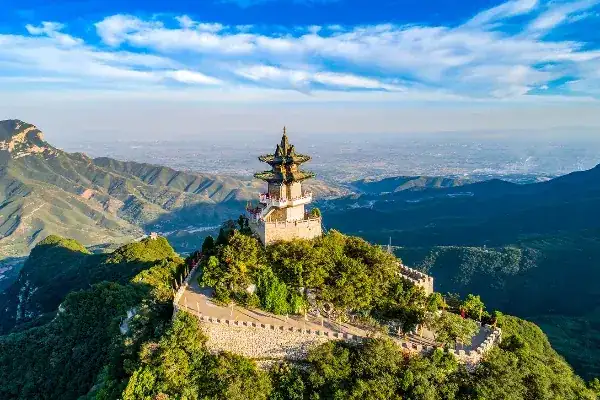
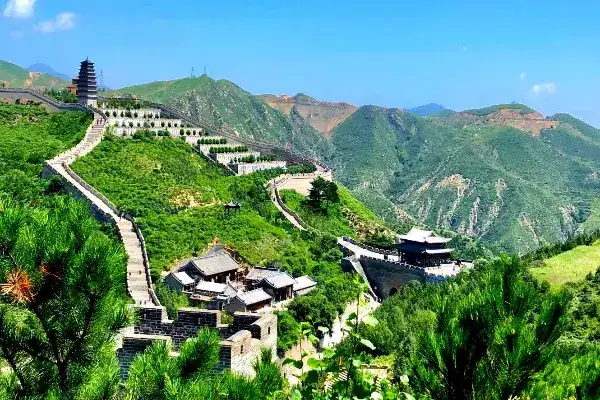
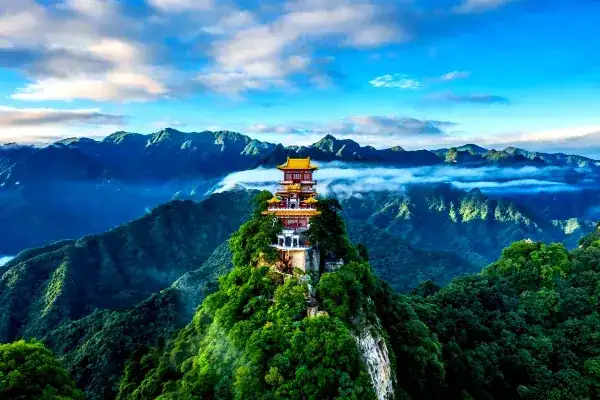
Wangmang Ridge in Lingchuan is the symbol of "Magical Taihang," with dozens of peaks where visitors can hear pine wind, watch cloud seas, view sunrises, and enjoy adventure sports. Other scenic areas include Jueshan, Shanli Springs, Dan River Longmen, and the Redwood Grand Canyon (a national geopark).
Famous Figures
Sister Cities
Honorary Titles
Travel information can change. Check current opening hours, reservations and entry requirements before you travel.
Traveller discussion
Start the conversation with a helpful tip or a question.