
Introduction to Tibet Entry Permits for Taiwan Compatriots and Tibet Travel Guide
Travel documents and tips for traveling from Taiwan to Tibet, including how to apply for a Tibet Entry Permit, essential travel items, transportation options to Tibet, and information on altitude sickness.
Introduction to Tibet Entry Permits for Taiwan Compatriots and Tibet Travel Guide
Edited on 2024-10-31 at 13:14:39
Taiwanese people need to apply for a Tibet travel permit to travel to Tibet. This article describes the application process and steps for Taiwanese people to travel to Tibet.
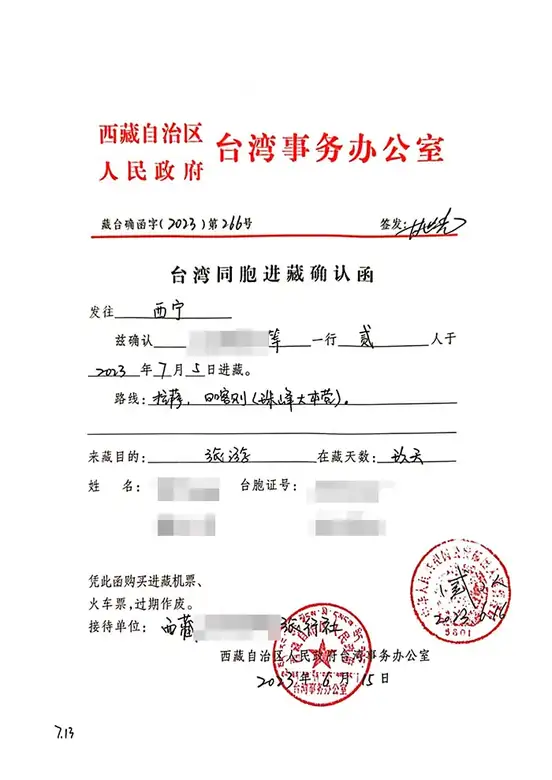
Taiwanese friends traveling to Tibet need to join a tour group; independent travel is not allowed. They need to prepare a color scan of their Taiwan Compatriot Permit and email it to the tour operator, who will then provide the necessary approval letter for Taiwanese compatriots to enter Tibet.
Both Taiwanese compatriots and foreigners need to obtain a Tibet Entry Permit, which is required to board trains and planes. Upon arrival in Lhasa, the tour operator will provide tour guides, accommodation, transportation, and other itinerary arrangements.
Letter of Entry for Taiwanese to Tibet
Brief procedure for Taiwanese compatriots to apply for a Tibet Entry Permit (Tibet Entry Certificate):
A. Prepare the required documents:
Front and back of the Taiwan Compatriot Certificate
B. Please confirm the route to and from Tibet, the itinerary time, the route to attractions, the service standards and the number of people in the group, and provide the travel agency with your contact information (Taiwan local mobile phone number starting with 00886 9).
C. After the group itinerary is confirmed, the travel agency will handle the Tibet Entry Permit. The processing time depends on the itinerary; generally, it takes about 20 days for review and issuance. If the itinerary involves non-open areas (Note: The Yarlung Tsangpo Grand Canyon is not currently open to foreign visitors; please do not apply for tourism in this area.), it will take approximately 35 days. Considering the arrangements and bookings for airfare, hotels, guides, and transportation, please complete the application process as early as possible to ensure confirmation of the travel route, dates, and locations in Tibet.
D. After the Tibet Entry Permit is issued, the travel agency will deliver the permit to the tourists according to the group's itinerary. For groups entering Tibet by train, only a fax (copy) of the permit is needed to purchase tickets and board the train. For groups entering Tibet by plane, the travel agency must deliver the original permit to the tourists by express delivery. Only with the original permit can group members board the plane to Tibet.
The above are the application steps for a permit to enter Tibet for Taiwanese citizens. A sample image is shown below.
(Photo: Approval letter for Taiwanese compatriots to enter Tibet)
Explanation of travel routes and attraction restrictions for Taiwanese people traveling to Tibet:
1. Tourists who only want to visit Lhasa, Shigatse and Namtso scenic areas only need a Tibet Travel Permit to travel.
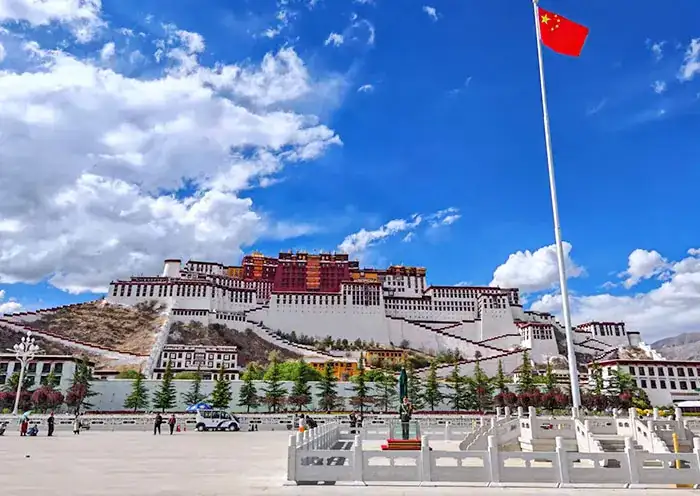
[Exquisite Everest Tour] 8-Day Tour of Lhasa, Yamdrok Lake, Shigatse, and Everest
Lhasa - Potala Palace - Jokhang Temple - Sera Monastery - Yamdrok Lake - Shigatse - Mount Everest - Tashilhunpo Monastery - Lhasa
[16-Day Ali-Lhasa Journey] Lhasa, Yamdrok Lake, Shigatse, Sacred Mountains and Lake Manasarovar, Guge Kingdom, Sakya - A 16-Day Tour
Lhasa - Sera Monastery - Potala Palace - Yamdrok Lake - Shigatse - Mount Everest - Mount Kailash - Zanda - Darchen - Saga - Sakya - Shigatse - Lhasa
Travel Guide for Taiwanese to Tibet
For Taiwanese travelers going to Tibet, what are some essential travel tips and must-haves? This article discusses travel strategies and essential items for Taiwanese people traveling to Tibet.
Essential items for traveling to Tibet
1. Commonly used medicines:
The first one, of course, is the well-known Rhodiola rosea. Whether or not you need Rhodiola rosea depends on your individual circumstances. It's worth noting that you should start taking Rhodiola rosea a while in advance!
Glucose: This can help alleviate altitude sickness!
Motion sickness patch: Due to the vastness of Tibet, most of the time will be spent in the car, and motion sickness combined with altitude sickness can be very uncomfortable.
Other commonly used medicines can be carried according to one's own situation, such as: Yunnan Baiyao, Zheng Honghua Oil, Band-Aids, and Mercurochrome for external injuries; Caoshanhu lozenges for sore throat; and Banlangen granules for clearing heat and reducing inflammation!
2. Sunscreen products:
Lhasa is known as the City of Sunshine, so a nice hat is essential. When choosing one, be sure to select one with a wide brim. Sunglasses, sunscreen, and lip balm are also good to carry with you.
3. Clothing preparation: Tibet has a large temperature difference between day and night, and you can often experience spring, summer, autumn and winter in a single day. It is recommended to dress in an onion-like manner. A warm down jacket and a windproof coat are also necessary.
4. Sleeping bag: Sleeping bags are not necessary, as guesthouses usually provide blankets. If you are concerned about hygiene, you can bring your own sleeping bag.
5. Wet wipes: Tibet has a dry climate, so wet wipes can be very useful in areas with limited resources.
6. Portable power bank (ideally with a flashlight): Sometimes you'll be in the car all day while traveling, and your phone is a great way to pass the time. With a portable power bank, you won't have to worry about your phone running out of battery.
Tips for Taiwanese people traveling to Tibet:
a) Taiwanese people cannot travel independently in Tibet. In other words, Taiwanese tourists cannot travel independently in Tibet.
b. Taiwanese businesspeople in mainland China who travel to Tibet need to obtain a certificate and invitation letter from the Taiwanese Business Association.
c. Taiwanese people living overseas or in Taiwan who want to travel to Tibet can consult local travel agencies in Tibet. There are special group tours for Taiwanese people, which can be done in a join-in group tour format.
d. Any Taiwanese compatriot traveling to Tibet must obtain a "Taiwan Compatriot Travel Permit," also known as the "Tibet Entry Permit." This document is a travel permit and is processed by an authorized travel agency in Tibet.
e. Some Tibetan attractions are not open to Taiwanese tourists. In addition, travel to Tibet in March is restricted. Please consult with travel agencies in advance to make proper arrangements for your travel plans and time.
In short, the procedures for Taiwanese tourists to enter Tibet are slightly more complicated than those for mainland tourists, but this does not affect the increase in the number of Taiwanese tourists visiting Tibet. Mainland tourists who wish to travel to Tibet with Taiwanese tourists need to form separate tour groups; Taiwanese tourists cannot participate in group tours for mainland tourists to Tibet.
altitude sickness
Altitude sickness, also known as high altitude syndrome, altitude sickness, or high altitude reaction.
(Altitude sicknessThe translation is morealtitude sicknessMore accurately, this is a reaction of the human body when it reaches high altitudes, not a disease.
English: Altitude sickness, acute mountain sickness (AMS).
It meansAcute pathological changes that occur in the human body at high altitudes due to decreased oxygen concentration.
Altitude sickness is caused by the fact that the higher the altitude, the thinner the air and the lower the air pressure, thus reducing the oxygen pressure required by the human body.
The oxygen content required by the human body remains unchanged. In order to maintain the required oxygen content in the blood, it is necessary to increase the number of red blood cells.
However, it takes several days for the human body to automatically increase the number of red blood cells. Therefore, when you first enter the mountainous area, the body may not have enough time to adapt due to the sudden increase in altitude.
The higher the altitude and the shorter the transition time, the more severe the reaction when there is insufficient oxygen supply in the body.
This physiological reaction is generally called "altitude sickness" or altitude sickness.
Symptoms of altitude sickness (high altitude sickness)
- Mild symptoms include headache, dizziness, loss of appetite, insomnia, nausea, peripheral edema, and general fatigue.
- Moderate symptoms include vomiting, headaches that cannot be relieved by common painkillers, and decreased urine output.
- Severe symptoms include altered consciousness, unsteady gait, difficulty breathing at rest, audible rales in the lungs, and cyanosis.
Transportation to Tibet: Plane or Train?
The best way to alleviate altitude sickness is to gradually ascend from low to high altitudes, allowing the body to adapt gradually.
Many people believe that taking the train to Lhasa involves a gradual ascent from low to high altitudes, but is this really the case? The following image showing the altitude changes will clarify this.
Altitude changes along the Qinghai-Tibet Highway
Therefore, taking the train to Lhasa does not alleviate altitude sickness.In addition, the carriage is a relatively enclosed environment with poor air quality. The journey is long and the carriage is crowded and noisy, making it difficult to get proper rest. This can actually make it easier to experience the discomfort of altitude sickness.
Although flying into Lhasa involves a short period of ascent from low to high altitude, once you arrive, you can immediately go to your hotel and enjoy a comfortable resting environment. This allows your body enough time and energy to gradually adjust and adapt. Even if you experience severe altitude sickness, you can receive immediate treatment from a professional doctor.
[Panoramic Tibet] 12-Day Tour of Lhasa, Nyingchi, Yamdrok Lake, Shigatse, Mount Everest, and Namtso
Lhasa - Kadinggou - Nyingchi - Basum Tso - Lhasa - Sera Monastery - Potala Palace - Yamdrok Lake - Shigatse - Mount Everest - Tashilhunpo Monastery - Damxung - Namtso - Lhasa
Who gets altitude sickness (high altitude sickness)?
Anyone entering a high-altitude area may experience altitude sickness, regardless of age, gender, or physical condition.。
For a long time, many people have had misconceptions about altitude sickness. Some people believe that people who are physically strong or exercise regularly consume more oxygen and therefore experience more severe altitude sickness. Some people believe that they should increase their exercise before going to Tibet, while others believe the opposite and that they should stop exercising.
In fact, these claims have no scientific basis. Altitude sickness depends on the body's innate ability to carry oxygen and has no necessary connection with physical fitness.
Should I get oxygen?
Many people are used to using supplemental oxygen to relieve discomfort. Supplemental oxygen can temporarily relieve symptoms such as chest tightness, shortness of breath, and difficulty breathing, but the symptoms will reappear after stopping supplemental oxygen, thus delaying the body's adaptation to high altitude.
If you only experience mild altitude sickness symptoms, it is best not to use supplemental oxygen.This allows the body to adjust itself and adapt more easily to the high-altitude environment.
Mild altitude sickness will resolve on its own; avoid using supplemental oxygen unnecessarily to prevent dependence. If severe altitude sickness symptoms occur, please immediately notify your tour guide for further treatment.
Prevention of altitude sickness (high altitude reaction)
Maintaining a good and healthy mindset is the most important key to preventing altitude sickness. Many symptoms of altitude sickness may be caused by psychological factors. Because of the fear of altitude, the probability of experiencing obvious altitude sickness symptoms is higher.
Experience shows that children's adaptation to altitude sickness is often shorter than that of some adults, possibly because children do not understand what altitude sickness is and therefore have less psychological burden.
Two weeks before departure, it is essentialMaintain a regular sleep schedule and avoid staying up late.Keeping your body in optimal condition is very important.
One week before departure, I started taking Rhodiola rosea capsules, which are available at pharmacies.Choose units with higher contentof
Whether you arrive by train or plane, you must...Relax and slow down.
ArrivalDay 1When the body has not yet adapted to the high-altitude environment,Avoid showering and washing your hair as much as possible.
Stay in Lhasa for 2-3 days to allow your body to acclimatize to the high altitude before starting your journey.
Drink plenty of water, in small sips frequently. Also, try to immerse yourself in local customs and drink butter tea like the locals.
Avoid overeating, chew food thoroughly and slowly to reduce the burden on your stomach and intestines.
Keep warmThe temperature difference between day and night is large, so be careful not to catch a cold.
Breathe slowly, speak slowly, walk slowly, and savor the beauty of Tibet.
Treatment of altitude sickness (high altitude reaction)
- Mild dizziness/headache: If it is within a tolerable range, shifting your attention to beautiful scenery will help your body adjust and the symptoms will disappear.
- Severe headache or vomiting: Inform the tour guide or Lhasa staff and seek medical assistance, such as oxygen, IV drip, or appropriate medication.
- If symptoms persist despite medication, oxygen therapy, and IV drips, it is essential to immediately move to a lower altitude.
Who is not suitable to travel to Tibet?
- Those who have not yet recovered from a severe cold
- Those with serious lesions in the heart, lungs, brain, liver, kidneys, etc.
- Those who have just undergone surgery and whose wounds and physical strength have not yet fully recovered.
- Pregnant women
- Those advised by doctors not to go
Photo gallery
Travel information can change. Check current opening hours, reservations and entry requirements before you travel.

Traveller discussion
Start the conversation with a helpful tip or a question.