This year marks the start of the 15th Five-Year Plan. Recently, various regions have been using the "first meeting of the new year" as a starting point to precisely plan their work for the new year.
From provinces like Shanghai, Liaoning, and Fujian focusing on continuously optimizing the business environment, to Hainan striving for a "good start" in its first year of customs closure, and Chongqing concentrating on enhancing the development level of the Chengdu-Chongqing economic circle... a series of high-level deployments and targeted measures have been implemented intensively to help the "15th Five-Year Plan" get off to a good start.

The pursuit of an "excellent" business environment has no limits.
At the start of the 15th Five-Year Plan, optimizing the business environment became a key focus of work in many regions. Shanghai, Liaoning, Fujian, and other provinces successively convened special conferences on optimizing the business environment, kicking off the new year's development.
It is clear from the core deployments in various regions that taking a problem-oriented approach to accurately address the needs of enterprises and breaking down obstacles to development through reform have become the core starting point for optimizing the business environment.
Cutting the blade inward, breaking through obstacles to development
Liaoning has positioned optimizing the business environment as the "most important, most realistic, and most urgent strategic task" during the "15th Five-Year Plan" period.
The Liaoning Provincial Conference on Optimizing the Business Environment proposed the goal of building the province with the best reputation for business environment and released the "Liaoning Province Action Plan for Vigorously Optimizing the Business Environment (2026 Edition)," which formulated 34 measures in 6 aspects.
With a focus on self-revolution and a determination to improve the business environment, Liaoning Province has identified eight key areas for improvement, including weak service awareness, government dishonesty and failure to fulfill promises, low administrative efficiency, irregular inspection and enforcement, diminished policy effectiveness and weak sense of gain for enterprises and the public, extortion, abuse of power for personal gain, prevalent "relationship culture," and weak market awareness.
Zhou Yiying, director of the Liaoning Provincial Development and Reform Commission, stated that while the business environment may seem like an intangible "soft power," it is actually a "hard support" for development. Only with a significant improvement in the business environment can Liaoning achieve comprehensive revitalization and great development during the 15th Five-Year Plan period.
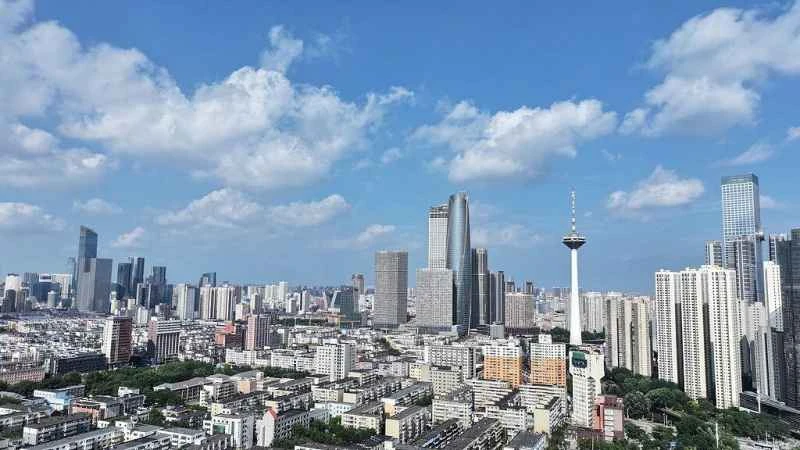
△ Shenyang, Liaoning
Act early and meticulously to address business concerns
Since 2018, Shanghai has taken the lead in placing the creation of a first-class business environment that is market-oriented, rule-of-law based, and internationalized in a prominent position. With an annual update frequency, it has successively launched eight versions of the action plan to optimize the business environment and introduced more than 1,200 measures.
The 2026 "Version 9.0 Plan" encompasses 26 measures covering four major environmental aspects: government services, market competition, industrial ecosystem, and social co-governance. On one hand, the "market competition" environment receives the most attention, with eight measures addressing key areas such as regulatory optimization, intellectual property protection, and the regulation of profit-driven professional whistleblowing. On the other hand, the "industrial ecosystem" is presented as a separate section for the first time, addressing enterprise needs in areas such as space guarantees, financing convenience, and human resource services through six measures. Furthermore, the "Version 9.0 Plan" precisely addresses hot topics such as "anti-involution," mitigating "involutionary" competition through strengthening platform algorithm governance and preventing malicious low-price bidding, regulating profit-driven professional whistleblowing, and creating a fair and clean business environment.
Wang Sizheng, president of the Shanghai Macroeconomic Society, pointed out that the "9.0 version of the plan" highlights the characteristics of early, meticulous, and practical implementation, always taking the feelings of enterprises as the guide and promoting the transformation of policies from "issuance" to "effectiveness".
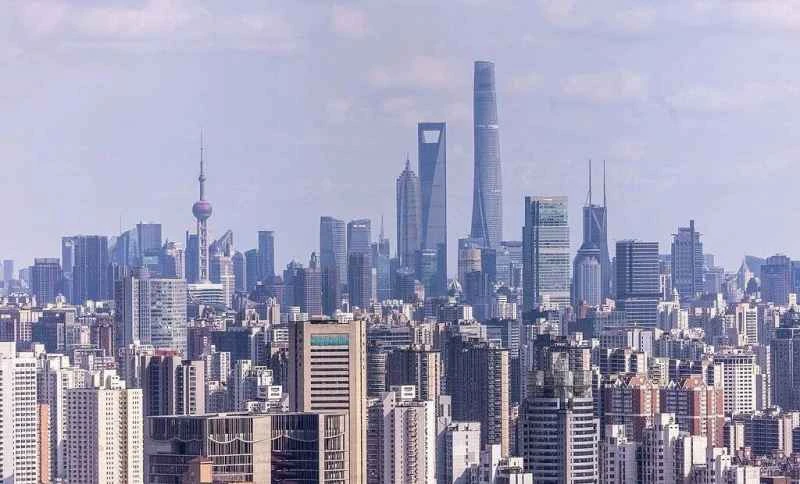
△Shanghai
Seize the opportunity and cultivate a fertile ground for business.
On the first working day after New Year's Day, Fujian Province held a provincial conference on optimizing the business environment. This is the second consecutive year that Fujian has used this format to start the year.
The first meeting of the new year in 2025 deployed four key tasks and achieved remarkable results, with the overall satisfaction rate with the business environment exceeding 85% for four consecutive years.
Facing the new expectation of "making Fujian a truly fertile ground for business that attracts both local and distant businesses," Fujian adheres to a problem-oriented approach, focusing on key aspects to promote a new leap forward in its business environment. The meeting put forward clear requirements in five areas: breaking down market access barriers, resolving overdue payments to enterprises, legally protecting the legitimate rights and interests of business entities, strengthening support for enterprise innovation platforms, and ensuring the effectiveness of preferential policies for enterprises. These requirements aim to improve the precision and accessibility of policies, ensuring that preferential benefits for enterprises are directly and quickly enjoyed.
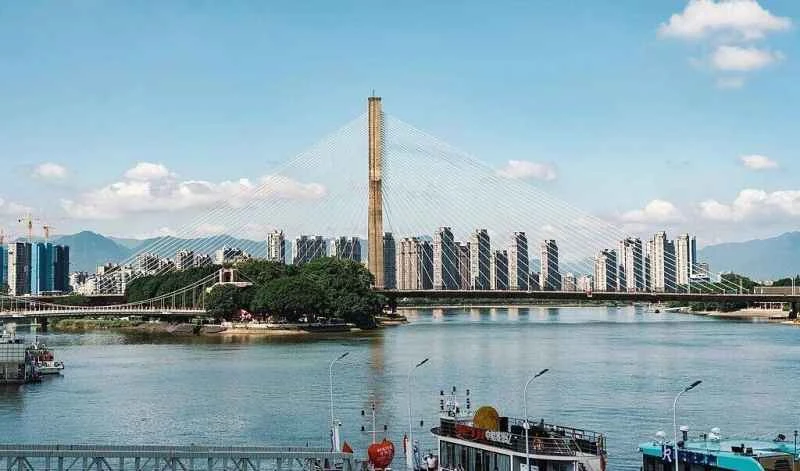
△Fuzhou, Fujian
Layout tailored to local conditions
In addition to focusing on the business environment, some regions have made distinctive arrangements for the start of the year based on their own strategic positioning and development stage.
Hainan: Striving for a "good start" in the first year of customs closure.
On December 18, 2025, the Hainan Free Trade Port officially launched its island-wide customs closure. Currently, the island-wide customs closure is operating smoothly and orderly. As of December 31, 2025, the value of imported goods subject to zero tariffs reached 420 million yuan, and the value of processed goods for domestic sale exempt from tariffs reached 47.23 million yuan; 3,265 new foreign trade enterprises were registered, more than doubling year-on-year; the total number of newly registered enterprises for the year reached 30,000, a 40% year-on-year increase.
This year marks the start of the 15th Five-Year Plan and the first year of operation of the Hainan Free Trade Port after its official opening. The beginning is crucial to the overall situation. On the first working day of the new year, Hainan convened a meeting to promote the high-standard construction of the Hainan Free Trade Port. Based on the new starting point of the island's full customs operation, the focus is on "high standards" to achieve higher-quality development.
The meeting clearly put forward "five principles": adhering to the connection between long-term and short-term goals; promoting both boosting domestic demand and expanding openness; coordinating "flexible deregulation" with "effective management"; combining a province-wide approach with mobilizing the initiative of cities and counties; and unifying strict supervision and management with encouraging accountability and action. Among these, focusing on boosting domestic demand, it explicitly requires the in-depth implementation of a special action to boost consumption, expanding the import and supply of high-quality goods and services, optimizing the "three consumption areas" of high-end shopping, healthcare, and education, and innovating and developing new types of consumption, especially service consumption.
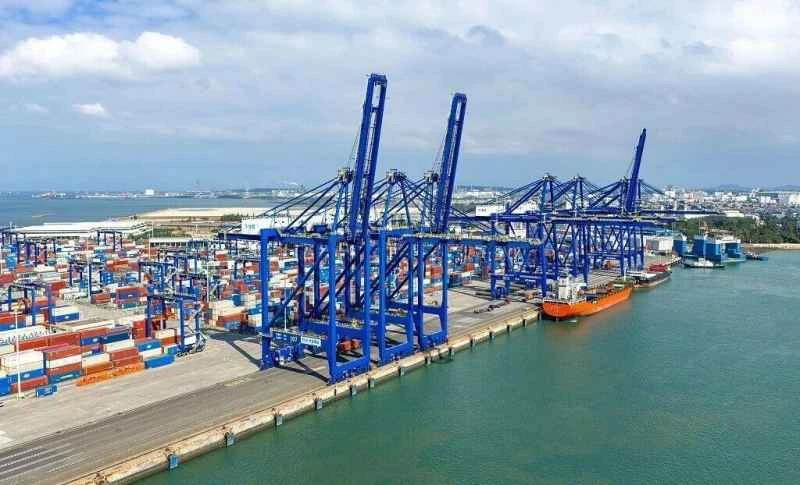
△Yangpu Port, Hainan
Chongqing: Enhancing the Development Capacity of the Twin-City Economic Circle
In October 2025, the Fourth Plenary Session of the 20th CPC Central Committee adopted the "Suggestions of the CPC Central Committee on Formulating the 15th Five-Year Plan for National Economic and Social Development," which clearly required "enhancing the development level of the Chengdu-Chongqing Twin-City Economic Circle."
Currently, the overall strength of the Chengdu-Chongqing economic circle has steadily improved. Since 2020, the GDP of the two provinces and cities has successively reached four trillion-yuan levels, and is expected to exceed 10 trillion yuan by 2025.
On January 4th, Chongqing held a conference to promote the development of the Chengdu-Chongqing economic circle. This conference, which in previous years was usually held after the Spring Festival, was moved to the first working day after New Year's Day this year, in order to accelerate the progress of the work and to further mobilize, deploy, and promote related tasks.
This conference proposed five new development goals and systematically deployed ten new actions. Regarding enhancing development capacity, the conference clarified the need to accelerate the construction of a new pattern of core-led development and full integration into the Chengdu-Chongqing economic circle, strengthening the modern main urban area. Regarding industrial development, the conference clarified the creation of trillion-yuan-level industrial clusters in intelligent connected new energy vehicles, software and information services, and food and agricultural product processing, accelerating the construction of a demonstration zone for undertaking industrial transfer from the eastern coastal areas. Regarding urban governance, "promoting AI empowerment" became a highlight, clarifying the construction of a high-level urban digital foundation, implementing actions to enhance the city's intelligent central capabilities, and promoting the interconnectedness and linkage of "Digital Chongqing" and "Smart Chengdu."
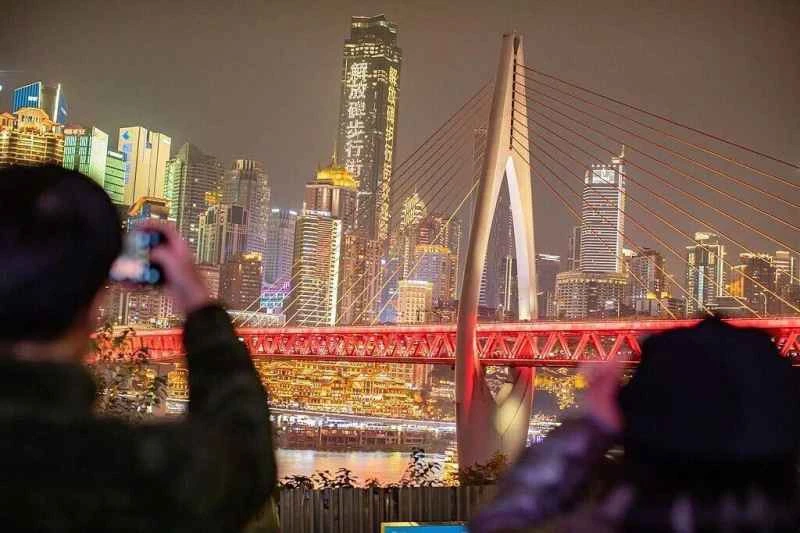
△Chongqing
In addition, on the first working day of the new year, Henan Province held a mobilization and deployment meeting in Kaifeng for the construction of major projects and the high-quality development of the manufacturing industry in 2026. The meeting emphasized focusing on project construction as the "key driver," stressing the need to organically combine strengthening infrastructure projects with optimizing industrial projects; to organically combine strengthening technological innovation with promoting industrial innovation; and to organically combine strengthening digital empowerment with accelerating green transformation. Guizhou Province held a provincial conference to promote the high-quality development of business entities, emphasizing "vigorously developing industries, projects, investment attraction, and business entities." Through measures such as optimizing the business environment, vigorously attracting investment, and implementing a program to cultivate enterprises for listing, the province aims to stimulate the vitality of business entities and build momentum for high-quality development.
The first step was a sprint. While the deployments of the "first meeting of the new year" in various regions had different focuses, they all consistently anchored on the core theme of high-quality development. A series of pragmatic measures not only consolidated the foundation for current development but also outlined a blueprint for long-term growth.
A new journey begins with hard work. Ultimately, achieving development goals depends on being grounded and persistent. Only by having the determination to "grasp what is right" and the tenacity to "work year after year," seeking progress while maintaining stability and achieving success, can we ensure the steady and long-term advancement of high-quality development.


