CCTV News (Focus Interview): The Yangtze River Economic Belt covers 11 provinces and municipalities in eastern, central, and western China, with an area of approximately 2.05 million square kilometers, accounting for about one-fifth of the country's total area. However, it accounts for over 40% of the national population, and its GDP now accounts for nearly half of the national total. Ten years ago, the concept of "jointly protecting the environment and refraining from large-scale development" set the rules and drew the red lines for the development of the Yangtze River Economic Belt. Ten years later, what impact has this major strategy had on the lives of people along the Belt, and what changes have occurred?
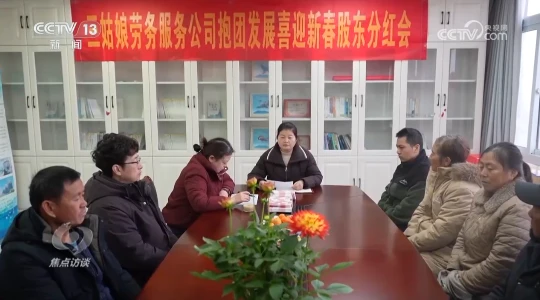
At the beginning of the new year, Chen Lanxiang's labor service company convened a shareholders' meeting to discuss dividends. This time, the total dividend amount increased by 20,000 yuan compared to last year.
Chen Lanxiang's labor service company is quite unique. All nine shareholders, including herself, are fishermen who have transitioned to ashore work. Six years ago, when the reporter first met Chen Lanxiang, she was standing at a crossroads in her life, as her family was about to say goodbye to their life of fishing, which involved braving the wind and rain and drifting on the water.
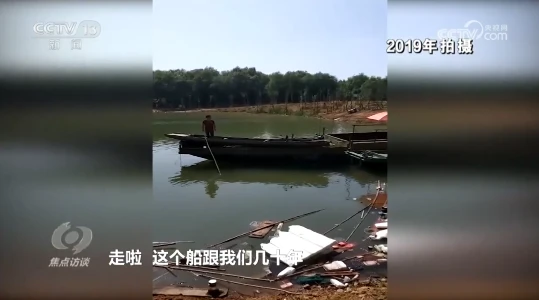
Chen Lanxiang's family has lived on boats for generations in Xuejiawa, Ma'anshan City. This place was once a natural harbor on the banks of the Yangtze River.
It's unclear when exactly, but Xuejiawa has slowly changed. Illegal docks and sand and gravel yards have damaged the ecosystem, various scattered and polluting enterprises have been discharging pollutants illegally, and fishermen's domestic sewage has been directly discharged into the Yangtze River, turning the clear Yangtze River into dirty and smelly water.
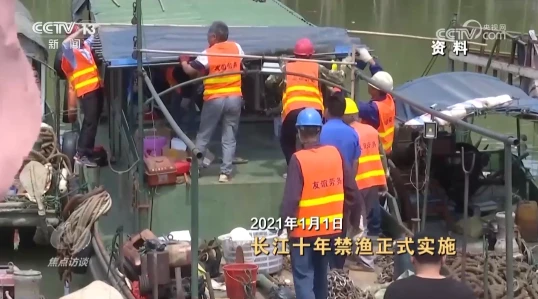
Although small, Xuejiawa was a microcosm of the ecological damage and disorderly development along the Yangtze River at that time. Chemical plants surrounded the river, lakes dried up, sewage flowed freely, and fish populations plummeted. The Yangtze was sick, and seriously so. A decisive battle to protect and restore the Yangtze was imminent. By the end of 2019, a complete fishing ban was to be implemented in aquatic life protection areas along the Yangtze River. On January 1, 2021, the ten-year fishing ban on the Yangtze officially took effect. More than 200,000 fishermen along the Yangtze, including Chen Lanxiang, had to leave the river and find new livelihoods.
From relying on the water for a living to seeking a livelihood on land, how should Chen Lanxiang proceed? The government's compensation for retiring from fishing allowed her to buy a house in the city and settle down. But her future livelihood is the bigger challenge. To her surprise, the subsequent assistance continued uninterrupted.
With the government's help, Chen Lanxiang partnered with several fishermen to start a labor service company. She channeled all her fishermen's hard work and perseverance into her new business, doing everything herself.
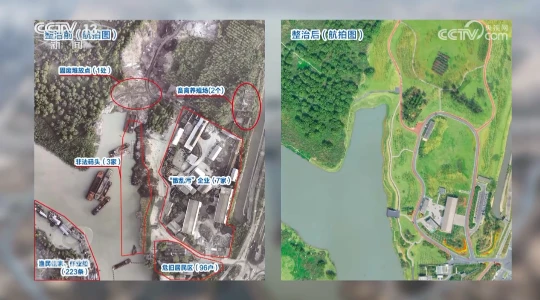
The government provided initial support, but ultimately, success depended on their own hard work. Five years later, their small company of fewer than 10 people has grown into a team of nearly 80. Chen Lanxiang and her partners have truly put down roots on land. Xuejiawa, too, has undergone a transformation after environmental remediation. Chen Lanxiang's story is a microcosm of the countless fishermen along the Yangtze River who have transitioned to other livelihoods. On this path of relocation and transformation, everyone has found their own new way.
Some people started businesses with their pioneering spirit; some people used their talents to transform from "fishing" to "fish farming"; and some younger generations have taken on the responsibility of protecting fish and witnessed the restoration of the Yangtze River's ecology.
For Chen Lanxiang, the greatest happiness is the peaceful home on the shore.
According to statistics, 231,000 fishermen who have left the fishing industry nationwide have received resettlement and support. All fishermen with the ability and willingness to work have found new employment; those who meet the eligibility criteria have all enrolled in pension insurance, with 60,000 already receiving pensions, and 12,000 fishermen facing hardship included in the minimum living allowance and other assistance programs. This solid support has made the fishermen's transition to ashore more stable and secure.
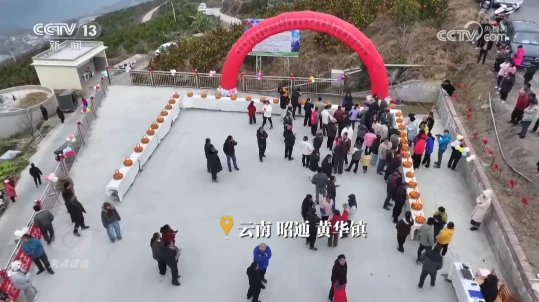
Along the Jinsha River, the white tangerines in Huanghua Town are ripe. The annual "Orange King Competition" is in full swing.
Tu Kongquan, head of the Shengjiping Jinshengtai Cooperative Orchard in Jinzhai Village, Huanghua Town, once again carefully selected fruits for the competition. Although the competition venue was simple, the judging was rigorous. After meticulous evaluation by experts through observation, smelling, and tasting, the 2025 Orange King was finally revealed.
Unfortunately, Lao Tu's oranges missed out on the title of "King of Oranges" for the third time. But he said, "I don't need to be number one. I just need us to shine today, and for everyone to have oranges to sell and be proud."
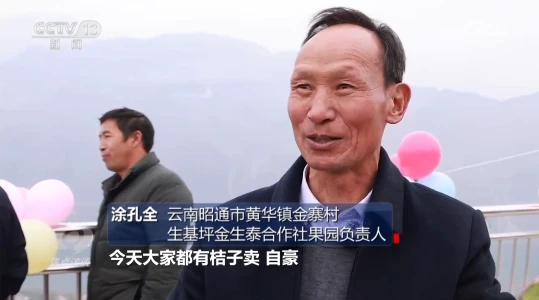
"Everyone has oranges to sell," Old Tu's simple pride stems from the earth-shaking changes that have taken place on this land. Ten years ago, this was a barren slope overgrown with weeds and suffering from severe soil erosion.
In 2016, the strategic concept of "jointly protecting the Yangtze River and refraining from large-scale development" set the standard for the development of the Yangtze River Economic Belt. Faced with the problem of soil erosion on barren slopes, how to explore a new path that can both protect the Jinsha River and help people get rich became a question that Huanghua Town had to answer.
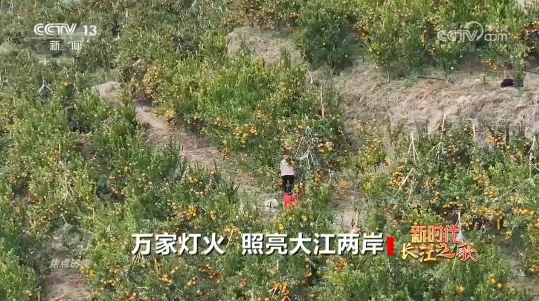
A path that balances ecology and development has been explored. Huanghua Town transformed barren slopes into terraced fields and introduced large-scale cultivation of fruits suitable for the local climate, such as white oranges and loquats, achieving a win-win situation for soil and water conservation and increased farmers' income. Lao Tu responded immediately, forming a cooperative with more than ten villagers and contracting 180 mu (approximately 12 hectares) of orange orchards. Over the past ten years, the saplings have grown into orange trees, and every winter, the branches are laden with heavy white oranges, attracting a flood of orders.
In Huanghua, Lao Tu's story is not an isolated case. Today, the town has developed 16,000 mu of citrus and 25,000 mu of loquat. These "golden and silver fruits" covering the mountains and fields are leading more than 6,300 households onto a new path of ecological prosperity.
The development of Huanghua Town has benefited from the synergy between ecological protection and industrial development. Looking at the entire Yangtze River Economic Belt, a deeper level of regional collaborative development is quietly enhancing the sense of well-being for countless households.
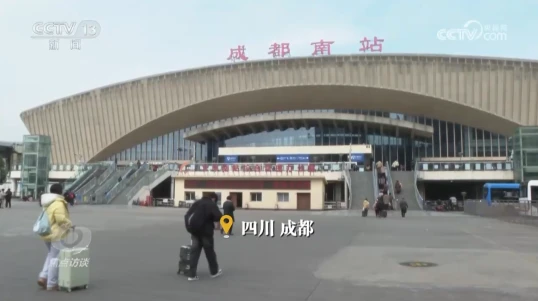
At Chengdu South Railway Station, fashion designer Zheng Junyue was preparing to travel to Chongqing to meet with a client. A small handbag was all she had.
The high-speed rail service between Chengdu and Chongqing, operating like a public bus, has made living between the two cities a reality. What surprised Zheng Junyue even more was the increasing convenience of handling affairs between the two cities; services such as pension insurance, housing provident fund, and medical insurance can now be processed across the city, and hospital test results are mutually recognized. Convenient transportation and smooth service have filled Zheng Junyue with confidence for her future career and life.
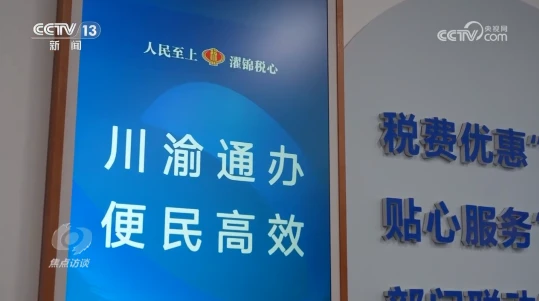
The convenience Zheng Junyue experienced is underpinned by a historic leap forward in infrastructure and public services along the Yangtze River Economic Belt. Over the past decade, the "hard connectivity" of the entire economic belt has accelerated significantly: approximately 470,000 kilometers of new highways and 134,000 new bridges have been built across 11 provinces and municipalities, and the operational railway mileage has increased from 36,600 kilometers to 53,000 kilometers. An even more profound transformation lies in "soft connectivity," with the 11 provinces and municipalities continuously expanding and deepening inter-provincial services, collectively supporting a more convenient and interconnected quality of life for the people. These changes have ultimately translated into tangible benefits for hundreds of millions of residents. Over the past decade, the per capita disposable income of residents in the 11 provinces and municipalities along the Yangtze River Economic Belt has increased from 23,000 yuan to 44,000 yuan, nearly doubling. This upward income curve is the most vivid illustration of the strategy of "jointly protecting the environment and refraining from large-scale development."
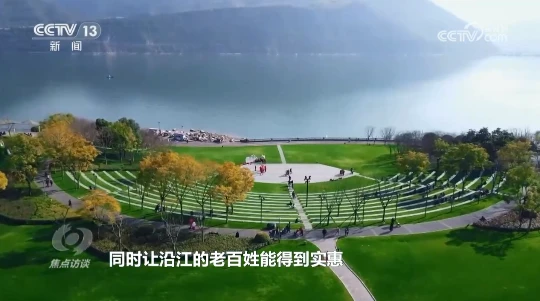
Liu Baokui, a researcher at the Institute of Territorial Development and Regional Economy of the National Development and Reform Commission, said: "Regional governance in the Yangtze River Economic Belt is undergoing a profound transformation from local to holistic, from competition to cooperation, and from administrative region economy to functional region economy. This also gives the Yangtze River Economic Belt a new era connotation, which means that while promoting ecological protection, we can achieve high-quality development, and at the same time, the people along the river can benefit and enhance their sense of gain and happiness."
From fishermen settling ashore to live and work in peace, to barren mountains turning green and bearing "golden fruit," and to living between two cities as if in one, the biggest change brought about by the ten-year implementation of the Yangtze River Economic Belt strategy is the ever-increasing sense of gain, happiness, and security among the people along the river. "If people do not fail the green mountains, the green mountains will certainly not fail the people." The blueprint drawn up ten years ago for "jointly protecting the environment and refraining from large-scale development" is transforming into a vivid reality of harmonious integration between mountains, rivers, people, and cities. A Yangtze River that benefits hundreds of millions of people, a Yangtze River of peace and tranquility, is flowing forward.


![[Infographic] New Trends in Ice and Snow Tourism Through "360 Million Visits"](/upload/20260112/6ba5f0a8c6493b.webp)