On the journey of serving national strategies and forging industrial strengths, Shanghai is forging ahead, continuously shaping new drivers and advantages for development. According to the Shanghai Municipal Commission of Economy and Informatization, based on its existing industrial foundation, the market growth during the 15th Five-Year Plan period, and the demand for project resources, Shanghai will focus on low-altitude economy, commercial aerospace, androids, bio-manufacturing, and smart terminals, making them the city's five new growth points, striving to reach a total scale of one trillion yuan during the 15th Five-Year Plan period.
It is reported that during the "14th Five-Year Plan" period, Shanghai has a total of 5 advanced manufacturing clusters selected into the "national team". These include the first three clusters selected in the first batch: integrated circuits, Zhangjiang biomedicine, and new energy vehicles, as well as the large aircraft cluster and the shipbuilding and marine engineering equipment cluster added in 2024.
The five national-level manufacturing clusters and five new industrial growth points are highly compatible with Shanghai's strategic layout of building a new industrial system led by three pioneering industries and creating four trillion-yuan-level industrial clusters. Together, they will form the industrial pillars for high-quality economic development.
Five national-level clusters achieve success, opening a new chapter in cross-domain collaboration.
Looking at Shanghai's five national-level advanced manufacturing clusters, they are not only "single champions" in their respective industrial fields, but also form a high-end matrix of Shanghai's manufacturing industry with different development models and leading roles.
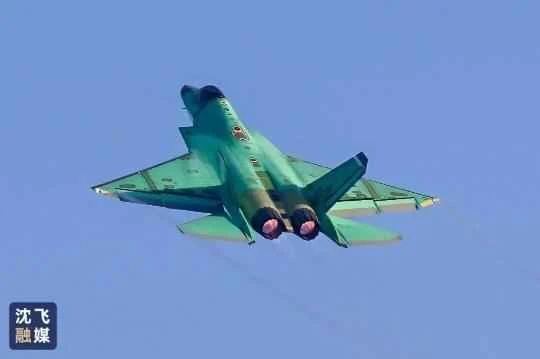
Of particular note is the Yangtze River Delta (including Jiangxi) large aircraft cluster, the first cross-provincial advanced manufacturing cluster in China, which has pioneered a new paradigm of regional industrial collaboration. Centered on Shanghai, this cluster covers the three provinces and one municipality of the Yangtze River Delta and the entire Jiangxi province, with Shanghai Lingang, Wuxi (Jiangsu), Hangzhou (Zhejiang), Lu'an (Anhui), and Nanchang (Jiangxi) as its core carrying areas. The total industrial output value of related industries has exceeded 100 billion yuan. Shanghai plays a crucial role as the "brain" and "assembly center," focusing on the research, development, and assembly of large aircraft, as well as core aspects such as aero-engines and airborne systems. Meanwhile, the Yangtze River Delta and Jiangxi regions have formed supporting supply chains with their own unique advantages. With the C919 entering large-scale operation and orders exceeding 1,000 units, the C909 regional jet being delivered in batches, and the C929 wide-body aircraft under steady development, an independent, controllable, safe, and efficient large aircraft industrial chain is rapidly taking shape in the Yangtze River Delta and even further, becoming a vivid example of regional collaboration in building national strategic strength.
The other four clusters are also quite impressive: the Zhangjiang Biomedical Cluster brings together more than 2,700 upstream and downstream enterprises, and has approved more than 20 domestic Class 1 innovative drugs for market launch, leading the country in quantity; the New Energy Vehicle Cluster takes Jiading District as its core carrier, relying on leading companies such as SAIC and Tesla, and gathers a complete industrial chain ecosystem from smart chips and LiDAR to solid-state batteries. Last year, the cumulative promotion scale of new energy vehicles ranked first among global cities, and the mileage and scope of open roads for intelligent connected vehicle testing are among the best in China; the Integrated Circuit Cluster ranked first in China's comprehensive competitiveness with an industrial scale of over 390 billion yuan last year, accounting for 25% of the national market share; Shanghai is also the only city in the world that has all three "crown jewels" of the shipbuilding industry: aircraft carriers, large cruise ships, and large liquefied natural gas (LNG) carriers. In 2024, the output value of shipbuilding and marine engineering reached 120 billion yuan, ranking among the world's top in terms of the completeness and innovation density of high-tech ship categories.
Four trillion-yuan-level industrial clusters have taken shape, marking an overall leap in industrial capacity.
Driven by the five national-level industrial clusters, Shanghai's industrial capacity has achieved an overall leap forward. Four trillion-yuan-level industrial clusters—electronic information, automobiles, high-end equipment, and software and information services—have taken shape, becoming the ballast for stable economic growth and the main engine driving new quality productivity.
According to Chen Feifei, Director of the Comprehensive Planning Division of the Shanghai Municipal Commission of Economy and Informatization, Shanghai's four trillion-yuan-level industrial clusters have grown from 10 key industrial chains. In 2024, the scale of Shanghai's electronic information industry reached 1.2 trillion yuan, ranking second among the top 50 cities in competitiveness in the core electronic industries. Currently, the city has gathered more than 1,200 leading companies in the integrated circuit industry, and a thriving innovation ecosystem has also been formed in cutting-edge fields such as artificial intelligence big data models and intelligent sensors.
The automotive industry is reshaping its advantages in the electrification and intelligentization revolution. Behind its 1.1 trillion yuan scale lies a complete ecosystem covering complete vehicles, electric drive systems, intelligent cockpits, and autonomous driving. Shanghai is transforming from an "automobile city" into a "smart car valley." The high-end equipment industry has also surpassed the trillion-yuan threshold. It is not only the cornerstone for the C919's flight and the mass launch of large LNG ships, but also continuously achieving breakthroughs in "national heavy equipment" such as heavy-duty gas turbines, deep-sea mining equipment, and industrial robots. Meanwhile, the software and information services industry, with a scale exceeding 1.8 trillion yuan, has become a key force supporting the city's digital transformation and data-driven integration, holding a leading position nationwide in sub-sectors such as industrial software, internet services, and fintech.
Seeking growth through breakthroughs in core technologies, aiming for world-class competitiveness.
Building on its existing industries, Shanghai is focusing on developing emerging pillar industries. During the 15th Five-Year Plan period, the city will focus on five new growth areas: low-altitude economy, commercial aerospace, embodied intelligence, bio-manufacturing, and smart terminals, striving to reach a total scale of one trillion yuan during the 15th Five-Year Plan period.
Shanghai is a national leader in the low-altitude economy. The East China UAV Base in Jinshan District is one of the first national civilian unmanned aerial vehicle (UAV) test zones, and more than half of the leading eVTOL (electric vertical takeoff and landing) aircraft companies in China have established operations in Shanghai. Minhang District has formed an industry alliance, initially establishing a collaborative development pattern. Recently, the Shanghai Municipal Commission of Economy and Informatization and other departments jointly issued the "Several Measures of Shanghai Municipality on Linking the Yangtze River Delta to Accelerate the Construction of an Advanced Manufacturing Cluster for the Low-Altitude Economy," which for the first time sets clear phased goals for the low-altitude economy in the form of an advanced manufacturing cluster: by 2028, the core industry scale of Shanghai's low-altitude economy will reach approximately 80 billion yuan, forming a complete industrial chain system for new low-altitude aircraft, building a national advanced manufacturing cluster for the low-altitude economy, and accelerating its progress towards becoming a "world eVTOL capital" with a prominent comparative advantage.
In the commercial space sector, Shanghai will intensify its efforts in tackling key technologies such as reusable rocket high-thrust engines and recovery technologies during the 15th Five-Year Plan period, accelerate the development of commercial satellites for mobile phone direct connection, intelligent computing, and radar remote sensing, and build commercial communication and remote sensing constellations such as Qianfan Constellation and Smart Sky Network.
In the field of embodied intelligence, Shanghai is gradually establishing a closed-loop business model encompassing "technology research and development – scenario verification – large-scale deployment." Zhangjiang has brought together nearly 200 upstream and downstream related enterprises and has built platforms such as the nation's first heterogeneous humanoid robot training center and open-source communities.
In the field of biomanufacturing, Shanghai will build "1+5" core innovation capabilities, namely, "AI+" intelligent microbial development and manufacturing system, and five common technologies: efficient utilization of non-grain bio-based raw materials, inorganic carbon source bioconversion technology, chassis cell creation, enzyme catalysis low-cost pathway design, and disruptive bioreactors.
Currently, giants like Google and Apple are seizing the opportunities presented by AI development to accelerate the launch of new terminal products. Shanghai also possesses unique advantages in developing smart terminals, having already gathered a number of leading enterprises such as ZTE (Nubia), Ingenic, Huaqin, and Longcheer. It plans to cultivate a number of globally influential smart terminal brands by 2030, with the scale of AI computers, AI mobile phones, and new AI terminals all reaching over ten million units.